

Central Asia Competes for the Skies: Why Kazakhstan Risks Falling Behind Uzbekistan on Jet Fuel
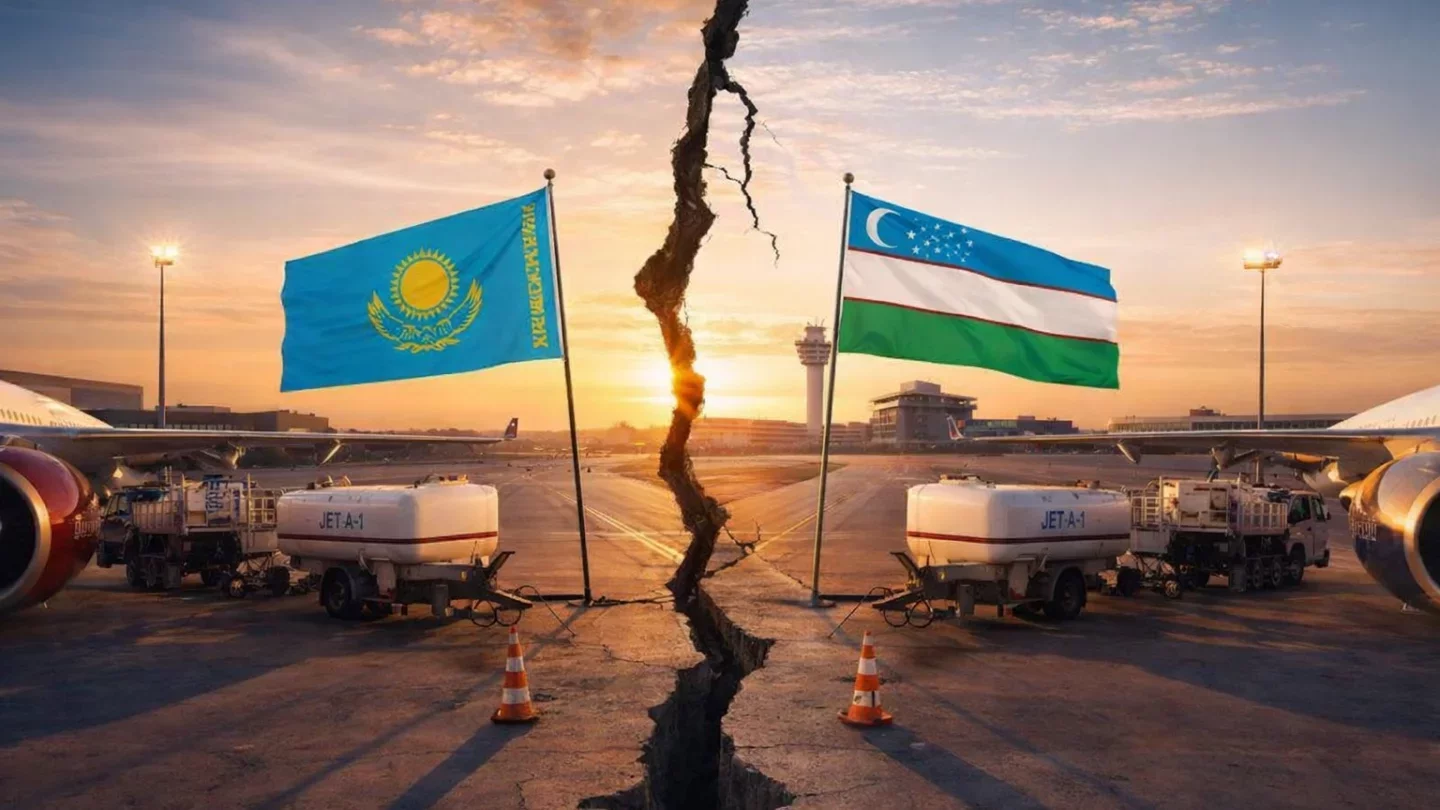 AI-generated
Kazakhstan has been talking for years about turning the country into Central Asia’s transport and aviation hub. However, the main constraint — both for this goal and for the industry’s development as a whole — remains a shortage of aviation fuel and the problems that come with it. We looked into whether the country will have enough Jet A-1 and TS-1, whether current production is sufficient, and what is actually preventing Kazakhstan from becoming a full-fledged hub — in an Orda.kz report.
Why aviation fuel matters for the country
The cheaper jet fuel is — and the more stable its price — the lower the fares, and the more flights and destinations airlines can offer. Domestic tourism develops, business becomes more mobile, and distances within the country are no longer seen as a critical obstacle. For passengers, it’s simple: fuel directly affects ticket prices.
For the state, aviation fuel is no longer a sector-specific issue — it is a strategic one. It will determine whether the country becomes a transit platform or remains focused on the domestic market. To build an aviation hub, it is not enough to construct a modern terminal and a runway. The country must also guarantee sufficient volumes of fuel and keep prices competitive. Without a fuel reserve, there will be no transit traffic, no technical landings by foreign carriers, and no expansion of the flight network.
International airlines calculate the profitability of long-haul flights down to the last dollar. The cost of refuelling and maintenance is one of the key factors when choosing a base and a connecting airport. If a country cannot provide stable supplies of Jet A-1 and its Soviet counterpart TS-1 at a predictable price, airlines choose other hubs.
In Central Asia, competition for this role is already underway. And the winner is not the one who talks about a hub more often or builds more runways. The winner is the one with more fuel — and a lower price.
What officials say
We sent questions to the Ministry of Energy and the Ministry of Trade on whether Uzbek fuel is being considered as an alternative to supplies from Russia and whether it could be used to supply airports in southern Kazakhstan. The questions were prompted by news from Uzbekistan about the launch of Jet A-1 and TS-1 production at the Fergana refinery. A number of publications claimed the fuel is produced from Kazakhstani oil.
Later, the Ministry of Energy said there were no supplies of Kazakhstani oil in that direction. In its response, the ministry focused not on Uzbekistan, but on reducing prices:
On behalf of the head of state, in the context of developing air hubs, the cost of aviation fuel ‘into the wing’ was reduced from $1,200 to $940 per ton, with a further target reduction to $890 per ton. This allowed us to improve competitiveness and increase the number of flights by international airlines.
The ministry added that all three Kazakhstani refineries are technically ready to produce Jet A-1 in line with ASTM D1655. A switch from TS-1 and RT to Jet A-1 is possible within two weeks, provided the systems are flushed.
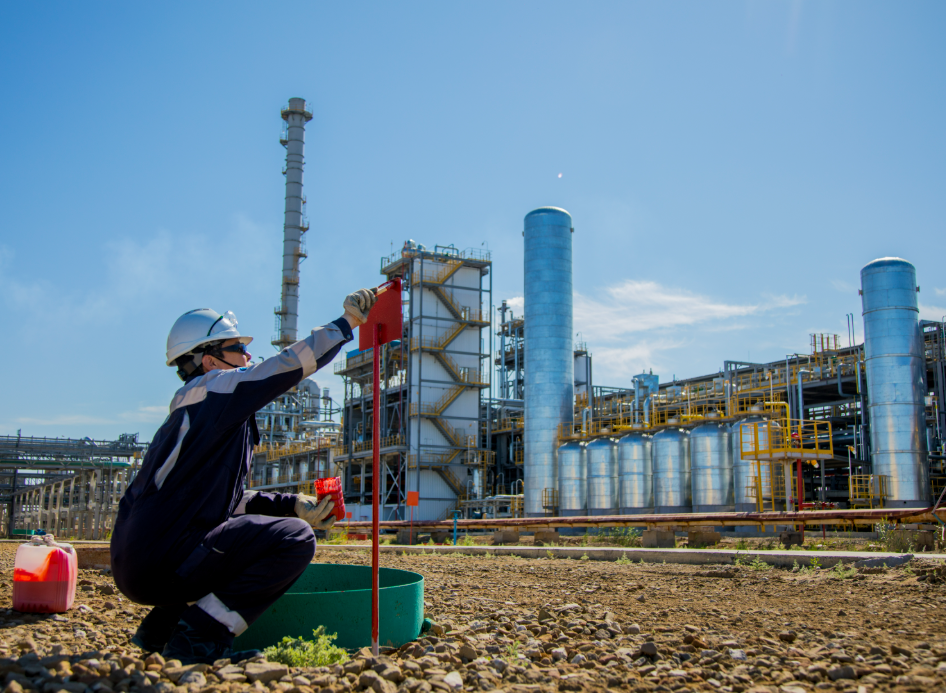
At the same time, it is impossible to fully switch domestic airports to a new type of fuel due to the specifics of their infrastructure. International protocols prohibit mixing Jet A-1 and TS-1. These requirements are set out in the EI/JIG 1530 standard.
Aviation fuel shortage in Kazakhstan: production and imports
The Ministry of Energy also provided data from the Civil Aviation Committee. In 2025, Kazakhstan’s demand for aviation fuel was about 1.1 million tons. Actual production was 724,000 tons, and imports were about 380,000 tons. In other words, Kazakhstan has a structural aviation fuel deficit that is covered by imports.
The gap is filled primarily through supplies from Russia. For 2026, the planned import of 300,000 tons of TS-1 and RT has been confirmed, with the option to increase it to 500,000 tons. That is, if needed, a significant share of imports can come from Russia.
Deliveries also come from China, from the Dushanzi refinery (Jet A-1). Import options from Turkmenistan are also being explored. Supplies from Uzbekistan are not mentioned in the ministry’s responses. The Ministry emphasizes that it does not see risks of dependence:
The Ministry does not see risks of Kazakhstan’s aviation industry becoming dependent on a limited number of external suppliers, given the existing mechanisms for diversifying supplies and the availability of alternative import sources. In addition, a decision by the Eurasian Economic Commission approved a tariff benefit — reducing the import customs duty rate from 5% to 0% for aviation fuel imported into Kazakhstan from third countries. To create a competitive environment, all airports have been granted access for KazMunayGas-Aero LLP. As a result, aviation fuel prices at airports have been reduced by about 25%, with a profit margin of no more than 5%.
It looks like the situation is under control. However, domestic production is almost entirely used to service basic passenger traffic.
“The main brake is aviation fuel”: expert
We put direct questions to aviation specialist Abul Kekilbayev: why officials are reluctant to discuss Uzbek fuel, and whether the situation is really that serious. According to him, the key problem lies not in competition with Uzbekistan, but within our own system.
The main brake on the development of aviation in Kazakhstan now is aviation kerosene. The volume of our own production is no longer enough even for basic needs. The consumption of the three largest carriers almost completely eats up the volume produced by our refineries.
The expert explains what this can lead to:
Any attempt at expansion automatically pushes airlines into the expensive import zone. This leads to a tariff explosion.

Without excess aviation fuel, Kazakhstan will not become a hub
The expert sets out his main conclusion, based on the need for surplus fuel:
Without excess supply of kerosene, any transit strategy remains a declaration. If Kazakhstan does not increase production by at least half a million tons, dreams of becoming a logistics hub of Eurasia can be forgotten.
Surplus volumes are what make it possible to refuel transit flights at any time and at a competitive price.
Otherwise, we will fly on someone else’s fuel, paying for systemic inefficiency from citizens’ pocketsthe expert notes.
In effect, this creates a model of hidden subsidy: in the end, the gap is paid either by passengers or by the budget through various support mechanisms.
Even if there is fuel, the infrastructure is not ready
Even if the volume problem is solved, the second level remains — infrastructure.
Most refuelling complexes are outdated both morally and technically. Switching to Jet A-1 and implementing SAF is a condition for the industry’s survival. But the question arises: at whose expense will the renovation be carried out? Abul Kekilbayev notes.
The transition to Jet A-1 requires accreditation of the entire chain under modern JIG and EI standards — from the refinery to the aircraft wing. This means upgrading storage tanks, filtration systems, laboratories, and logistics. Without that, even sufficient volumes of domestic fuel or the cheapest imports will not solve the problem.
You can buy fuel. But it needs to be stored, tested, and delivered. If the infrastructure is not ready, imports will not become a strategic advantage
Speaking about the importance of modern fuel, the aviation expert also points to Kazakhstan’s climate:
Jet A-1 has a higher freezing point compared to TS-1 and RT. In the northern regions, this requires additional technical solutions and higher infrastructure requirements.
Staff shortage
The third layer of the problem — one that regularly fades into the background and is directly tied to regional competition — is personnel.
According to Abul Kekilbayev, some airport services face serious staffing shortages:
In Kazakhstan, there is a particularly acute shortage of managerial and engineering personnel in the airfield service, the electrical and lighting support service for flights, the fuel and lubricants service, and emergency rescue support. Depending on the area, the deficit reaches 50%.
The expert believes some specialists are going to work in Uzbekistan:
Uzbekistan is still far from our scale, but they are already catching up, and their pace is higher. This should mobilize us. However, instead, we prefer to deny obvious trends. Our specialists are already moving to Uzbekistan. Many Kazakhstanis work there today, including in leadership positions.
There are also problems with training aviation personnel in educational institutions, and there is no system of continuous professional development.
Aviation fuel is just the tip of the iceberg
For a sustainable future for aviation in Kazakhstan, it is not enough to cut prices for airlines or negotiate imports. What is needed is systematic work with the industry — from production and infrastructure to staffing and transparent mechanisms for allocating resources. According to Abul Kekilbayev, opacity shows up not in silence about problems, but in the lack of consistency within the industry itself:
It is especially important for Kazakhstan today not to overdo it with reports, figures, and loud slogans. Sometimes they distort reality more strongly than direct recognition of problems.
The expert points out that there is no synchronization of actions within the industry. Manufacturers, airports, carriers, and traders each operate in their own mode. As a result, the state constantly declares a course toward becoming a hub, but there is no agreed model for implementing it within the system. Experts and the president have previously spoken about this inconsistency in the industry:
- Why airports don’t want to give the fuel business to oilmen
- Kazakhstan misses a golden chance — Tokayev criticized the Kazakhstani aviation industry
Orda.kz industry interlocutors and representatives of the fuel sales business are also in no hurry to discuss aviation fuel publicly. Many private companies avoid this segment: according to them, after the Bek Air tragedy, the market has become noticeably more cautious. Requirements for laboratory control have increased, and the responsibility of market participants has grown.
Against this background, Kekilbayev draws attention to differences in management approaches:
In Uzbekistan, they don’t take their mistakes to the window. They show successes, but errors remain inside the system.
According to him, the difference is not in the absence of problems, but in how quickly the system reacts to them. And the main competition with Uzbekistan is already not about loud statements about a hub, but about management decisions. That is why the import question depends less on the geography of supplies than on the rules of the game inside the country:
Before importing fuel from Uzbekistan, it is necessary to pay attention to the lack of a transparent and understandable mechanism for its distribution. This weakens the position of domestic airlines.
Original author: Alexander Zhdanov
Read also:
Latest news
- How A Chinese Goose Ended Up In Almaty And Joined A Flock Of Wild Ducks
- How Much Savings Make A Kazakhstani Well-Off In Kazakhstan
- How The War In The Middle East Affected Kazakhstanis’ Pension Savings
- Why Almaty’s Crematorium Is Still Not Operating: Authorities Explain
- Why Sparrows And Swallows Have Disappeared In Almaty, Expert Explains On Bird Day
- Audit Finds Violations In Use Of Kazakhstan’s National Fund Money
- Employment Rate In Kazakhstan Falls Despite Lower Unemployment
- “They Have Already Risen Sharply”: Deputy Calls For Extending Utility Tariff Moratorium
- Kazakhstan May Ban Storage Of Extremist And Terrorist Materials
- School Built Three Years Ago Already Falling Apart In Turkestan Region
- The Rich Save, The Poor Borrow: Expert Describes Kazakhstan’s Economic Model
- Stock Up On Sandbags: East Kazakhstan Residents Warned Of Possible Flooding
- Civil Service Recruitment In Kazakhstan Goes Fully Online
- Justice Ministry Explains Constitutional Protection Against Arbitrary Eviction
- Floods In Akmola Region Enter Active Phase, Ministry Of Emergency Situations Says
- Businessman Who Brought Popeyes To Kazakhstan To Receive 700 Mln Tenge In Dividends From Broker
- Kazakhstan Approves Comprehensive Plan To Preserve Cultural Heritage
- Clothes, Food, And Cosmetics Lead Kazakhstan’s Online Shopping Boom
- Scholarships Will Not Be Increased in Kazakhstan Yet
- Have Mopeds Revived Kazakhstan’s Motorcycle Market? How The New Law Reshaped The Country’s Fleet
