

Why Can't Astana City Subsidiary Sell Russian Firm?
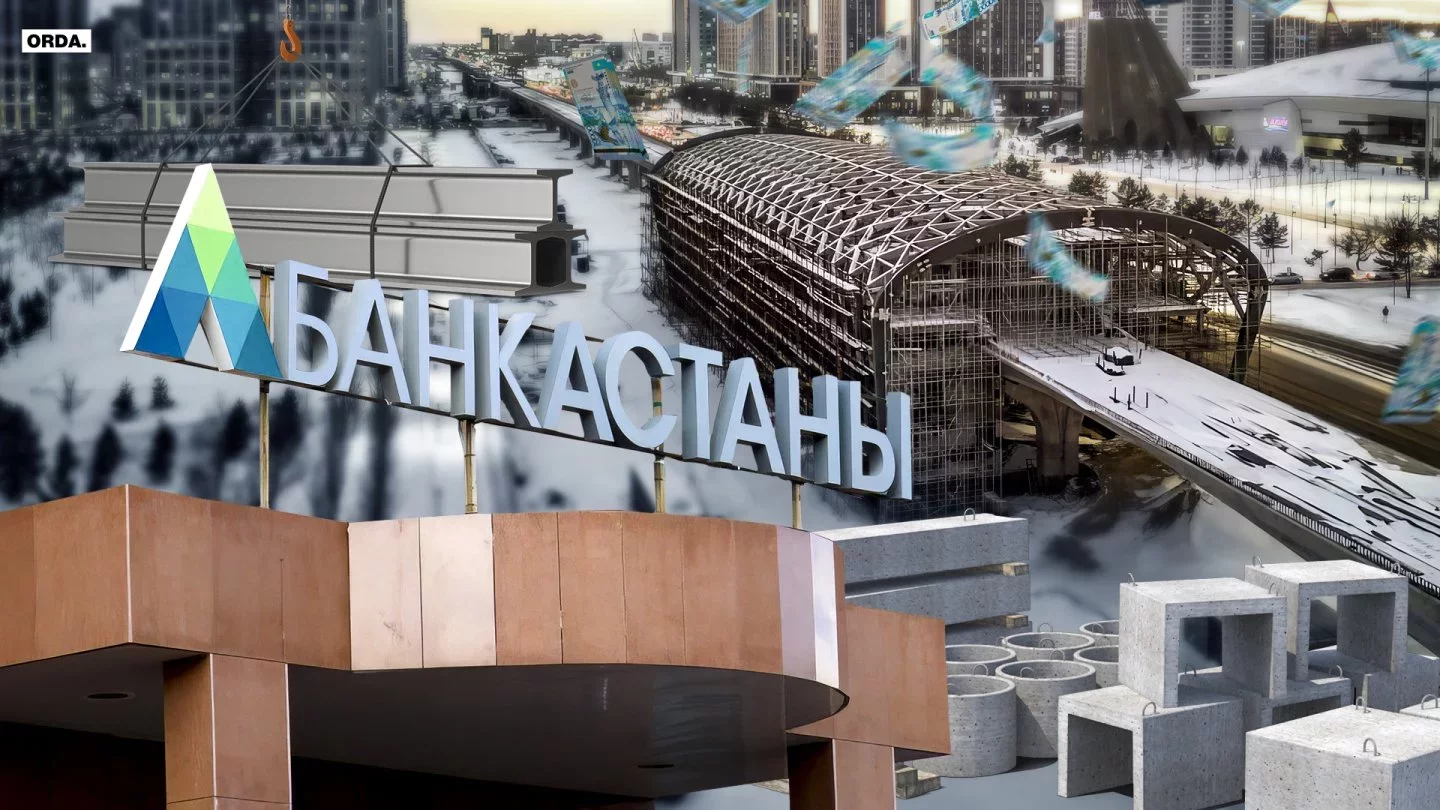 Photo: Orda.kz
According to the state property auction website, an auction to sell a stake in SAT Investment LLP — owned by City Transportation Systems (CTS), a subsidiary of Astana's city government — has failed due to a lack of bidders. The starting price was set at 9.8 billion tenge, which likely discouraged interest.
So how it end up with this asset — and what does it have to do with a Russian company, the scandal-ridden Bank of Astana, and the LRT project?
Orda.kz investigates.
SAT Investment LLP has shown little signs of profit — since 2015, it has paid just 5.1 million tenge in taxes. The company’s authorized capital is only 175,000 tenge, and it currently has tax debts and a ban on registration actions. Its ownership is split: 2% belongs to a private individual named Manat Bazarbekov, and the remaining 98% — the stake on sale — is held by CTS.
So why is the asking price so high? The value lies not in the SAT Investment itself, but in its collateral — assets belonging to the Russian company Finngrad JSC.
Finngrad JSC is registered in Pushkin near St. Petersburg and manufactures concrete components for the construction industry. Its book value is 938 143 605 rubles, but at the time of appraisal, the company was non-operational, and as of March 13, its accounts were frozen. The founder is Marat Baltabayev.
Interestingly, the company was founded in 2009. The Finnish manufacturer of stationary reinforced concrete shelters opened the production of stationary panels in St. Petersburg, ZAO Betset. It built a plant and began exporting its products to Sweden and Finland. In 2016, the Finnish owner sold the company to the Kazakh SAT Investment, which renamed it Finngrad.
The Loan That Started It All
In 2016, SAT Investment took a $15.5 million loan from Bank of Astana to acquire a 100% stake in Betset (now Finngrad) and to replenish its working capital.
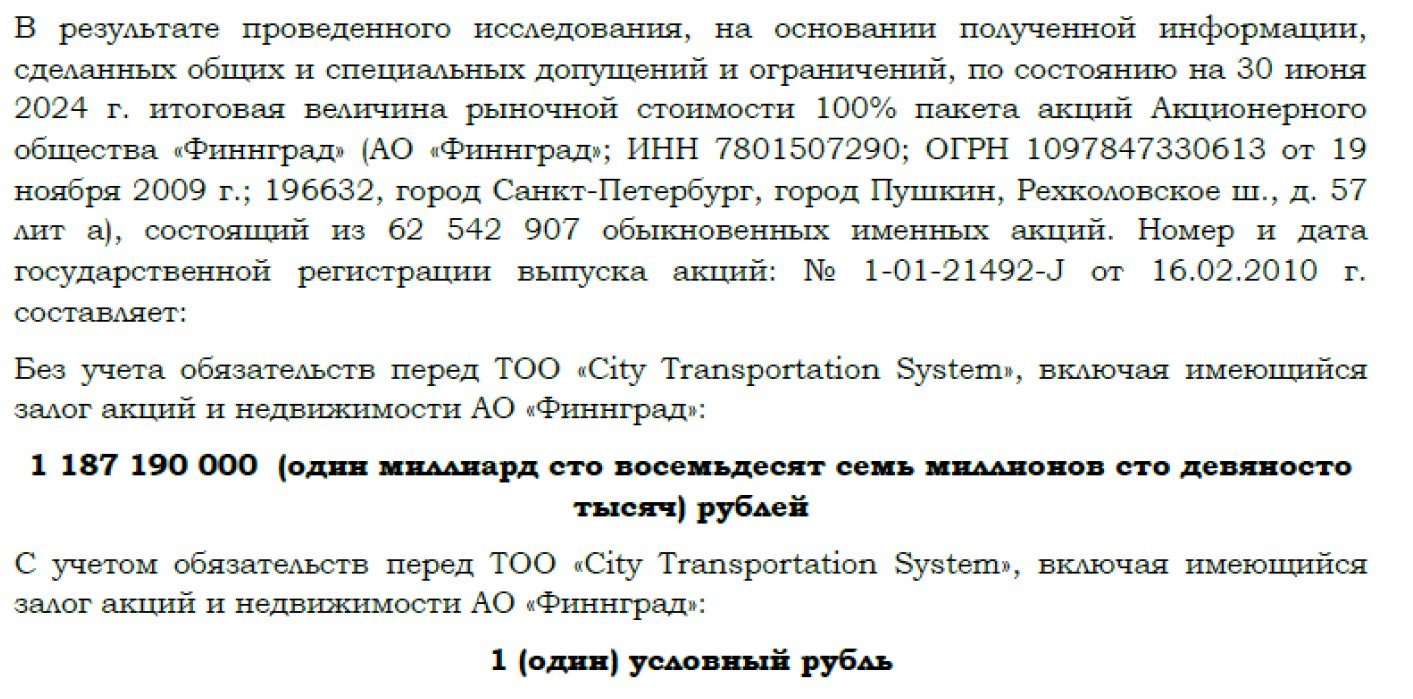
As collateral, SAT pledged:
- All shares in Finngrad (3.4 million),
- Real estate, land, and equipment in St. Petersburg — though the plant had already been idle for three years.
SAT later defaulted on the loan, and in 2018, an Almaty court ordered it to repay 7.6 billion tenge (roughly $20 million at the time).
How Astana LRT Got Involved
Back then, Astana’s LRT operator (then known as Astana LRT, now CTS) kept $257.6 million in Bank of Astana accounts. However, when the bank lost its license in 2018, all client funds — including Astana LRT’s — were frozen.
To resolve these financial messes, Bank Astana transferred both SAT Investment’s debt and Astana LRT’s frozen funds to the state-owned Problem Loans Fund. That’s how CTS ended up owning the Finngrad collateral.
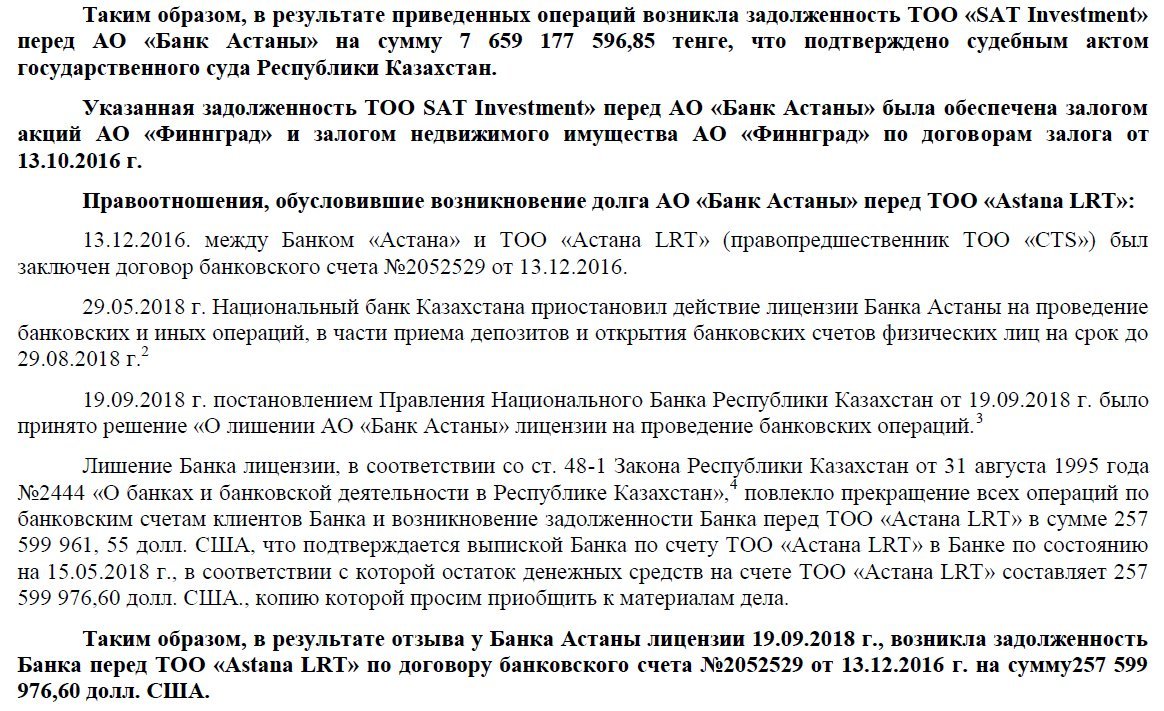
In short:
- SAT Investment did not repay the loan, and its debt was transferred to the state fund.
- Astana LRT lost $257.6 million in the bank and is now waiting for compensation from the same state fund.
The entire scheme is part of an effort to remedy what was left behind after Bank Astana's bankruptcy, which resulted in the $257.6 million allocated for the LRT project simply disappearing.
Nazarbayev’s Words and the Fall of Bank Astana
The downfall of Bank Astana began in April 2018, when then-President Nursultan Nazarbayev publicly criticized several banks, including Bank Astana, for mismanagement. He stressed that the shareholders of these financial institutions had poorly managed the banks, which had led to debts and the inability to meet obligations to depositors.
After Nazarbayev publicly called for “bringing order to the financial sector” and “cracking down on dishonest bankers,” Astana Bank’s rapid downfall began. Depositors rushed to withdraw their savings, and within the same year, the bank’s license was first suspended and then fully revoked, officially due to liquidity problems and regulatory violations.
Unofficially, however, the bank, linked to influential figures of the time, had fallen out of favor.
Customers lost access to their funds, the bank's headquarters stood empty, and Astana Bank became a symbol of how quickly “financial success” in Kazakhstan can collapse when it no longer aligns with the ruling elite's interests.
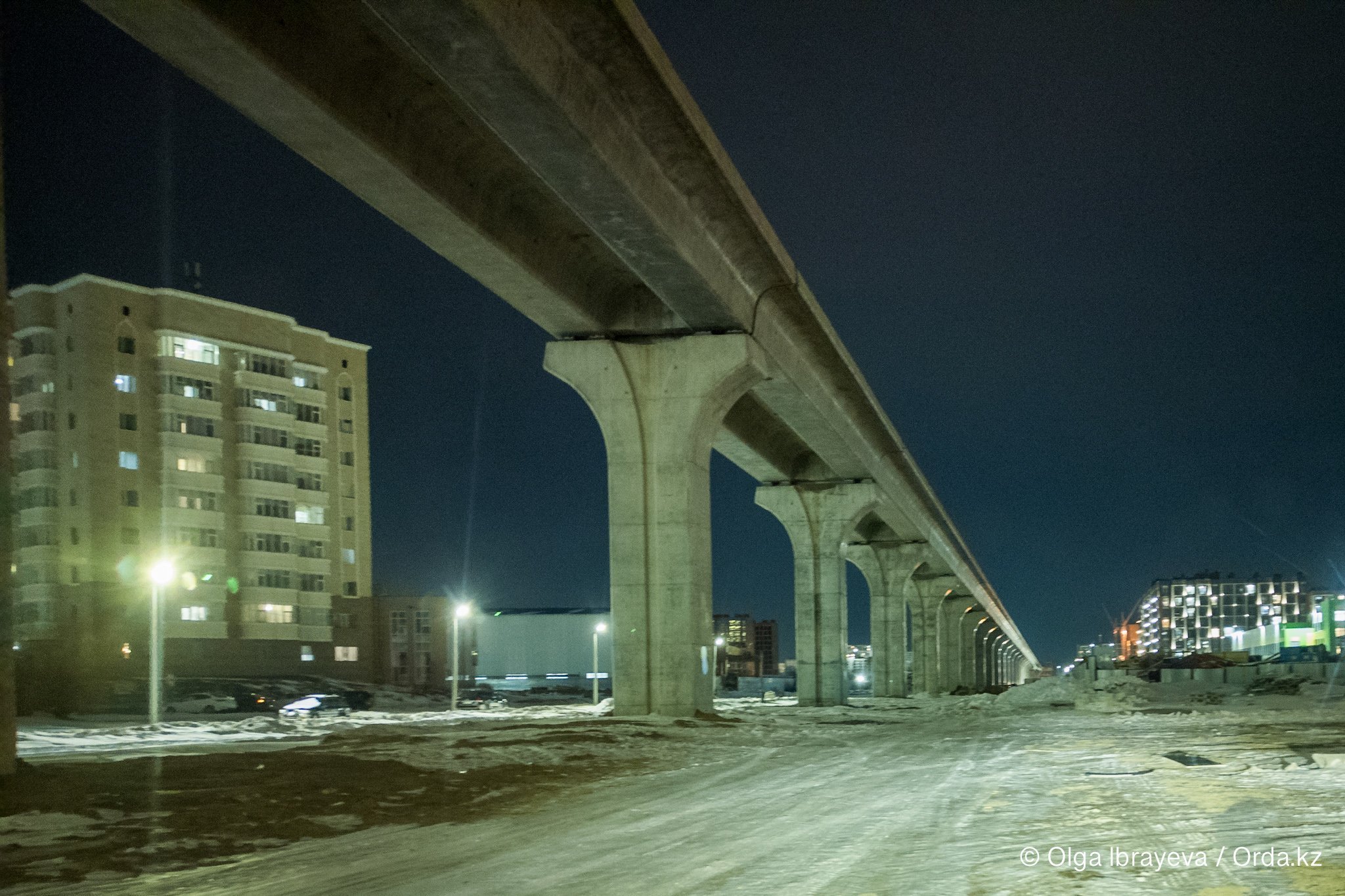
In this case, its failure also froze financing for one of the country’s flagship infrastructure projects — the LRT metro line in Astana.
That very project would later be dubbed a monument to Kazakhstani corruption.
The rest is well known: criminal cases, a search for the culprits, a bailout loan from Chinese partners, and a construction site that, after years of setbacks, now finally appears close to completion.
Original Author: Ilya Astakhov
Latest news
- Kazakhstan Explains How Russians Who Fled Mobilization Can Be Deported
- Kazakhstan and Japan discuss hydrogen partnership with export potential
- Russia Thanks Tokayev for Initiative to Support Russian Language
- Almaty Could Restrict Cars Under Beijing-Style Anti-Smog Plan
- Tigers in Kazakhstan Are in No Rush to Breed
- What Changes Are Being Prepared Under the New Tax Code
- Alcohol and Tobacco Prices in Kazakhstan See Sharpest Monthly Rise in 15 Years — Analysts
- Middle East Conflict Will Not Lead to Higher Gasoline Prices in Kazakhstan — Minister
- Five Regions of Kazakhstan Face Higher Flood Risk This Spring
- Kazakhstan Ratifies Turkic States Civil Protection Deal
- Astana Enters Top 100 Safest Cities as Smart City Project Expands
- Almaty Cameras to Record New Driver Violations Starting March 12
- Kazakhstan Suspended 11 Polling Stations Abroad Due to Middle East Escalation
- Kazakhstan’s Foreign Ministry Comments on Disappearance of Citizen After South Korea Factory Fire
- ChatGPT Among AI Tools Recommended for School Lessons in Kazakhstan
- Missing Kazakh Woman Found in Vietnam Four Days Later
- Seven-Year-Old Kazakh Girl Returned From Georgia Following Six Months of Diplomatic Efforts
- Kazakhstan Plans to Rent 11 Helicopters for 22 Billion Tenge Ahead of the Fire Season
- Flights Delayed and Canceled at Astana Airport Due to Bad Weather
- More Than 8,500 Kazakhstanis Evacuated From the Middle East
