

What’s Holding Back Kazakhstan’s Economy?
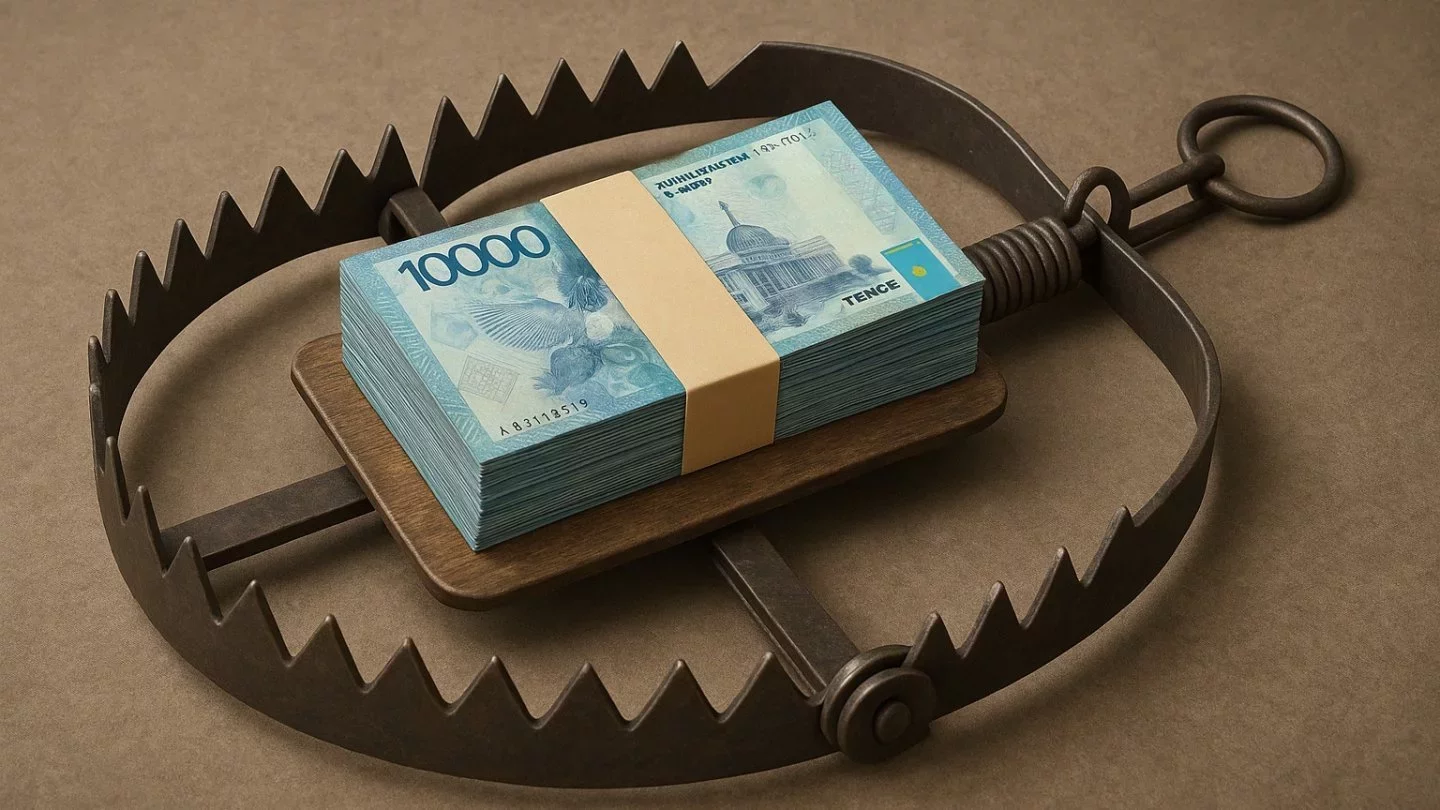 Photo: Dall-E, illustrative purposes
Kazakhstan boasts the highest income levels in Central Asia, above-average GDP per capita, and a steadily growing economy. Still, real wages are falling, the National Fund is being depleted, and inflation forecasts are increasingly troubling.
Analysts at Halyk Finance have taken a closer look at the situation, Orda.kz reports.
According to Sanzhar Kaldarov, a macroeconomic analyst at Halyk Finance, one common theory is that Kazakhstan has fallen into the so-called “middle-income trap.” This is a stage where an economy that once grew rapidly through low-cost labor, raw material exports, and infrastructure investments slows down, unable to transition to innovation-driven, high-value growth.
The World Bank notes that 108 countries are currently at this level, while only 34 have broken through to high-income status.
On the one hand, Kazakhstan has shown relatively stable GDP growth, a solid financial system, and has held ‘upper-middle income’ status since 2006. But on the other hand, it still exhibits the typical traits of economies stuck at the middle-income level: dependence on commodity exports, weak diversification, stagnant labor productivity, and underdeveloped high-tech sectors,” says Kaldarov.
The core issue of the “middle-income trap” isn’t that countries don’t grow — it’s that they rely on outdated growth models. And Kazakhstan appears to be doing just that. In its early post-Soviet years, the country made impressive gains through oil and mineral exports, infrastructure development, and market reforms.
But for the past 10–15 years, GDP growth has been slowing, and reliance on raw material revenues remains high.
Kazakhstan’s economy is still heavily exposed to external conditions. In 2024, raw materials made up about 83% of total export revenue, while industrial processing and added value remain limited. Labor productivity has increased only marginally over the past 15 years, and the gap between the extractive and manufacturing sectors is widening. Investment in scientific research and innovation is also extremely low, less than 0.2% of GDP, compared to the OECD average of around 3%. High-tech exports are not growing, and overall business innovation remains weak, says Sanzhar Kaldarov.
The analyst also highlights several other concerns:
- The state's involvement in the economy remains excessive
- Generous subsidies and benefits distort market dynamics
- Human capital is being used inefficiently — while many people have higher education, their skills often don’t align with the actual demands of the labor market
Still, it’s not too late. The “trap” hasn’t fully closed. According to the World Bank, countries at risk should focus on investment, innovation, and inclusion. For Kazakhstan, this means bold reforms and smarter government involvement — not just oversight, but strategic investment in infrastructure, science, private enterprise, and human capital.
Kaldarov outlines a path forward:
- Reduce the state’s role in the economy
- Liberalize tariffs and pricing policy
- Increase transparency and efficiency in public spending
- Promote fair business regulation and real competition
We need to reduce regional and social inequalities, improve access to resources for small and medium-sized businesses, streamline administrative processes, and eliminate barriers that hinder entrepreneurship. These steps would lay the foundation for inclusive, sustainable growth — the kind needed to break free from the stagnation typical of countries stuck in the middle-income trap, said Sanzhar Kaldarov.
But according to Kaldarov, Kazakhstan may be facing something even more problematic than the middle-income trap: the resource curse.
“Kazakhstan is not facing a middle-income trap, but rather signs of the resource curse — a situation where wealth from natural resources leads to weaker development of the non-resource sectors. One of the key signs of this is the lack of sufficient motivation from the state to diversify the economy and support private business: resource revenues make it possible to maintain a certain level of well-being without the need for structural reforms,” concludes Sanzhar Kaldarov.
However, Kazakhstan’s natural resources won’t last forever. Oil and uranium no longer generate the high profits they once did. And while the country’s subsoil holds other valuable resources — including rare earth metals — they alone can’t sustain the economy indefinitely.
It’s time for Kazakhstan to break free from its long-standing “resource curse” and shift toward an economic model focused on long-term, sustainable growth.
Original Author: Nikita Drobny
Latest news
- Tokayev Urges Shift From Humanities to Science and Technology
- Tokayev Criticized the Effectiveness of Science Funding in Kazakhstan
- Kazakhstan Breaks Into The World’s Top 40 Economies By PPP GDP
- Kazakhstan May Allow Dombras in Aircraft Cabins
- Kazakhstan To Assess Airlines’ Costs for Evacuating Citizens From the Middle East
- International Criminal Group Exported 88 Tons of Artemia From Kazakhstan
- Kazakh Ambassador to Russia Speaks About the Russian Language After the Referendum
- Kazakhstan May Introduce Drug Testing, Mortgage Perks, And New Restrictions For Civil Servants
- Who Paid the Most Taxes in Kazakhstan’s Trade Sector
- Kazakhstan Plans School-to-Civil Service Pipeline to Boost Youth Recruitment
- School Textbooks To Be Rewritten Again In Kazakhstan
- Suspect In Serial Fraud Case Extradited To Kazakhstan From Russia
- The National Bank Will Be Less Likely To Inform Kazakhstanis About Inflation
- Kazakhstan Extends Toll Road Payment Deadline
- Kazakhstan’s Industry Fell 3.1% In January–February Despite February Growth
- From Utilities to Security, Kazakhstan Approves New Smart Cities Methodology
- Tokayev Announced A Criminal And Administrative Amnesty Following The Adoption Of The New Constitution
- Tokayev Signed A Decree On The Implementation Of The New Constitution
- Casinos for Foreigners Only to Open in Kazakhstan
- Analysts Record a Sharp Surge in Immigration From China to Kazakhstan
