

US House Advances Bill to Repeal Caesar Act Sanctions on Syria
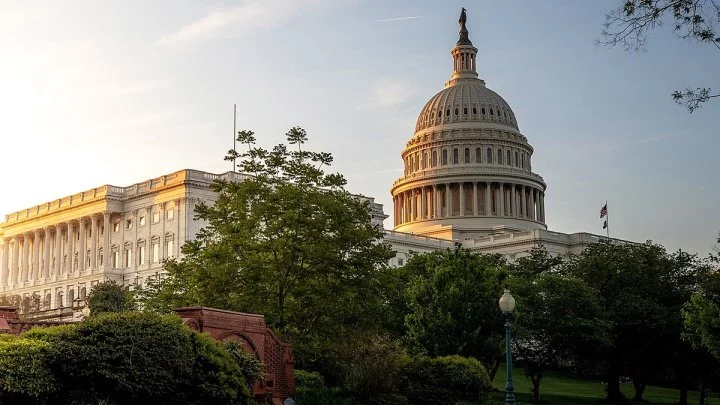 Photo: Picture of a sunrise at the United States Capitol building, Author U.S. House of Representatives
The US House of Representatives has approved a measure that would lift the Caesar Act sanctions on Syria — restrictions originally imposed in response to abuses committed under former president Bashar al-Assad, Orda.kz reports, citing Aljazeera.
The repeal was included in the wider National Defense Authorization Act (NDAA), passed on Wednesday.
With this NDAA, as many know, we are repealing sanctions on Syria that were placed there because of Bashar al-Assad and the torture of his people. We’re giving Syria a chance to chart a post-Assad future, Representative Brian Mast of Florida said
Mast, who had previously opposed dropping the sanctions, added that the bill still allows the president to restore sanctions if deemed necessary.
The legislation now heads to the Senate, where a vote is expected before year’s end.
If enacted, the NDAA would revoke the 2019 Caesar Act, which targeted the Assad government for war crimes committed throughout Syria’s 13-year conflict. The new provisions also oblige the White House to issue regular assessments confirming that Syria’s post-Assad authorities are maintaining minority rights and countering Islamist armed groups.
Human rights organizations have broadly welcomed the prospect of easing sanctions, arguing that rolling back sweeping economic restrictions could help Syria’s devastated economy begin to recover.
The Caesar Act was signed during Donald Trump’s first term. In late 2024 — just before Trump returned to office — rebel forces overthrew Assad, who fled to Russia. Since then, the new Syrian government under President Ahmed al-Sharaa has been recognized by Washington, and Trump has already lifted a number of sanctions through executive action.
But several core restrictions can only be removed by Congress, prompting the current push.
Syrians recently marked the one-year anniversary of Assad’s fall with nationwide celebrations, though the country continues to confront deep structural and humanitarian challenges left behind by more than a decade of war.
Latest news
- Orda.kz Editorial Team to Cease Operations on September 1
- The Price of a Degree: How Students in Kazakhstan Pay for University
- Second Przewalski’s Horse Foal Born as Species Returns to Kazakhstan
- Kazakh Mining Companies Can Recalculate Purchases if Tenge Weakens
- Kazakhstan Names First Vice President in Three Decades
- What Almaty’s Bus Shelters Are Missing
- 400-Truck Queue Builds at Kazakh–Kyrgyz Border
- Kazakhstan Ready to Help Feed and Rebuild Gaza
- Tokayev Establishes New Presidential Security Body
- Almaty Takes Back Its Nearly Century-Old Hippodrome
- No More Guesswork on Savings: Kazakhstan Tightens Energy Audits for Businesses
- Public Money Could Be Used to Rescue Failing Kazakh Banks
- Third Kazakh Woman Reported Missing in Nepal-China Flood Zone
- Falconer Convicted Over 35 Protected Birds, Spared Punishment Under Amnesty
- Kazakh Citizen Detained in Yakutia in Phone Fraud Case
- Yuan Instead of Dollars? KazMunayGas Draws Record Demand in Asia
- China Gains Oil-Market Influence as OPEC+ Weakens
- Kazakhstan to Divide Smartphones Into White, Gray and Black Lists
- Kazakhstan’s Government Formally Resigns as First Kurultai Session Opens
- Rare Lynx Sighting Recorded in Northern Kazakhstan
