

Transit, Trade, and Trust: Expert Weighs in On What Kazakhstan Gains from Stronger Ties with Türkiye
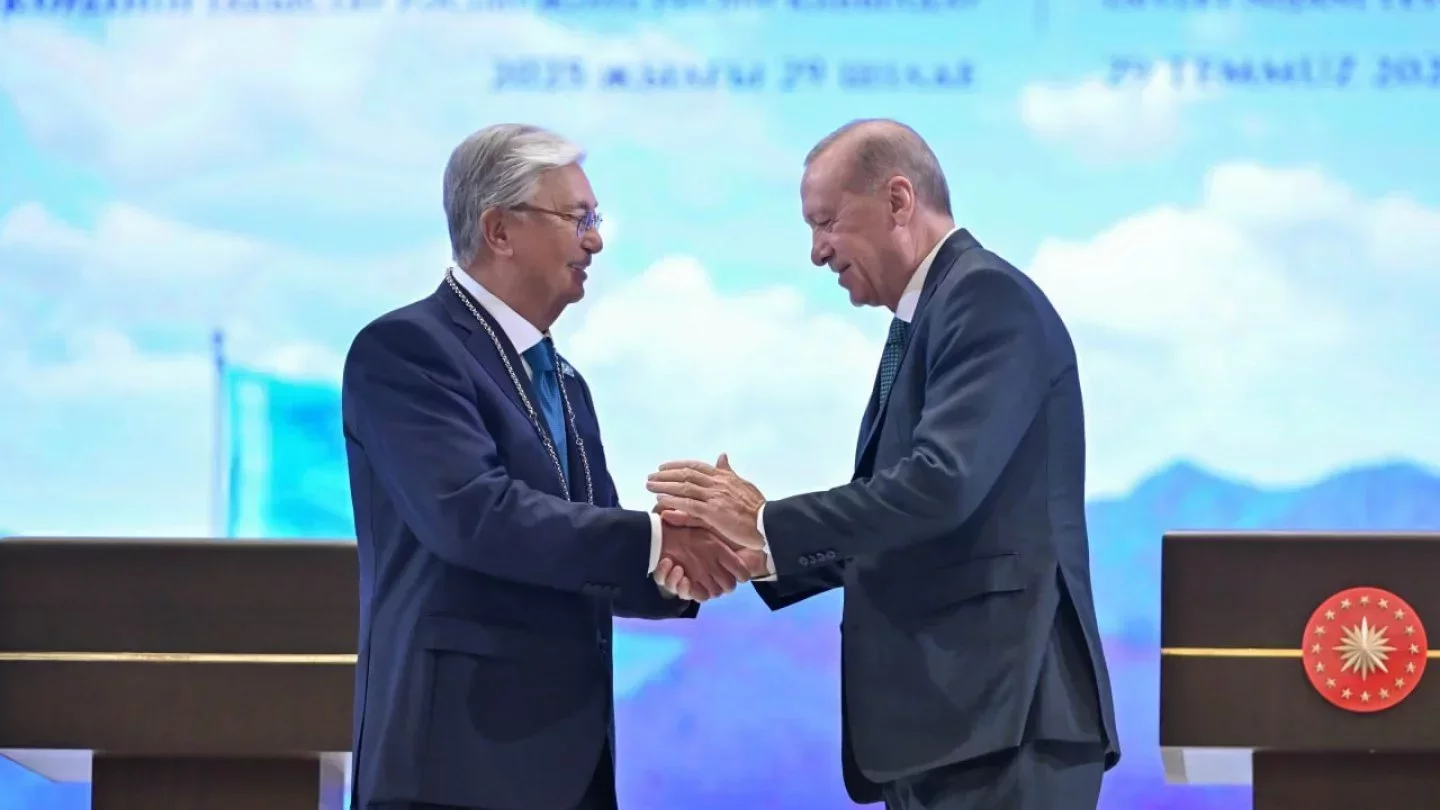 Photo: Aqorda
The high-level Kazakhstan-Türkiye Strategic Cooperation Council was held in Ankara the day before. From the soft power of Turkic unity to the hard economy of transit corridors, these agreements sound especially weighty when they are promoted by Türkiye, a country with one of NATO's largest armies.
Orda.kz analyzes the significance of these steps and comments from political scientist Aidar Amrebayev on key areas of cooperation.
Political Chemistry
Recep Tayyip Erdoğan personally met Qasym-Jomart Toqayev at the airport, a notable moment.
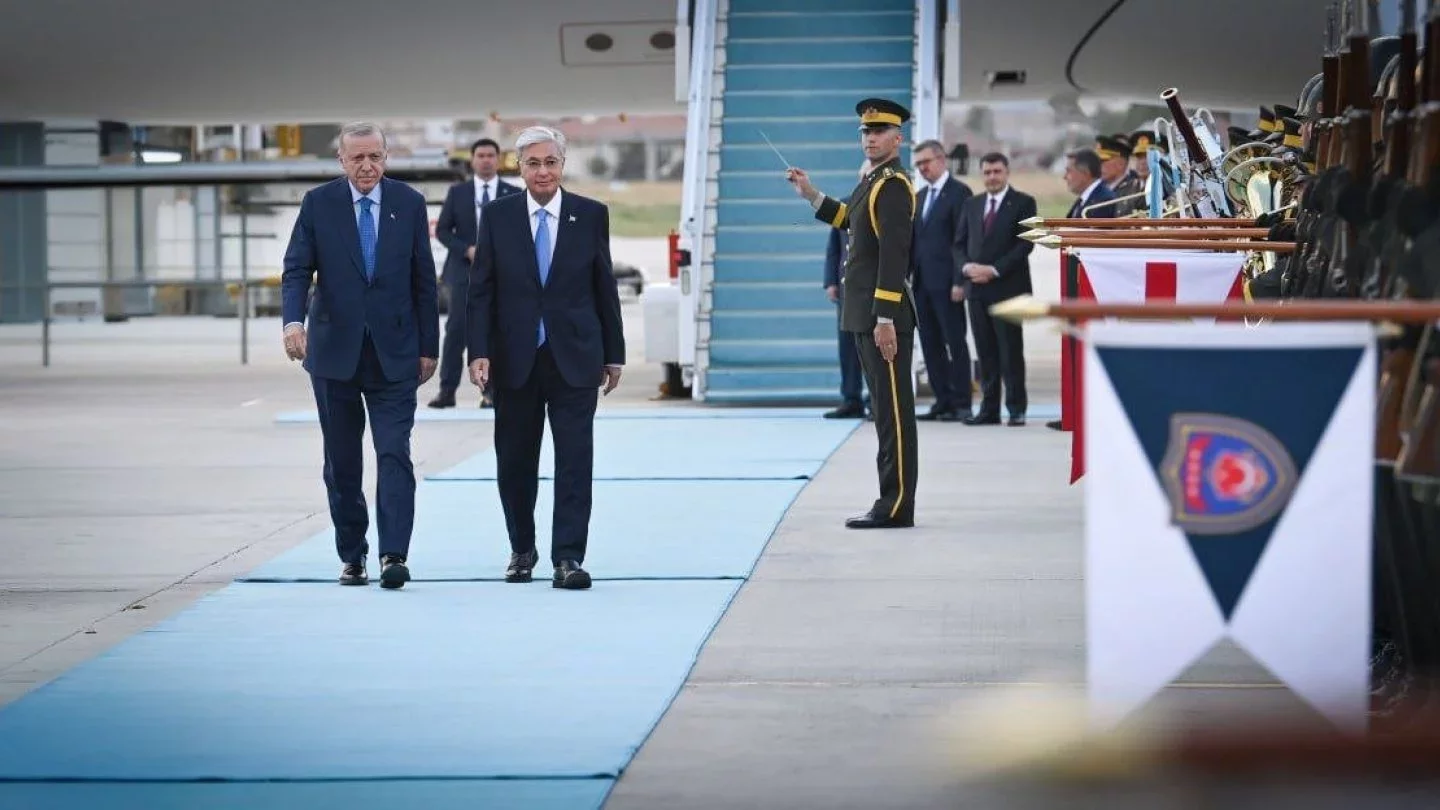
Such a gesture underscores that everything is built on a positive history of relations:
There is a common cultural tradition, we are close peoples in language, faith and historical precedents. It is enough to remember that even during the period of the Kazakh khanates, our rulers corresponded with the sultans of the Ottoman Empire. This was also a period of high international authority of the Great Steppe. This historical context always serves as a positive background for inter-Turkic interaction, says Aidar Amrebayev.
There is also an essence that cannot be measured by agreements and protocols:
I worked in Türkiye for some time and saw how much they perceive Kazakhstan and the entire region as 'atajurt' - the land of the ancestors. Major Turkish leaders, starting with Turgut Ozal, Suleyman Demirel and others, always came to Kazakhstan with great pleasure and reverence, believing that this is where the Seljuk Turks and then the Ottomans - the ancestors of modern Turks - came from. So the connections are very subtle, sensual, I would say. This is very important for establishing political chemistry at the top leadership level.
Consistency further strengthens the partnership:
At one time, our first President, Nursultan Nazarbayev, also had very good relations with Turkish leaders. There is even a monument to him in Ankara. He was considered an aksakal of the Turkic world. Now Qasym-Jomart Kemelevich Toqayev has very trusting relations with the leader of the Turkish Republic,says the expert.
Pragmatism
Foreign policy is only an instrument of internal development based on pragmatic decisions:
The task on the external track is to use new opportunities for international cooperation. After all, a successful external line creates favorable conditions for internal stability and development. Although Kazakhstan today faces serious external pressure, notes Amrebayev.
Current realities also factor in:
Our closest partner, the Russian Federation, is going through a difficult period, is under sanctions and in international isolation, which objectively complicates the implementation of the desired level of cooperation. Kazakhstan could face secondary sanctions in the event of the restoration of the previous level and quality of cooperation with this country. We are forced to take this into account.
"At the same time, next to us is the People's Republic of China, one of the largest and rapidly developing powers in the world, which is already considered a global leader by many indicators. It has powerful production, technological and investment potential. And on this track, we are faced with a difficult dilemma in the context of confrontation and trade wars between China and the United States," says the political scientist.
One must determine their place in such circumstances:
The question arises: how to build a system of counterbalances, which circle of states do we belong to and how to minimize risks? For example, German analysts classify Kazakhstan as a 'middle power' - which means that various centers of power are trying to involve us in their alliances and projects. But this has both a positive side and threatens certain vulnerabilities. We must calculate each of our steps.
In this context, it is worth noting the recent EU-Central Asia summit in Samarqand. The European Union is actively increasing its presence in the region, and Kazakhstan is building constructive relations with leading European powers - France, Germany, Italy. We must maintain our international subjectivity in interaction with such developed partners.
Map of Interests
Other nations must also be considered:
There is also interest from countries with growing global influence, such as India, the world’s largest country in terms of population, with significant technological potential and control over important logistics routes in South Asia.
Pakistan is another important player, a major Muslim power with a modernizing transport infrastructure. I had the opportunity to visit the port of Gwadar, where the capacity for large-tonnage transportation is being expanded. In partnership with China, this allows for the creation of new, improved routes in the southern direction. At the same time, we are seeing an ongoing confrontation between India and Pakistan, despite the fact that they, like us, are members of the SCO.
The horizons of foreign policy are expanding, but they converge on the lines outlined by Kazakhstan long before the current events:
Iran is also actively involved in the space of Central Asian interaction. Today, it is a full member of the Shanghai Cooperation Organization, where Kazakhstan, in turn, is one of the founding states.
Kazakhstan is interested in such diversification of interaction on the external track. Despite the presence of confrontational lines, we need a counterbalance: if one vector dominates, it needs large players to counterbalance it. Counter-alliances are also possible, Amrebayev suggests.
And on these intersecting lines, the points of attraction are prominent:
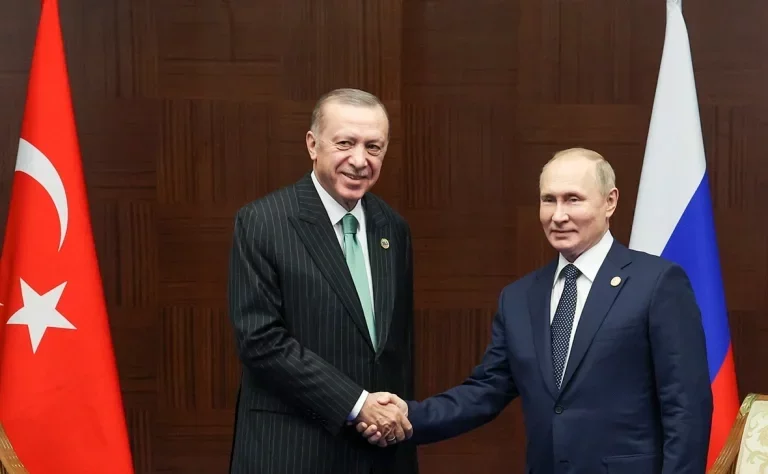
In this sense, Türkiye is an active and authoritative player in the international arena: negotiations between Ukraine and Russia are regularly held in Istanbul, and this is no coincidence. Not every state has the authority to organize such complex dialogues. Recep Tayyip Erdoğan is a politician of the highest level, whose opinion is listened to in Brussels, Washington, Moscow, and Beijing.
All this, according to Amrebayev, allows us to count on a concrete, businesslike, and conscious format of relations:
When the question of territorial integrity and independence of our country arose, the Turkish Republic was the first to recognize Kazakhstan, and Erdoğan also stated that the Turkish Republic is always ready to come to the rescue in the event of a threat to national security, territorial integrity and independence of our state.
This partnership can be called fraternal:
"Although I don't really like to use this term. I recall the classic saying that in international relations there are no eternal friends, no eternal enemies, but there are eternal national interests."
Room for Maneuver?
Following the sanctions against Russia, renewed interest emerged in the Trans-Caspian Corridor (Middle Corridor).
At full capacity, the corridor could link Japan, China, and other Eastern countries through Central Asia and the Caspian Sea, then through Azerbaijan and Türkiye to Europe, bypassing Russia. Volumes have already reached 2.7 million tons and could triple by 2030.
Against this background, Uzbekistan and Kyrgyzstan have started construction of the China-Kyrgyzstan-Uzbekistan railway, Türkiye is seeking to strengthen its role, and the European Union, Japan, and China are actively investing.
The expert carefully formulates the underlying component in agreements - the transformation of the corridor into a working tool:
The decision taken at the summit in Xi’an on construction presupposes close cooperation between the Turkic states located along this route: Kazakhstan, Uzbekistan, Kyrgyzstan, Turkmenistan, Azerbaijan, and other countries of the South Caucasus.
Routes via Armenia and Azerbaijan could supplement the Trans-Caspian Corridor.
However, Armenia is under pressure to reopen transit routes — including the proposed Zangezur Corridor — but no agreement has yet been reached. Armenia has pushed for its project, The Crossroads of Peace.
Corridor options remain a politically sensitive topic, with differing views on oversight and international involvement.
Türkiye as a Crossing Point
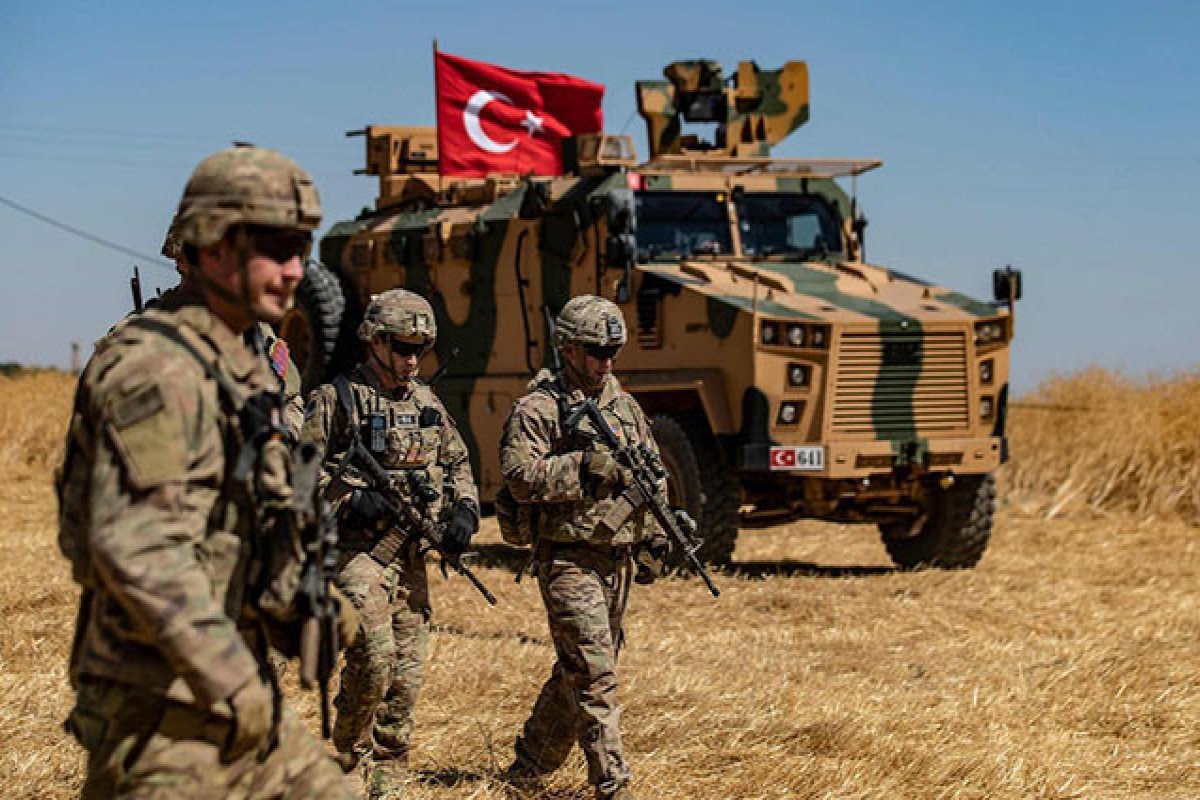
Another important topic is security. Türkiye’s armed forces number about 355,000 active personnel and 380,000 in reserves, making them NATO’s second-largest army, while Kazakhstan, with about 110,000 active personnel and 135,000 reservists, remains the largest military force in Central Asia.
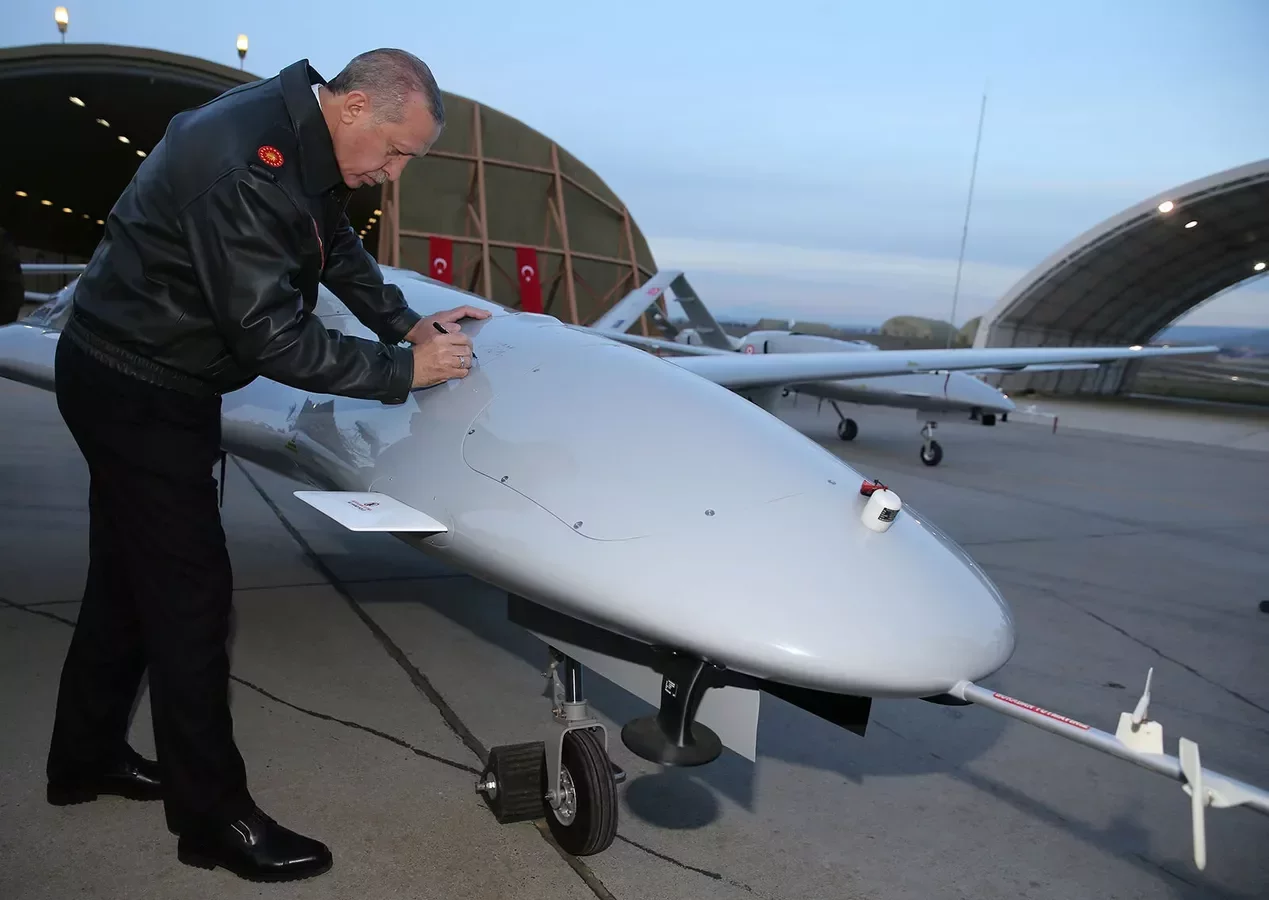
Türkiye is also promoting its defense industry, building Bayraktar TB2 drones, missiles, and the TCG Anadolu amphibious aircraft carrier, while exporting $7.1 billion in arms.
At the same time, Kazakhstan is upgrading Soviet equipment and buying weapons from Türkiye, China, and Russia. Türkiye is actively projecting military power through bases and operations in the Middle East, Africa, and the Balkans, while Kazakhstan is focused on regional security and participating in peacekeeping missions under the auspices of the CSTO and the UN.
Amrebayev emphasizes a separate point.
Although Kazakhstan is a member of the opposite CSTO bloc, it nevertheless possesses, so to speak, the magic of synergy, allowing it to interact with multi-vector systems, political regimes, economies, and civilizational traditions.
Rational decisions are also crucial:
With the support of the Turkish Republic, these are entirely feasible and viable projects. Türkiye knows how to cool hot heads - unlike some of our partners, who today do not behave very responsibly and do not always follow the norms of international law. In such a situation, those who are able to effectively restrain such emotional impulses are especially important to us.
Turkish arms have also proven their practicality:
There are countries that need serious support, including military support. Today, the Turkish army is equipped with modern technologies and equipment. After all, it was the effective use of Turkish drones that played a key role in Azerbaijan's victory in the 44-day war for Nagorno-Karabakh. It is no coincidence that we have signed an agreement with Türkiye in the military-industrial complex, within the framework of which drones are produced - this is an important practical result of cooperation.
Economic factors are another notable point:
Today, many countries, striving to become technological leaders, are actively seeking access to rare earth metals. In this context, Kazakhstan offers real opportunities: we have the necessary resources, and the legislation and public assurances of the president confirm openness to cooperation - including in the field of geological exploration and development of deposits.
All of the above can be reinforced by IT technologies and the use of artificial intelligence:
Türkiye is actively developing this area, and a field for partnership is opening up here - from science and education to joint technological projects. All this logically complements the already mentioned forms of interaction in politics, security and economics, the expert concludes.
Original Author: Kamila Ermakhanova
Latest news
- Kazakhstan Prosecutor Opposes Deportation of 16-Year-Old Russian Teen
- Russian TV Channels Taken Off Air in Kazakhstan
- Mistaken Claim? Kazakhstan Denies $1B Contribution to the Board of Peace
- How many Kazakhstanis remain in the Middle East — MFA
- Kazhydromet Warns of High Flood Risk in Five Regions in 2026
- MP Calls for Prosecutor Review of Kazakhstanis’ Dubai Property
- Kazakhstan Moves to Legalize Private Detective Work
- Kazakhstan to Extend Gas Export Ban for Six More Months
- Majilis MP Calls to Soften Liability for Kazakhstanis Drawn into Foreign Wars for Pay
- The Delivery of 51 Stadler Passenger Coaches Has Been Delayed
- Kazakhstan Returns Nearly 1,000 Citizens From the Middle East
- Damaged Baikonur Launch Pad Facility Restored After 2025 Collapse
- A Rare Black Melanist Wolf Was Shot in Eastern Kazakhstan
- Kazakhstan Maintains Neutral Stance on Middle East Escalation
- Kazakh MFA: Citizens Evacuated from the Middle East via Oman and Saudi Arabia
- Kazakhstan to Spend 4.6 Trillion Tenge on Road Projects Through 2029
- Central Asia Competes for the Skies: Why Kazakhstan Risks Falling Behind Uzbekistan on Jet Fuel
- The War in Iran Opens a Window of Opportunity for Kazakhstan’s Oil Sector, Analysts Say
- Iran Conflict Escalates Beyond the Gulf: What Kazakh Experts Say About Risks for Central Asia and Kazakhstan
- Kazakhstan Prepares Possible Evacuation of Its Citizens From Iran
