

Reuters Claims U.S. Secures Strategic Transit Corridor in Armenia-Azerbaijan Peace Deal, Details Scant
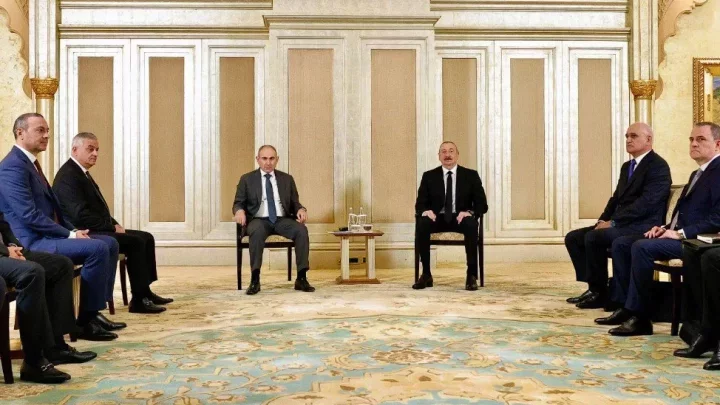 Photo: Armenian MFA Press Service
The United States has brokered a peace framework between Armenia and Azerbaijan, securing exclusive U.S. development rights to a transit corridor through the South Caucasus, Orda.kz reports, citing Reuters.
Claims Made
The agreement — scheduled to be signed at the White House by Armenian Prime Minister Nikol Pashinyan, Azerbaijani President Ilham Aliyev, and U.S. President Donald Trump — names the route the “TRIPP” (Trump Route for International Peace and Prosperity). The corridor will reportedly operate under Armenian law.
Pashinyan and Aliyev last met on July 10 in Abu Dhabi, agreeing to continue bilateral talks and confidence-building measures. Armenia’s Foreign Ministry said the leaders noted progress on border delimitation and instructed their respective commissions to continue practical work.
Managed under Armenian law, the corridor will be operated by a U.S. consortium. Reportedly, Armenia and Azerbaijan will also request the dissolution of the Minsk Group, which has mediated their conflict since 1992.
U.S. officials say the deal could pave the way for Azerbaijan’s entry into the Abraham Accords.
While a transit corridor deal and progress on a peace framework would be significant, the report provides few details on how the corridor deal would work in practice, lacking input from key regional powers, such as Russia, Türkiye, and Iran.
It also overlooks unresolved ethnic tensions and domestic political risks in both Armenia and Azerbaijan.
Prior Developments
Both countries have repeatedly declared readiness to sign a peace treaty, but no deal has yet been finalized. Most reports indicate that the deal set to be signed in D.C. is a commitment to work toward peace.
Baku has demanded an extraterritorial corridor through Armenia to its Nakhchivan exclave, a proposal Yerevan sees as a threat to sovereignty, insisting the road must remain under Armenian control.
Azerbaijan has also demanded that Yerevan amend its constitution to remove territorial claims on Azerbaijan — a step requiring a national referendum. Armenia has made similar demands. With parliamentary elections scheduled for 2026, shifts in Armenia's political landscape in Armenia may complicate talks.
Pashinyan's popularity has been diminishing.
In July, the U.S. offered to place the above route under its supervision. Pashinyan confirmed receiving the proposal, stressing that “any issue is discussed based on the principles of Armenia’s territorial integrity, sovereignty, and jurisdiction.”
Other remarks by Armenian officials were made, highlighting territorial integrity and Armenia's preferred route, "The Crossroads of Peace."
Meanwhile, border fire claims have remained consistent, with the most recent one surfacing on August 4.
Latest news
- Orda.kz Editorial Team to Cease Operations on September 1
- The Price of a Degree: How Students in Kazakhstan Pay for University
- Second Przewalski’s Horse Foal Born as Species Returns to Kazakhstan
- Kazakh Mining Companies Can Recalculate Purchases if Tenge Weakens
- Kazakhstan Names First Vice President in Three Decades
- What Almaty’s Bus Shelters Are Missing
- 400-Truck Queue Builds at Kazakh–Kyrgyz Border
- Kazakhstan Ready to Help Feed and Rebuild Gaza
- Tokayev Establishes New Presidential Security Body
- Almaty Takes Back Its Nearly Century-Old Hippodrome
- No More Guesswork on Savings: Kazakhstan Tightens Energy Audits for Businesses
- Public Money Could Be Used to Rescue Failing Kazakh Banks
- Third Kazakh Woman Reported Missing in Nepal-China Flood Zone
- Falconer Convicted Over 35 Protected Birds, Spared Punishment Under Amnesty
- Kazakh Citizen Detained in Yakutia in Phone Fraud Case
- Yuan Instead of Dollars? KazMunayGas Draws Record Demand in Asia
- China Gains Oil-Market Influence as OPEC+ Weakens
- Kazakhstan to Divide Smartphones Into White, Gray and Black Lists
- Kazakhstan’s Government Formally Resigns as First Kurultai Session Opens
- Rare Lynx Sighting Recorded in Northern Kazakhstan
