

Political Scientist on Three Scenarios for Kazakhstan's Future
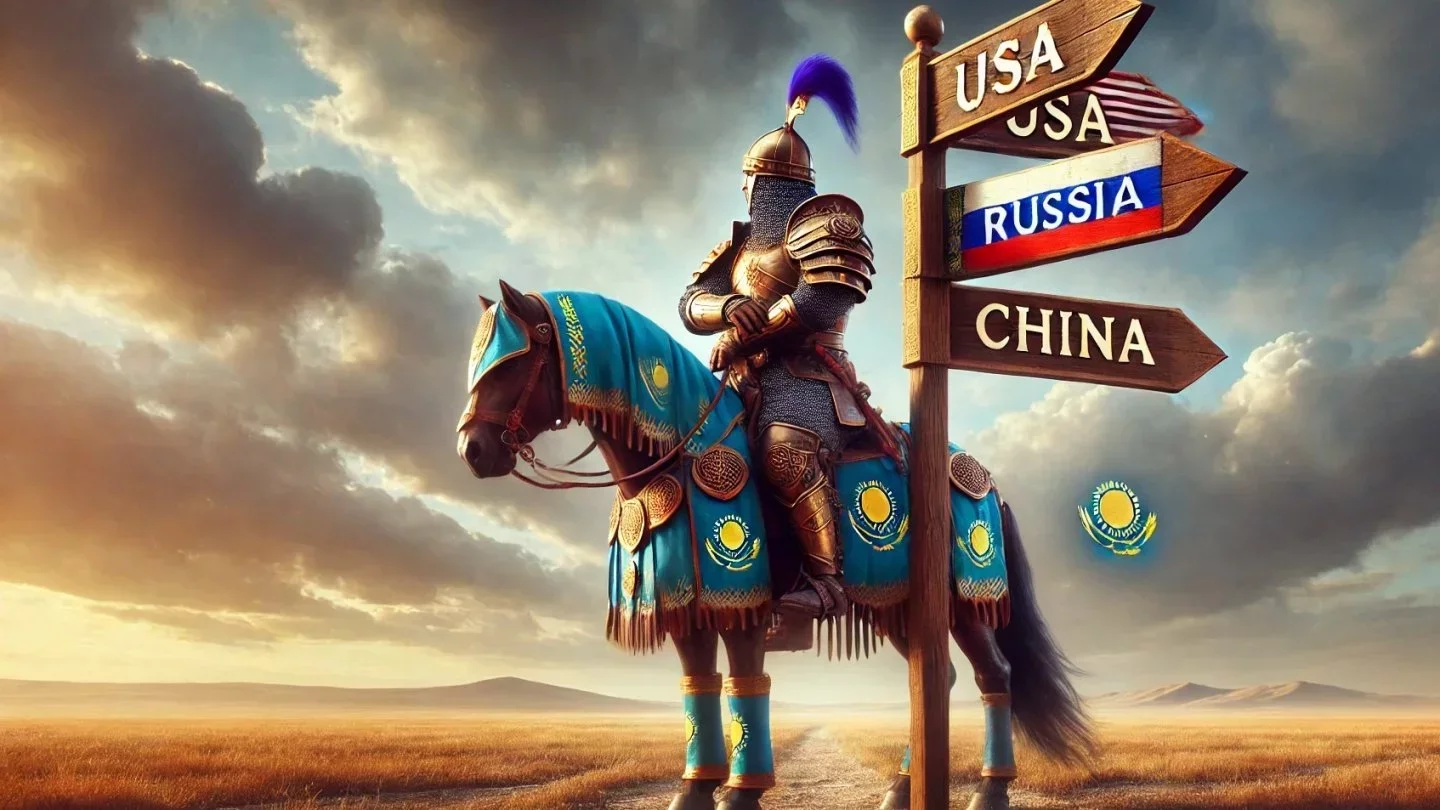 Photo: Dall-E, illustrative purposes
Kazakhstan stands at a crossroads, and its chosen path will shape the country for years to come.
Political scientist Nargis Kassenova, who published an article in early February titled "Surrounded by superpowers, Kazakhstan walks a geopolitical tightrope," discusses this position.
Orda.kz presents an abridged version of her analysis.
In her article for the Atlantic Council, Kassenova highlights how the annual Freedom Index, compiled by the World Population Review, reflects two key trends in Kazakhstan’s development over the past three decades.
On the one hand, the country has improved its ranking, signaling successful integration into the global community. Conversely, it still struggles with governance, democratization, and human rights.
Kazakhstan’s current economic and social issues stem from a long history of political and financial challenges.
The authoritarian rule of Nursultan Nazarbayev in the 1990s, the Asian financial crisis, and protectionist policies in the early 2000s all left their mark.
Rankings vs. Reality
Kassenova examines Kazakhstan’s international rankings, contributing to the overall Freedom Index.
She notes that economic performance is the main factor driving Kazakhstan’s upward movement in the ratings.
However, the situation is more complicated when it comes to political freedoms. Between 1999 and 2019, Kazakhstan’s score dropped by 20 points in areas such as freedom of expression and the right to peaceful assembly. Over the years, the government passed several laws restricting freedom of speech (2003, 2011, 2016), citing the need to improve public safety.
Kassenova notes that changes began after Nazarbayev stepped down in 2019, and the January 2022 events were a turning point.
The first event did not change the balance of power— Nazarbayev, his family and associates remained in control, with Nazarbayev still designated “Leader of the Nation”—but it changed the mood in society. People felt that change was possible, and started demanding reforms. Toqayev and his team perceived and tried to respond to this growing demand. They developed policies around the concept of the “hearing state” and experimented with more open local elections. However, under the Nazarbayev/Toqayev duumvirate, the system—long used to a clear and rigid vertical of power—grew confused and ineffective.
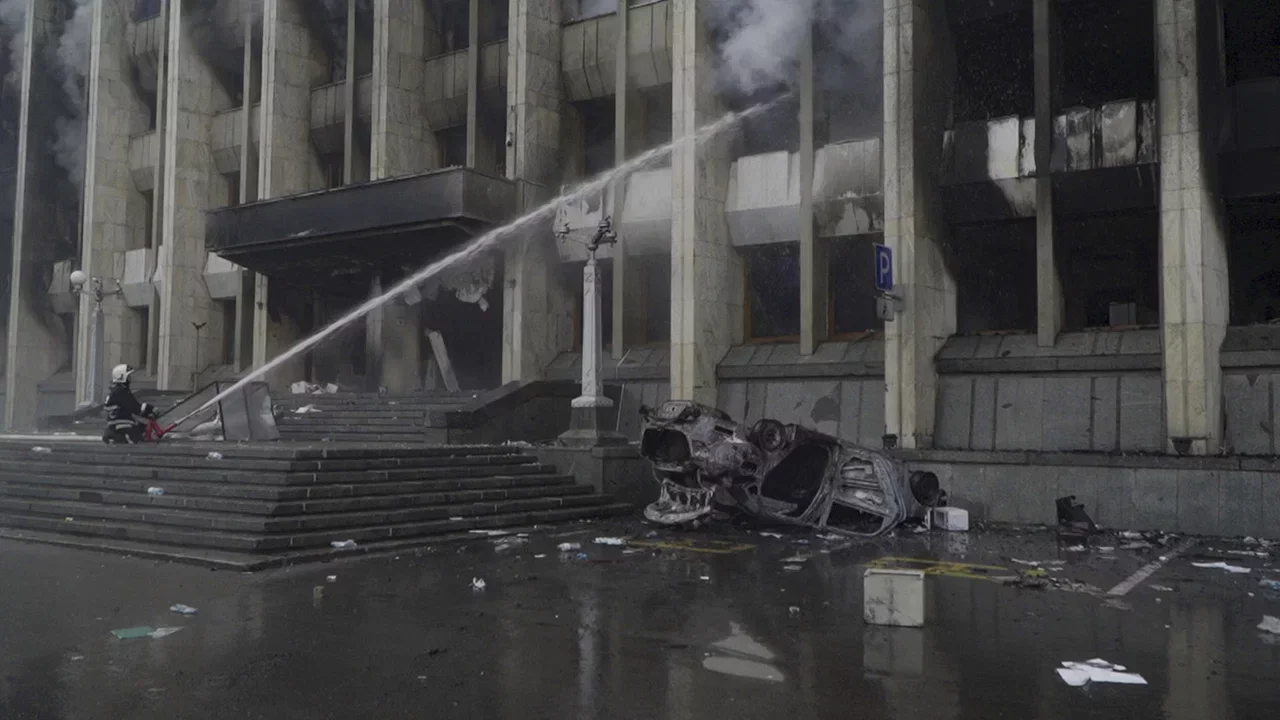
The January 2022 unrest, often called Bloody January, marked a breaking point. Many analysts now see it as an unsuccessful attempt by those once close to Nazarbayev to regain power.
The system ultimately distanced itself from Nazarbayev’s legacy, and Qasym-Jomart Toqayev announced political reforms.
While the official goals of the political reforms he has been undertaking are democratization and liberalization, they seem to be primarily aimed at removing the excesses of the super-presidential political system and improving governance. The geopolitical context is a factor affecting the direction and depth of reforms. On the one hand, deepening relations with the West is even more important under the new circumstances, and therefore Western perceptions of the human rights situation in Kazakhstan matter. On the other, there are fears that political liberalization could destabilize and weaken the country, making it more vulnerable to external meddling. Nargis Kassenova
One of Kazakhstan's long-standing problems is systemic corruption.
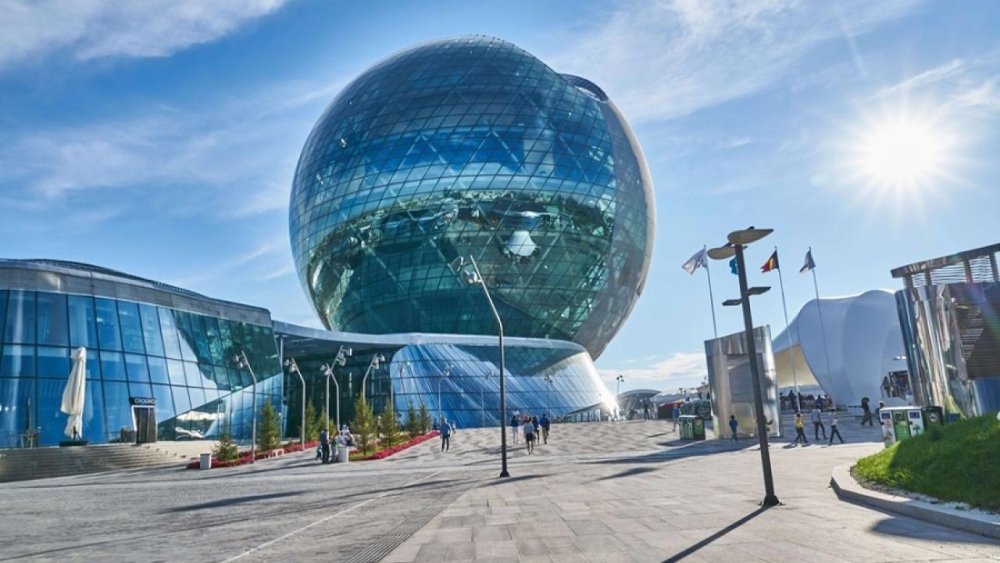
The country's position is worsening in judicial independence and effectiveness. This negatively impacts Kazakhstan's appeal to foreign investors, which is why Astana established the AIFC with its arbitration center.
This only emphasizes the lack of judicial rights for ordinary Kazakhstanis.
The expert points out that President Toqayev is pushing for judicial reform and tackling corruption in the legal system.
Still, the results of these efforts will only become apparent in the next five years.
Kazakhstan is climbing the ranks of prosperity, and it’s not hard to see why, given its abundant natural resources.
However, the country still faces significant inequality. This highlights the fact that economic growth doesn’t always equate to a decrease in poverty. There's a substantial income contrast between urban and rural areas, as well as between different regions:
The two largest cities, Almaty and Astana, are better off, while the oil-producing regions of western Kazakhstan have both high income and high poverty rates and the agricultural and largely rural south ranks poorly on both counts. Nargis Kassenova
When assessing international rankings, it is also essential to consider “how they count.”
Regarding education, Kazakhstan formally demonstrates some of the best indicators in the world.
The widespread access to preschool and school education contributes to this.
These high rankings do not accurately reflect the true quality of education. Standardized tests show Kazakhstani students are considerably behind their European peers.
Kazakhstan’s Dilemma: West, Russia, or China?
Kazakhstan faces a geopolitical balancing act. According to Kassenova, the country is at a turning point:
The January 2022 events put a sudden end to the Nazarbayev era, and Russia’s full-scale invasion of Ukraine undermined the post-Soviet political and security order. The combined domestic and geopolitical shocks are causing concerns, fears, and anxieties about the present and the future. At the same time, they are creating space for change and new beginnings. Nargis believes.
Toqayev’s reforms aim to liberalize the system, and as a result, the country can expect to improve its standing in the political freedom index.
Religious freedoms are unlikely to change significantly, as Kazakhstan is cautious about radical Islamism.
There is still potential for progress in terms of legal freedoms and overall prosperity. For these improvements to materialize, the government must show its commitment to continuing these reforms, and society must express a genuine desire to support them.
There will be more clarity about the trajectory of Kazakhstan’s development by 2029, the year when president Toqayev’s single term comes to an end. It is important to keep in mind that there are anti-liberal as well as pro-liberal forces in Kazakhstan’s society. Growing social conservatism that accompanies Islamic revival could become a formidable challenge over the next ten years.Nargis Kassenova
On the geopolitical stage, Kazakhstan’s push for liberalization should be backed by the West, as it serves both sides' interests.
Stronger ties with the U.S. and EU can help Kazakhstan maintain its independence and avoid falling entirely under Russian or Chinese influence.
These relationships must be managed carefully to avoid provoking Moscow or Beijing. At the same time, the U.S. and EU must recognize that the dynamics have shifted since the 1990s — engaging with Kazakhstan now requires new, more effective strategies.
Kassenova outlines three potential scenarios for Kazakhstan’s future. The first is optimistic. Kassenova calls it “More freedom and prosperity.”
Under this scenario, President Toqayev and his team are able to successfully implement some reforms, giving them more legitimacy, and Kazakhstani society keeps pushing for more liberalization. Toqayev ends his term in 2029, as defined by the Constitutional amendment, and there is a peaceful power transfer. Relations with the West are strong, Russia accepts the new situation, and China finds it useful for managing relations with Europe. Kazakhstan is not a liberal democracy, but it is on a promising path, gradually internalizing liberal values and norms.
The second scenario, which the expert calls "Prosperity at the expense of freedom," envisions limited reforms focused primarily on improving governance and achieving socio-economic goals.
Greater state control over society is the main driver in this scenario, including modern surveillance systems, while disregarding Western criticism.
In this scenario, Kazakhstan evolves into an authoritarian state and, both politically and economically, aligns closely with China as a satellite nation.
The third is the worst-case scenario. It is conventionally called "No freedom and no prosperity."
The third scenario, “No freedom and no prosperity,” is a sad story of Kazakhstan imploding from internal tensions and/or destabilized from outside. The January 2022 events provided a glimpse of such destabilization. Transformation of a consolidated, personalized and corrupt authoritarian regime into a softer and better governed one is a way to prevent conflicts and improve the development trajectory of the country, but as with all modernizations, it can be unsettling and pregnant with risks. Russia, unhappy with Kazakhstan “drifting away,” decides to “bring it to heel” using hybrid war methods.
The path Kazakhstan takes will ultimately be decided by its government and people.
Their ability to reach a consensus on the country's future will shape how the republic enters the 2030s — whether as a strong, independent player on the global stage, a vassal state of China, or a battleground for competing superpowers.
Nargis Kassenova is a senior fellow at the Davis Center for Russian and Eurasian Studies, Harvard University and a member of the expert council at Human Rights Watch for Europe and Central Asia.
Original Author: Nikita Drobny
Latest news
- Seven-Year-Old Kazakh Girl Returned From Georgia Following Six Months of Diplomatic Efforts
- Kazakhstan Plans to Rent 11 Helicopters for 22 Billion Tenge Ahead of the Fire Season
- Flights Delayed and Canceled at Astana Airport Due to Bad Weather
- More Than 8,500 Kazakhstanis Evacuated From the Middle East
- Kazakh Experts Explain Why AI Is Becoming the Main Weapon of Modern Warfare
- Kazakhstan Dismisses Reports of “Acid Clouds From Iran” Heading Toward Central Asia
- Kazakhstan Continues Middle East Evacuation, More Than 7,300 Brought Home
- Kazakhstan Recommended for U.S. Watch List as Vorontsov Case Draws New Attention
- Putin Bans Extradition of Foreign Nationals Who Served in the Russian Army
- Kazakh Researcher Reportedly Jailed in Xinjiang for “Misinterpreting” Abay
- Almaty Residents Warned of Elevated Air Pollution
- Over 6,000 Kazakhstanis Return Home From the Middle East
- The National Bank Invests $350 Million in Crypto-Related Assets
- Tokayev Congratulates Kazakhstani Women on International Women’s Day
- Building a House in Kazakhstan Has Become Cheaper
- Kazakhstan May Allow Crypto Payments for Goods and Services
- Kazakhstan Tightens Penalties for Violence Against Medical Workers
- Kazakhstan Urges Citizens Not to Travel to Middle East Amid Escalating Conflict
- Kazakhstan Joins the Opening of the Milano Cortina 2026 Paralympic Winter Games
- Statistics Show Where the Most Women Live and Work in Kazakhstan
