

Political Scientist Abishev Explains Toqayev’s Parliament Proposal
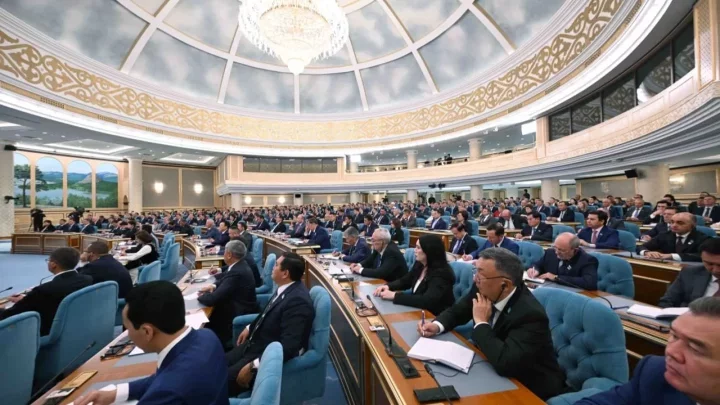 Photo: Aqorda
In his Address to a joint session of parliament on September 8, President Qasym-Jomart Toqayev announced a new political reform: the abolition of the Senate and the transition to a unicameral parliament, Orda.kz reports.
Toqayev said the reform should be implemented within a year. A national referendum on the issue is scheduled for 2027, as constitutional amendments will be required.
Elections to the new unicameral parliament are planned to take place under a strictly proportional system.
During the calendar year, they will hold a discussion of the constitutional reform to create a unicameral parliament. How many deputies should there be? What powers will it have? What is the threshold for passing under the proportional system? Are demographic and other quotas needed? In a year, in the Address, the head of state will announce the end of the discussion, describe the final parameters. Then or a little later, he will announce the date of the republican referendum,explained political scientist Gaziz Abishev.
If voters approve the amendments in 2027, the current Senate and Majilis will be dissolved, and early elections will be held.
The reform is expected to strengthen parliamentarism, unify the functions of both chambers, and increase the role of political parties.
The new unicameral parliament may turn out to be quite powerful in terms of powers. After all, the Majilis currently approves the prime minister and agrees on the composition of the government. And the Senate approves the heads of bodies directly subordinate to the president, such as the National Security Committee and the Prosecutor General's Office. It approves judges of the Supreme Court. Both chambers appoint members of the Constitutional Court. In the event of a merger, all these decisions will be made by a single chamber. That is, a party majority in a single chamber of parliament. And given that elections will be held only under a proportional system, key decisions will remain with the party leadership, which controls the mandate of a party deputy, said Abishev.
As a result, party leaders will gain significant influence. If one party secures a majority, its chair will hold considerable power; if no party wins outright, coalitions will become crucial.
The stronger this parliamentary majority is — relative, absolute or constitutional — the stronger the position of the party leader. If a party takes more than two-thirds of the mandates, and its chair becomes parliamentary speaker, he will play one of the decisive roles in the entire state,Abishev added.
The proposed reform continues Toqayev’s course of shifting Kazakhstan from a super-presidential system toward a presidential republic with a stronger parliament, building on earlier constitutional changes.
Original Author: Nikita Drobny
Latest news
- Orda.kz Editorial Team to Cease Operations on September 1
- The Price of a Degree: How Students in Kazakhstan Pay for University
- Second Przewalski’s Horse Foal Born as Species Returns to Kazakhstan
- Kazakh Mining Companies Can Recalculate Purchases if Tenge Weakens
- Kazakhstan Names First Vice President in Three Decades
- What Almaty’s Bus Shelters Are Missing
- 400-Truck Queue Builds at Kazakh–Kyrgyz Border
- Kazakhstan Ready to Help Feed and Rebuild Gaza
- Tokayev Establishes New Presidential Security Body
- Almaty Takes Back Its Nearly Century-Old Hippodrome
- No More Guesswork on Savings: Kazakhstan Tightens Energy Audits for Businesses
- Public Money Could Be Used to Rescue Failing Kazakh Banks
- Third Kazakh Woman Reported Missing in Nepal-China Flood Zone
- Falconer Convicted Over 35 Protected Birds, Spared Punishment Under Amnesty
- Kazakh Citizen Detained in Yakutia in Phone Fraud Case
- Yuan Instead of Dollars? KazMunayGas Draws Record Demand in Asia
- China Gains Oil-Market Influence as OPEC+ Weakens
- Kazakhstan to Divide Smartphones Into White, Gray and Black Lists
- Kazakhstan’s Government Formally Resigns as First Kurultai Session Opens
- Rare Lynx Sighting Recorded in Northern Kazakhstan
