

Mammoth Bones Discovered in Aqmola Region
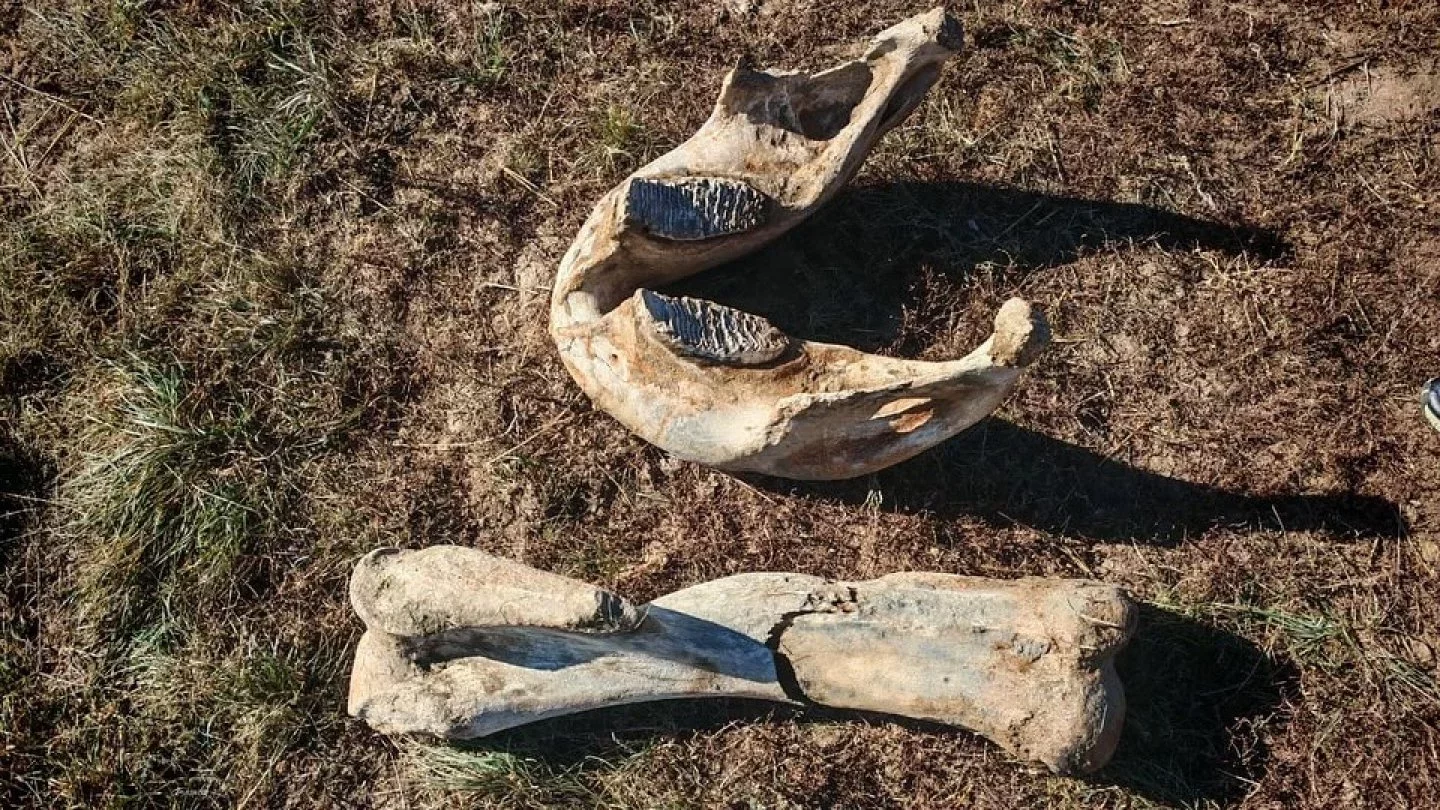 Photo: National Museum of Kazakhstan / Facebook
A remarkable paleontological discovery has been made in Kazakhstan’s Aqmola Region — part of a woolly mammoth skeleton dating back tens of thousands of years, Orda.kz reports.
The National Museum of the Republic of Kazakhstan announced the find on its official Facebook page. The bones were accidentally uncovered near the village of Novobratskoye by agricultural workers Adilet Omarov and Alzhan Rakishev, who promptly notified scientists.
The lower jaw and one of the massive leg bones are now being preserved in the museum’s scientific laboratory under controlled temperature and humidity conditions.
Preliminary analysis indicates that the remains belong to an adult mammoth aged around 40–50 years, which lived between 40,000 and 15,000 years ago. Researchers believe that a full skeleton might still be buried nearby, the museum’s press service said.
They added that large-scale excavations are planned for the next archaeological season.
Should scientists succeed in unearthing an entire mammoth skeleton, it would represent a significant milestone in the study of Ice Age fauna.
Mammoths — ancient relatives of modern elephants — roamed the Earth during the Pleistocene epoch. They first appeared roughly 700,000 years ago and became extinct about 10,000 years ago. These colossal creatures could weigh between five and eight tons and typically replaced their enormous molars up to six times throughout their lifetime.
Kazakhstan has seen similar discoveries in recent years, with mammoth remains previously unearthed in the Qaraganda, Pavlodar, North Kazakhstan, and East Kazakhstan regions. Just last week, part of a fossilized skeleton believed to belong to an unidentified dinosaur was found in the Qyzylorda region.
Original Author: Nikita Drobny
Latest news
- Kazakhstan Suspended 11 Polling Stations Abroad Due to Middle East Escalation
- Kazakhstan’s Foreign Ministry Comments on Disappearance of Citizen After South Korea Factory Fire
- ChatGPT Among AI Tools Recommended for School Lessons in Kazakhstan
- Missing Kazakh Woman Found in Vietnam Four Days Later
- Seven-Year-Old Kazakh Girl Returned From Georgia Following Six Months of Diplomatic Efforts
- Kazakhstan Plans to Rent 11 Helicopters for 22 Billion Tenge Ahead of the Fire Season
- Flights Delayed and Canceled at Astana Airport Due to Bad Weather
- More Than 8,500 Kazakhstanis Evacuated From the Middle East
- Kazakh Experts Explain Why AI Is Becoming the Main Weapon of Modern Warfare
- Kazakhstan Dismisses Reports of “Acid Clouds From Iran” Heading Toward Central Asia
- Kazakhstan Continues Middle East Evacuation, More Than 7,300 Brought Home
- Kazakhstan Recommended for U.S. Watch List as Vorontsov Case Draws New Attention
- Putin Bans Extradition of Foreign Nationals Who Served in the Russian Army
- Kazakh Researcher Reportedly Jailed in Xinjiang for “Misinterpreting” Abay
- Almaty Residents Warned of Elevated Air Pollution
- Over 6,000 Kazakhstanis Return Home From the Middle East
- The National Bank Invests $350 Million in Crypto-Related Assets
- Tokayev Congratulates Kazakhstani Women on International Women’s Day
- Building a House in Kazakhstan Has Become Cheaper
- Kazakhstan May Allow Crypto Payments for Goods and Services
