

Iran Conflict Escalates Beyond the Gulf: What Kazakh Experts Say About Risks for Central Asia and Kazakhstan
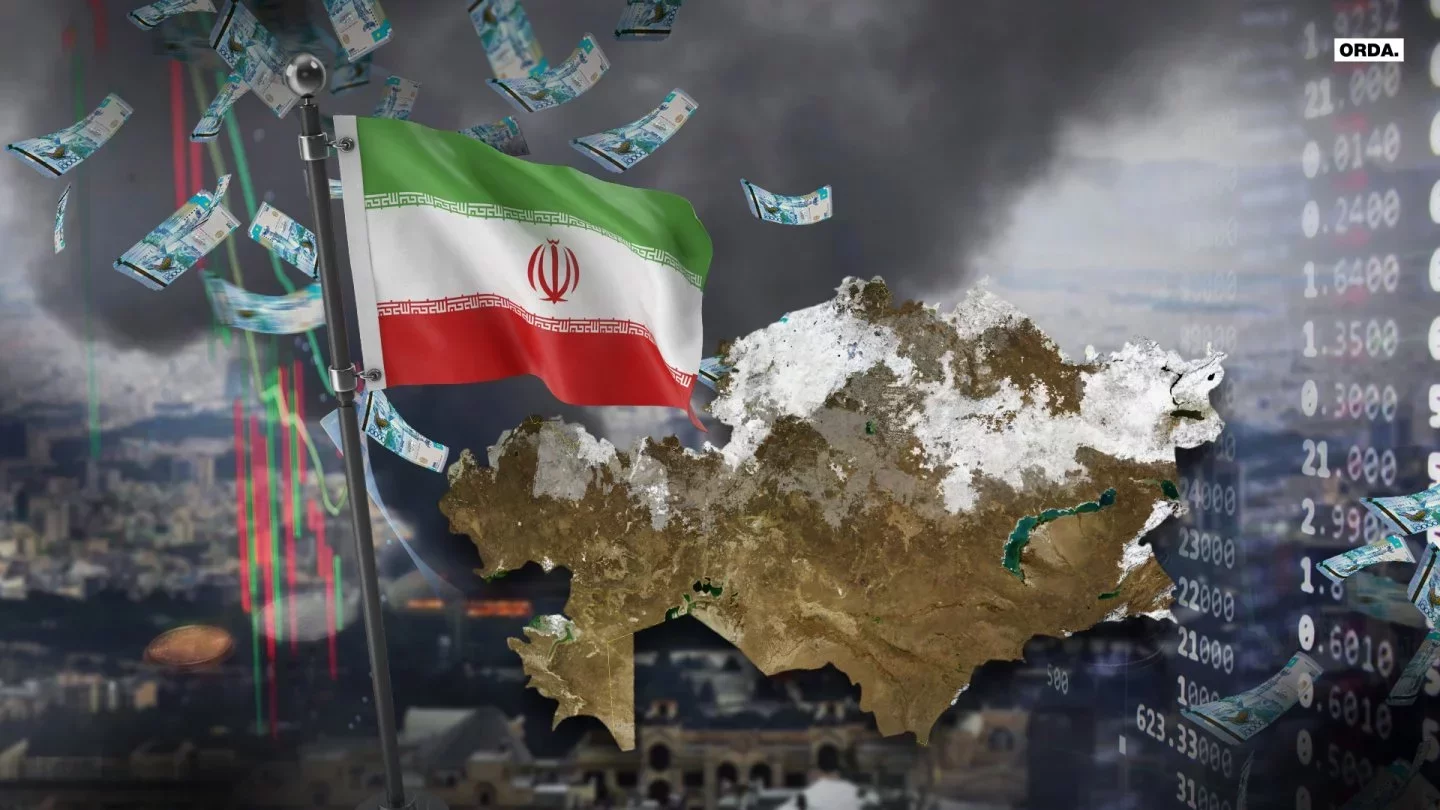 Photo: Orda.kz
The escalation of the conflict between Iran, the United States and Israel is already going beyond the Persian Gulf, which is alarming in neighboring regions. For the countries of Central Asia and Kazakhstan, this is not just news: instability can affect energy markets, trade routes, migration and security, and also increase pressure on the foreign policy of regional states. Orda.kz has collected the opinions of Kazakhstani political scientists who assess possible scenarios and their consequences for us.
How the escalation began
On the morning of February 28, Israel and the United States launched a joint military operation against Iran, striking multiple targets. Israel said it hit more than 30 sites, including missile systems, air defence assets and other military infrastructure in western and central Iran. Bushehr, where Iran’s nuclear power plant is located, also came under attack.
Iranian state media reported that Supreme Leader Ayatollah Ali Khamenei was killed. A 40-day mourning period was declared, and Iranian officials said Khamenei’s residence had been destroyed. Iran also reported the deaths of the secretary of the Defence Council, Admiral Ali Shahmani, and IRGC commander Mohammad Pakpur.
The Guardian reported that Israel and the United States framed the operation as a pre-emptive move meant to anticipate threats they associate with Iran’s missile program and its potential to create nuclear weapons. The United States officially confirmed its military participation, including the use of naval assets, aircraft and Tomahawk missiles.
Israel called its strike a pre-emptive attack, and the United States officially confirmed the participation of its military. America used its fleet, aviation and Tomahawk missiles.
Iran immediately reacted to the attack. According to The Guardian, Tehran launched a series of ballistic missiles and drones at objects associated with U.S. and Israeli military positions, including military bases in the Persian Gulf countries. An oil tanker in the Strait of Hormuz was attacked. Iranian officials said the response would be tough and aimed at protecting national sovereignty.
Al Jazeera notes that this campaign caused alarm in the region: the airspace of several countries was closed, and air defense systems were activated. Many international airlines suspended flights over the Middle East due to the risks of collisions and missile attacks.
Positions of the parties to the conflict
The operation, according to Washington, is aimed at destroying Iran’s missile and naval infrastructure and other threatening forces.
Some time ago, the U.S. Armed Forces launched a major combat operation in Iran. Our goal is to protect the American people by eliminating the threats from the Iranian regime. U.S. President Donald Trump said.
Israel emphasizes that this operation, in cooperation with the United States, is part of efforts to repel the threat from Iran’s military program.
Our joint operation will create conditions for the brave Iranian people to be able to take their fate into their own hands.Israeli Prime Minister Benjamin Netanyahu emphasized.
Tehran declared a "crushing response" and called the attacks a violation of international law.
All American and Israeli facilities and interests in the Middle East have become a legitimate target. After this aggression, there are no more red lines. the Iranian representative noted.
Iran’s Supreme National Security Council also told «RIA Novosti» that it was taking crushing retaliatory measures in response to the strikes by the United States and Israel.
According to Trump, the attacks will continue for the next week or longer until the goals are achieved. At the same time, he refused to answer the question of whether he considered what was happening a war.
Thus, the conflict is in an active phase, and the situation in the Middle East remains extremely alarming. The Security Council and the UN are holding emergency meetings due to ongoing strikes and growing tension.
“The operation was not a shock”
Political scientist Talgat Kaliyev notes that the operation was expected:
Apparently, all these negotiations in Geneva and so on were more of a camouflage trick in the style of Donald Trump — to distract attention from the preparation and make the blow extremely unexpected. The first blow was struck by Israel, and the United States joined as an ally. This is logical, because the American authorities have no formal grounds to start hostilities against Iran.
In response, Iran launched missile strikes on Israel and the Persian Gulf countries — Qatar, Saudi Arabia and the UAE.
While Israel can intercept missiles while still on the way to its territory, the Arab countries are located closer to Iran, and missile debris falls on their territory, people die. This may force the Persian Gulf countries, which previously officially refused to provide their territory for the flight of American bombers and missiles, to change their position and support the military campaign against Tehran.Kaliyev suggested.
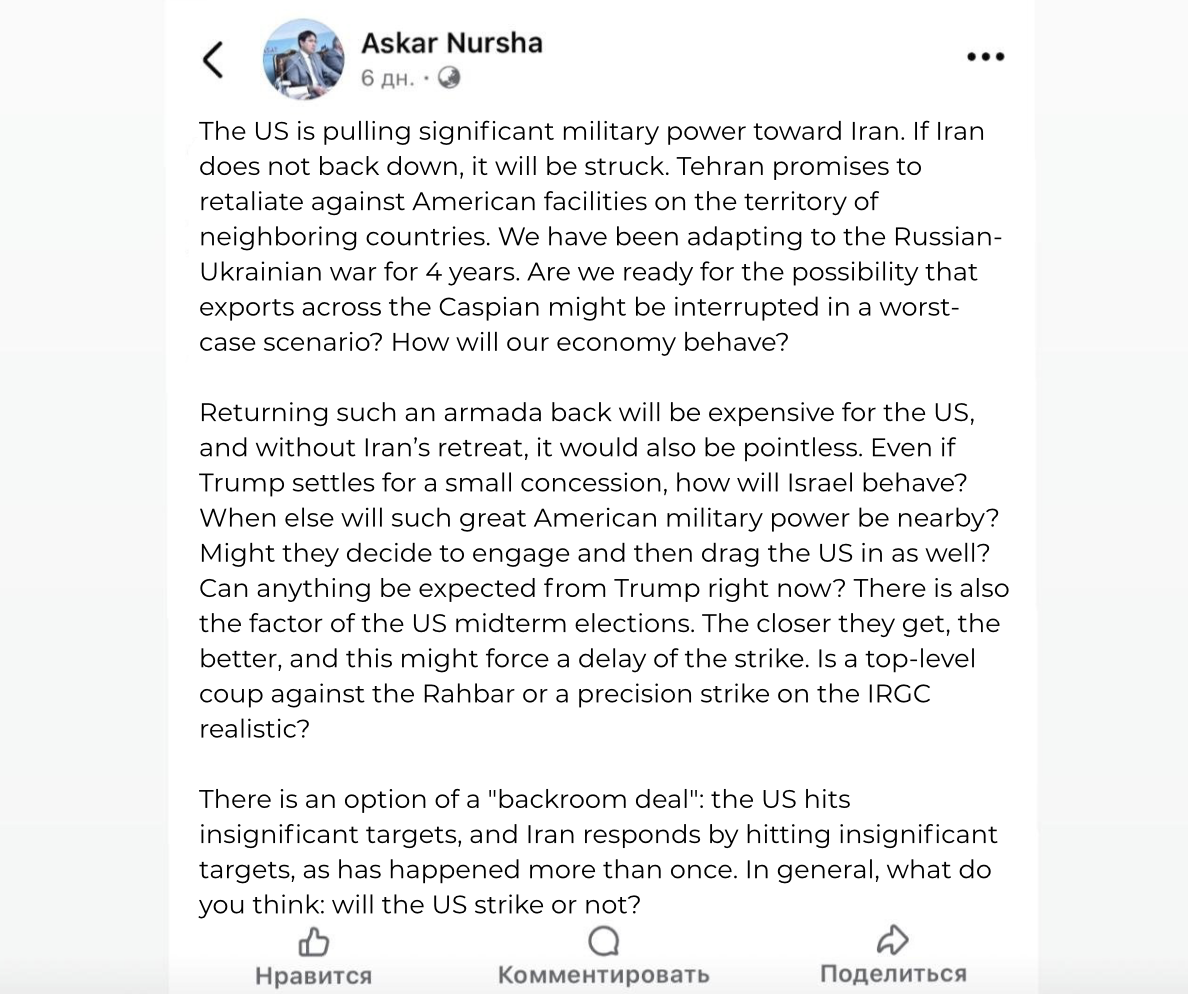
Political analyst Askar Nursha also speaks about the inevitability of escalation. Moreover, he predicted a strike on Iran on his Facebook page five days before the events.
The United States is pulling a lot of military power to Iran. If Iran does not retreat, it will be hit. Tehran promises to respond to American facilities in nearby countries. We have been adapting to the Russian-Ukrainian war for four years. Are we ready for the fact that exports through China may be interrupted in the worst-case scenario? How will our economy behave?the expert wondered.
Nursha also foresaw the role of Israel:
How will Israel behave when there is still such great American power nearby? Won’t it decide to get involved and involve the United States? Now you can expect anything from Trump
In an interview with Orda.kz, he noted that the military escalation was only a matter of time. In his opinion, the interests of the three main participants — the United States, Israel and the monarchies of the Middle East — coincided here. For Israel, Iran’s nuclear program remains a key factor.
Benjamin Netanyahu has been Prime Minister for the sixth time. And all this time, since Clinton’s presidency, he has been asking the United States about striking Iran. The fact is that the appearance of nuclear weapons in Iran was predictable — Israel did not want to miss the moment to destroy the nuclear infrastructure. For Israel, Iran and theocracy in Iran are the main threat to national security. But it is clear that Israel could not do it alone; it needed the support of the United States.the expert thinks.
As for the Arab monarchies of the Persian Gulf, Iran is the main geopolitical rival in the region.
Over the past 30 years, there has been an active confrontation through proxy forces: Iran has supported pro-Iranian Shiite groups in the Middle East, and Arab monarchies supported their own. What is happening in Yemen, Syria and Iraq is a reflection of the confrontation between Arab monarchies and Iran. Now the Arab monarchies have taken an outwardly passive position and even persuaded the United States not to strike, fearing retaliation.
Nevertheless, according to the expert, on the basis of anti-Iranian sentiments, there has been a rapprochement between Israel and Arab monarchies in the last 20 years.
During the first presidency of Donald Trump, there was even an idea of creating a Middle Eastern or Arab NATO, and several contracts were concluded with the United States for the purchase of weapons. Even then, experts talked about rapprochement on anti-Iranian soil.Nursha added.
Finally, the role of the United States, in his opinion, was decisive.
Democrats tried to appease Iran through a nuclear deal during the time of Barack Obama. Iran’s sanctions were lifted in exchange for promises not to develop nuclear weapons, and not to bring uranium enrichment to a certain level. But the United States and Israel already expressed concern that the nuclear deal would not stop Iran. As soon as Trump came to power, he immediately refused it. But now the ‘stars have come together’: the head of the Israeli government, Netanyahu, finally gets a partner and ally as President of the United States, driven by the idea of limiting Iran. Everything came together to cut the Gordian knot and solve problems that have not been solved for decades.
The analyst reminded that Donald Trump recognized Jerusalem as the capital of Israel almost immediately after coming to power.
Before him, no American president had decided to take such a step. It was an important signal.
With Trump’s support, the Syrian issue gradually began to be resolved.
Everything went from one to another. First, Iranian proxies in the region were weakened and effectively eliminated. The crisis around the Gaza Strip, which eventually seriously weakened Hamas, played a significant role. the analyst emphasizes.
Regime change in Syria has significantly hampered the supply of Iranian weapons to other countries in the Middle East.
The assassination of Hezbollah leader Hassan Nasrullah actually brought this organization out of the active game, although it enjoyed the support of Iran. As a result, Iran was left alone with this coalition, and a strike on it was only a matter of time. Nursha says.
“A new round of the old conflict”
Political scientist Dosym Satpayev considers the new round of confrontation "USA, Israel — Iran" as the second phase of clashes that began back in 2025, when American forces struck three nuclear reactors in Iran.
Moreover, in June last year, the head of the Islamic Revolutionary Guard Corps Hossein Salami was killed as a result of an Israeli airstrike on Tehran. And it was a rehearsal of the current point strike on Ayatollah Ali Khamenei, which led to his death. At the same time, Israel and Saudi Arabia play the first violin in these attacks. They convinced the United States that there is now a window of opportunity to change the regime in Iran or greatly weaken it. These two states were most concerned about the Iranian nuclear program. Although Tehran’s decision to stop its nuclear development and make a deal would be enough for Trump.Satpayev believes.

The political scientist points out that last year’s actions of the United States and Israel to check the vulnerabilities of Iranian air defense and missile potential showed that Iran will not be able to fully protect its airspace.
The choice of the moment for the strike is dictated by the weakening of the country by both internal and external factors.Satpayev adds.
“Iran was in an economic trap”
Since 1979, the country has spent hundreds of millions of dollars to support its proxies in the region and on a nuclear program.
That is, under the conditions of sanctions, even the income that Iran received from the sale of oil was mainly used for geopolitical purposes, rather than for improving the welfare of its residents. And literally over the past year, all these long-term colossal spending has gone down the drain — after the country lost its loyal ally in Syria, Bashar al-Assad. And also after the Lebanese Hezbollah, as a result of Israeli strikes, lost most of the top leadership and seriously weakened. In addition, as a result of the 12-day war with Israel last summer, serious damage was caused not only to Iran’s nuclear infrastructure and other industrial facilities, but the Iranian military power was also severely undermined. the expert noted.
The fall in world oil prices has intensified the economic crisis. The choice in favor of ambitions caused a new wave of mass rallies in January 2026.
According to Satpayev, these were already the fifth mass protests since 2009. And although three of them began for economic reasons, the real reason for dissatisfaction is the growing separation of the ruling circles from the people, the growth of corruption and the decline in confidence in the authorities.
Meanwhile, as world experience shows, the collapse of different political regimes rarely occurs only as a result of a protest from below. Most often this is accompanied by a conflict within the elite, a coup by the security forces or betrayal, as was the case with the capture of Maduro in Venezuela. Satpayev says.
What interests are behind the attack on Iran?
According to Talgat Kaliyev, the maximum task is to change the political system in the Islamic Republic of Iran. It poses a clear threat and, in general, is a long-standing destabilizing factor, as it funds various proxy groups such as Hamas and Hezbollah.
Therefore, the United States and Israel are primarily interested in overthrowing the ayatollah regime and changing the domestic political situation in the country, restoring a secular democratic regime. the political scientist thinks.
It is not clear whether it will work, he says. After all, there is no opposition in Iran: there is not a single political force that would have its own political program and could, having come to power, consistently implement it. Hereditary Shah Reza Pahlavi published his program for the transfer of power in case of regime change and promises a consistent transition to democracy. But whether he will be able to come to power is a big question.

Kaliyev recalled Trump’s call to the protesters. They say that when "we finish everything", you can take control of the government, and this will be your chance for many generations. Thus, Iran’s missile program and capabilities to create nuclear weapons, and stopping oil supplies to China, in his opinion, are rather accompanying tasks — at least for Israel.
The oil motif would not be relevant for Israel. It would not arrange a whole regional war in order to stop oil supplies to China. One of the main goals for Iran is to destroy the State of Israel. And it sounds, you will agree, not quite friendly.the political scientist noted.
Speaking about the interests of the United States, Askar Nursha emphasizes that the combined strike on Venezuela and Iran works to weaken the two main rivals in the global arena — Russia and China. And with this multi-move, Donald Trump comes closer to them.
Thus, the United States gets the opportunity to strengthen its influence in the world energy sector, control energy flows and thus put pressure on China. After all, a significant share of Iranian oil is sold to China. the analyst argues.
Forecast
According to Askar Nursha, two possible scenarios in Iran would correspond to the interests of the United States.
The first is controlled changes from above, by analogy with Venezuela. Khamenei is removed, and the rest of the leadership goes to a deal with the United States. Khamenei was considered incapable of making a deal, so the calculation may be that his successors will be more flexible and negotiate, the analyst notes.
In this variant, the participation of the population will be minimal — the so-called elite deal. Dosym Satpayev also talks about betting on loyal forces.
But here another question arises: who will represent these loyal forces? The example with Iraq, Libya or Afghanistan showed that such a model does not work for a long time, he noted.
The second scenario, according to Askar Nursha, is a velvet revolution. Gradual transformation of the country from the power of the mullahs and theocracy to a more republican model. He reminds that Iran combines elements of the theocratic structure — the power of the clergy, the Council of Experts — and republican institutions in the form of a president and parliament.
The United States would be interested in reducing the influence of mullahs, he adds.
At the same time, the analyst again recalled Donald Trump’s appeal to the Iranians to take power in their country after the end of the operation. In his opinion, this is due to the fact that Washington is aware of the risks of a ground operation.
A ground operation on the territory of Iran without huge losses is not feasible for the United States. The maximum that Israel and the United States can do is local special operations, targeted strikes on objects or specific individuals. There can be no question of a major military campaign, the expert thinks.
This is also said by Dosym Satpayev. You can’t achieve this with missile and air strikes alone — you need a full-fledged ground operation.
But it is not yet clear whether Donald Trump is ready for this. He himself once criticized the Democrats for the large number of casualties among the American military in Iraq or Afghanistan. On the other hand, there will be midterm elections in the United States this year, and Trump does not need such sacrifices, as they will hit the Republicans’ rating and him personally.
Askar Nursha drew a parallel with the conflict between Russia and Ukraine, where even with a population of about 35–40 million people, offensive actions face great difficulties.
Now imagine Iran with its almost 90 million population, and ideologically charged. It may not be about hundreds of thousands mobilized, but about millions. Is the United States ready for thousands of combat losses? I think not, says the analyst.
Therefore, according to his assessment, the focus is on a remote format of the war — missile strikes from fighters and aircraft carriers without large-scale deployment of troops. But this approach does not guarantee a change of power.
For Moscow, Iran remains not just a regional player, but a strategic partner in the confrontation with the West and American hegemony.
With a lack of resources, Russia at a certain stage actively bought Iranian ‘shaheds’ for the war in Ukraine. This situation can also affect the Russian-Ukrainian conflict itself, Askar Nursha believes.
In his opinion, if Iran is weakened, Washington can use it.
If Iran is disconnected or actually surrenders, the Americans may well set a condition to stop this support for Russia
At the same time, the Kremlin is facing serious issues now.
I think Moscow has thought hard about whether it is ready to continue to provide Iran with more than political support — and how this will affect Russian-American relations, including relations between Putin and Trump
Nursha suggests that now, most likely, there are active consultations between Moscow and Beijing, because it affects the interests of both parties.
And it’s very fortunate, convenient for the United States: the Taliban got bogged down in a conflict with Pakistan. We remember that just about a week ago the Taliban declared their full support for Iran and their readiness to oppose the United States together with Iran. And now their forces are switched to the conflict with Pakistan
Forecast for Central Asia and Kazakhstan
According to Askar Nursha, the main impact of the conflict on the countries of Central Asia will be economic. Further escalation may affect supply chains and the transport corridor from Central Asia to the South Caucasus and beyond.
But it’s not in our interest to prolong the conflict. Because at its second stage, Iran may remember that there are American economic, oil facilities — in the same Kazakhstan. Again, the point: Iran will count on support from Russia — food and others, on Lend-Lease, the analyst noted, referring to the military aid program under which a state transfers weapons, equipment and materials to allies for a time, with subsequent return or payment.
In this case, the expert warns, there are risks that the Caspian Sea will become a target of missile strikes by American and Israeli aircraft.
What does it mean for us? Do you remember when the supply chains were interrupted from the beginning of the Ukrainian conflict, and we were rebuilding for a long time? Here we are threatened that the alternative in the form of trans-Caspian exports, the middle corridor, our oil to Baku, to Makhachkala, these ports — all our investments can be put on pause for a while
In this situation, in his opinion, Kazakhstan will be in a more vulnerable position.
In these conditions, our dependence on exports through the Russian and Chinese territories will increase. If we take into account the situation in Eurasia as a whole, Russia’s conflicts, then in fact this will mean strengthening China’s position in the region, Nursha summed up.
The expert calls the oil market the second factor. There are forecasts that oil prices may soar. He reminded that the countries of the region actively promoted the southern trade corridor through Afghanistan and Iran.
If the conflict continues and Afghanistan is drawn into its orbit, we will have to forget about railway construction projects through Afghanistan and export plans through Iranian infrastructure for a while. In general, it’s not very good for us
At the same time, Nursha allows a more positive scenario in the long term.
If people who believe that it is unprofitable for them to conflict with the United States come to power in Iran, if this government is less religious and moves towards greater secularism, then we have a chance to lift American sanctions against Iran
It was the sanctions restrictions that have restrained the region’s trade with Iran over the past decades.
Due to American sanctions, the trade of the Central Asian countries with Iran has not realized its potential; it has been very limited for the last 30 years. If, as a result, relations between Iran and the United States improve, we will win — all trade routes through Iran will open
Dosym Satpayev also notes that long-term destabilization in Iran may create serious challenges for Kazakhstan.
Blocking the North–South corridor threatens transport and logistics routes and may negate the country’s long-term efforts to access the ports of the Persian Gulf
Instability will also affect aviation. Kazakhstan airlines will again have to change routes and bypass Iranian airspace, which will increase the time and cost of flights. In addition, the country risks losing an important market for wheat and barley exports.
Satpayev, like his colleague, also emphasizes geopolitical risks in the Caspian Sea region, especially if tension between Iran and Azerbaijan increases. Ethnic Azerbaijanis who live compactly in the northwest of Iran number 25–35 million people. Any severe destabilization can cause humanitarian and social consequences, migration flows and an increase in interethnic conflicts.
In the short term, the expert believes, Kazakhstan may benefit from interruptions in the supply of Iranian oil, for example through the closure of the Strait of Hormuz. Problems with oil supplies to the Chinese market may increase the attractiveness of Kazakhstan as a supplier to China.
The Atasu–Alashankou oil pipeline, which leads to Xinjiang, China, has a capacity of about 10 million tons per year. But it is not used to full capacity. In 2025, only one million tons of Kazakhstani oil were exported to China through it. By the way, at the end of last year, due to the reduction of export capacity of the Caspian Pipeline Consortium after the attacks of Ukrainian drones, for the first time, 50 thousand tons of oil from the Kashagan field were sent through the Atasu–Alashankou oil pipeline,Dosym Satpayev specified.
But the political scientist warns that the effect of rising oil prices may be short-term.
If Venezuelan oil supplies increase in 2026, or the situation in Iran stabilizes and sanctions are lifted, prices may decrease. It will be extremely unprofitable for Kazakhstan
At the same time, Dosym Satpayev notes that stability and the lifting of sanctions open up new opportunities. Rapid stabilization opens up more economic opportunities for Kazakhstan: using the transport and logistics route Kazakhstan — Iran — Turkmenistan and Iranian ports, as well as access to the Iranian market with Kazakhstani products.
Earlier we reported that the Kazakh authorities have switched to high alert due to the aggravation of the situation in the Middle East. Tokayev instructed officials to prepare a plan of emergency steps in case of risks and possible threats to stability.
Original author: Asel Turar
Read also:
Latest news
- From Electric to Hybrid: Kazakhstan’s Changing Auto Market
- Kazakhstan Proposes Changes to Structure of Pension Contributions
- Three New Hydroelectric Power Plants to Be Built in Kazakhstan
- Life Up to 77 Years: New Healthcare Strategy Presented in Kazakhstan
- Kinopark Demanded "Entry Fees" for Film Distribution in Kazakhstan
- Could Kazpost Be Closed in Kazakhstan's Villages? Prime Minister Responds to Deputies' Concerns
- Kazakhstan Seeks to Introduce Compulsory Employment for IDPs and Kandas
- Residents of Almaty Demand Return of Baum Grove to Specially Protected Natural Area Status
- A Drone Again? Object Similar to UAV Found in Western Kazakhstan
- Problems of the Caspian Sea and Projects Worth Billions of Dollars – What Bektenov and Mishustin Discussed in Astana
- Senate Ratifies Protocol to Simplify Alimony Collection Abroad
- LRT Trains Accelerated To 80 Kilometers Per Hour In Astana
- Kazakhstan And China Discuss Cooperation In Boao
- Tashkent–Atyrau Flight to Be Launched From March 29
- Tokayev and Erdogan Exchange Congratulations and Discuss Upcoming Meetings
- Tengiz, Kashagan and Export: What Kazakhstan and Oil Giants Agreed on in the United States
- Atyrau After the Rain: Power Outage and Two Injured by Electric Shock
- Kazakhstani Tennis Player Shevchenko Beats World No. 9
- Shepherd Lay in the Steppe for Five Days With Broken Leg and Survived
- Fogs, Rain, And Storms Expected Across Kazakhstan On March 24
