

Interior Minister Sadenov Outlines Law Enforcement Priorities
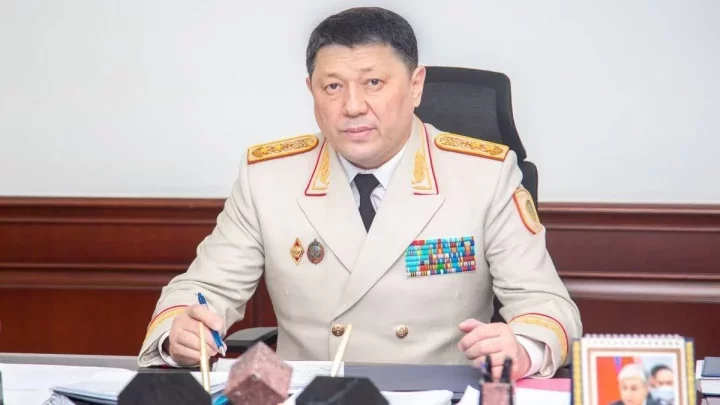 Photo: Polisia.kz
Before yesterday's extended meeting of senior law enforcement officials chaired by President Qasym-Jomart Toqayev, Minister of Internal Affairs Yerzhan Sadenov gave an interview to Kazakhstan’s main police information platform, Orda.kz reports.
In his interview with Polisia.kz, Yerzhan Sadenov shared his perspective on shaping legal awareness among Kazakhstanis, discussed early education for future police officers, and addressed how law enforcement efforts are increasingly focused on online crime.
Education and Accountability
According to Yerzhan Sadenov, developing a new legal culture involves two main elements. The first is enforcement, which he says police manage effectively with the help of automated systems.
For instance, those monitoring road violations and issuing fines without direct officer involvement.
The second is encouraging respect for the law from an early age.
Consciousness, social responsibility, formed through respect for the law, internal beliefs based on decency and discipline are necessary. And here everyone is responsible. The roots of beliefs are laid in the family,
the Minister noted.
At the same time, he said that societal norms and expectations still sometimes contribute to attempts to avoid liability.
Currently, a number of citizens are asking to soften the punishment for drunk driving. But look for yourself: this year, almost five thousand drivers have been detained for drunk driving. Of course, with the tightening of punishment for such bad drivers, the number of cases has decreased, but they still occur. I think it is important to include public censure here. People should not get behind the wheel drunk not because the police will detain them, but because it is not the norm. And these 'norms' are formed not only by enforcement measures, but to a greater extent by the attitude of those around them. And even more so, there should be no concessions for those who got behind the wheel intoxicated. They are potential criminals. This year alone, 18 people died due to their fault, more than 300 were injured.
The Minister believes that easing penalties in such cases could send the wrong message and undermine prevention efforts.
Still, he noted that public attitudes have evolved significantly over the past decade. Where once minor violations like littering, smoking in prohibited areas, or public drinking were often ignored, there is now more willingness to report such behavior.
Social networks should also be mentioned. Every day we identify hundreds of videos of violations that are posted by concerned citizens. Measures are taken against all of them at once. This has also become a powerful tool in strengthening awareness.
Sadenov added that a draft law titled On the Prevention of Offences is currently under parliamentary review.
The legislation includes:
- An expanded list of prevention participants, with the authority to engage the public in these efforts
- Incentives for active community participants, ranging from formal recognition to financial rewards
Law Enforcement Personnel
The Minister emphasized the importance of a well-rounded approach to law enforcement, including both training and the ethical conduct of officers.
He noted that efforts now begin in schools.
Today, many schools across the country have opened police classes called 'Jas Saqshy'. Schoolchildren are brought up in the spirit of patriotism, law-abidingness and civic responsibility. This is a good personnel potential for law enforcement agencies. We would be glad to see them tomorrow in departmental educational institutions.
He also noted changes in internal affairs university programs, which now include modules on digital technologies, analytics, and cybersecurity. Training now places equal focus on technical knowledge and the development of values such as leadership and integrity.
According to Sadenov, the crime rate in Kazakhstan is trending downward. In the first five months of 2025, about 39,000 crimes were recorded, 5,000 fewer than during the same period last year.
The number of murders, robberies, assaults, hooliganism, sexual assault and other types of crimes has decreased significantly. I think, first of all, this fact indicates an increase in the legal awareness of Kazakhstanis, social responsibility, and an increase in well-being. In general, this was facilitated by the work of all structures that are actively introducing digital resources, modern methods and traditional ways of ensuring law and order,
says Yerzhan Sadenov.
Cybercrime
Sadenov pointed out a shift in the types of crimes being committed, with internet-based fraud becoming increasingly common.
While theft once dominated crime statistics, online offenses have grown substantially.
This trend dictated the need to create a new unit in the Ministry of Internal Affairs aimed specifically at combating cybercrime. Systematic measures are being taken to counter such challenges as online fraud. The results are already noticeable in the first months of this year. By introducing early response and prevention systems, it was possible to prevent major financial losses. More than one and a half billion tenge that fraudsters tried to steal from citizens were blocked. Almost 90 thousand SIM cards that were used or intended for fraudulent calls were seized as a result of operational activities. Work has been established to block international calls from spoofed numbers. Since 2022, more than 67 million such calls that did not reach Kazakhstanis have been blocked.
The Minister emphasized that digital literacy among citizens remains a crucial part of prevention.
“Together with operational work and cyber hygiene, we will be able to combat Internet fraud.”
In his interview, Yerzhan Sadenov also discussed issues such as rural crime, drug trafficking, addiction rehabilitation, and other ongoing areas of operations for law enforcement in Kazakhstan.
Original Author: Anastasia Prilepskaya
Latest news
- Orda.kz Editorial Team to Cease Operations on September 1
- The Price of a Degree: How Students in Kazakhstan Pay for University
- Second Przewalski’s Horse Foal Born as Species Returns to Kazakhstan
- Kazakh Mining Companies Can Recalculate Purchases if Tenge Weakens
- Kazakhstan Names First Vice President in Three Decades
- What Almaty’s Bus Shelters Are Missing
- 400-Truck Queue Builds at Kazakh–Kyrgyz Border
- Kazakhstan Ready to Help Feed and Rebuild Gaza
- Tokayev Establishes New Presidential Security Body
- Almaty Takes Back Its Nearly Century-Old Hippodrome
- No More Guesswork on Savings: Kazakhstan Tightens Energy Audits for Businesses
- Public Money Could Be Used to Rescue Failing Kazakh Banks
- Third Kazakh Woman Reported Missing in Nepal-China Flood Zone
- Falconer Convicted Over 35 Protected Birds, Spared Punishment Under Amnesty
- Kazakh Citizen Detained in Yakutia in Phone Fraud Case
- Yuan Instead of Dollars? KazMunayGas Draws Record Demand in Asia
- China Gains Oil-Market Influence as OPEC+ Weakens
- Kazakhstan to Divide Smartphones Into White, Gray and Black Lists
- Kazakhstan’s Government Formally Resigns as First Kurultai Session Opens
- Rare Lynx Sighting Recorded in Northern Kazakhstan
