

How a Young Woman's Death Ignited Demands for Capital Punishment in Kyrgyzstan
 Photo: Social media
The killing of 17-year-old Aisuluu Mukasheva has provoked a nationwide outcry in Kyrgyzstan, with citizens demanding changes to the criminal justice system. President Sadyr Japarov responded swiftly, ordering the reinstatement of the death penalty, Orda.kz reports.
Aisuluu disappeared on September 27 in Issyk-Kul. Her family reported her missing that same evening, and two days later, her body was found in the Boom Gorge.
Investigators determined she had been kidnapped, sexually assaulted, and killed. The perpetrator attempted to cover his tracks by moving the body, washing his car, discarding the SIM card, and selling the victim’s phone.
The suspect, a 41-year-old man with a criminal record, was arrested in Bishkek and confessed to the crime. He had previously served time for fraud, battery, and false imprisonment.

He had also faced charges of assault and attempted homicide but was not punished, according to the victim’s family.
The homicide triggered a wave of public anger. Several hundred residents of Issyk-Kul gathered for a rally during Aisuluu’s funeral, demanding harsher penalties for violent crimes and sexual violence against children, and the killing of women.
We, the people of Barskoon (a village in the Issyk-Kul region – Ed.), want to appeal to the president and the head of the State Committee for National Security to amend the law and introduce the death penalty. Prison won’t reform them, villagers shouted.
The president acted on these demands, announcing the return of capital punishment. Kyrgyzstan abolished the death penalty in 2007, replacing it with life imprisonment.
Even the suspect’s mother said:
There are no words. I’m deeply saddened by what happened to this girl; my heart aches. I have no choice but to agree with the girl’s parents, who are demanding the death penalty.
Other relatives of the detainee declared that he “has no right to live in this world.”
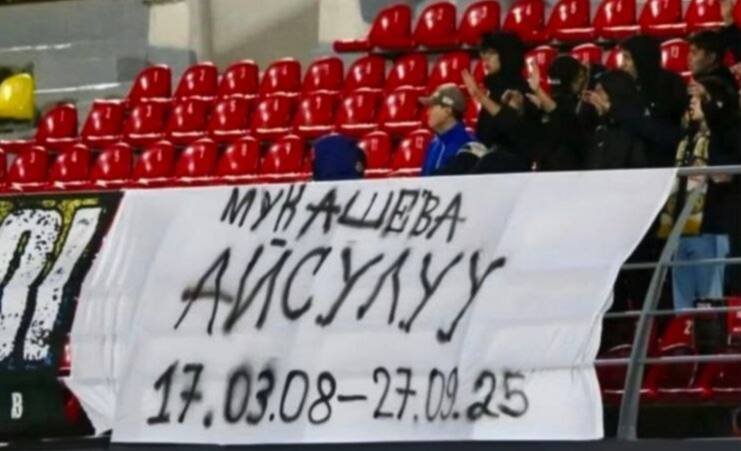
Public anger has continued to grow. At a football match, fans displayed a banner in memory of Aisuluu Mukasheva.
However, the government’s decision drew criticism from abroad.
The UN Office for Human Rights in Central Asia released a statement by High Commissioner Volker Türk, who said, “the death penalty has no place in 2025.”
He stressed that executions are ineffective as a deterrent, adding:
“The way to protect society is not through executions, but through strong institutions and accountability.”
Original Author: Ruslan Loginov
Latest news
- Orda.kz Editorial Team to Cease Operations on September 1
- The Price of a Degree: How Students in Kazakhstan Pay for University
- Second Przewalski’s Horse Foal Born as Species Returns to Kazakhstan
- Kazakh Mining Companies Can Recalculate Purchases if Tenge Weakens
- Kazakhstan Names First Vice President in Three Decades
- What Almaty’s Bus Shelters Are Missing
- 400-Truck Queue Builds at Kazakh–Kyrgyz Border
- Kazakhstan Ready to Help Feed and Rebuild Gaza
- Tokayev Establishes New Presidential Security Body
- Almaty Takes Back Its Nearly Century-Old Hippodrome
- No More Guesswork on Savings: Kazakhstan Tightens Energy Audits for Businesses
- Public Money Could Be Used to Rescue Failing Kazakh Banks
- Third Kazakh Woman Reported Missing in Nepal-China Flood Zone
- Falconer Convicted Over 35 Protected Birds, Spared Punishment Under Amnesty
- Kazakh Citizen Detained in Yakutia in Phone Fraud Case
- Yuan Instead of Dollars? KazMunayGas Draws Record Demand in Asia
- China Gains Oil-Market Influence as OPEC+ Weakens
- Kazakhstan to Divide Smartphones Into White, Gray and Black Lists
- Kazakhstan’s Government Formally Resigns as First Kurultai Session Opens
- Rare Lynx Sighting Recorded in Northern Kazakhstan
