

Georgia Passes Tougher Laws on Protests and Political Parties
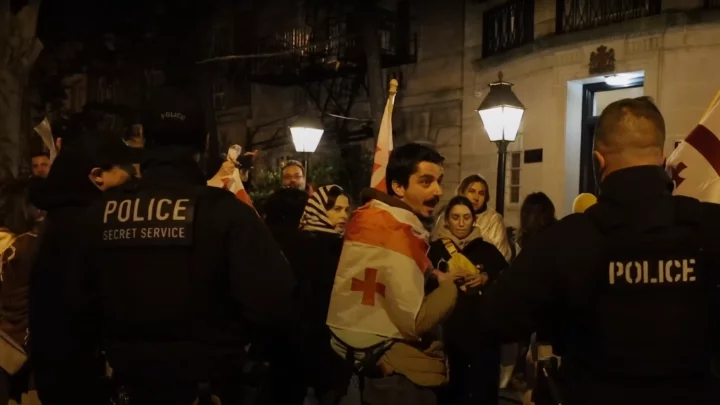 “Photo by Voice of America – Protesters in Tbilisi on March 7, 2023, during demonstrations against the proposed ‘foreign agents’ law. Public domain (Voice of America, U.S. federal government work).”
The Georgian Parliament has fast-tracked and approved in three readings a series of legislative amendments tightening penalties for violations during protests, Orda.kz reports, citing The Caucasian Knot.
Lawmakers also adopted a separate bill allowing political parties to be declared unconstitutional.
The ruling Georgian Dream party introduced the package to toughen sanctions for breaching assembly rules. Party faction leader Irakli Kirtzkhalia announced the initiative.
Background
Protests have continued since November 28, 2024, with demonstrators demanding new parliamentary elections and the release of political prisoners. Police have used tear gas and water cannons to disperse crowds, detaining more than a thousand people.
Municipal elections on October 4 saw Georgian Dream candidates win in all 64 municipalities — in 26 of them with 100% of the votes. Analysts say these results will shape Georgia’s political balance for years, as the next national elections are not due until 2028.
October Protests
The new laws follow the unrest that erupted on October 4, when thousands gathered in central Tbilisi during local elections.
After opera singer Paata Burchuladze declared that “power in Georgia belongs to the people,” clashes broke out outside the presidential palace. Police used special equipment, and protesters responded with fireworks. Six demonstrators and 21 officers were hospitalized, and 30 others were treated on site.
Authorities opened criminal cases for incitement to overthrow the government, attacks on police, and an attempted storming of the palace.
Five protest leaders — Paata Burchuladze, Paata Manjgaladze (Strategy Agmashenebeli), Colonel Lasha Beridze, and opposition members Murtaz Zodelava and Irakli Nadiradze — were arrested and charged with organizing group violence and attempting to seize power.
They face up to nine years in prison and have denied all charges.
Penalties
Under the new law, wearing a mask or blocking a road at a rally can result in up to 15 days of administrative arrest, or 20 days if done by an organizer. Disobeying a police order to disperse can lead to up to 60 days’ detention — the same term applies to carrying weapons or pyrotechnics.
Amendments to the Criminal Code add up to one year in prison for repeat violations, and up to two years for subsequent offenses.
Supporters from Georgian Dream say the law targets protesters who regularly block Rustaveli Avenue, where demonstrators may now only occupy the road if sidewalks are full. The fine remains 5,000 lari.
Around 30 NGOs condemned the changes, calling them a de facto ban on peaceful protest and a breach of Georgia’s Constitution and the European Convention on Human Rights.
Further amendments introduce up to one year in prison for anyone resisting police for a third time.
The new article establishes criminal liability for insulting or disobeying a police officer on the third occasion — punishable by up to one year, or up to two years for repeat offenses, MP Irakli Kirtzkhalia is quoted as saying.
"Unconstitutional" Political Parties
Parliament also passed another bill banning members of parties deemed unconstitutional — and anyone affiliated with them — from political activity, holding office, or running in elections. They will also be barred from donating to parties or joining others. If a party accepts a banned member or such individuals become decision-makers, it too can be outlawed.
When our political landscape is cleared of such figures, people who truly care about Georgia will be able to enter politics, said Archil Gorduladze, chair of the parliamentary legal affairs committee.
The Georgian Dream party plans to petition the Constitutional Court to ban the opposition United National Movement, citing a parliamentary report on alleged crimes by former authorities, including issues linked to the 2008 war, pressure on businesses, and prisoner abuse.
Latest news
- Orda.kz Editorial Team to Cease Operations on September 1
- The Price of a Degree: How Students in Kazakhstan Pay for University
- Second Przewalski’s Horse Foal Born as Species Returns to Kazakhstan
- Kazakh Mining Companies Can Recalculate Purchases if Tenge Weakens
- Kazakhstan Names First Vice President in Three Decades
- What Almaty’s Bus Shelters Are Missing
- 400-Truck Queue Builds at Kazakh–Kyrgyz Border
- Kazakhstan Ready to Help Feed and Rebuild Gaza
- Tokayev Establishes New Presidential Security Body
- Almaty Takes Back Its Nearly Century-Old Hippodrome
- No More Guesswork on Savings: Kazakhstan Tightens Energy Audits for Businesses
- Public Money Could Be Used to Rescue Failing Kazakh Banks
- Third Kazakh Woman Reported Missing in Nepal-China Flood Zone
- Falconer Convicted Over 35 Protected Birds, Spared Punishment Under Amnesty
- Kazakh Citizen Detained in Yakutia in Phone Fraud Case
- Yuan Instead of Dollars? KazMunayGas Draws Record Demand in Asia
- China Gains Oil-Market Influence as OPEC+ Weakens
- Kazakhstan to Divide Smartphones Into White, Gray and Black Lists
- Kazakhstan’s Government Formally Resigns as First Kurultai Session Opens
- Rare Lynx Sighting Recorded in Northern Kazakhstan
