

Zhumangarin Comments on Tax Reform, Fuel Price Freeze, and Utility Tariffs
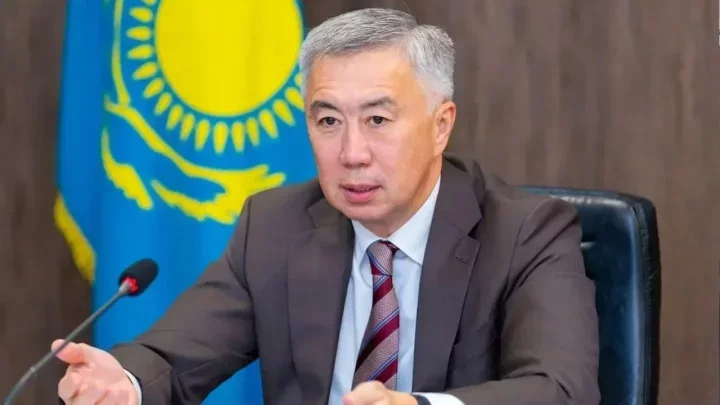 Photo: primeminister.kz
Economy Minister Serik Zhumangarin commented on several economic matters, Orda.kz reports.
Tax Reforms
The list of economic activities for which the transition to a simplified tax regime is prohibited may still be revised.
Journalists on the sidelines of the Majilis addressed Serik Zhumangarin, known as the “father of tax reform,” and asked his opinion on how the reform had turned out.
The initial draft tax reform promoted by Zhumangarin proposed a ban on the simplified special tax regime (STR) for 795 types of activities.
The General Classifier of Economic Activities (GCEA) contains only 1,111 items, meaning 70% were on the prohibited list. However, the approved list only includes 44 items. The head of the Ministry of National Economy was asked whether this meant the reform hadn’t gone according to plan.
We never said that the exclusion list was exactly like that. And we honestly say we’re open to discussion. The GCEA exclusion list itself is important, but it doesn’t play a significant role in this case. More important is the ban on deductions for entities operating under the STR with a simplified tax filing,
Serik Zhumangarin believes.
According to him, the ban on expense deductions affects approximately 20% of Kazakhstani businesses that operate under the SNR but maintain ties with companies under the general tax regime.
Now’s the time for them to make a decision: will they remain on the simplified tax filing system and operate b2c (business-to-client), or will they register for VAT and operate b2b (business-to-business, building relationships with other companies). But if their turnover is below 43 million tenge per year, they don’t have to pay VAT. These regulations have never been repealed; they were in the current tax code. We’ve lowered the threshold to 10,000 MCIs, which is now around 43 million tenge. I believe that together we’ve achieved an acceptable result, allowing us to stabilize public finances next year,
the head of the Ministry of National Economy stated.
Kazakhstani businesses have already expressed their position on the STR and the ban on deductions.
Entrepreneurs have launched a petition on the ePetition website demanding a revision of Section 16 of Article 286 of the new Tax Code, which prohibits expense deductions for companies operating under the simplified tax system.
Fuel Price Freeze to Last Until 2026
The Deputy Prime Minister announced that the current price freeze on gasoline and diesel fuel will last until at least the spring of 2026.
He said the decision is due to the external market:
We need to wait for stabilization in neighboring countries. We’re trying to catch up (with fuel prices – ed.), narrow the gap (price gap – ed.), but they keep growing. This is due to both the exchange rate difference and the fact that some neighboring countries are experiencing shortages, which is driving up prices. And they, unlike us, don’t regulate prices through administrative measures,
said Zhumangarin.
According to him, no sharp price changes within the country are expected until spring.
After that, everything will depend on the exchange rate, shortages in neighboring countries, and the overall stabilization of the regional fuel market.
Utility Tariffs and Inflation Control
Economy Minister Serik Zhumangarin also outlined how utility rates will increase.
The moratorium on tariff increases, introduced until spring 2026, raises concerns for Zhumangarin, as the deteriorating infrastructure could fail during the cold season.
We’ve taken a time lag to avoid raising all tariffs at once. We’re extending the duration of investment programs. Since all these innovations began on October 1, we’ll see the results in November in terms of inflation. We can already say that instead of a 1.32% contribution to inflation by the end of the year, the entire utilities sector will contribute only 0.25%. This will significantly help slow inflation,
the minister believes.
At the same time, according to him, the utilities sector managed to attract approximately 650 billion tenge in investment and repair thousands of kilometers of utility networks.
Original Authors: Anastasia Prilepskaya, second article, Ilya Astakhov
Latest news
- Orda.kz Editorial Team to Cease Operations on September 1
- The Price of a Degree: How Students in Kazakhstan Pay for University
- Second Przewalski’s Horse Foal Born as Species Returns to Kazakhstan
- Kazakh Mining Companies Can Recalculate Purchases if Tenge Weakens
- Kazakhstan Names First Vice President in Three Decades
- What Almaty’s Bus Shelters Are Missing
- 400-Truck Queue Builds at Kazakh–Kyrgyz Border
- Kazakhstan Ready to Help Feed and Rebuild Gaza
- Tokayev Establishes New Presidential Security Body
- Almaty Takes Back Its Nearly Century-Old Hippodrome
- No More Guesswork on Savings: Kazakhstan Tightens Energy Audits for Businesses
- Public Money Could Be Used to Rescue Failing Kazakh Banks
- Third Kazakh Woman Reported Missing in Nepal-China Flood Zone
- Falconer Convicted Over 35 Protected Birds, Spared Punishment Under Amnesty
- Kazakh Citizen Detained in Yakutia in Phone Fraud Case
- Yuan Instead of Dollars? KazMunayGas Draws Record Demand in Asia
- China Gains Oil-Market Influence as OPEC+ Weakens
- Kazakhstan to Divide Smartphones Into White, Gray and Black Lists
- Kazakhstan’s Government Formally Resigns as First Kurultai Session Opens
- Rare Lynx Sighting Recorded in Northern Kazakhstan
