

What Role Does Radio Free Europe/Radio Liberty's Media Play in Central Asia?
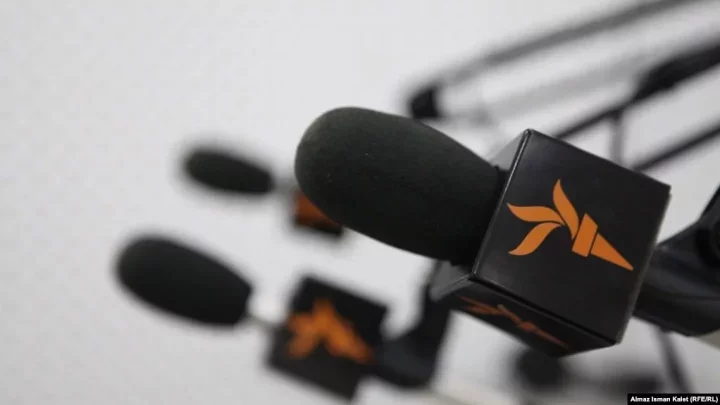 Photo: Radio Azattyk
Experts have described the potential shutdown of Radio Azattyq as a “black swan” event and a major blow to media freedom in Central Asia, Orda.kz reports.
The outlet, part of Radio Free Europe/Radio Liberty (RFE/RL), has long served as a critical source of information in the region. Despite facing constant pressure from local governments, it has maintained operations in Kazakhstan, Kyrgyzstan, and Tajikistan, with no official offices currently in Turkmenistan or Uzbekistan.
The current U.S. administration decided in 2025 to suspend funding for the U.S. Agency for Global Media (USAGM), which oversees RFE/RL.
Azattyq’s five regional services — the Kazakh and Kyrgyz Azattyq, Tajik Ozodi, Turkmen Azatlyk, and Uzbek Ozodlik — all faced uncertainty. Though USAGM later resumed funding, the episode triggered urgent conversations about the role of independent media in the region and the risks of relying on foreign-backed journalism.
Institutional Immunity and Editorial Risk
They are allowed to do many things, and other local journalists can always nod, like, let Azattyq first take [the material from the site], maybe we can do the same later,says Karlygash Yezhenova, editor-in-chief of Kazakhstan’s Exclusive.kz.
Her comment highlights the de facto role Azattyq plays as a shield for local outlets. With stronger protections and greater resources, the outlet has frequently covered controversial topics that others avoid, fearing political or financial repercussions.
With such an 'umbrella' as the US Congress, of course, you are allowed to do more than others. Without Azattyq, the information field will not have this heavyweight, driver, vanguard, batman. Even if others are not allowed to cover certain topics, Azattyq can afford to push boundaries and cross red lines. That is why they irritated and even enraged the authorities of all autocracies. The above-mentioned 'umbrella' - the presence of a budget independent of the market, resources - all this allows the Azattyq team to be in the information field without being completely under the jurisdiction of these very autocracies,
notes Adil Dzhalilov, Director of the International Center for Journalism MediaNet and founder of Factcheck.kz.
This dynamic is echoed across the region. In Tajikistan, independent media often wait for Ozodi to publish sensitive stories before reporting them.
I'll let you in on a secret: all independent media [in Tajikistan] has had an unspoken rule: if a high-profile event occurred (which they prefer to keep silent about in official reports), even if the editorial office has all the information, everyone waits for Ozodi [Radio Liberty's Tajik service] to give the news. Only then do the others release it. They can add their own information, but still after Ozodi. Because they have more immunity,
shares Zebo Tadjibaeva, editor-in-chief of Your.tj.
In Kyrgyzstan — where Azattyq narrowly avoided closure in 2023 — editors warn of a shrinking media space.
The space for alternative opinions is shrinking, in such conditions any information gap is filled with state propaganda or kitchen talk. This is a great joy for officials, because there is less chance of learning about official crimes and simply their foolishness. And a great loss for those who are ready to perceive, even if not agree, a diversity of opinions,
says Dina Maslova, editor-in-chief of Kaktus.Media.
Local Languages
Azattyq has also championed journalism in national languages.
This is particularly vital in regions where Russian dominates the information space, but local language speakers — especially in rural areas — lack access to independent news.
Journalism in the Kazakh language is still underdeveloped, and Azattyq in this regard covers the needs of the Kazakh-language audience. For example, the Kazakh-language audience learns about international news primarily from Azattyq. Independent media simply do not have the resources to independently cover the international, or even domestic, agenda,
explains Yesengul Kapkyzy, head of the Minber Foundation.
Yezhenova adds that Azattyq also served as a training ground for Kazakh-speaking journalists.
Many journalists have grown out of Azattyk and are now running their own podcasts, their own projects. The Kazakh-language segment of the media, unfortunately, is deprived of high-quality analytics, investigations, and this is a big problem,
For Dzhalilov, Azattyq’s value also lies in its cultural impact:
Azattyq helps not only to cover sensitive topics, but also, as they say, to decolonize consciousness. Important topics of national identity, historical role and patriotism in a non-conformist understanding and field (the niche of conformist, opportunistic patriotism is usually occupied by pro-government media) - this is exactly what the Azattyq team does.
Another major component of RFE/RL’s regional presence is the Current Time Asia platform, which remains one of the few regional programs showcasing Central Asian voices to global audiences.
Current Time is one of the few media resources on the modern market that gives countries in our region the opportunity to participate in public discussion in a broader media space. Let's put it this way: Galim Ageleuov is shown on Current Time no less often than Russian experts such as Ekaterina Shulman or Tamara Eidelman. Moreover, we discuss Central Asian news on our channel twice a day, every day. It seems to me that there is no other place with such a level of representation of the region on an international platform,
says Kaarmanbek Kuluev, senior social media producer for Current Time Asia.
Criticism
Azattyq’s work hasn’t been without controversy. In 2019, a journalist accused the media of having ties to Aqorda. That same year, Eurasianet investigated alleged cooperation between Radio Ozodi and Tajik authorities.
At the other extreme, Radio Liberty's Kyrgyz service (Azattyk - Ed.) has drawn fire from government officials. Kyrgyz President Sadyr Japarov criticized the outlet in February 2025:
Earlier, 20–30 years ago, people listened to Azattyk and believed it. Because there was no internet back then. Now people don't need Azattyk news.
For Yezhenova, however, Azattyq’s existence remains crucial:
Yes, they are now being accused of having 'wrong' democratic values, but someone has to give an alternative point of view...
Dzhalilov believes the outlet plays a foundational role in supporting local civil society.
And at the same time it becomes a foundation, helps civil society and independent journalists feel not alone. What is happening to them now is a "black swan" and a terrible challenge for all civil societies in all our countries. I really hope they will manage to stay and continue working.
While RFE/RL is funded through October 2025, the broader lesson, experts say, is the need to invest in sustainable, locally rooted media.
Original Author: Liliya Gaysina
Latest news
- Orda.kz Editorial Team to Cease Operations on September 1
- The Price of a Degree: How Students in Kazakhstan Pay for University
- Second Przewalski’s Horse Foal Born as Species Returns to Kazakhstan
- Kazakh Mining Companies Can Recalculate Purchases if Tenge Weakens
- Kazakhstan Names First Vice President in Three Decades
- What Almaty’s Bus Shelters Are Missing
- 400-Truck Queue Builds at Kazakh–Kyrgyz Border
- Kazakhstan Ready to Help Feed and Rebuild Gaza
- Tokayev Establishes New Presidential Security Body
- Almaty Takes Back Its Nearly Century-Old Hippodrome
- No More Guesswork on Savings: Kazakhstan Tightens Energy Audits for Businesses
- Public Money Could Be Used to Rescue Failing Kazakh Banks
- Third Kazakh Woman Reported Missing in Nepal-China Flood Zone
- Falconer Convicted Over 35 Protected Birds, Spared Punishment Under Amnesty
- Kazakh Citizen Detained in Yakutia in Phone Fraud Case
- Yuan Instead of Dollars? KazMunayGas Draws Record Demand in Asia
- China Gains Oil-Market Influence as OPEC+ Weakens
- Kazakhstan to Divide Smartphones Into White, Gray and Black Lists
- Kazakhstan’s Government Formally Resigns as First Kurultai Session Opens
- Rare Lynx Sighting Recorded in Northern Kazakhstan
