

What Do Experts Think about The Petition for Kazakhstan's Withdrawal from The CSTO and The EAEU?
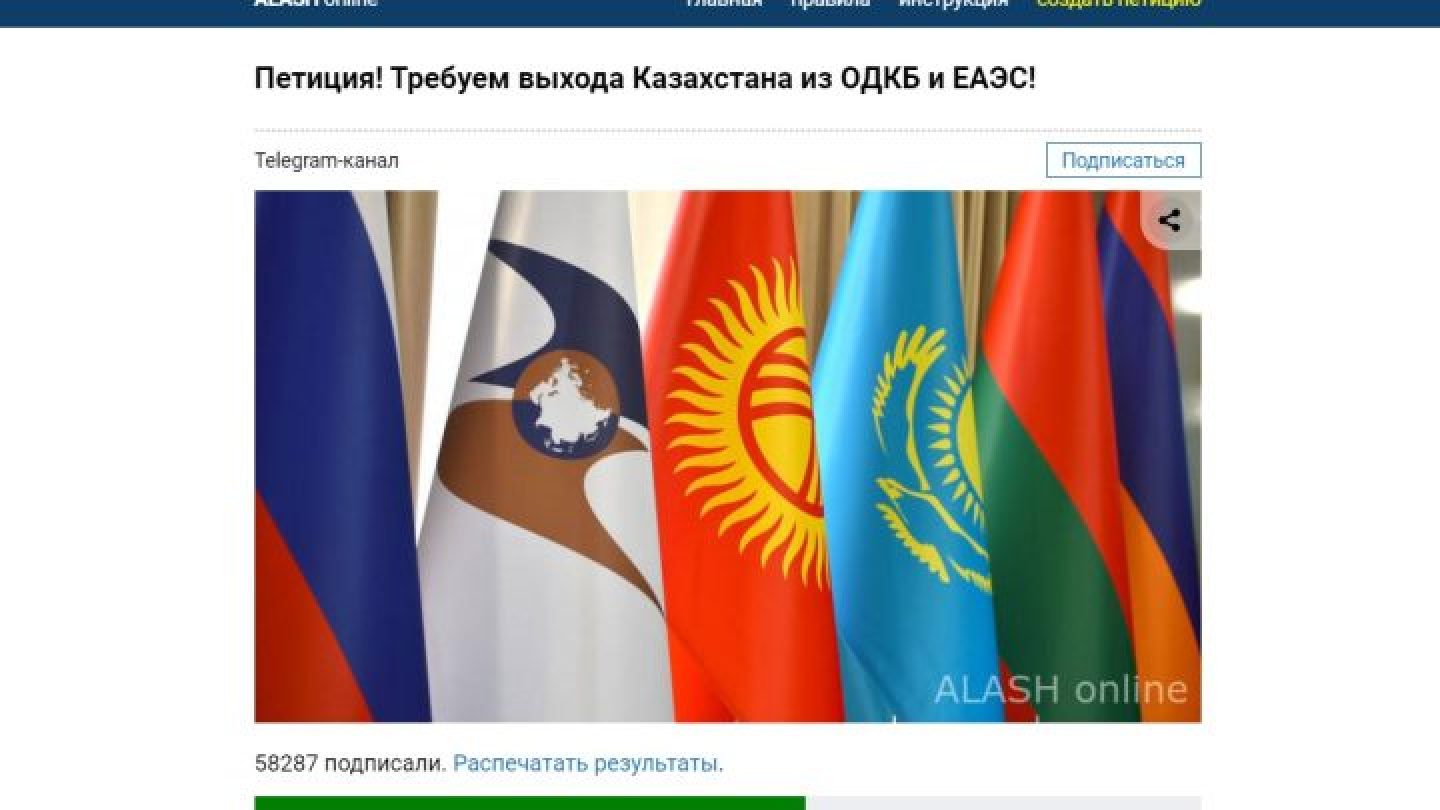
Kazakhstan's largest petition platform has a collection of signatures for the country's withdrawal from the Eurasian Economic Union. Orda.kz consulted with Kazakhstani political scientists to understand what chances for this exist and whether it should be done at all.
At the time of publication, the petition on the alash.online website had received signatures from 58,198 people, with almost 54 thousand for and almost 4 against. This is one of the largest petitions. It has risen to 9th place in more than a year, having significantly increased in recent months. At the same time, talks about the uselessness of an economic union with Russia have been going on for many years. They have been happening since Nursultan Nazarbayev became the official initiator of integration in the Eurasian space.
"We demand from the authorities of Kazakhstan to withdraw from the CSTO and the EAEU, as well as to stop all integration processes with the Russian Federation! To remain in the field of diplomatic and economic relations with the Russian Federation, even if it costs us a break in relations! Otherwise, with any support from Russia, our country will face the same isolation from the world as Russia itself at the moment,"
the published petition says.
Populism or Reasonable Arguments?
According to political scientist Daniyar Ashimbayev, the very wording of the question has an obvious anti-Russian orientation.
"It is clear that any documents against the CSTO and the EAEU are directed against the union with the Russian Federation. This is a continuation of the old liberal national-pan-Turkist approach, which supports Kazakhstan's position from complete neutrality to hostility towards Russia."
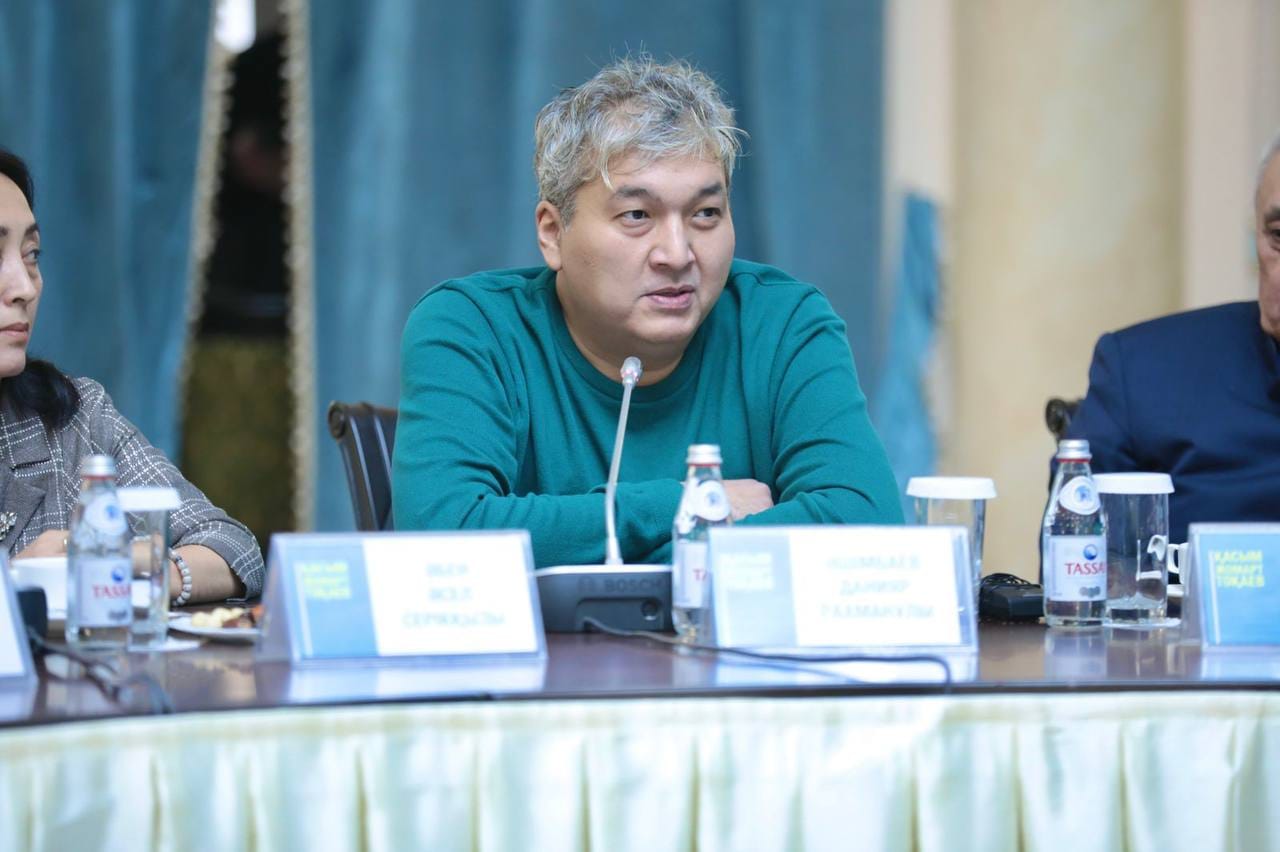
If earlier this rhetoric was beneficial to the West, then after the cooling of relations between Ankara and NATO, as well as the quarrel between Erdogan and the United States (this concerns, among other things, the closing of doors for the American ambassador, who met with the opposition candidate Kyrychdaroglu before the elections – Ed.), the pan-Turkists began to act directly, Ashimbayev believes. At the same time, the expert is sure that supporters of the exit use populist methods, and, given the momentary success of the proclaimed slogans, they think little about the consequences for Kazakhstan.
"Relations with Russia are conditioned by geographical and historical factors. Including the coherence of our logistics models: the Russian North-South transport corridor is impossible without Kazakhstan, the Kazakhstan East-West corridor will be fuller if Russia is "attached to it". This is what Toqayev voiced at the summit in Moscow, about Russia's connection to the Trans-Caspian route. It's the same with China, from which there is no escape. It does not meet the interests of Kazakhstan to ruin relations with Russia."
Ashimbayev is also sure that the idea of withdrawing from alliances with the Russian Federation is popular, but only among a certain liberal-minded and anti-war part of society, but not among the majority.
Another political scientist, Gaziz Abishev, agrees with him. An Orda correspondent spoke with Abishev.
"Of course, there are arguments in favor of leaving the EAEU. There are many examples when, due to the "scale effect" (reduction of production costs with the consolidation of production – Ed.), enterprises in a number of processing industries, due to price-quality, extensive state subsidies, Russian enterprises defeated Kazakhstani competitors, as a result of which Kazakhstani enterprises were closed. That is, the conclusion is that being in the EAEU and not being able to close markets reduces the opportunities for Kazakhstan to create long production chains."

At the same time, according to the political scientist, the authors of the petition and those who sign it forget about counterarguments. He calls Kazakhstan's presence in the EAEU “necessary". Indeed, the CPC oil pipeline, which supplies 80% of Kazakhstan's oil to world markets, and the lack of its own production of a large number of goods that Kazakhstan needs, factor in. A similar situation exists with agricultural products that are sold not only to China and Central Asia but also via the Black Sea ports of Russia, and the gasification program to supply the northern regions of the country with Russian natural gas.
"There are two different things: not joining the union is one thing, as Uzbekistan does, while leaving is a different situation. The demarche may provoke sanctions from Russia. In general, of course, there was no economic miracle from Kazakhstan's participation in the EAEU."
Daniyar Ashimbayev, in turn, points out that participation in the EAEU was justified, as Kazakhstan did not create competitive products for the world market, while participation in the union became a good school for local producers. At the same time, the expert considers the creation and promotion of such petitions to be a good sign for the development of civil society. However, he points out that petitions still do not have much significance for the authorities in Kazakhstan, as they do not carry any legal weight.
Petitions in Kazakhstan and Abroad
Petitions are collective letters that are certified by ordinary citizens' signatures. They are designed to draw the attention of higher and local authorities to a particular problem in politics, ecology, or society.
In the USA, where 330 million citizens live, if a petition collects more than 100 thousand signatures in 2 months, it automatically goes to the president of the country, who is obliged to consider it. In Germany, with a population of 80 million people, 50 thousand signatures are enough for a special petition commission. The population of Kazakhstan is 20 million, thus the threshold for consideration of collective letters should logically be less.
Political scientist Abishev also draws attention to a technical point that should be taken into account in Kazakhstan.
"The results of a petition poll may often not coincide with the results of public opinion polls and a national referendum. They have their own specifics. Those who sign them often support the position of the petition's author, as this document is distributed among supporters of the "yes" answer.”
There have been successful petitions in the world, even in countries where they are not mandatory. In 2016, in Indonesia, a fee was introduced for plastic bags in stores after successful petitions. In Thailand, the Minister of Education canceled a program to reduce rural schools.
In Kazakhstan, petitions are not necessarily for not. Two of them, albeit not directly, have worked. Demands were made on the alash.online platform to rename the capital to Astana and cancel scrap collection. These two things were indeed implemented.
Original Author: Maxim Skopin
DISCLAIMER: This is a translated piece. The text has been modified, the content is the same. Please refer to the original piece in Russian for accuracy.
Latest news
- Orda.kz Editorial Team to Cease Operations on September 1
- The Price of a Degree: How Students in Kazakhstan Pay for University
- Second Przewalski’s Horse Foal Born as Species Returns to Kazakhstan
- Kazakh Mining Companies Can Recalculate Purchases if Tenge Weakens
- Kazakhstan Names First Vice President in Three Decades
- What Almaty’s Bus Shelters Are Missing
- 400-Truck Queue Builds at Kazakh–Kyrgyz Border
- Kazakhstan Ready to Help Feed and Rebuild Gaza
- Tokayev Establishes New Presidential Security Body
- Almaty Takes Back Its Nearly Century-Old Hippodrome
- No More Guesswork on Savings: Kazakhstan Tightens Energy Audits for Businesses
- Public Money Could Be Used to Rescue Failing Kazakh Banks
- Third Kazakh Woman Reported Missing in Nepal-China Flood Zone
- Falconer Convicted Over 35 Protected Birds, Spared Punishment Under Amnesty
- Kazakh Citizen Detained in Yakutia in Phone Fraud Case
- Yuan Instead of Dollars? KazMunayGas Draws Record Demand in Asia
- China Gains Oil-Market Influence as OPEC+ Weakens
- Kazakhstan to Divide Smartphones Into White, Gray and Black Lists
- Kazakhstan’s Government Formally Resigns as First Kurultai Session Opens
- Rare Lynx Sighting Recorded in Northern Kazakhstan
