

The Aral Sea Two Centuries Back and Qara-Chuk’s Trail: What Books Reveal
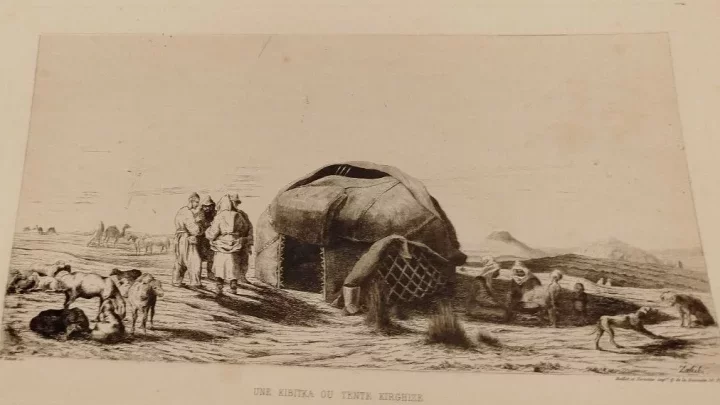 Photo: Orda.kz
On the day the National Academy of Sciences under the President of the Republic of Kazakhstan officially welcomed new academicians (and awarded journalists ), a small exhibition of rare books from the Central Scientific Library's collection was also unveiled.
These books, some dating back to the 18th and 19th centuries, are now even rarer since access to them is currently restricted due to ongoing repairs.
The collection of books on display was remarkably diverse, ranging from statistical records to travelers' diaries.
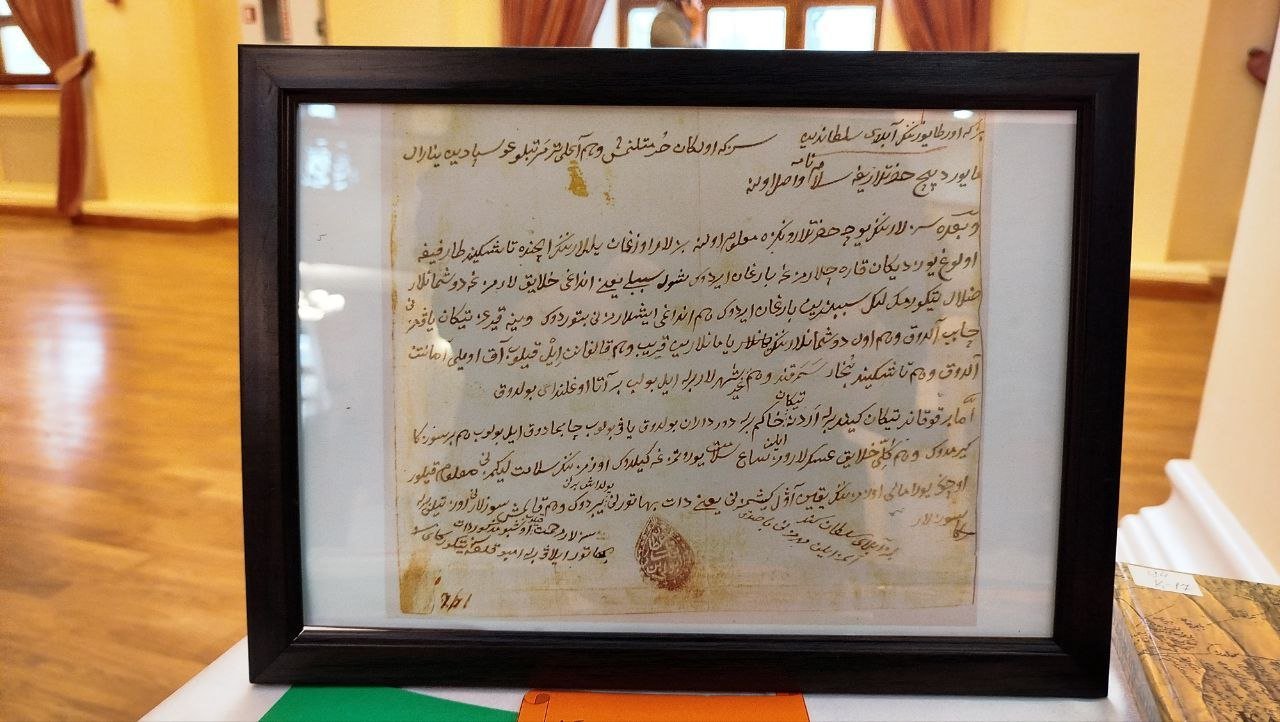
One standout exhibit was not a book but a rare letter from Ablai Khan to the Governor-General of Siberia, Ivan Springer.
The letter is particularly intriguing because, while Ablay Khan was Kazakh, it was written in the Chagatai language using Arabic script. This detail highlights an interesting historical nuance: Chagatai served as the region’s diplomatic language, much like French did in Europe at the time.
One book on display is "La vie des Steppes Kirghizes" ("The Life of the Kyrgyz Steppes") from 1865 by Bronisław Zaleski.
Zaleski, a Polish-Belarusian politician and traveler, spent several years in Central Asia during the mid-19th century. He even participated in the Karatau scientific expedition alongside the renowned Taras Shevchenko.
Interestingly, the author’s name appears in the book's signature in Lithuanian—"Bronislas," though the text is in French.
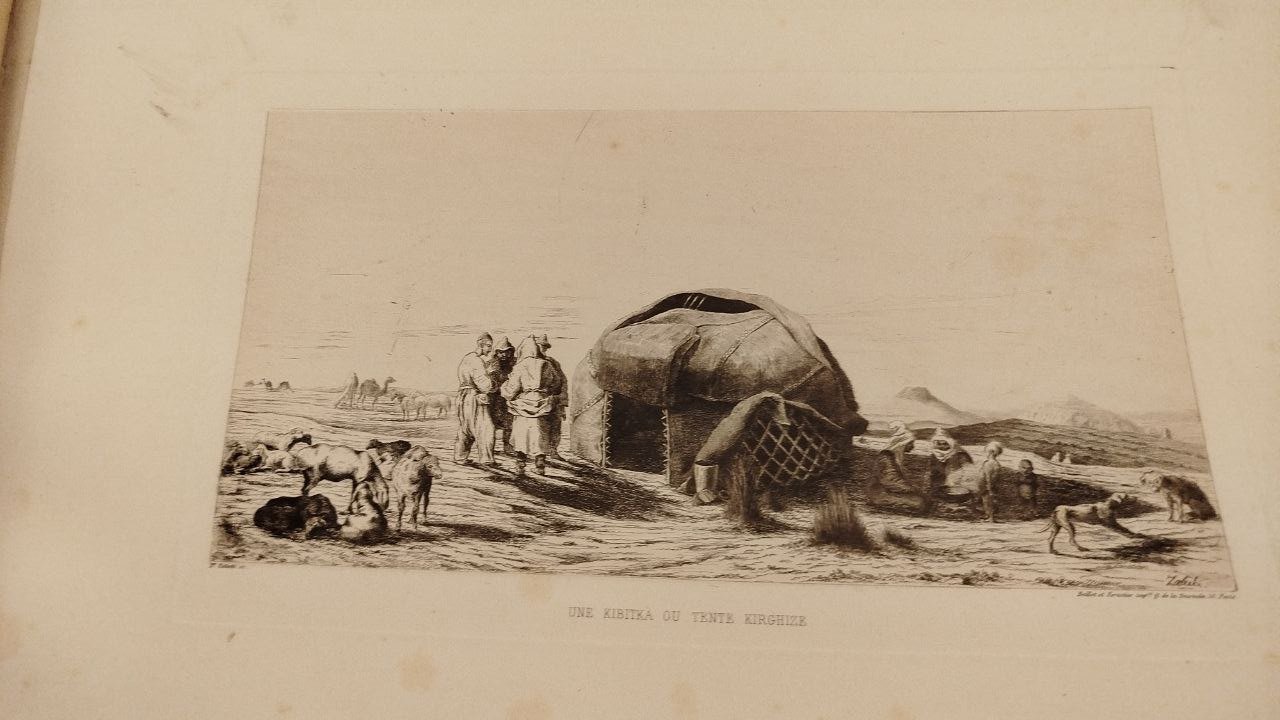
The book features numerous sketches, including one labeled “une kibitka ou tente Kirghize.” As is known, the Kazakhs were mistakenly referred to as "Kirgiz" (Kyrgyz) in the 19th century.
This rich blend of art and history makes Zaleski's work a fascinating window into the past.
Atlases were the most popular items among many books on display.
One notable example is an 18th-century atlas of China’s provinces accompanied by a general map of China and its neighboring territories.
Simply put, cartography from 200 years ago was far from perfect.
For instance, the Gobi and Taklamakan deserts are labeled simply “Gobi.” Distances and proportions are often distorted, but the map remains a fascinating historical artifact despite these quirks.
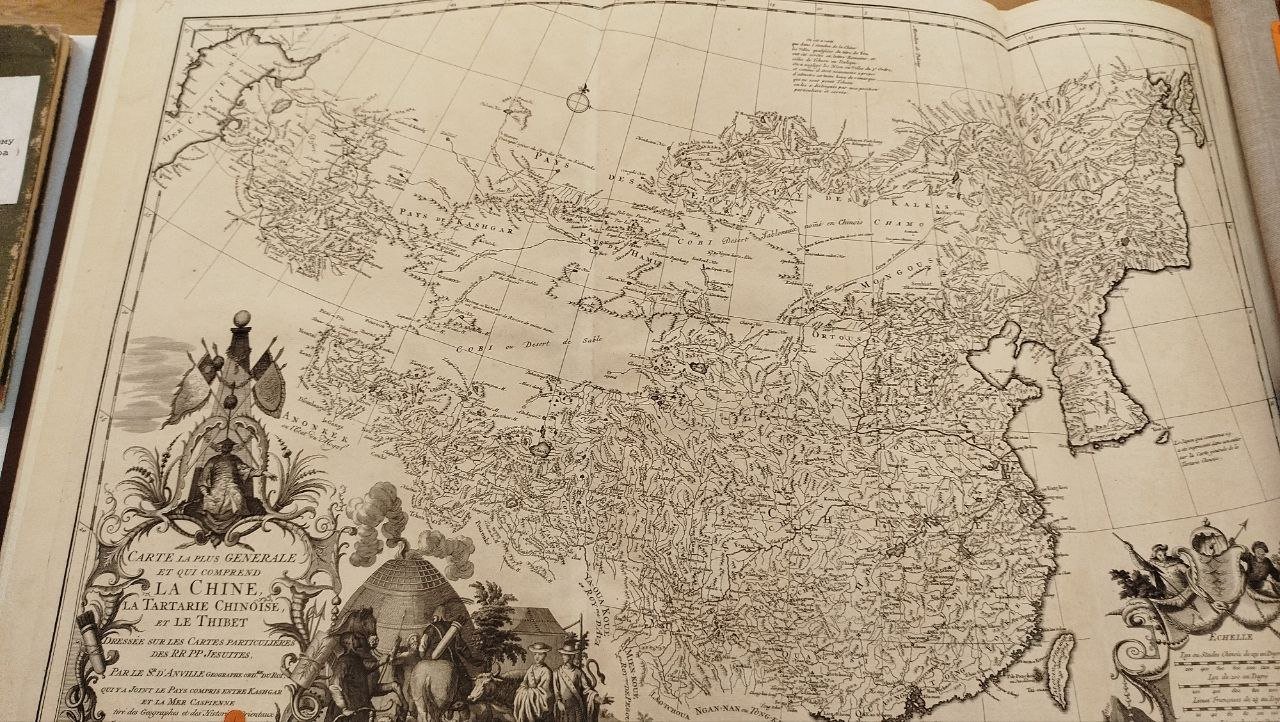
Upon closer inspection, you can spot the city of Taraz and the Talas River (sometimes spelled Talash).
However, several other geographical objects are not on the modern map.
For example, Mount Qara-Chuk, which, according to a 200-year-old map, is located somewhere north of Taraz.
There is also a scattering of cities that either disappeared, were renamed, or were simply miswritten in French.
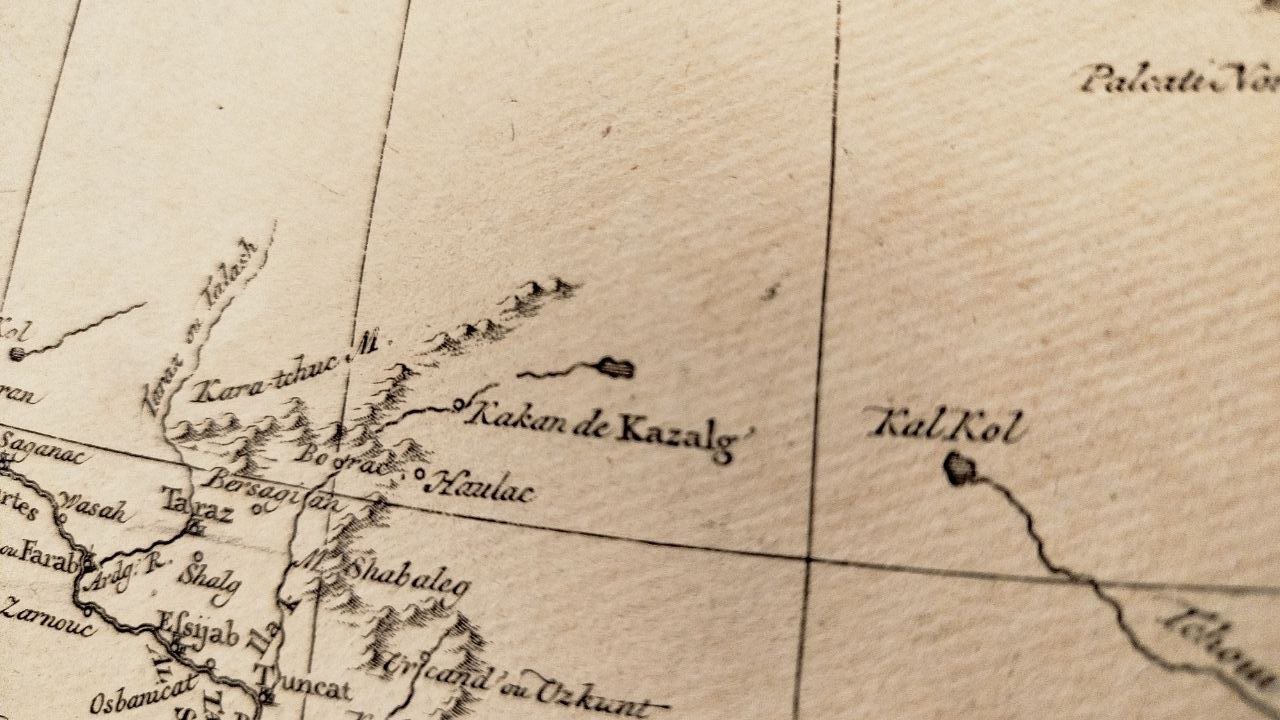
After consulting with library staff, we concluded that this might be an old way of referring to the "Kazakh Khanate" (the title "khan" could have been written as "kagan" in earlier times). However, this remains just our assumption.
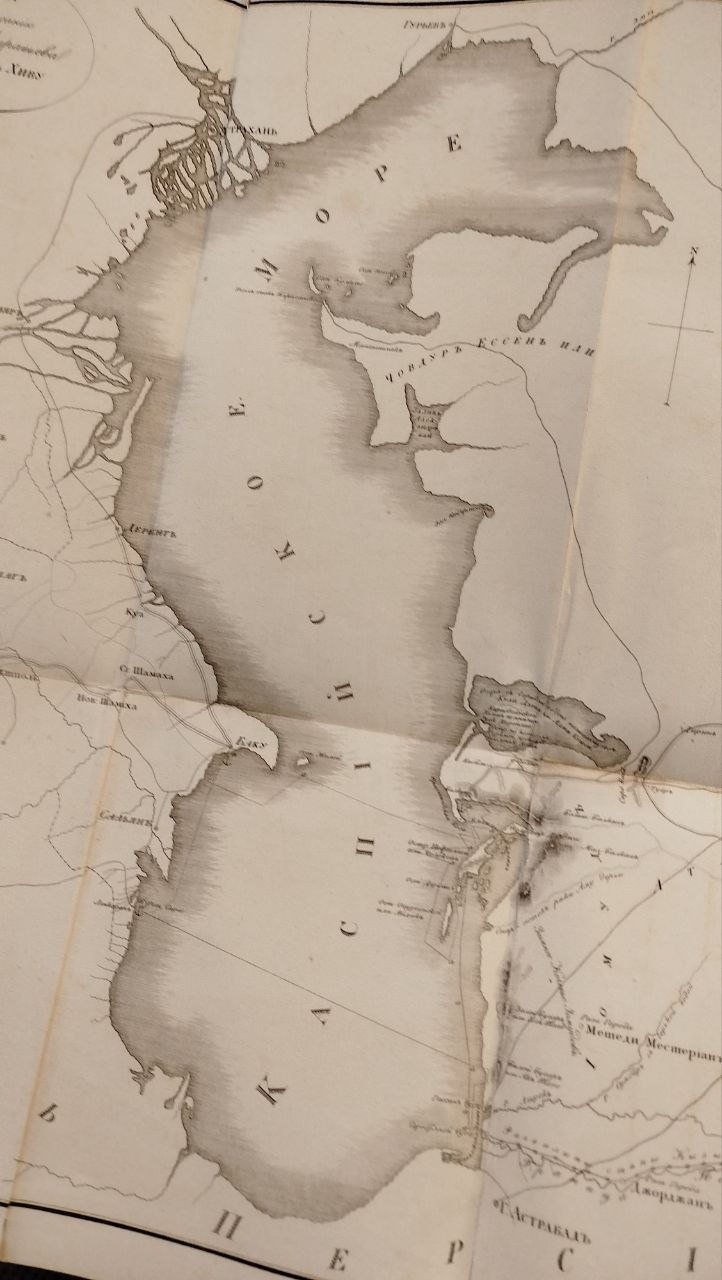
Our journalist also noticed the Caspian and Aral Seas on an 18th-century Russian map. Despite the inaccuracies of old cartography, one can judge how the levels of these lakes changed.
For example, Kaydak Bay, near the Caspian Sea, is depicted as a prominent part of the reservoir, while today, it is pretty shallow. It’s noteworthy that depths were not indicated on maps from that era.
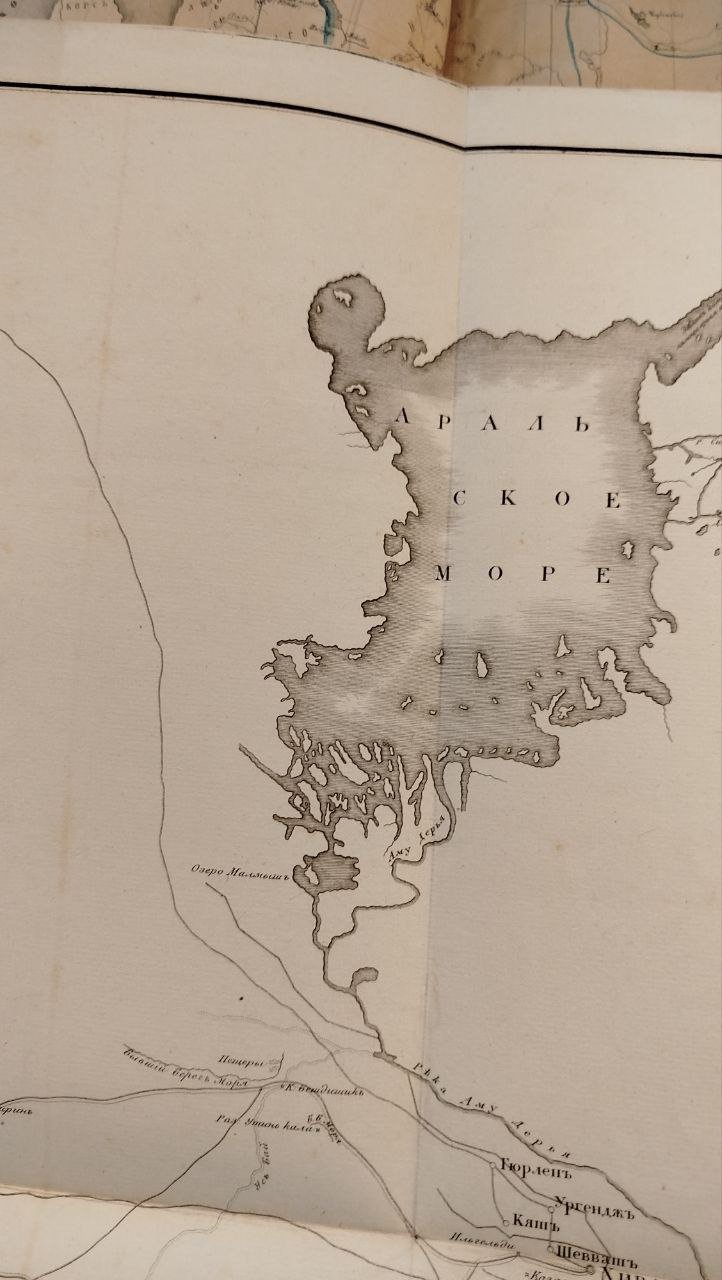
Over 200 years ago, the Aral Sea looked very different — not only from its current state but also from how it appeared in the mid-20th century.
Judging by the map, the Aral Sea of two centuries ago resembled the Great Aral Sea of the 1990s, when the water body had split into two separate parts.
Original Author: Igor Ulitin
Latest news
- Orda.kz Editorial Team to Cease Operations on September 1
- The Price of a Degree: How Students in Kazakhstan Pay for University
- Second Przewalski’s Horse Foal Born as Species Returns to Kazakhstan
- Kazakh Mining Companies Can Recalculate Purchases if Tenge Weakens
- Kazakhstan Names First Vice President in Three Decades
- What Almaty’s Bus Shelters Are Missing
- 400-Truck Queue Builds at Kazakh–Kyrgyz Border
- Kazakhstan Ready to Help Feed and Rebuild Gaza
- Tokayev Establishes New Presidential Security Body
- Almaty Takes Back Its Nearly Century-Old Hippodrome
- No More Guesswork on Savings: Kazakhstan Tightens Energy Audits for Businesses
- Public Money Could Be Used to Rescue Failing Kazakh Banks
- Third Kazakh Woman Reported Missing in Nepal-China Flood Zone
- Falconer Convicted Over 35 Protected Birds, Spared Punishment Under Amnesty
- Kazakh Citizen Detained in Yakutia in Phone Fraud Case
- Yuan Instead of Dollars? KazMunayGas Draws Record Demand in Asia
- China Gains Oil-Market Influence as OPEC+ Weakens
- Kazakhstan to Divide Smartphones Into White, Gray and Black Lists
- Kazakhstan’s Government Formally Resigns as First Kurultai Session Opens
- Rare Lynx Sighting Recorded in Northern Kazakhstan
