

Syrian President Pledges Security For All Amid Sweida Tensions and Israeli Strikes
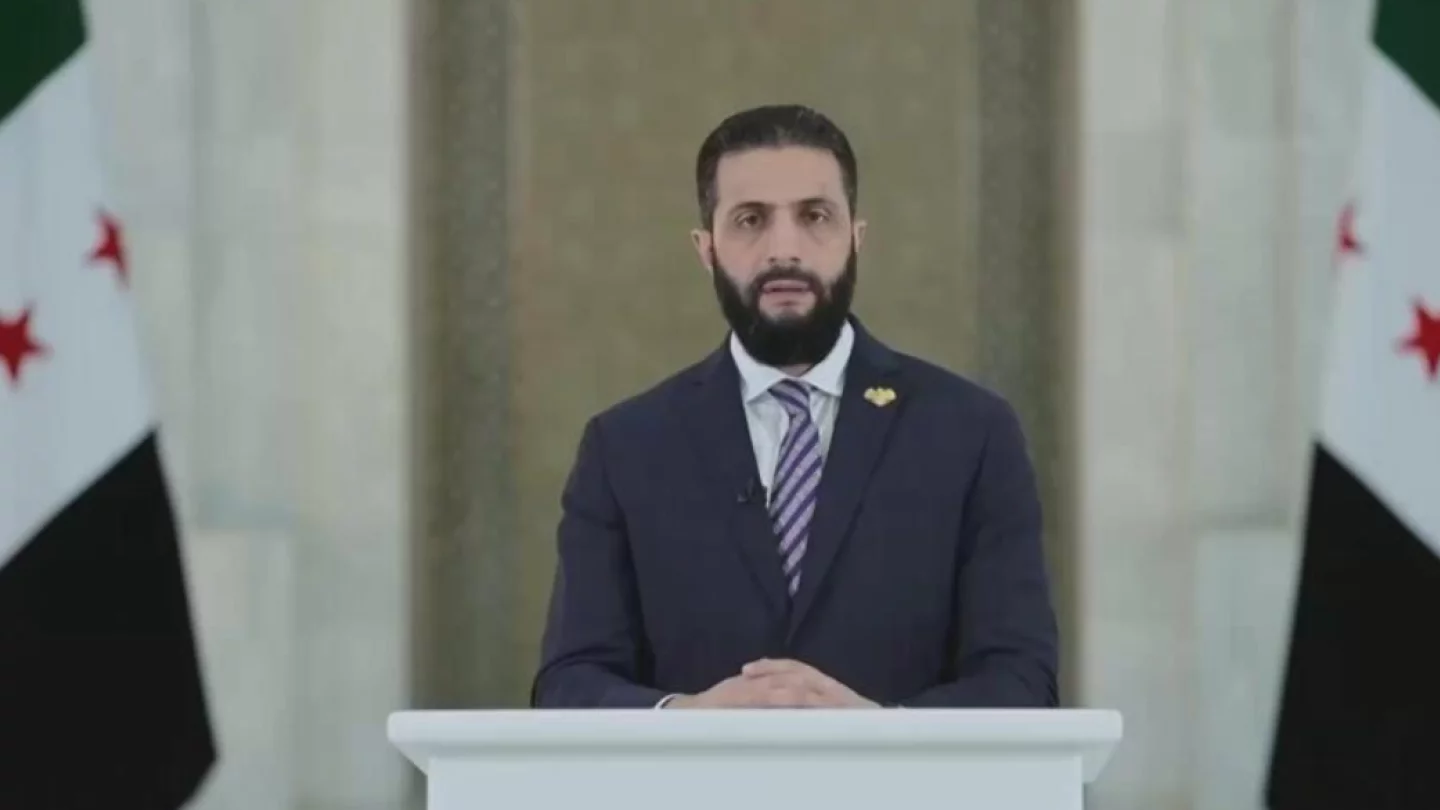 Photo: Screenshot / Syrian Presidential Press Service video
Syrian President Ahmed al-Sharaa announced that local leaders in the city of Sweida will take over security responsibilities, emphasizing the protection of the country’s Druze minority amid recent sectarian clashes and Israeli airstrikes, Orda.kz reports, citing AP.
In a televised address on Thursday, al-Sharaa said safeguarding the rights of the Druze — who make up the majority in Sweida — is a top priority. The decision to hand over security to local elders and factions, he stated, was made “based on the supreme national interest.”
His remarks follow days of violent confrontations between Druze groups, Bedouin tribes, and government forces in southern Syria. The situation escalated further after Israeli airstrikes targeted sites near the presidential palace and military headquarters in Damascus, reportedly in response to perceived threats to the Druze population.
"We are eager on holding accountable those who transgressed and abused our Druze people because they are under the protection and responsibility of the state,” said al-Sharaa, calling the Druze 'a fundamental part of the fabric of this nation.”
He warned against 'foreign or domestic' efforts to incite division.
Ceasefire
The government and Druze leader Sheikh Yousef Jarbou have agreed to a ceasefire, with Syrian troops beginning to withdraw from Sweida. Dozens of military vehicles were seen leaving the city overnight.
Reports indicate that the situation on Thursday was “a tense calm,” noting that it was uncertain how long the ceasefire would hold. Purportedly, there are internal divisions within the Druze community regarding the new government, which assumed power after former President Bashar al-Assad was ousted in December.
While Jarbou supported the ceasefire and condemned Israeli strikes, saying “any attack on the Syrian state is an attack on the Druze community” — another Druze figure, Sheikh Hikmat al-Hajari, rejected the agreement and vowed to continue fighting.
His current whereabouts remain unknown.
Casualties and Regional Response
Local sources reported at least 169 deaths in the recent violence, while the UK-based Syrian Observatory for Human Rights placed the toll at over 360.
In his speech, al-Sharaa accused Israel of trying to destabilize Syria:
The Israeli entity, which has consistently targeted our stability and sowed discord since the fall of the former regime, now seeks once again to turn our sacred land into a theatre of endless chaos, he said
He added that Israeli attacks, including one in Damascus that killed three and injured 34, risked sparking a broader conflict. According to al-Sharaa, the situation was defused only through mediation by U.S., Turkish, and Arab officials, reports Al Jazeera.
Al-Sharaa concluded by calling for unity:
“The building of a new Syria requires all of us to stand united behind our state, to commit to its principles and to place the interest of the nation above any personal or limited interest.”
International Reaction
The United States, which has recently signaled a more conciliatory approach toward Syria, urged restraint.
State Department spokesperson Tammy Bruce described the episode as “a misunderstanding between new neighbours” and reiterated calls for Syrian troops to withdraw from the southern border to ease tensions.
Separately, she stated:
"Regarding Israel's intervention and activity is the United States did not support recent Israeli strikes," she said.
Meanwhile, European Council President António Costa tweeted he was “very concerned” about Israeli airstrikes on Damascus, stressing that “Syria’s sovereignty and territorial integrity need to be respected” and urging all sides to de‑escalate.
The EU also voiced alarm over the violence in Sweida, calling on external actors to respect Syria’s sovereignty and demanding civilian protections.
Latest news
- Kazhydromet Warns of High Flood Risk in Five Regions in 2026
- MP Calls for Prosecutor Review of Kazakhstanis’ Dubai Property
- Kazakhstan Moves to Legalize Private Detective Work
- Kazakhstan to Extend Gas Export Ban for Six More Months
- Majilis MP Calls to Soften Liability for Kazakhstanis Drawn into Foreign Wars for Pay
- The Delivery of 51 Stadler Passenger Coaches Has Been Delayed
- Kazakhstan Returns Nearly 1,000 Citizens From the Middle East
- Damaged Baikonur Launch Pad Facility Restored After 2025 Collapse
- A Rare Black Melanist Wolf Was Shot in Eastern Kazakhstan
- Kazakhstan Maintains Neutral Stance on Middle East Escalation
- Kazakh MFA: Citizens Evacuated from the Middle East via Oman and Saudi Arabia
- Kazakhstan to Spend 4.6 Trillion Tenge on Road Projects Through 2029
- Central Asia Competes for the Skies: Why Kazakhstan Risks Falling Behind Uzbekistan on Jet Fuel
- The War in Iran Opens a Window of Opportunity for Kazakhstan’s Oil Sector, Analysts Say
- Iran Conflict Escalates Beyond the Gulf: What Kazakh Experts Say About Risks for Central Asia and Kazakhstan
- Kazakhstan Prepares Possible Evacuation of Its Citizens From Iran
- LRT in Astana Is Reaching the Finish Line: The Launch Is Expected in the Coming Months
- Kazakhstan Ready to Help the UAE Amid Escalation in the Region
- Tokayev Discusses Middle East Escalation With Qatar’s Emir
- Airlines Ready to Bring Kazakhstanis Home From the Middle East
