

Self-governance in Kazakhstan, Why Does The Existence of Kenes Contradict The Constitution?
 pixabay.com
Orda looked into why local self-governance does not work in Kazakhstan and what should be done about it.
Local self–governance (LSG) is one of the cornerstones of a developed, successful, democratic society and state. In Kazakhstan, however, it cannot get on its feet and gain agency. Researchers list the LSG bodies’ financial dependence on akims seeking to control any processes on their territory among the main reasons. Maslikhats have turned into de facto appendages of akimats as a result.
The Ministry of National Economy (MNE) has recently presented and posted the Concept of Development of Local Self-Government in the Republic of Kazakhstan by 2030 for discussion on the Open NPAs website.
The document states the following:
"The adoption of the project will not entail negative socio-economic and/or legal consequences. The implementation of the Concept will strengthen the role of citizens in government. Local self-governing bodies will gain independence and the opportunity to resolve issues faced by residents in everyday life faster and more effectively. From the second half of 2021 to 2025, 2,345 akims of cities of regional significance, villages, settlements, rural districts will be elected. Functioning in all rural districts of the Kenes representative body. Coverage of maslikhats of all levels by conducting online broadcasts of meetings. Since 2024, akims of districts in oblasts, cities and towns of regional significance will be elected through direct elections. By 2030, every local community should have access to the Internet portal of local self-governance."
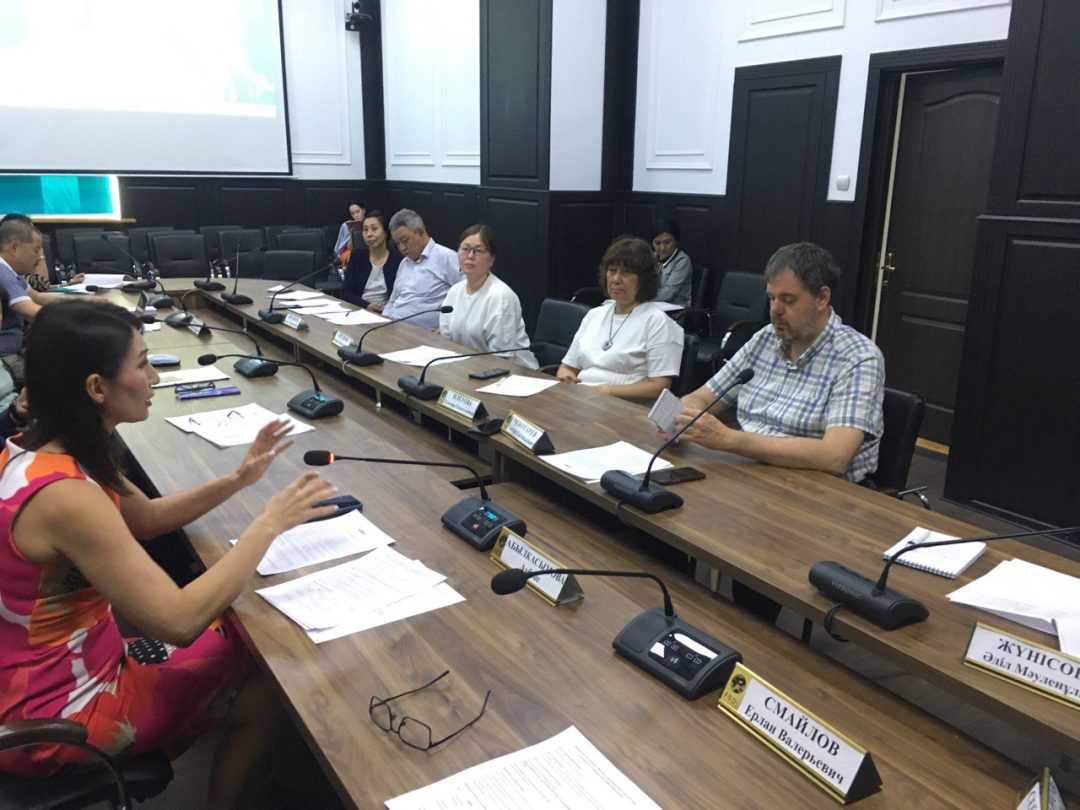
But the MNE's initiative caused a stir in the Majilis, while Kazakhstan’s expert community was very sceptical about it. A round table on the topic "Local self-governance in Kazakhstan: features and prospects of reform" was held in Almaty.
A Definition’s Importance
Director of the Center for Political Studies of the Institute of Philosophy, Political Science and Religious Studies of the Committee of Science of the Ministry of Science and Higher Education of the Republic of Kazakhstan, Aidar Amrebayev, noted that it is necessary to understand the meaningful concept of "local self-governance” and what it encompasses from the get-go. Then they can move on to which of its forms are possible in Kazakhstan and what role it can play in the country’s political modernization.
Director of the Center for Topical Studies "Alternative", political scientist Andrey Chebotarev recalled that attempts have been made several times in the Republic of Kazakhstan to legislate a special law on local self-governance, but in the end, all bills were withdrawn.
In 2001, the law "On Local Public Administration and Self-Government in the Republic of Kazakhstan" was adopted, but it was not completely clear how LSG should operate.
An Insurmountable Dependency
According to Andrey Chebotarev, the association of property owners (APO) in cities that do not have political agency and people's gatherings in rural areas, which are most often controlled by local akims, currently acts as a grassroots for LSG. There is also concern that the newly established kenes will be just as dependent on the akims as the people's gatherings or maslikhats.
As for the APO, the government categorically does not want to recognize them as an LSG. An APO is very convenient in this capacity, however. Most people know each other personally and it is a basic form of civil self–organization. Therefore, APOs should be recognized, if not as an organization, then at least as a form of LSG.
"But despite all this, right now, when the country and the whole world are in a phase of rapid transformation, Kazakhstan has a chance not just to adopt another new law but in practice to start building a working LSG system."
Nowhere without Money
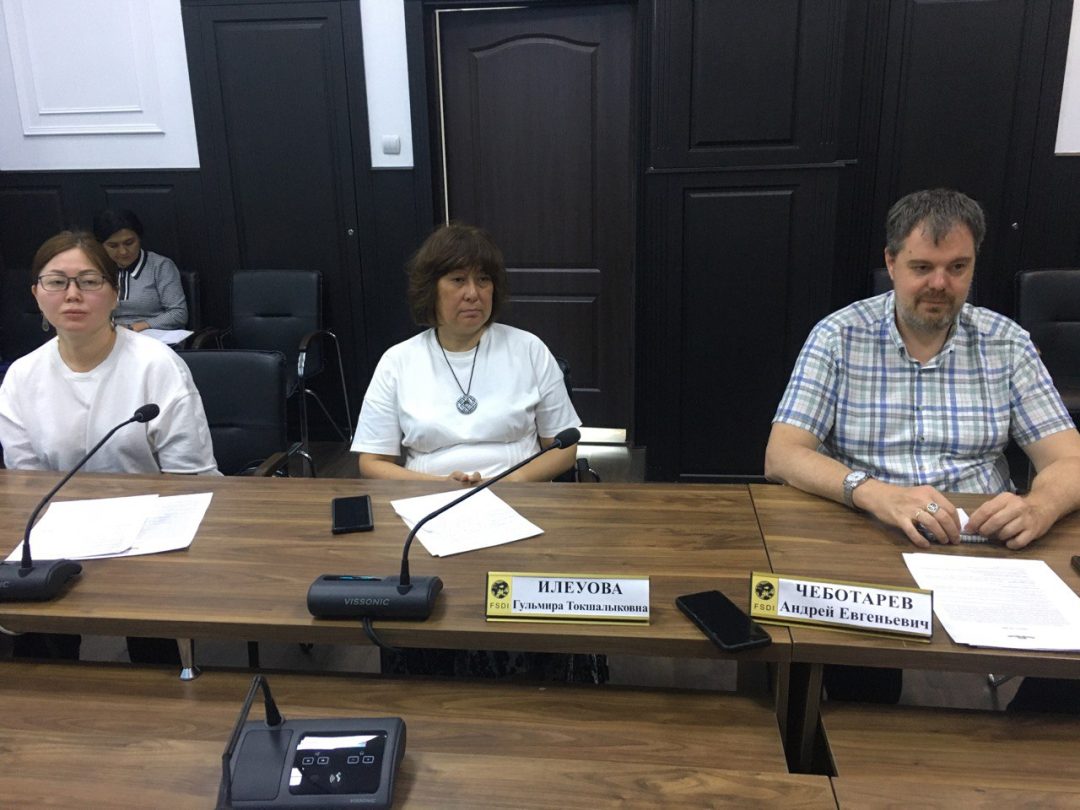
Gulmira Ileuova, President of the Center for Social and Political Studies "Strategy", drew attention to the mentality issue concerning the development of LSG.
"In Kazakhstan, until now, citizens, and above all officials, do not distinguish public administration from local self-governance. In our country, both appointed and elected akims are called the same and are perceived by the population in the same way – as government officials who make all decisions and manage local resources."
Executive Director of the public fund "Zertteu Research Institute”, Sholpan Aitenova, said that LSG in Kazakhstan will never work until issues with their financial independence from executive powers are resolved and their range of tasks is determined.
The Creation of Kenes Runs Contrary to The Constitution
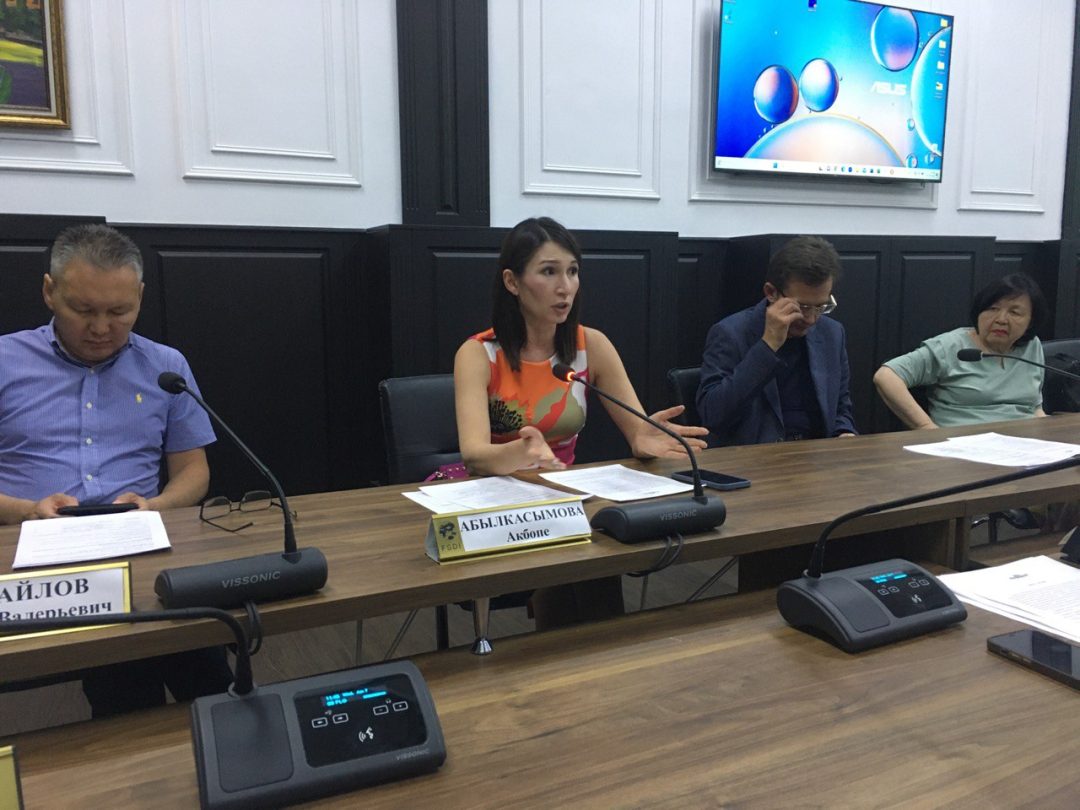
Member of the People’s Assembly of Kazakhstan, leader of the movement "Kazakhstan bizdin shanyragymyz”, Akbope Abylkasymova, said that the draft law of the Ministry of National Economy, in particular the idea of kenes as representative bodies, contradicts Kazakhstan’s Constitution. It clearly states that representative and executive bodies carry out local governance. The representative body is the maslikhat.
"I don't see the point in having so many different bodies. We already have a surplus of them. But people don't know about them and don't understand how everything works. For example, in Almaty there are so-called Committees of Local Self-governance (CLS). But who knows about them? Throughout all the time of my public activity in Almaty, I have met only one person from a CLS. He was an active young man from Algabas. Actually, the young man worked, and, as I understood, he received a salary in the akimat. I haven't seen them in other districts."
Having the southern capital in mind, according to the leader of "Kazakhstan bizdin shanyragymyz", it is necessary to increase the number of members in the city maslikhat (as single-mandate deputies) for maslikhats’ genuine independence from akims and increased efficiency. District maslikhats are also necessary, they would oversee the district akims’ operations and local budget spending.
In large cities, maslikhats of regional significance are needed. There are 42 people in the Almaty maslikhat. Only three receive salaries and are engaged only in social activities. All the others combine their parliamentary responsibilities with their main obligations.
"There are only 42 people in the Almaty maslikhat. And they have to control a city of 2 million, check the quality of the implementation of numerous programs and projects. At the same time, out of these 42 people, only three have the opportunity to fully devote themselves to social activities. Everyone else combines it with their main job. How can they effectively cope with their duties?".
Weak-willed Power-hungry Bureaucrats
Yerlan Smilov, a member of the Public Chamber under the Mazhilis, said that the head of state sets the right tone for self-governance's development, but Kazakhstan’s political elite and bureaucracy do not have the will to develop LSG. The president's initiatives are being hindered at the central and regional municipal levels.
Meanwhile, on the ground, akims most often decide who will be in the maslikhat or the public council, basing such decisions on who will be convenient and loyal to them.
There is currently a draft law on LSG, but there is no clear strategy for its development. It is unclear how the balance of interests between maslikhats and the elected akims will be maintained. The situation will become even more complicated if kenes comes into play. This is why Yerlan Smaylov is against it.
"In general, the development of LSG absolutely needs to be considered in conjunction with budgets. So that local self-government institutions have sufficient resources to solve local problems and are independent from akims and other government agencies."
He also noted that 42 maslikhat deputies are not sufficient for such a huge and complex city as Almaty. Its annual budget is 1 trillion 200 billion tenge. Thus, each city district should have its own maslikhat, which would be engaged in improving the lives of people in their respective areas.
At the same time, the same number of people live in Almaty region as in Almaty, but there are 300 maslikhat deputies of different levels.
Considering The Specifics
Different regions’ varying problems, different resources, and unique specifics complicate using the same LSG structure. It is, therefore, logical to try several different models and test them in several municipalities as pilot projects to see how it turns out, and whether it is worth spreading this experience to the whole country and formalizing it legislatively, Yerlan Smilov concluded.
By the end of the meeting, most of the speakers agreed that officials' authoritarianism and closeness and citizens’ passivity and irresponsibility hinder LSG development in Kazakhstan. Without sufficient financial reserves, it will not pan out. The MNE is incompetent in matters of LSG, kenes are not needed, and different districts and municipalities will suit different forms of self-organization. LSG is also not an end in itself, but a tool for improving people's lives.
Aidar Amrebayev added that the transformation of the LSG into a working tool is necessary not only for ordinary citizens but also for Kazakhstan’s political elite. Indeed, if they continue to fence themselves off from the people with an insurmountable wall of bureaucracy and deputies appointed from above, then the January events may occur once again. And people will tear down all dilapidated political structures.
Original Author: Danil Utyupin
DISCLAIMER: This is a translated piece. The text has been modified, the content is the same. Please refer to the original post in Russian for accuracy.
Latest news
- Orda.kz Editorial Team to Cease Operations on September 1
- The Price of a Degree: How Students in Kazakhstan Pay for University
- Second Przewalski’s Horse Foal Born as Species Returns to Kazakhstan
- Kazakh Mining Companies Can Recalculate Purchases if Tenge Weakens
- Kazakhstan Names First Vice President in Three Decades
- What Almaty’s Bus Shelters Are Missing
- 400-Truck Queue Builds at Kazakh–Kyrgyz Border
- Kazakhstan Ready to Help Feed and Rebuild Gaza
- Tokayev Establishes New Presidential Security Body
- Almaty Takes Back Its Nearly Century-Old Hippodrome
- No More Guesswork on Savings: Kazakhstan Tightens Energy Audits for Businesses
- Public Money Could Be Used to Rescue Failing Kazakh Banks
- Third Kazakh Woman Reported Missing in Nepal-China Flood Zone
- Falconer Convicted Over 35 Protected Birds, Spared Punishment Under Amnesty
- Kazakh Citizen Detained in Yakutia in Phone Fraud Case
- Yuan Instead of Dollars? KazMunayGas Draws Record Demand in Asia
- China Gains Oil-Market Influence as OPEC+ Weakens
- Kazakhstan to Divide Smartphones Into White, Gray and Black Lists
- Kazakhstan’s Government Formally Resigns as First Kurultai Session Opens
- Rare Lynx Sighting Recorded in Northern Kazakhstan
