

Scandal Over UAS Escalates with Russian Link and Legal Concerns
 Photo: Orda
The implementation of the Unified Accounting System (UAS), overseen by the Ministry of Tourism and Sports, has sparked fresh controversy — this time involving Russian ties, suspected legal violations, and efforts to stifle public scrutiny, Orda.kz reports.
A press conference on July 16 in Astana responded to a closed meeting on July 10, where sports betting operators were told that to integrate with the UAS, they needed to sign agreements not only with ESU Operator LLP but also with Nomapay LLP.
This surprised many in the industry.
Nomapay is a private company, yet Kazakhstan's law prohibits delegation of regulatory authority to private entities. Nomapay is effectively a front for Russia’s NPO Mobile Card, whose ultimate owner is VTB Bank — a bank under international sanctions.
As a result, ostensibly for regulatory purposes, a payments market worth over a trillion tenge annually could fall under control of a sanctioned foreign entity, right from official ministry offices.
To make matters worse, neither ESU Operator LLP nor Nomapay LLP hold information-security certificates. Instead, they plan to safeguard personal data via NDAs. Far from reinforcing national data sovereignty, this appears more like a hostile takeover of Kazakhstan’s payment infrastructure.
Press Conference Disrupted
Organized by the Association of Fintech and Innovations (AFTI) and the Association of Payment Organizations (APO), the July 16 press event was interrupted by provocateurs — speakers were cut off, journalists harassed, attempts made to derail the session — all aimed at preventing exposure of this scandal at high government levels.
UAS Echoes Russian TSUPIS Model
AFTI head Irina Davidenko pointed out that the Kazakh UAS mirrors Russia's TSUPIS — a platform created and promoted by select betting companies to control competitors. Initially run by "Boxing Progress Center," it later brought on VTB Bank via its subsidiaries.
The TSUPIS operator in Russia is NPO Mobile Card, ultimately controlled by VTB Bank. Nomapay staff openly acknowledge their affiliation with NPO Mobile Card.
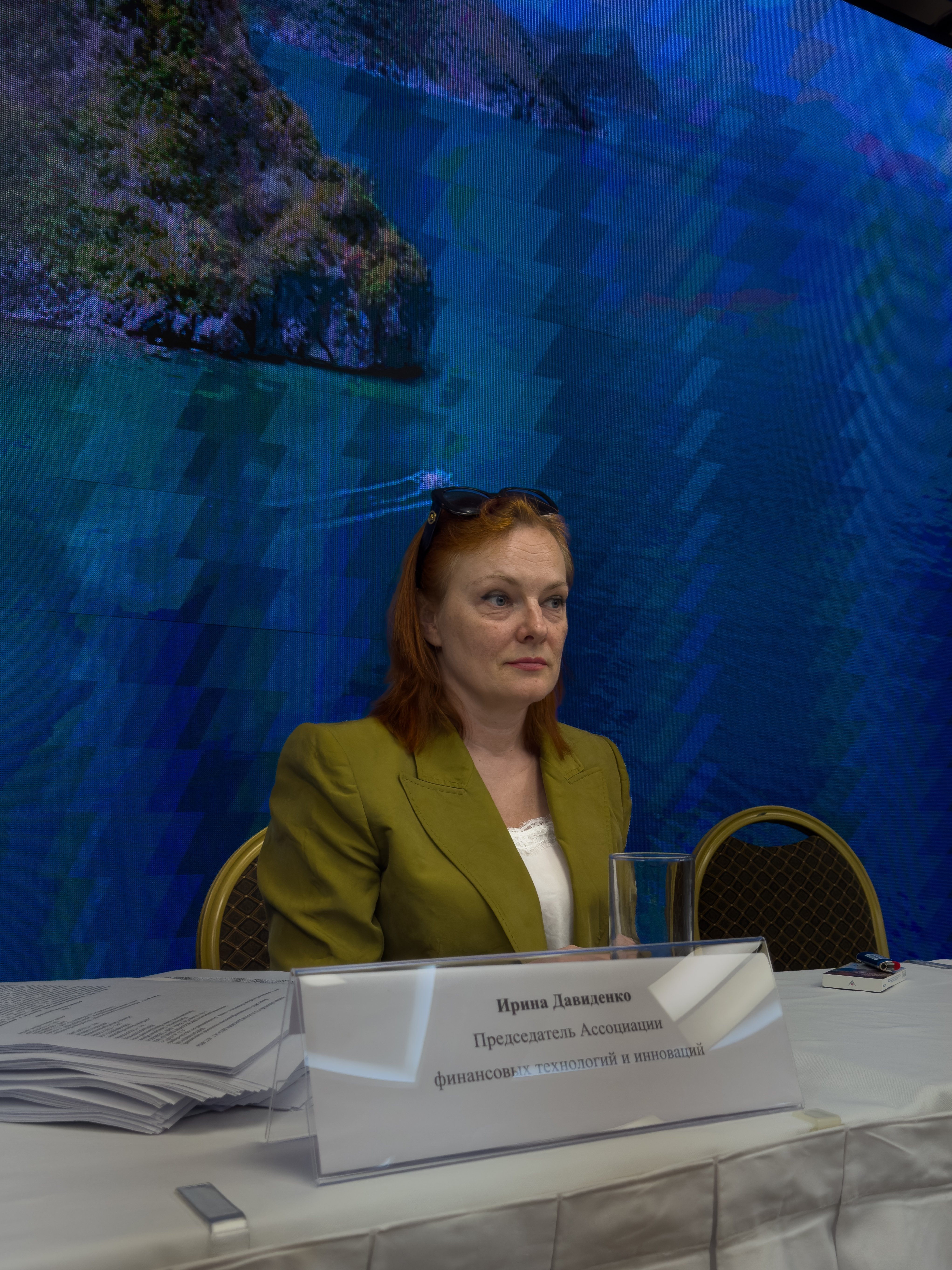
In order to implement the TSUPIS scheme in Kazakhstan, they began to substitute terms in the regulations, introduce non-existent regulators and distort statistics. The goal is to justify the need for a market function of payments in one hand of an artificially created private monopolist, which is managed by a subsidiary of a sanctioned Russian bank, said Davidenko.
Legal Team Flags Criminal Violations
AFTI’s legal department warns that officials and lobbyists behind the UAS may have breached multiple articles of the Kazakh Criminal Code (arts. 369, 361, 362, 190).
We hope that the competent authorities will figure out whether the Criminal Code of the Republic of Kazakhstan was violated, and in the event of a violation, they will be able to hold accountable those people who, using their official position, are transferring the market competitive payments sector into the hands of an artificially created private monopolist, which is controlled by foreign sanctioned structures, said Yerlan Kistafin, legal director at AFTI.
Industry Had Already Offered Free Solutions
Fintech firms had independently developed tools to prevent minors from gambling and to restrict account transfers, without new legislation. These tools were ready for the Ministry’s approval, free of charge, and with software provided to the state.
Yet officials declined to adopt them, saying it would obstruct the UAS rollout. Thus, legal regulatory tools were refused for the sake of implementing the contested system — a “theatre of the absurd,” according to industry representatives.
Broad Economic Risks
Kazakhstan’s financial system is internationally integrated and attracts investments through publicly traded banks and fintechs.
Establishing a private monopoly — especially one linked to sanctioned entities — could scare off capital, leading to withdrawal of existing investments and deterring new ones.
What Comes Next
Authorities must now determine whether legal violations occurred. Meanwhile, supporters of the private-monopolist model are likely to hurry its implementation, risking information security and financial sovereignty.
Both fintech associations urge government officials to proceed cautiously, fully understand relevant criminal statutes, and critically evaluate any push to adopt this centralized system with their signature.
Original Author: Editorial
Please refer to the original piece for accuracy.
Latest news
- Orda.kz Editorial Team to Cease Operations on September 1
- The Price of a Degree: How Students in Kazakhstan Pay for University
- Second Przewalski’s Horse Foal Born as Species Returns to Kazakhstan
- Kazakh Mining Companies Can Recalculate Purchases if Tenge Weakens
- Kazakhstan Names First Vice President in Three Decades
- What Almaty’s Bus Shelters Are Missing
- 400-Truck Queue Builds at Kazakh–Kyrgyz Border
- Kazakhstan Ready to Help Feed and Rebuild Gaza
- Tokayev Establishes New Presidential Security Body
- Almaty Takes Back Its Nearly Century-Old Hippodrome
- No More Guesswork on Savings: Kazakhstan Tightens Energy Audits for Businesses
- Public Money Could Be Used to Rescue Failing Kazakh Banks
- Third Kazakh Woman Reported Missing in Nepal-China Flood Zone
- Falconer Convicted Over 35 Protected Birds, Spared Punishment Under Amnesty
- Kazakh Citizen Detained in Yakutia in Phone Fraud Case
- Yuan Instead of Dollars? KazMunayGas Draws Record Demand in Asia
- China Gains Oil-Market Influence as OPEC+ Weakens
- Kazakhstan to Divide Smartphones Into White, Gray and Black Lists
- Kazakhstan’s Government Formally Resigns as First Kurultai Session Opens
- Rare Lynx Sighting Recorded in Northern Kazakhstan
