

President Signs Amnesty Law, Urges AI Use in Crime Prevention
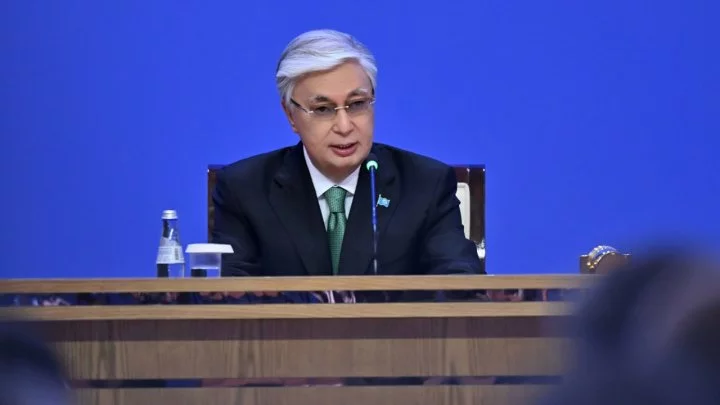 Photo: Aqorda
President Qasym-Jomart Toqayev addressed an expanded meeting of Kazakhstan’s law enforcement agencies, stressing the importance of public safety amid growing geopolitical tensions, Orda.kz reports.
Toqayev noted that since 2019, the number of criminal offenses in the country has been cut nearly in half, and safety in public spaces has improved by 80 percent.
Still, he emphasized that the work is far from complete. One of the government's top priorities remains tackling domestic violence.
One year ago, a law [the 'Saltanat Law'] significantly tightened penalties for domestic violence. Thanks to the adopted amendments and other measures, since the beginning of 2025 the number of medium and high-severity crimes in the domestic sphere has decreased by 30%,
Toqayev stated.
Corruption was another key focus. The President noted that funds confiscated from oligarchs and corrupt officials are being redirected toward public infrastructure projects. As evidence, he pointed to the recent opening of Kazakhstan’s first social facility built using returned assets.
Artificial intelligence also featured prominently in Toqayev’s address. He called for the launch of a surveillance platform with capabilities for facial recognition, vehicle tracking, and behavioral analysis.
We need a reboot of our system for forecasting and countering criminal threats. It is necessary to use the capabilities of artificial intelligence and 'big data.' For this purpose, we can use our new supercomputer, which is currently being prepared for launch.
In closing, Toqayev announced that he had signed the law "On Amnesty in Connection with the 30th Anniversary of the Constitution of the Republic of Kazakhstan."
It must be understood that amnesty is a one-time decision, not a systemic measure. Today, there is an urgent need for serious reform of the penal system. It must be aimed at the rehabilitation of convicted persons, not just their isolation from society.
Overall, the President concluded, Kazakhstan’s law enforcement system requires further reform — an agenda the government will now undertake.
Latest news
- Orda.kz Editorial Team to Cease Operations on September 1
- The Price of a Degree: How Students in Kazakhstan Pay for University
- Second Przewalski’s Horse Foal Born as Species Returns to Kazakhstan
- Kazakh Mining Companies Can Recalculate Purchases if Tenge Weakens
- Kazakhstan Names First Vice President in Three Decades
- What Almaty’s Bus Shelters Are Missing
- 400-Truck Queue Builds at Kazakh–Kyrgyz Border
- Kazakhstan Ready to Help Feed and Rebuild Gaza
- Tokayev Establishes New Presidential Security Body
- Almaty Takes Back Its Nearly Century-Old Hippodrome
- No More Guesswork on Savings: Kazakhstan Tightens Energy Audits for Businesses
- Public Money Could Be Used to Rescue Failing Kazakh Banks
- Third Kazakh Woman Reported Missing in Nepal-China Flood Zone
- Falconer Convicted Over 35 Protected Birds, Spared Punishment Under Amnesty
- Kazakh Citizen Detained in Yakutia in Phone Fraud Case
- Yuan Instead of Dollars? KazMunayGas Draws Record Demand in Asia
- China Gains Oil-Market Influence as OPEC+ Weakens
- Kazakhstan to Divide Smartphones Into White, Gray and Black Lists
- Kazakhstan’s Government Formally Resigns as First Kurultai Session Opens
- Rare Lynx Sighting Recorded in Northern Kazakhstan
