

Olzhas Baidildinov on Oil, Nuclear Power, and Kazakhstan’s Energy Future in An Interview with Orda.kz
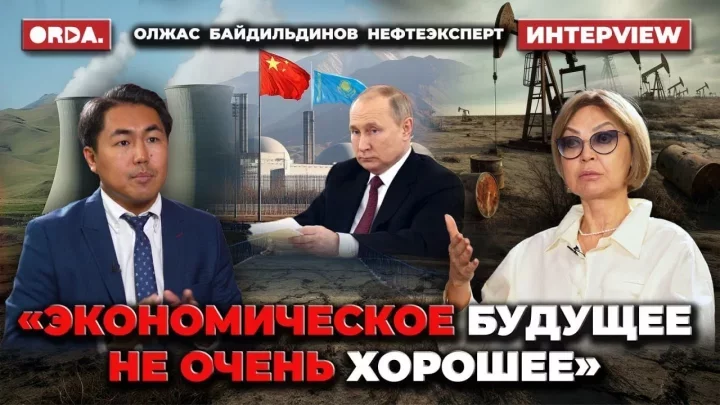 Photo: Orda.kz
Oil and gas industry analyst Olzhas Baidildinov spoke with Orda.kz Editor-in-Chief Gulnar Bazhkenova about the future of Kazakhstan’s oil sector, the construction of the country’s first nuclear power plant, and structural problems within KazMunayGas.
In this extended interview, he explained why the hiring practices at the national oil company may violate the Constitution, how Kazakhstan risks a significant drop in oil production in the coming years, and why Russia is unlikely to use energy as a political tool to put pressure on Kazakhstan.
A Chinese Comrade Instead of a Russian Brother
Baidildinov believes that China is poised to build Kazakhstan’s first nuclear power plant. In his view, the decision has practically been made, as suggested by a series of high-level meetings and ongoing negotiations since last year.
The Chinese state corporation CNNC has had a presence in Astana for a long time. Kazakhstan has held intensive talks not just with them, but also with the Export-Import Bank of China and the legislative technical committee. I even joked on Telegram, writing how ‘nuclear power plant’ looks in Chinese characters—it’s clear where things are headed. While I can’t confirm it definitively, I’m confident we’ll get official word soon,Baidildinov said.
Baidildinov also addressed Russia’s potential involvement. While Rosatom isn’t under direct sanctions, its subsidiaries and key personnel are, including Atomstroyexport.
We are now proceeding from current realities, not on what might happen 10 to 15 years from now. Russia is under sanctions right now; China is not, though there's no guarantee that it won’t change. Still, China clearly has the money for such projects and is willing to splash that cash, both literally and figuratively, to strengthen its presence in the region and expand its influence, Baidildinov explained.
He added that Kazakhstan will eventually need at least three nuclear power plants to address its growing energy demand. According to Baidildinov, the country already faced a 2.2 GW electricity deficit in December last year, made up through imports from Russia.
One nuclear plant won’t solve our energy issues; it only addresses current needs. With economic growth and an expected population increase of five million by 2040, we’ll need three plants. Why not let Rosatom build one and the Chinese another? That’s also a multi-vector diplomacy and healthy competition. Although I admit that Russia has objective competitive advantages, from language to qualified personnel. Currently, about 10 thousand Kazakhstanis work within Rosatom structures.
Will Russia Try to Block Kazakhstan’s Nuclear Plans?
Baidildinov argues that Russia has never used energy as leverage against Kazakhstan. While such a possibility may exist in theory, he said it has never materialized.
I don’t agree with claims that Russia has ever used energy as a club against us. That hasn’t happened — not with the CPC pipeline, electricity supplies, or oil products. For instance, Kazakhstan imports about 10% of its oil products from Russia. If they cut off bitumen, roadwork would halt nationwide. But that hasn’t happened, and I don’t believe it will,he explained.
Still, Baidildinov admitted that even if no direct threats occurred, some mistrust might linger.
There may still be a bit of a ‘residue’ left behind. But how that might show itself in the future is unclear. I believe our presidents have a good working relationship, and we’re unlikely to see open conflict, he added.
Asked whether Russian President Vladimir Putin’s rumored late-night phone calls to Kazakh President Qasym-Jomart Toqayev might have involved the nuclear power plant issue, Baidildinov replied:
Only two people know for sure: Qasym-Jomart Kemelevich and Vladimir Vladimirovich. Unfortunately, we have no opportunity to ask them. But it’s possible they discussed something like this. Most likely, we’ll find out based on the decisions made in the first half of this year regarding the nuclear power plant.
Aggressive and Fast, But Inefficient
Kazakhstan extracts oil inefficiently, leading to faster depletion of major fields than necessary.
Any oil field has a lifespan of about 40–50 years. You can produce oil aggressively and ramp up output quickly, but then production will decline just as fast. Or, you can take a slower approach and extract more oil over time. In Kazakhstan, the average oil recovery factor (ORF) is only 30%. For comparison, in the U.S., it reaches 55%. So we’re only extracting about a third of what’s actually possible,
explains Olzhas Baidildinov.
He cites Kazakhstan’s largest fields — Tengiz, Karachaganak, and Kashagan — as examples. Tengiz, for instance, is now producing around 900,000 barrels per day, about 1% of global output.
However, production is expected to decline sharply in the 2030s.
Kashagan is an even more complex case, with production falling significantly short of early expectations.
When I worked at the ministry, we seriously believed that thanks to Kashagan we would live like in Dubai. It was projected to produce 1.2 to 1.5 million barrels per day. But it’s stuck at 400–450 thousand. Western companies have invested about $60 billion into the project, but Kazakhstan disputes around $13 billion of that as unjustified. Arbitrations are ongoing, the companies want to extend the contract, but production isn’t increasing. Pessimistically forecasting, I think the volumes will remain the same until the shareholder structure changes.
Karachaganak, the third major field, has already reached its production peak and is set to decline.
Karachaganak is the calmest of the three ‘sisters,’ but the production plateau has already been reached. Output won’t go up from here, and will start to drop soon. Kazakhstan faces a double risk: after the 2030s, production will decline, and global oil prices will also fall. At that point, it won’t matter how much oil we produce — the world won’t need as much, and the prices will be low.
Baidildinov also highlights the difficulties of extracting oil from Kashagan due to the shallow waters of the Caspian Sea, just four to six meters deep, which prevent oil tankers from being fully loaded and require major infrastructure investment.
Kashagan is a very complex project, like the character of Kazakh women: strong-willed, temperamental, always full of surprises. Pipes have burst, and launches have been delayed there. In addition, there’s a risk that the northern Caspian could become swampy, and Kashagan could end up in a critical situation,he said.
The expert recalled that Kazakhstan’s total oil reserves are estimated at 30 billion barrels — nearly half of which lie in the Kashagan field.
KazMunayGas Hiring Practices Violate the Constitution
Baidildinov believes that the hiring system at KazMunayGas and its subsidiaries contradicts Kazakhstan’s Constitution.
He references a strike last year where former employees demanded to be rehired or compensated, arguing that they had been underpaid in the past.
These people feel cheated. They say, ‘We left five years ago when the salary was much lower. Now it’s doubled. That means you underpaid us — either compensate us or hire us back.’ But the company responds, ‘That’s not how it works, you’ve already quit,’he explained.
According to Baidildinov, the root of the issue is the company’s hiring policy, which he argues is unconstitutional because it discriminates based on personal background.
For example, to get hired at Ozenmunaigas, there’s a special list: residents of Zhanaozen, children of current KazMunayGas employees, or children of those injured on the job are given priority. The company believes these people should be hired first. So, when a position opens, they hire from that list. This clearly violates the Constitution.
He insists that professional qualifications should be the only hiring criterion, not gender, hometown, or family connections.
Baidildinov also warns that the situation in the Zhanaozen region is becoming critical: the nearby oil fields are drying up, and within five years, they may be nearly depleted.
Original Author: Artem Volkov
Latest news
- Orda.kz Editorial Team to Cease Operations on September 1
- The Price of a Degree: How Students in Kazakhstan Pay for University
- Second Przewalski’s Horse Foal Born as Species Returns to Kazakhstan
- Kazakh Mining Companies Can Recalculate Purchases if Tenge Weakens
- Kazakhstan Names First Vice President in Three Decades
- What Almaty’s Bus Shelters Are Missing
- 400-Truck Queue Builds at Kazakh–Kyrgyz Border
- Kazakhstan Ready to Help Feed and Rebuild Gaza
- Tokayev Establishes New Presidential Security Body
- Almaty Takes Back Its Nearly Century-Old Hippodrome
- No More Guesswork on Savings: Kazakhstan Tightens Energy Audits for Businesses
- Public Money Could Be Used to Rescue Failing Kazakh Banks
- Third Kazakh Woman Reported Missing in Nepal-China Flood Zone
- Falconer Convicted Over 35 Protected Birds, Spared Punishment Under Amnesty
- Kazakh Citizen Detained in Yakutia in Phone Fraud Case
- Yuan Instead of Dollars? KazMunayGas Draws Record Demand in Asia
- China Gains Oil-Market Influence as OPEC+ Weakens
- Kazakhstan to Divide Smartphones Into White, Gray and Black Lists
- Kazakhstan’s Government Formally Resigns as First Kurultai Session Opens
- Rare Lynx Sighting Recorded in Northern Kazakhstan
