

National Currencies, Iran's Accession - Results of The SCO Summit
 Photo: sputnik.tj
The end of the recent summit of the Shanghai Cooperation Organization has signaled the completion of India's chairmanship and marked the beginning of Kazakhstan's. Orda analyzed the situation.
The SCO appeared in 2001. It evolved from the Shanghai Five, which since 1996 included Kazakhstan, Kyrgyzstan, China, Russia and Tajikistan.
Uzbekistan, Pakistan, and India joined the organization later. Iran has recently become a full-fledged member after many years of observer status. Belarus is in the queue to join.
Iran's interest is clear – participation in the SCO will strengthen cooperation with large and neighboring economies, will open new markets, and provide the ability to participate in projects. Iran ranks second in the world in terms of the number of sanctions after Russia.
The SCO member states occupy 60% of the Eurasian continent’s territory, where half of the world's population lives. At the same time, the Shanghai Cooperation Organization is not a union like the EU and includes very diverse participants, between whom there are often serious contradictions.
SCO Contradictions
Such contradictions were expressed in the results of the meeting and the documents adopted, including the New Delhi Declaration, where the SCO members agreed on the need to implement the Strategy of Economic Development by 2030. It was this point, according to the Wire, that did not suit the host of the summit – India, which did not sign the document. The reason for the refusal, according to sources, was the abundance of Chinese initiatives. Many disputes exist in relations between Beijing and Delhi, including territorial ones. As a result, the Strategy was not even published. It remains unclear whether other SCO members approved it.
Great differences have historically persisted between India and Pakistan. There is also a different attitude within the SCO countries on the Uighur issue. Chinese President Xi Jinping, listing the "three forces of evil," mentioned "militants of East Turkestan." This is how those fighting for the independence of the Xinjiang Uygur Autonomous Region are called in China. The region bordering Central Asia was once part of it in ethno-cultural terms. Now "re-education camps" are organized there. Uighurs, Kazakhs and Kyrgyz, who live in Xinjiang, are held there.
What Kazakhstan Needs
President Toqayev also spoke about the three forces of evil. However, he sees them as transnational crime, drug trafficking and cybercrime. Kazakhstan will make efforts to combat these issues for a year, while the chairmanship that has passed from India lasts.
Toqayev proposed updating cooperation programs on countering terrorism, separatism and extremism for 2025-2027, as well as adopting the SCO Anti-Drug Strategy for 2024-2029.
To overcome the crisis in Afghanistan, Toqayev recalled the initiative to create a UN Regional Center for Sustainable Development Goals for Central Asia and Afghanistan with a headquarters in Almaty. He also focused on "preventing a geopolitical rift between the East and West," apparently alluding to the modern relations between Moscow, Beijing and Tehran with Western partners.
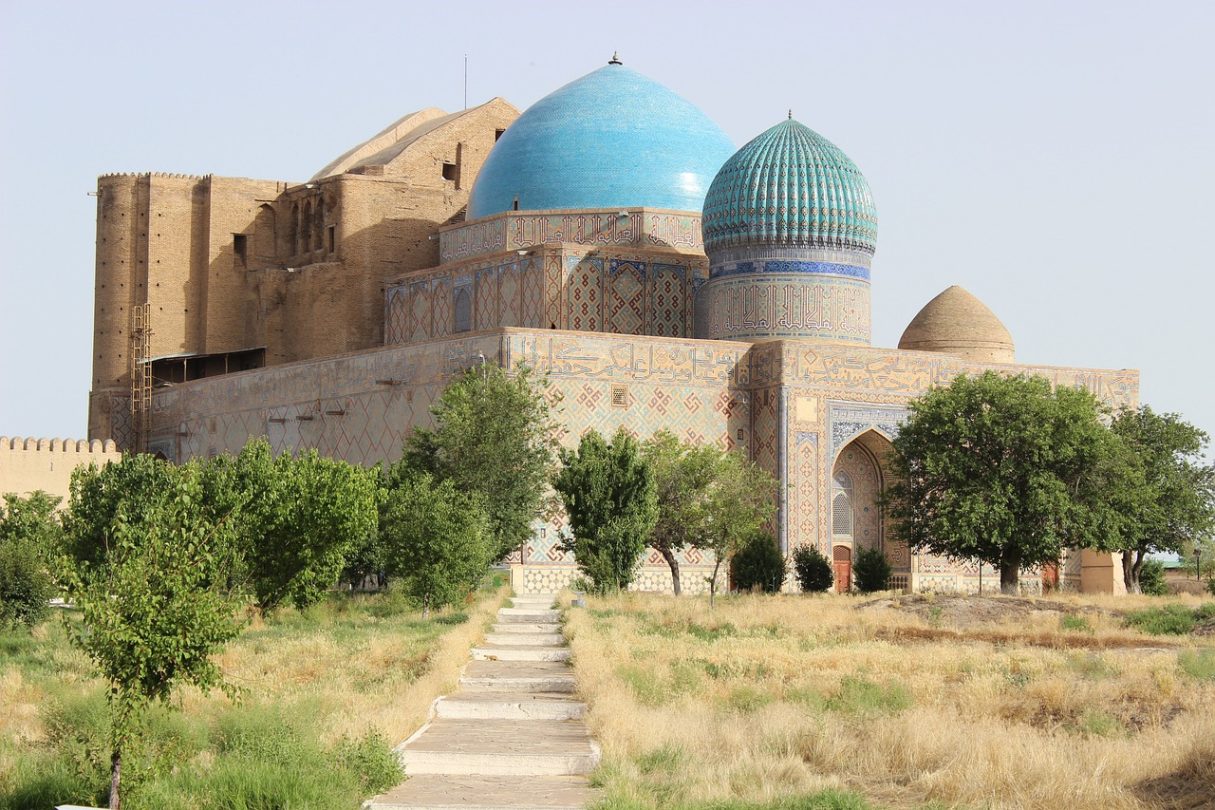
Toqayev also proposed to hold a number of international events in Kazakhstan: the SCO Digital Forum and the creation of the SCO Digital Hub at the Astana International Financial Center, the SCO Energy Forum, and as part of the development of culture and tourism, the launching of the SCO Spiritual Shrines project, and a presentation of the city of Turkestan and the mausoleum of Khoja Ahmed Yasawi.
Almaty will become the tourism and cultural capital of the SCO for 2023-2024. The pulling back of the visa regime with India, Iran and China will contribute to this.
Transport
The discussion of the development of transport arteries between the SCO members took an important spot on the agenda. All the participants of the summit in New Delhi spoke about them. President of Uzbekistan Mirziyoyev called for "developing a single map of the transport interconnectedness of all SCO states" in order to identify bottlenecks. Incidentally, Uzbekistan is currently building a railway with Kyrgyzstan and China, which in the future will connect them with the ports of the Caspian Sea in Turkmenistan and a possible extension to Iran.
The route can be called a competitor to the Kazakhstan Trans-Caspian International Transport Route (TMTM), which runs from the Chinese border to the Kazakh ports on the Caspian Sea - Aktau and Kuryk.

Iran's accession to the SCO makes access to Iranian ports both in the Caspian Sea and in the Persian Gulf easier. The republic's leader, Ebrahim Raisi, said that he wants to develop transport links with Russia within the North-South corridor. A project is currently being implemented to build a railway that will connect Russia, Azerbaijan and the Iranian city of Rasht.
Currency
Kyrgyzstan and China proposed to increase the share of settlements in the national currencies of the participating states. This idea is not so new, and is in Beijing’s interests, as it may facilitate the yuan’s influence strengthening in the region and the world.
"I consider it expedient to increase the share of settlements in national currencies within the organization, to increase cooperation on the sovereign digital currency, to work on the creation of the SCO development bank,"
Xi Jinping said.
According to Vladimir Putin, who was also present via video link from Moscow, more than 80% of transactions between Russia and China are now carried out in rubles and yuan, but he did not specify the currencies' share in mutual trade. Iran also supported the rejection of the US dollar.
Qasym-Jomart Toqayev noted that for 20 years of the SCO's existence, it has not implemented a single major investment project. Therefore, it is necessary to consider the possibility of creating a joint investment fund for the SCO states.
Original Author: Maxim Skopin
DISCLAIMER: This is a translated piece, the text has been modified, the content is the same. Please refer to the original article for accuracy.
Latest news
- Kazakhstan Cancels Exam Results For More Than 700 University Applicants
- Astana LRT Operator Looks For Funding In China
- Smoke From Russian Wildfires Reaches Eastern Kazakhstan
- Kazakhstan Offers EU A Broader Partnership In Eurasia
- Oil Leak Reported In Caspian Sea Near Azerbaijan Coast
- Kazakhstan To Build 250 Roadside Service Stations For 180 Billion Tenge
- Police Chase With Kazakh Driver In Phuket Ends In Crash And Injuries
- Foreigners Moving To Kazakhstan Are Choosing Big Cities Over Most Regions
- Turkestan Region Leads Kazakhstan In Twin Births
- From Grain To AI: What Kazakhstan Brought To Afghanistan
- Helicopters Drop 39 Tons Of Water On Forest Fire In East Kazakhstan
- Kazakhstan Tightens Border Checks Despite Saying There Is No Fuel Shortage
- Kazakhstan Seeks Greek Investment In Energy And Transport
- Global Rating Agency Confirms Kazakhstan’s Investment-Grade Status
- Kazakh Company Sent $16 Million To China, Got No Goods And A Huge Fine
- Kazakh Parties Are Losing Focus With Overly Broad Programs, Expert Says
- Almaty Man Registered 990 People In One-Room Apartment And Received Sentence
- Montenegro President Makes First Official Visit To Kazakhstan
- Gas Prices In Kazakhstan To Rise From July 1
- Kazakhstan’s Oldest Gold Mining Company Resold For 8.7 Billion Tenge
