

Majilis Approves Crime Prevention Law With Rules on Scooters, Attire, and Social Media
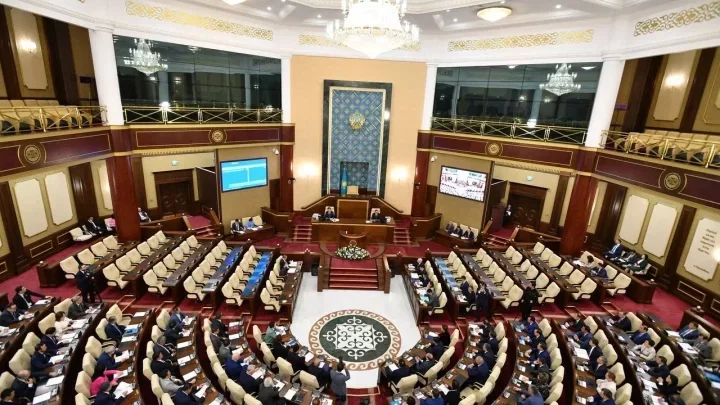 Photo: Majilis press service
At its December 3rd plenary session, the Majilis adopted the law “On Crime Prevention” along with a package of related amendments in its second reading. The changes affect several different areas, including transportation, religious attire, and behavior on social media, Orda.kz reports.
The law consolidates the provisions of five existing regulatory acts:
- “On the prevention of offenses”
- “On the prevention of domestic violence”
- “On the prevention of juvenile delinquency, prevention of child neglect and homelessness”
- “On administrative supervision of persons released from places of deprivation of liberty”
- “On the participation of citizens in ensuring public order”
One of the most significant and long-discussed changes concerns the regulation of electric scooters.
Kazakhstan has been reviewing and revising these rules for several years. Draft amendments recognizing electric scooters as vehicles were first adopted in 2023.
The new amendments approved by the Majilis introduce mandatory civil liability insurance and require registration plates for scooters.
These amendments primarily concern the responsibilities of sharing companies. Their activities will be regulated. We'll develop a sample number. It won't be a state registration number like a car's, but it should be a legible, identifiable number. Each company will have one — they'll keep their own records. And if there's an accident, like a pedestrian being hit, this number will be used to identify the person operating the scooter,
Deputy Interior Minister Igor Lepekha clarified.
The bill also establishes penalties for wearing clothing that prevents facial recognition — such as the niqab (where only the eyes are visible) or the burka (full facial covering).
Wearing such clothing in public places is already prohibited in Kazakhstan; the president signed the law on June 30, 2025. The amendments now outline specific penalties.
For the first offense, a warning is provided, for a repeat offense, a fine of 10 MCI (39,320 tenge),
deputy Magerram Magerramov said.
Additionally, during the bill’s first reading, deputies announced that Kazakhstan would introduce administrative liability for reposts. This means penalties would apply not only to creators of prohibited content but also to those who distribute it, including through social media reposts.
The law has been adopted by the Majilis and will be sent to the Senate for consideration.
Original Author: Anastasia Prilepskaya
Latest news
- Orda.kz Editorial Team to Cease Operations on September 1
- The Price of a Degree: How Students in Kazakhstan Pay for University
- Second Przewalski’s Horse Foal Born as Species Returns to Kazakhstan
- Kazakh Mining Companies Can Recalculate Purchases if Tenge Weakens
- Kazakhstan Names First Vice President in Three Decades
- What Almaty’s Bus Shelters Are Missing
- 400-Truck Queue Builds at Kazakh–Kyrgyz Border
- Kazakhstan Ready to Help Feed and Rebuild Gaza
- Tokayev Establishes New Presidential Security Body
- Almaty Takes Back Its Nearly Century-Old Hippodrome
- No More Guesswork on Savings: Kazakhstan Tightens Energy Audits for Businesses
- Public Money Could Be Used to Rescue Failing Kazakh Banks
- Third Kazakh Woman Reported Missing in Nepal-China Flood Zone
- Falconer Convicted Over 35 Protected Birds, Spared Punishment Under Amnesty
- Kazakh Citizen Detained in Yakutia in Phone Fraud Case
- Yuan Instead of Dollars? KazMunayGas Draws Record Demand in Asia
- China Gains Oil-Market Influence as OPEC+ Weakens
- Kazakhstan to Divide Smartphones Into White, Gray and Black Lists
- Kazakhstan’s Government Formally Resigns as First Kurultai Session Opens
- Rare Lynx Sighting Recorded in Northern Kazakhstan
