

Lavrov–Rubio Meeting Ahead of Trump–Putin Summit Postponed
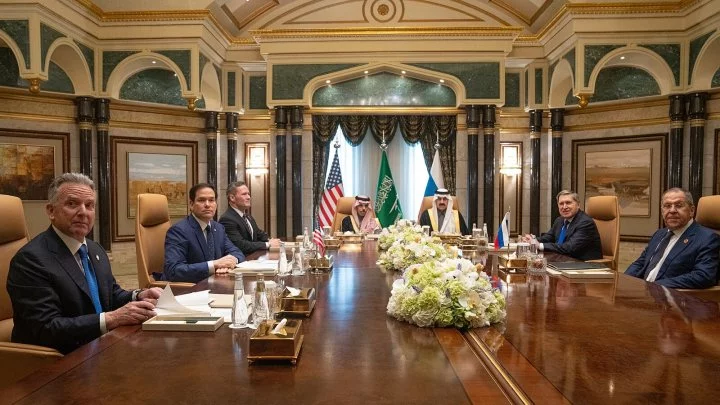 Photo: Ill. Purposes, Rubio left, Lavrov Right - Meeting of US and Russian officials (Official U.S. Department of State photo by Freddie Everett — Public Domain)
The planned meeting between Russian Foreign Minister Sergey Lavrov and U.S. Secretary of State Marco Rubio, intended to precede the upcoming Trump–Putin summit, has been postponed, CNN reports, citing a White House official.
Tabled For Now
According to the report, it remains unclear why the meeting was delayed, but one of CNN’s sources noted that Lavrov and Rubio had differing expectations about how the war between Russia and Ukraine could end.
A phone call between the two took place on October 20, during which, according to Russia’s Foreign Ministry, they discussed “specific steps for implementing the understandings reached by Putin and Trump.”
However, after that call, U.S. officials reportedly concluded that Moscow’s position had not shifted from its maximalist demands. One of CNN’s sources said Rubio is unlikely to recommend holding the Putin–Trump meeting next week, although the two diplomats may speak again later this week.
CNN notes that it is also unclear how the postponement of the Lavrov–Rubio meeting will ultimately affect the expected Trump–Putin summit in Budapest.
Sanctions Bill on Hold
The U.S. Senate has also paused consideration of the Sanctioning Russia Act of 2025 until after the anticipated meeting between Donald Trump and Vladimir Putin, Bloomberg reports.
Republican Party leader John Thune told reporters in the Senate that lawmakers were temporarily halting the process:
“At the moment, we’re kind of pressing the pause button,” Thune said.
The bill, introduced on April 1, had long remained stalled despite support from at least 85 senators. Last week, Thune said the chamber would vote on the measure within 30 days.
The Sanctioning Russia Act of 2025 mandates sweeping economic measures if the U.S. president determines that Russia — or entities acting on its behalf — refuses to negotiate peace with Ukraine, violates an existing agreement, launches a new offensive, or seeks to overthrow the Ukrainian government.
If enacted, the law would impose a minimum 500% tariff increase on all Russian goods and services, as well as on imports from any country trading in Russian oil or uranium.
Latest news
- Orda.kz Editorial Team to Cease Operations on September 1
- The Price of a Degree: How Students in Kazakhstan Pay for University
- Second Przewalski’s Horse Foal Born as Species Returns to Kazakhstan
- Kazakh Mining Companies Can Recalculate Purchases if Tenge Weakens
- Kazakhstan Names First Vice President in Three Decades
- What Almaty’s Bus Shelters Are Missing
- 400-Truck Queue Builds at Kazakh–Kyrgyz Border
- Kazakhstan Ready to Help Feed and Rebuild Gaza
- Tokayev Establishes New Presidential Security Body
- Almaty Takes Back Its Nearly Century-Old Hippodrome
- No More Guesswork on Savings: Kazakhstan Tightens Energy Audits for Businesses
- Public Money Could Be Used to Rescue Failing Kazakh Banks
- Third Kazakh Woman Reported Missing in Nepal-China Flood Zone
- Falconer Convicted Over 35 Protected Birds, Spared Punishment Under Amnesty
- Kazakh Citizen Detained in Yakutia in Phone Fraud Case
- Yuan Instead of Dollars? KazMunayGas Draws Record Demand in Asia
- China Gains Oil-Market Influence as OPEC+ Weakens
- Kazakhstan to Divide Smartphones Into White, Gray and Black Lists
- Kazakhstan’s Government Formally Resigns as First Kurultai Session Opens
- Rare Lynx Sighting Recorded in Northern Kazakhstan
