

Kazakhstan’s Waste Volume Rose To 5.5 Million Tons In 2025
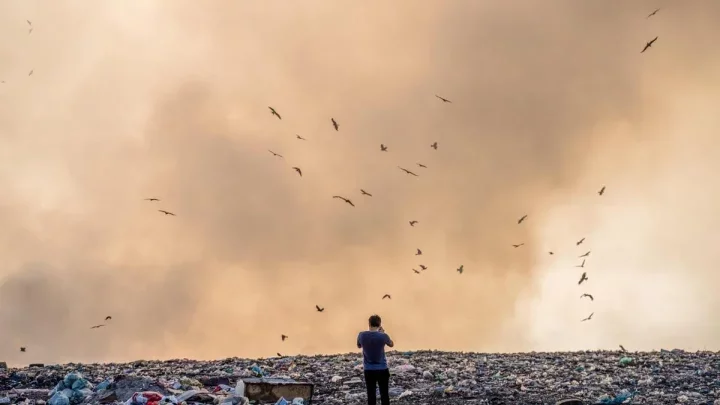 Photo: pixabay
Kazakh households produced 2.1 million tons of household waste last year, up from 2 million tons a year earlier. Meanwhile, the number of companies collecting and removing waste has also grown, rising from 676 to 846 over five years, Orda.kz reports.
The figures come from a market study by Energyprom. According to the agency, 846 enterprises and organizations were involved in waste collection and removal in Kazakhstan in 2025. Most operate in the private sector, with 782 privately owned companies.
The largest number of market participants was concentrated in the Almaty region, where 117 organizations operate. Another 93 companies were registered in the Zhambyl region and 91 in Almaty. The fewest such enterprises were recorded in the Ulytau region, with nine, while 15 organizations operated in Shymkent.
The total volume of collected waste, including waste from enterprises that remove their own garbage, reached 5.5 million tons. In 2021, the figure stood at 4 million tons. Municipal waste accounted for 4.1 million tons of the total.
Among municipal waste categories, street-cleaning waste made up the largest share, at 246,200 tons. Wastepaper and paper waste totaled 200,300 tons, food waste 157,700 tons, and market waste 154,500 tons. Collected plastic and PET packaging reached 98,200 tons.
At the same time, the volume of recyclables remained relatively small. Over the year, Kazakhstan collected 665 tons of electronic waste, 1,700 tons of scrap metal, 412 tons of tires, and 4,000 tons of textiles.
Households accounted for 2.1 million tons of waste. The largest volume was collected in Almaty, at 475,100 tons. It was followed by the Karaganda region with 237,800 tons and Astana with 212,000 tons. Another 148,100 tons were collected in the Mangystau region and 137,600 tons in Shymkent.
Less populated regions reported significantly lower figures. Kyzylorda region collected 13,300 tons of household waste, Zhetysu region 22,800 tons, and Abay region 25,900 tons.
In recent years, waste removal services have become more expensive as waste volumes have grown. However, tariff growth slowed significantly in 2026. By the end of April, the cost of garbage removal had increased by 1.3% year-on-year.
Original author: Rimma Karatayeva
Read also:
Latest news
- Orda.kz Editorial Team to Cease Operations on September 1
- The Price of a Degree: How Students in Kazakhstan Pay for University
- Second Przewalski’s Horse Foal Born as Species Returns to Kazakhstan
- Kazakh Mining Companies Can Recalculate Purchases if Tenge Weakens
- Kazakhstan Names First Vice President in Three Decades
- What Almaty’s Bus Shelters Are Missing
- 400-Truck Queue Builds at Kazakh–Kyrgyz Border
- Kazakhstan Ready to Help Feed and Rebuild Gaza
- Tokayev Establishes New Presidential Security Body
- Almaty Takes Back Its Nearly Century-Old Hippodrome
- No More Guesswork on Savings: Kazakhstan Tightens Energy Audits for Businesses
- Public Money Could Be Used to Rescue Failing Kazakh Banks
- Third Kazakh Woman Reported Missing in Nepal-China Flood Zone
- Falconer Convicted Over 35 Protected Birds, Spared Punishment Under Amnesty
- Kazakh Citizen Detained in Yakutia in Phone Fraud Case
- Yuan Instead of Dollars? KazMunayGas Draws Record Demand in Asia
- China Gains Oil-Market Influence as OPEC+ Weakens
- Kazakhstan to Divide Smartphones Into White, Gray and Black Lists
- Kazakhstan’s Government Formally Resigns as First Kurultai Session Opens
- Rare Lynx Sighting Recorded in Northern Kazakhstan
