

Kazakhstan Ratifies CIS Regulations on Radioactive Material Transport
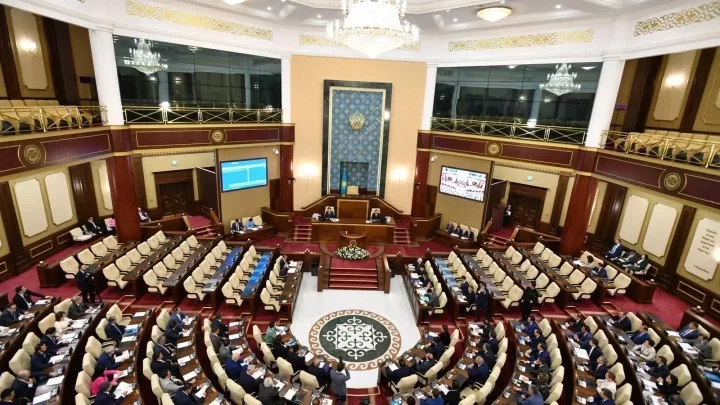 Photo: Majilis press service
The Majilis has approved an agreement governing the cross-border movement of radioactive materials within CIS countries, Orda.kz reports.
The document introduces unified rules for moving nuclear materials across the territories of CIS member states. According to Atomic Energy Agency Chair Almasadam Satkaliyev, one of the main goals is to enhance safety during transport.
The international transport of radioactive materials, which involves the territories of several countries, requires coordinated actions by authorized bodies of CIS member states, recognition of permits, and unified approaches to ensuring safety. Therefore, ratification of the agreement was necessary,
the head of the agency clarified.
Satkaliyev also addressed questions about accident scenarios or radioactive leaks:
To prevent such situations, the transportation of such cargo is typically carried out in special transport packaging kits that are fully protected from biological, chemical, seismic, shock, explosive, and thermal impacts. All nuclear cargo is escorted, and certain types of cargo even require National Guard escort.
Under the agreement, in the event of an emergency, the carrier must have all necessary materials, equipment, protective clothing, and specialized gear on hand to eliminate the consequences of radiation leaks and territorial contamination.
If a larger-scale emergency occurs, the transit country, through the relevant ministries — in our case, the Ministry of Emergency Situations — must take all necessary measures to address the incident. All costs will be reimbursed by the shipper,
added the head of the atomic energy agency.
The agreement also requires shippers transporting radioactive materials across borders to obtain permits from the competent authorities of the exporting state, the transit country, and the destination state, in line with national legislation.
Physical protection during transport will be carried out under the laws of the participating states and relevant international instruments.
However, protection standards may not be lower than those established by the Convention on the Physical Protection of Nuclear Material and Nuclear Facilities of October 26, 1979.
Original Author: Anastasia Prilepskaya
Latest news
- Orda.kz Editorial Team to Cease Operations on September 1
- The Price of a Degree: How Students in Kazakhstan Pay for University
- Second Przewalski’s Horse Foal Born as Species Returns to Kazakhstan
- Kazakh Mining Companies Can Recalculate Purchases if Tenge Weakens
- Kazakhstan Names First Vice President in Three Decades
- What Almaty’s Bus Shelters Are Missing
- 400-Truck Queue Builds at Kazakh–Kyrgyz Border
- Kazakhstan Ready to Help Feed and Rebuild Gaza
- Tokayev Establishes New Presidential Security Body
- Almaty Takes Back Its Nearly Century-Old Hippodrome
- No More Guesswork on Savings: Kazakhstan Tightens Energy Audits for Businesses
- Public Money Could Be Used to Rescue Failing Kazakh Banks
- Third Kazakh Woman Reported Missing in Nepal-China Flood Zone
- Falconer Convicted Over 35 Protected Birds, Spared Punishment Under Amnesty
- Kazakh Citizen Detained in Yakutia in Phone Fraud Case
- Yuan Instead of Dollars? KazMunayGas Draws Record Demand in Asia
- China Gains Oil-Market Influence as OPEC+ Weakens
- Kazakhstan to Divide Smartphones Into White, Gray and Black Lists
- Kazakhstan’s Government Formally Resigns as First Kurultai Session Opens
- Rare Lynx Sighting Recorded in Northern Kazakhstan
