

Interview: Iakov Vorontsov Discusses Establishing New Orthodox Church in Kazakhstan
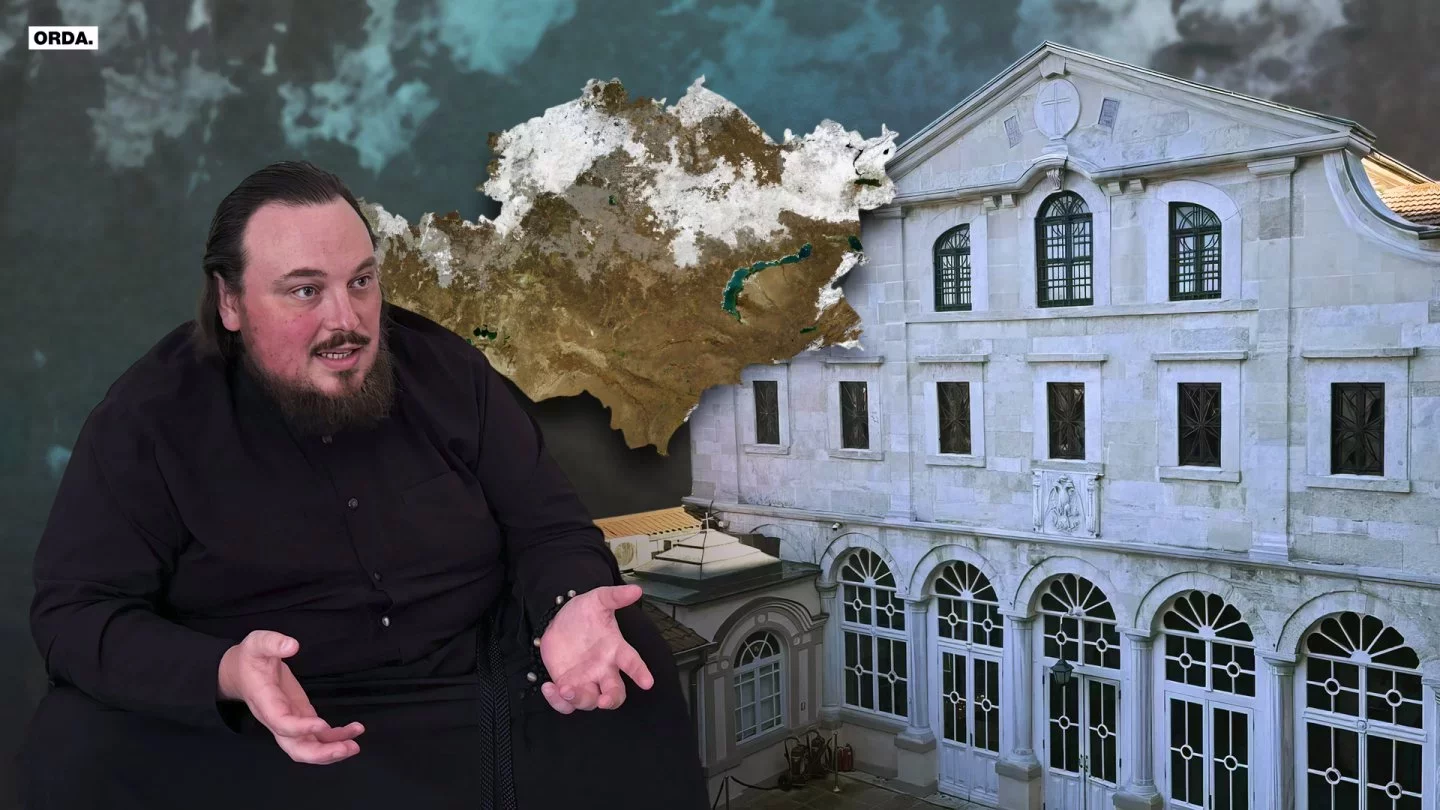 Photo: Orda
Former Russian Orthodox Church cleric Iakov Vorontsov gained public attention in 2022 after taking a strong anti-war stance, opposing the top leadership of the Russian Orthodox Church.
Since then, he has been suspended and defrocked within the Russian Orthodox Church. Vorontsov has long advocated for establishing a representative office of the Constantinople Patriarchate in Kazakhstan and has recently begun collecting signatures for an appeal to Ecumenical Patriarch Bartholomew.
Orda.kz spoke with him about the feasibility of this idea and whether anything might change for parishioners if the Patriarch responds positively.
You are still referred to as a priest, often as a hieromonk. But it turns out your rank was revoked. This happened quietly. I personally missed it. When did it happen?
— I missed it too. I was defrocked in absentia, violating both secular and ecclesiastical law. The church court ruling dates back to August 2023. But I only learned of it nearly a year later, when news broke that Patriarch Kirill had approved the diocesan court’s decision.
I had heard the trial was being prepared, but it wasn’t conducted like an informal gathering. Just as the state has its laws, the Church has its own canons, decrees from local councils, bishop councils, the Holy Synod, and episcopal decrees — including those related to court proceedings.
The regulations on church courts were approved by the Bishops’ Council, the Church’s highest governing body today. They’re very specific. I should have received a formal summons with a seal and signature. Instead, I got a personal email from the court secretary saying: “Come to fraternal fellowship.”
In other words, I was invited to “fellowship” in court. I refused to attend under that format. I replied: if you want to meet fraternally, let’s have tea or coffee. If it’s a trial, follow the court regulations.
Since I wasn’t properly summoned, my absence was justified. And even if that email were a valid summons, it arrived too late for me to prepare. I wasn’t given access to the accusations or witness testimony. Defrocking is the Church court’s highest penalty.
If someone fails to appear without a valid reason, the court can be postponed up to three times. With a valid reason, it can be postponed indefinitely. For example, during Father Alexei Uminsky’s trial in Moscow, they followed this protocol.
He didn’t attend, but they summoned him three times and defrocked him on the third day. In my case, all norms were violated. So it surprised me to learn I had already been defrocked. I had trusted the court representatives to act decently.
I believe my defrocking is completely unjust and illegal. I recently appealed this decision to the Orthodox Church of Constantinople, addressed to the Patriarch. Like most Orthodox Christians worldwide, I recognize him as the universal arbiter. He is “first among equals” among bishops.
According to the canons, he has both appellate and supreme judicial authority in the Church.
You were also under investigation for over a year. What was that about?
— A criminal case for suspected extremism was part of a smear campaign. Not against me personally — I’m just a private citizen without notable status. But the initiative I voiced — not just on my own behalf, but for many Orthodox believers in Kazakhstan, both citizens and foreigners — caused alarm.
It frightened the Russian Orthodox Church and, perhaps, the authorities of a neighboring country who treat the ROC as a political tool, propaganda mouthpiece, and means of exporting the “Russian World” ideology. They weren’t afraid of me, but of the idea and its support.
A lot of slander has been spread about me: “He’s crazy, a drunk, a drug addict. He’ll fail.” Yet money has been poured into this slander — that costs something. The criminal case was just one tool in this smear campaign.
To me, it was an attempt to obstruct legitimate religious activity — meaning, preparation for registering a religious association. According to Kazakhstan's law, citizens have the right to form such associations and be spiritually aligned with the patriarch of their choosing.
The government agencies I’ve corresponded with confirmed that establishing a representative office of the Constantinople Patriarchate is legally possible, though without state involvement. It must come from citizens and with the Patriarch’s blessing.
The process of collecting signatures for the Ecumenical Patriarch is underway. I view this as my religious activity, and the criminal case as an obstruction to it. According to Kazakhstan’s Constitution and its law on religious activity, such obstruction should be considered a violation.
Thank God, the investigators closed the case and cleared me of suspicion. But it cost time stolen by the slanderers. Perhaps the initiative would’ve progressed further.
Maybe a church would already be under construction.
Since the case is closed and you’ve been formally defrocked, are you now just an ordinary citizen?
— Not entirely. I remain a monk. I haven’t been stripped of my monastic status. I accept the church court’s decision out of obedience. And if any Orthodox bishop tells me to serve, I will — without hesitation. But for now, there’s no such blessing.
Your initiative would create a parallel Orthodox Church in Kazakhstan. Are there precedents for that elsewhere?
— Absolutely. In France, other EU countries, and the U.S., there are nine local Orthodox churches. Russian, Constantinople, Romanian, Georgian, and others — all coexisting peacefully.
In the former USSR, the Baltic countries have two Orthodox churches. Same with Southeast Asia and Japan, where the ROC operates alongside the Constantinople Church. They don’t clash.
Until recently, Constantinople and other churches had offices in Moscow. But the ROC has strained ties with many local churches, so Constantinople and Alexandria left. Yet Jerusalem and Antiochian churches still have offices in Russia — no one calls that a schism. But in Kazakhstan, there’s an uproar.
From a bureaucratic standpoint, how long would it take to set up another patriarchate’s representation? Given Kazakhstan’s Orthodox history is tied to the ROC.
— Legally, it’s simpler. Kazakhstan’s “On Religious Activity” law outlines the registration process. We’re ready for it: we meet the required numbers, we have a draft charter — even translated into Kazakh. We’re prepared to hold a constituent assembly and register.
Canonically, we need a blessing to avoid accusations of schism. Since we’re seeking a Constantinople representative office, the blessing must come from there.
Constantinople often responds to heads of state. In Lithuania, several priests spoke against Russia’s war on Ukraine and were defrocked.
Lithuania’s Prime Minister wrote to the Patriarch, and an exarchate was quickly established.
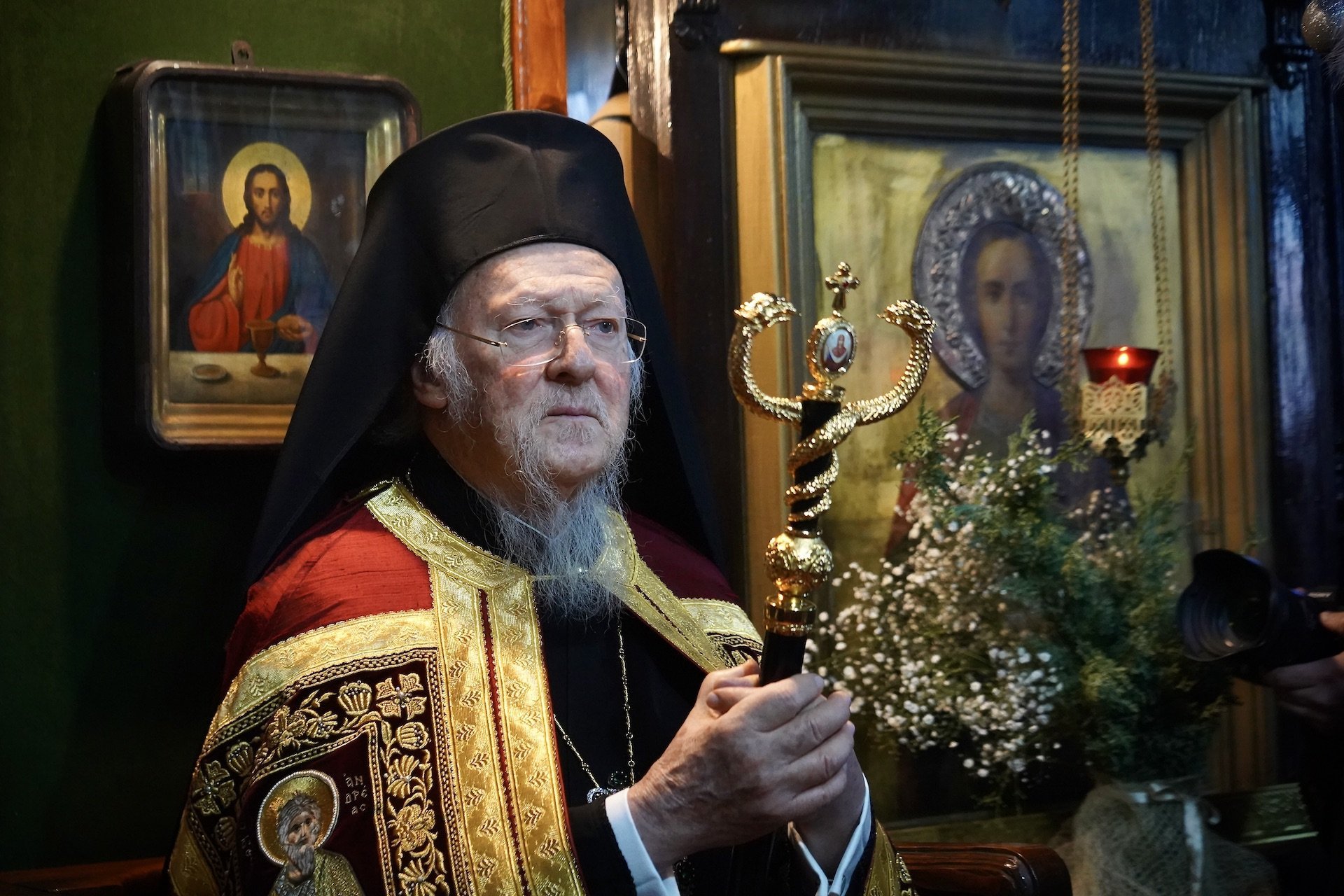
The ROC remains in Lithuania and serves its followers. The new Constantinople parishes are for people who don’t attend ROC churches — same in Kazakhstan. Supporters of our initiative are mostly former parishioners or those who feel morally unable to attend services commemorating Patriarch Kirill, who blessed the war.
Some accuse you of pushing a “Ukrainian scenario” — the creation of an independent church. Is that your goal for Kazakhstan?
— Ukraine’s case is unique. Orthodoxy is a cultural foundation there, with deep historical roots. The Russian Church was once Kyivan. Even after moving to Moscow, the Metropolitan was still called “of Kyiv and All Rus.” After a long schism, Moscow absorbed Kyiv in the 18th century.
Ukraine has long struggled for church independence. In 2018, President Poroshenko and the Rada appealed to the Ecumenical Patriarch. A unification council followed, which the ROC boycotted. Today, two canonical churches operate in Ukraine — one autocephalous and recognized by Constantinople and others, the other still seen as Moscow-affiliated despite distancing itself.
In Kazakhstan, Orthodoxy is smaller — Islam and even atheism are more widespread. If we look for a comparable case, it’s more like Poland or Albania — Orthodox minorities in mostly non-Orthodox countries.
But I think Lithuania’s case is the closest match.
But in Lithuania and Ukraine, political leaders supported the Patriarch appeal. In Kazakhstan, you’ve been told the authorities won’t get involved.
— "In this situation, we cannot count on any high-ranking officials to support our appeal publicly and write a letter to the patriarch."
But government agencies affirm our right to form a religious association. The Committee on Religious Affairs even recommended it in writing: hold a constituent assembly.
Kazakhstan has many religious organizations. Did you consult any on registration? Was it difficult?
— I’m friendly with many leaders of diverse communities. They do get registered from time to time. The law allows it, though the process is complex — but not impossible. In Kyrgyzstan or Russia, it’s easier to register a new religious group.
There are also fewer banned groups in Kazakhstan than in Russia.
— That’s true.
You said a church might already exist if not for the criminal case. But for full operation, you need priests and buildings. Where will they come from?
— The traditional model — a building around which everything forms — is outdated. As they used to say: “The church is not in the logs, but in the ribs.” A church is a community. Major cities should have one building, yes, but services can be held in any room. Protestants proved this. So did the New Martyrs of the 20th century — they worshipped in homes during Soviet repression.
Kazakh law allows services in any space once a community is registered. You don’t need an ornate building — even an office can work.
This follows the apostolic model. Before Christianity was legalized, liturgies were held in Roman catacombs.
ROC services are in Church Slavonic. What about the Constantinople Patriarchate — will language be an issue?
— The Patriarchate of Constantinople conducts services in the language of its parishioners. In Europe, Russian-tradition parishes use Church Slavonic.
Even the ROC’s 1917–18 council proposed letting communities choose their service language. In the 1920s–30s, this was practiced. Ukraine had Ukrainian services; some in Russia used Russian.
Externally, will the priests from Constantinople differ from those in the ROC?
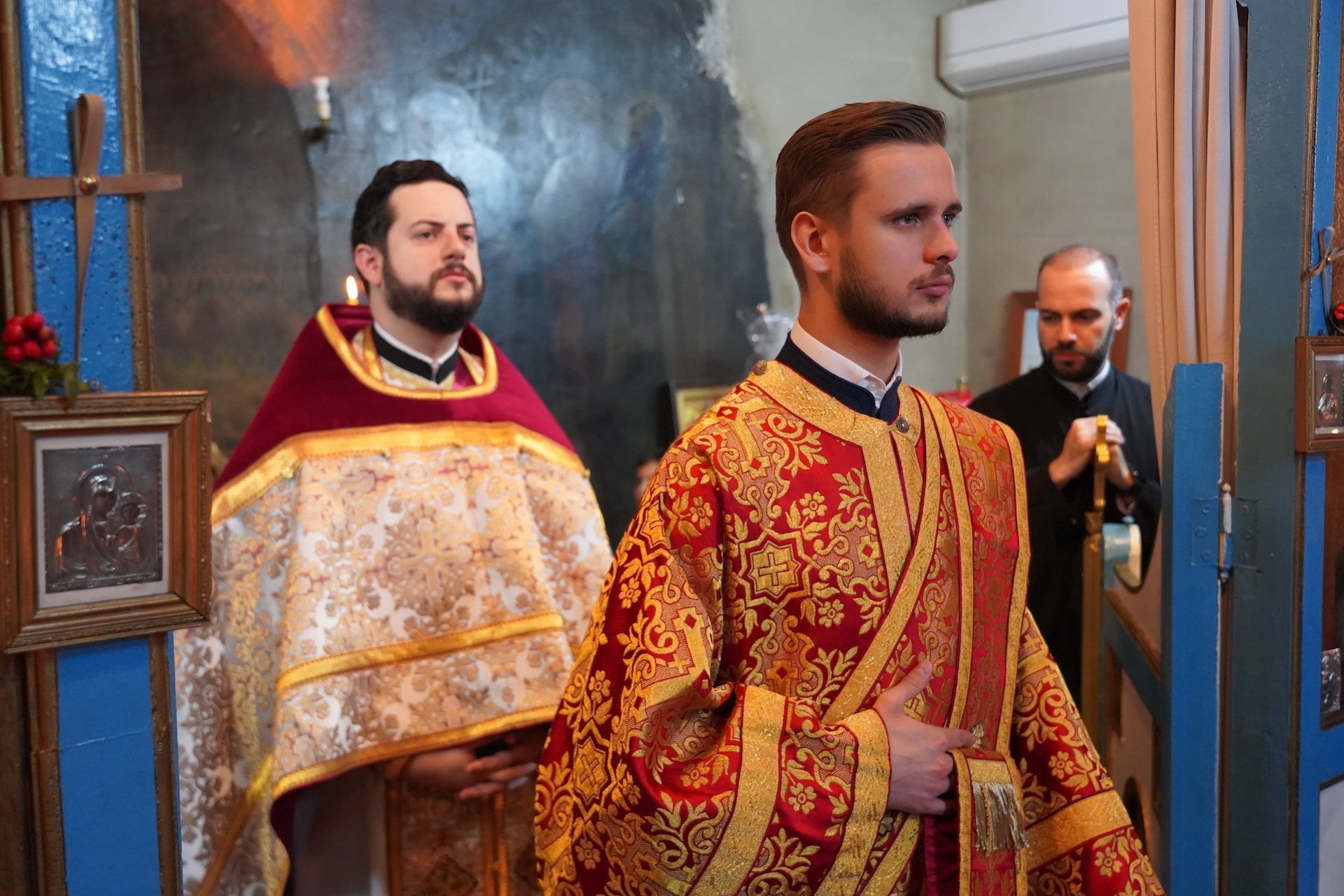
— For a knowledgeable parishioner, yes — slight differences in vestment styles. A Georgian priest looks a bit different, but he’s still Orthodox.
Within the Constantinople Patriarchate, there are Russian-tradition parishes that dress and serve identically to ROC priests. There’s more flexibility — communities can choose their language and rite.
You recently mentioned Nestorianism online. Some say it was a steppe tradition that could be revived. Is that possible?
— Nestorianism was once widespread in Turan, including parts of Kazakhstan and Kyrgyzstan — confirmed by archaeological finds. There were dioceses and churches.
People ask if it can be revived. It can’t. Religious reconstructions don’t work. Nestorianism had a hierarchy like Orthodoxy or Catholicism. And its bishops are gone.
But the rite survives in the Chaldean Catholic and Assyrian Churches of the East. Their doctrine differs from Nestorius’, but the ritual remains. If any group in Kazakhstan wants to honor that legacy, it’s theoretically possible to adopt the Syriac rite — with proper blessing.
Some Orthodox and Catholic churches already use alternative rites.
Original Author: Igor Ulitin
Latest news
- Kazakhstan Dismisses Reports of “Acid Clouds From Iran” Heading Toward Central Asia
- Kazakhstan Continues Middle East Evacuation, More Than 7,300 Brought Home
- Kazakhstan Recommended for U.S. Watch List as Vorontsov Case Draws New Attention
- Putin Bans Extradition of Foreign Nationals Who Served in the Russian Army
- Kazakh Researcher Reportedly Jailed in Xinjiang for “Misinterpreting” Abay
- Almaty Residents Warned of Elevated Air Pollution
- Over 6,000 Kazakhstanis Return Home From the Middle East
- The National Bank Invests $350 Million in Crypto-Related Assets
- Tokayev Congratulates Kazakhstani Women on International Women’s Day
- Building a House in Kazakhstan Has Become Cheaper
- Kazakhstan May Allow Crypto Payments for Goods and Services
- Kazakhstan Tightens Penalties for Violence Against Medical Workers
- Kazakhstan Urges Citizens Not to Travel to Middle East Amid Escalating Conflict
- Kazakhstan Joins the Opening of the Milano Cortina 2026 Paralympic Winter Games
- Statistics Show Where the Most Women Live and Work in Kazakhstan
- Kazakhstan Carries Out 12 Evacuation Flights From the Middle East
- Kazakhstan Labor Inspectors Find Wage Arrears at 102 Enterprises
- Police Raid in Shymkent Uncovers Widespread Violations Involving Foreign Nationals
- Tokayev Condemns Drone Strike on Nakhchivan Airport
- Eyewitnesses Share Photos of Kazakh Citizens’ Evacuation
