

How Drone Attacks on Russian Gas Plants Could Affect Kazakhstan
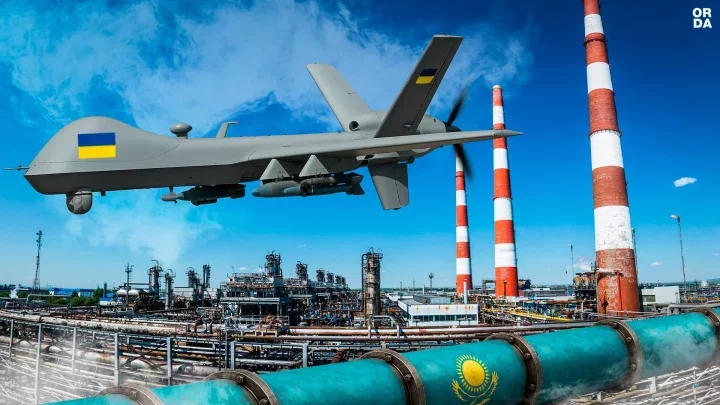 Photo: Orda
On October 19, many Kazakhstanis discovered that their country does not process raw gas from the Karachaganak field domestically. The revelation came after Ukrainian drones attacked Russia’s Orenburg Gas Processing Plant — the facility where Kazakhstan’s gas is refined before being returned for domestic use.
The Ministry of Energy assured citizens that the attack would not affect gas supplies. Still, questions remain: what happens if further strikes disable the plant for longer — and why doesn’t Kazakhstan have its own gas processing facility at one of its largest fields?
Orda.kz posed these questions to oil and gas industry expert Nurlan Zhumagulov.
If not for the possible impact on consumers, the strikes on Orenburg might have drawn as little public concern as earlier attacks on the Caspian Pipeline Consortium’s infrastructure. However, soon after the Orenburg incident, reports suggested potential gas shortages in Astana and the North Kazakhstan region.
The Ministry of Energy quickly dismissed the rumors, saying gas supplies were operating normally.
On October 22, the ministry confirmed that the Orenburg plant had resumed receiving gas from Karachaganak and that measures were being taken to return production to pre-attack levels.
Still, questions persist about Kazakhstan’s reliance on Russia’s facilities.
Seven billion cubic meters of Karachaganak gas, purified in Orenburg, is returned. This is a third of all domestic gas consumption. Therefore, restrictions on intake could lead to a shortfall in gas supplies. But we have an import contract with Gazprom. This means Kazakhstan imports the gas it needs,
said Nurlan Zhumagulov.
As ordinary citizens continue to ask why Kazakhstan has no plant of its own at Karachaganak, Orda.kz previously reported that a long-running dispute between the Kazakh government and the Karachaganak consortium had stalled progress for years.
While investors were once denied the right to build the plant, the issue has repeatedly resurfaced.
The main reason is low cost. Shareholders always consider their expenses and revenues. It’s more profitable for them to utilize gas in Orenburg, since processing costs are low. When this purified marketable gas arrives in Kazakhstan, it costs $70 per 1,000 cubic meters. That’s a very good price. The operator of the Karachaganak field itself sells to KazRosGas for approximately $20 per 1,000 cubic meters. And this is beneficial for both investors and Kazakhstan. And if the gas processing plant were built, the processing cost would probably be at least $120 per 1,000 cubic meters,
the expert explained.
Despite this, Kazakhstan plans to move forward.
The Ministry of Energy has confirmed that a new gas processing plant will be built by KazMunayGas, not by the consortium shareholders.
If we can secure funding, we can easily get started. Such large plants are expected to take at least four to five years to build. But I’d like to believe that by 2030, we’ll be receiving commercial gas, assuming everything works out,
says Nurlan Zhumagulov.
According to him, the groundwork for the project is already in place.
Hyundai Engineering has a 3D design for the plant. The main construction contractor is also in place—Italy’s Sicim, which has a production base and a 4,000-person work camp in Aqsay, where gas is extracted. And if we can secure funding, we can easily get started,
he added.
However, the Orenburg plant is not the only Russian facility at risk.
In recent months, Ukrainian drones have struck oil and gas infrastructure not only in Orenburg but also in the Astrakhan, Samara, Volgograd, and Saratov regions.
Ninety-five percent of all Kazakhstan’s oil exports go through Russia. This primarily includes the Caspian Pipeline Consortium (CPC), Atyrau–Samara, and then on through Samara to Ust-Luga, Novorossiysk, and Primorsk. Plus the Aqtau–Makhachkala route: oil is shipped from Aqtau by tanker and then via Makhachkala by pipeline to the port of Novorossiysk. So, 95% of all exports go through Russia, and all of these routes are vulnerable,
Zhumagulov warned.
The latest refinery struck by Ukrainian drones was located in Makhachkala and was hit on the night of October 22.
Original Author: Igor Ulitin
Latest news
- Orda.kz Editorial Team to Cease Operations on September 1
- The Price of a Degree: How Students in Kazakhstan Pay for University
- Second Przewalski’s Horse Foal Born as Species Returns to Kazakhstan
- Kazakh Mining Companies Can Recalculate Purchases if Tenge Weakens
- Kazakhstan Names First Vice President in Three Decades
- What Almaty’s Bus Shelters Are Missing
- 400-Truck Queue Builds at Kazakh–Kyrgyz Border
- Kazakhstan Ready to Help Feed and Rebuild Gaza
- Tokayev Establishes New Presidential Security Body
- Almaty Takes Back Its Nearly Century-Old Hippodrome
- No More Guesswork on Savings: Kazakhstan Tightens Energy Audits for Businesses
- Public Money Could Be Used to Rescue Failing Kazakh Banks
- Third Kazakh Woman Reported Missing in Nepal-China Flood Zone
- Falconer Convicted Over 35 Protected Birds, Spared Punishment Under Amnesty
- Kazakh Citizen Detained in Yakutia in Phone Fraud Case
- Yuan Instead of Dollars? KazMunayGas Draws Record Demand in Asia
- China Gains Oil-Market Influence as OPEC+ Weakens
- Kazakhstan to Divide Smartphones Into White, Gray and Black Lists
- Kazakhstan’s Government Formally Resigns as First Kurultai Session Opens
- Rare Lynx Sighting Recorded in Northern Kazakhstan
