

ForteBank Issues $400 Million in Perpetual Subordinated Bonds
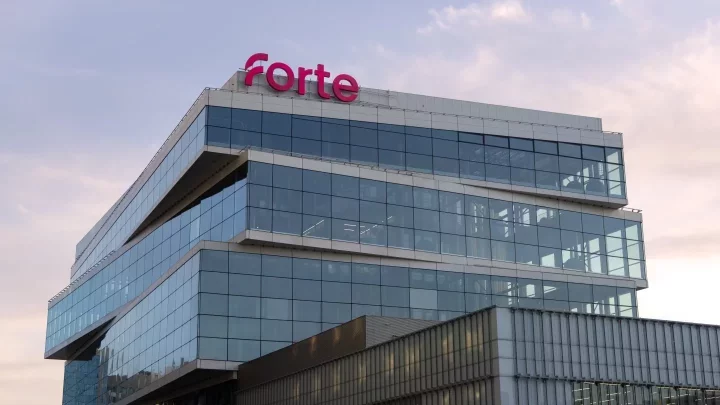 Photo: ForteBank Press Service
ForteBank has announced the debut issue of perpetual subordinated bonds (Additional Tier 1) totaling $400 million with a coupon rate of 9.75% per annum. This marks the first AT1 issuance in the Kazakhstani capital market, Orda.kz reports.
The placement was carried out in accordance with international standards, and the securities were listed on both the Vienna MTF and the Astana International Exchange (AIX). The issue strengthens the bank’s capital position and complies with financial stability requirements.
Investor demand was strong, with applications exceeding the placement volume by nearly three times.
More than 100 investors participated, including those from the United Kingdom (45%), the United States (14%), Switzerland (10%), and Hong Kong (9%). The high level of interest reflected confidence in ForteBank and Kazakhstan’s standing in the global financial market.
Issuing AT1 is an investment in the future. This instrument creates the foundation for the bank's further growth and will allow us to more actively lend to the economy, supporting Kazakhstani businesses. We continue to implement our sustainable development strategy while maintaining our primary focus — supporting the real economy and creating long-term value for the country, noted Timur Isatayev, Chair of the Board of Directors of ForteBank.
The transaction was arranged by JP Morgan as global coordinator and bookrunner, with First Abu Dhabi Bank, Commerzbank, and Mashreq acting as joint bookrunners. ForteFinance served as the Kazakhstani placement partner.
The AT1 issuance is part of ForteBank’s strategy to strengthen its capital structure, diversify funding sources, and expand access to international markets. The proceeds will be used to enhance financial stability and support further business development.
AT1 instruments are perpetual subordinated bonds that form part of Tier 1 capital. They have no fixed maturity date, and coupon payments can be suspended under adverse market conditions.
If the bank’s common equity tier 1 (CET1) ratio falls below a set threshold, these bonds can be written off or converted into shares, helping to cover potential losses and maintain financial system resilience.
Original Author: Maria Kravtsova
Latest news
- Orda.kz Editorial Team to Cease Operations on September 1
- The Price of a Degree: How Students in Kazakhstan Pay for University
- Second Przewalski’s Horse Foal Born as Species Returns to Kazakhstan
- Kazakh Mining Companies Can Recalculate Purchases if Tenge Weakens
- Kazakhstan Names First Vice President in Three Decades
- What Almaty’s Bus Shelters Are Missing
- 400-Truck Queue Builds at Kazakh–Kyrgyz Border
- Kazakhstan Ready to Help Feed and Rebuild Gaza
- Tokayev Establishes New Presidential Security Body
- Almaty Takes Back Its Nearly Century-Old Hippodrome
- No More Guesswork on Savings: Kazakhstan Tightens Energy Audits for Businesses
- Public Money Could Be Used to Rescue Failing Kazakh Banks
- Third Kazakh Woman Reported Missing in Nepal-China Flood Zone
- Falconer Convicted Over 35 Protected Birds, Spared Punishment Under Amnesty
- Kazakh Citizen Detained in Yakutia in Phone Fraud Case
- Yuan Instead of Dollars? KazMunayGas Draws Record Demand in Asia
- China Gains Oil-Market Influence as OPEC+ Weakens
- Kazakhstan to Divide Smartphones Into White, Gray and Black Lists
- Kazakhstan’s Government Formally Resigns as First Kurultai Session Opens
- Rare Lynx Sighting Recorded in Northern Kazakhstan
