

Former Oskemen Akim Seeks Return Amid 20-Year Legal Battle
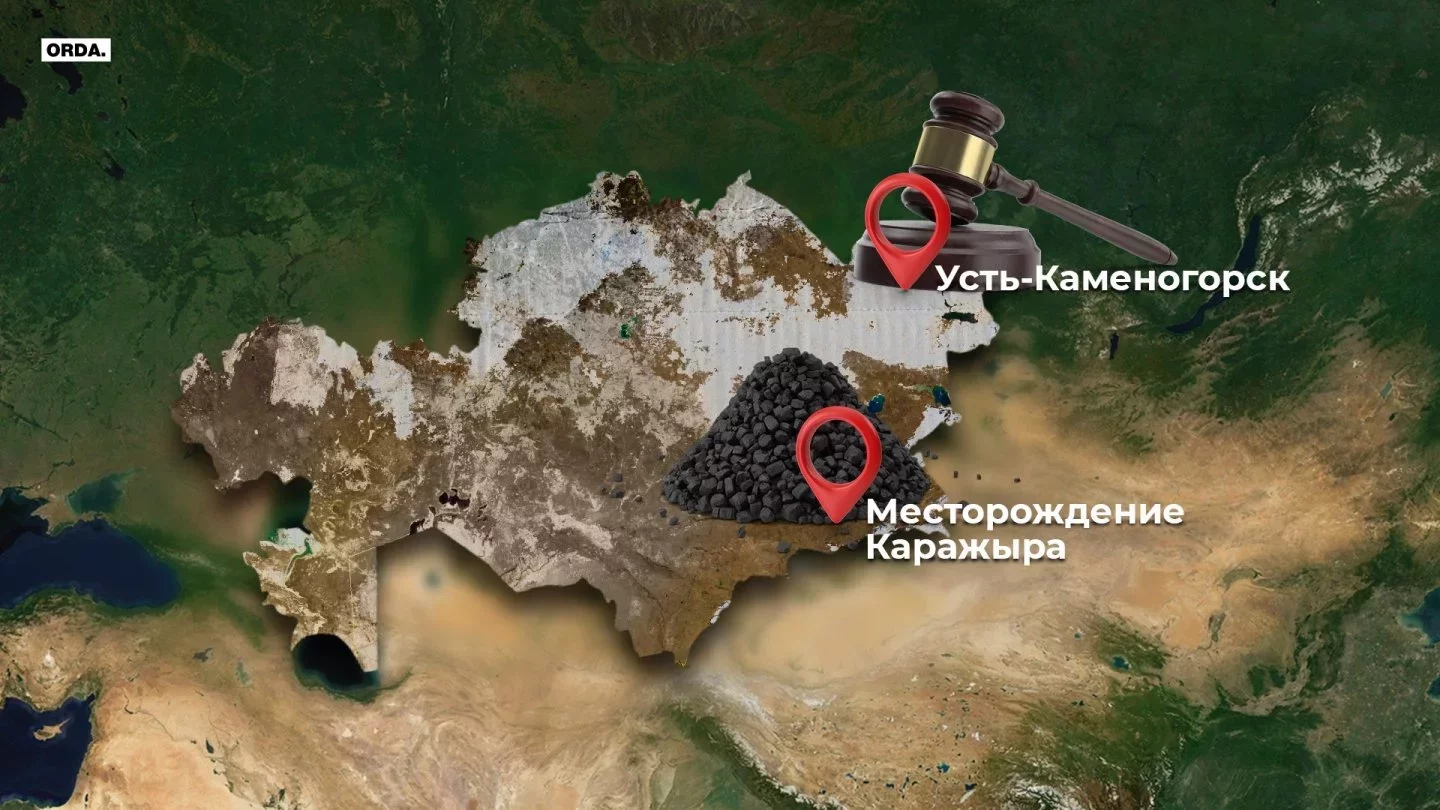 Photo: Orda.kz
Power, business, money, the ’90s. In 1996–1997, Aleksandr Lukin served as Akim of Oskemen. In the 2000s, he became a top manager at a coal mining company. In 2002, Lukin was convicted. In 2003, he received amnesty and left Kazakhstan.
Just a few months later, he was convicted again — this time in absentia, with a harsher sentence. More than 20 years have passed, and the case still raises more questions than answers.
What happened, why does it matter, and how can these events be explained today? Orda.kz looks into it.
The Emigrant
Lukin recalls that after Kazakhstan gained independence, he briefly served as Deputy Akim of the Semey Region — despite having no prior experience in government. He was tasked with reforming public utilities and transportation. But the region itself didn’t last long — it was dissolved. Still, Lukin landed on his feet.
The head of East Kazakhstan Region at the time offered him the post of Akim of Oskemen, asking him to tackle the same issues there.
From 1997 to 1999, Lukin governed a large and challenging city. He stepped down voluntarily — an unusual move at the time.
When I returned to Semey, I was invited to work at the coal company run by the Semey financial and industrial group. That’s how I ended up in mining. I joined the enterprise as a hired manager. Since I was born in Semey, I knew everyone who had been involved in developing the deposit from the very beginning and created this coal enterprise from scratch — and they knew me. I saw how they drove in the first stakes, the struggles they went through, the doubts they faced during those difficult times — wondering whether they could pull it off at all. But in the end, everything worked out in the best possible way. The coal mining company became a key driver of socio-economic development in the Semey region at the time. I was managing an industrial construction cooperative and eventually acquired a small stake in the company. That’s how I became involved.
The company Lukin worked for — and from which he acquired a 1% share in the early 2000s — was then called Semey Komirleri LLP. Today, it is known as Karazhyra JSC.
During the collapse of the Soviet Union, everyone was scrambling to claim a piece of the pie. Some succeeded, while others turned to aggressive tactics to take over thriving businesses.
The company where I worked as a hired manager grew entirely through private initiative — and I want to stress this again — it never received any government funding, support, or subsidies. At that time, the team celebrated the company’s 10th anniversary. As I said earlier, at that time, the coal company was an extremely important facility. The company was registered with the tax authorities in the Semey region, contractual obligations to the government of Kazakhstan were strictly fulfilled, and all taxes and fees were paid in full. During the two and a half years I managed the company, we increased coal production by 2.5 times, expanded our sales network across the region, and even into Russia. The company had no debts, not even on wages. We provided a strong level of social support and insurance for employees. The company became so attractive that certain interested parties — people with ties to high places — began showing interest. Then came the case linked to the DVK… Lukin recalls the timeline.
DVK refers to the Democratic Choice of Kazakhstan, a political movement launched in 2001 by former minister and businessman Mukhtar Ablyazov and Galymzhan Zhakiyanov, then the Akim of Pavlodar Region. On March 13, 2018, Kazakhstan’s government designated DCK as an extremist organization and banned it nationwide.
The Lukin case unfolded during a time when DVK was being actively dismantled. Many of its members soon found themselves on trial.
In the late 1990s, the Karazhyra coal mine came under the influence of business interests linked to top government officials — including former Prime Minister Akezhan Kazhegeldin and Galymzhan Zhakiyanov.
Both later emerged as central figures in DVK. Zhakiyanov was one of the official founders, while Kazhegeldin, though not a formal member, was a vocal supporter of its ideals and a critic of President Nazarbayev’s authoritarian rule.
- In 2002, Zhakiyanov was sentenced to seven years in prison for abuse of office. He was released on parole in 2006. International human rights organizations recognized Zhakiyanov as a political prisoner.
- In 2001, Kazhegeldin was sentenced in absentia to 10 years in prison for bribery. By that time, he was no longer in Kazakhstan. In June 2002, he was awarded the “Passport of Freedom” by the European Parliament as a victim of political persecution.
Last year, Zhakiyanov filed a lawsuit in a New York court against the current owner of the field. Elmedia colleagues presented the response from the other side.
The owners of our company were indeed members of the DVK. There was a clear motive to take over the business — and a strong one. First of all, I was already being accused of allegedly financing the opposition. We earned our money honestly, but still, they told us: ‘You’re financing the opposition.’ For some, it was beneficial to get rid of the opposition; for others, it was a chance to seize a profitable business. Everyone had their own agenda. When the attempt failed — and I, personally, saw no reason to go along with it, and the company’s owners weren’t going to give in either — open confrontation began. We defended the company’s interests strictly within the law. That’s when they decided to go after me personally, Lukin explains.
The Verdict
Court No. 2 of Semey (now defunct) began reviewing the case against Aleksandr Lukin, who was initially charged under 10 different articles — some still from the Kazakh SSR era. As the investigation progressed, most of the charges were dismissed as baseless.
According to the case files, while serving as Akim, Lukin allegedly devised a scheme in which the city purchased coal for Oskemen through intermediaries — and supposedly at inflated prices.
The prosecution claimed Lukin arranged for the city to buy coal through two intermediary firms — TEK Asia Trans LLP and San i K LLP. According to investigators, this made the coal more expensive than if it had been purchased directly from the supplier, resulting in losses of 79 million tenge for Ust-Kamenogorsk Heating Networks.
These actions, investigators alleged, caused damage to the state.
UKHN OJSC (Ust-Kamenogorsk Heating Networks Open Joint-Stock Company) is a private entity. Under a decision by the government of Kazakhstan, and through a contract with the regional municipal property department, the company was placed under the trust management of the private American firm Irtysh Power and Light.
According to the terms of that agreement, Irtysh Power and Light assumed full responsibility for UKHN’s operations — including profits, losses, and all commercial or material risks in dealings with suppliers and consumers. The contract also prohibited any interference by government agencies in the company’s activities as an independent business.
Neither the management company nor UKHN transferred any authority to the regional municipal property department of East Kazakhstan to represent its interests in any governmental body or agency. Specifically, no one was authorized to file a claim on behalf of UKHN OJSC against the city Akim seeking recovery of 79 million tenge in so-called “virtual damages.”
The civil suit brought by the East Kazakhstan municipal property department against Lukin, seeking 79.9 million tenge in damages, was dismissed by the court.
The ban on using intermediaries, as set by regional Akimat decisions, applied only to state-funded organizations and did not affect the joint-stock company.
Lukin had no authority to intervene in the business operations of the heating utility. Coal supply contracts were approved by the antimonopoly committee and followed the required procedures. The actual coal prices paid by the heating company during that period were lower than the manufacturer’s listed prices, when factoring in installment terms and delivery costs.
Since 1996, the state had stopped subsidizing the utility sector. All expenses — including coal purchases — were covered by residents through tariffs. No government loans were provided to offset coal prices.
According to the former Akim, in 1997, despite the difficult situation and the threat of the city freezing, the state did not allocate any loans. The crisis was resolved thanks to Lukin’s initiative: a decision was made to gradually pay off heating debts, and the company Asia-Trans agreed to supply coal to the city on an installment basis. At the same time, Lukin had no authority to force the Oskemen heating utility to enter into contracts with a specific company — and certainly not to compel Asia-Trans to inflate coal prices.
The prosecution used inconsistent cost indicators to compare coal prices — sometimes excluding VAT and transportation costs, and sometimes including them. This made the price difference appear significant, though in reality it was offset by installment terms and other contractual conditions. An independent audit reached the same conclusion.
The core of the accusation was that standard business activity in a market economy was interpreted as criminal.
First, they charged me under six articles. Everything from tax evasion to leading an organized criminal group. The goal was to create an informational, accusatory narrative. They wrote about it, talked about it. So that the authorities below, who would be given the task, would no longer doubt. Even if I had only been convicted under Article 190 — which at the time was called ‘illegal entrepreneurial activity’ — I should still have been released under the amnesty, Lukin explains.
Another part of the charges claimed that Lukin, after leaving public office and already serving as a top manager at Karazhyra, was mining coal illegally without a special license.
When the case went to trial, only two articles remained. One was Article 190 — allegedly, as president of a coal company, I operated without a license. But I was a hired manager. A private individual. I wasn’t required to hold any license. But they needed something to go after me with. Those who wanted to take over the company needed this article. I didn’t agree with them — and that’s where the second charge came in: Article 307, abuse of office. And not just the standard version — the aggravated form, Part 3. That article didn’t fall under amnesty or sentence reduction. During the entire trial, the word ‘corruption’ was never used in reference to me. There wasn’t even a law defining it at the time. No one said I stole anything, or that I accepted bribes.
Semey Komir JSC operated under a contract with the Ministry of Energy and Mineral Resources, and no additional licenses were required to mine coal at the Karazhyra deposit. Although the site was near the former Semipalatinsk nuclear test area, the precise boundaries of the explosion zones had not been established — Soviet maps were still in use, which meant that the license the investigation referred to was not mandatory.
All necessary permits and approvals at the time of the contract were obtained legally.
The trial was contentious; some witnesses withdrew their testimony, stating they had been pressured. Nevertheless, Lukin was sentenced to three and a half years in prison. He appealed the verdict and was granted amnesty in January 2003.
The court revised the initial verdict under Article 307, Part 3 — it was reduced to Part 2. As for Article 190, Part 2, the court found the verdict inconsistent with the facts and legal standards. The conviction under that article was overturned, and the case was closed due to a lack of criminal elements.
By that point, Lukin had already spent 10 months in detention. Following the amnesty, he left the country. It was only after leaving that he learned he had been convicted again:
On February 20, 2003, a new court ruling was issued. This time, they gave me four years. Even though the first sentence was three. Legally, they had no right to do that. But back then, apparently, the law didn’t apply to them — they did whatever they wanted. According to the rules, a court cannot worsen a defendant’s position on appeal. If the first sentence was three and a half years, the second should be the same or less. It cannot be increased. But at that point, everything in the country had changed. What was happening — all this lawlessness — was getting very close, the former Akim says.
Lukin has not returned to Kazakhstan since his conviction in absentia — going back would mean prison. From abroad, he has repeatedly tried to have the criminal case reviewed.
- In 2003, the Supreme Court of the Republic of Kazakhstan dismissed Lukin’s appeal.
- In 2008, the Prosecutor General’s Office also refused to initiate a review of his case.
- It wasn’t until 2010 that the Prosecutor General’s Office formally submitted a protest to the Supreme Court — but the Court dismissed it and declined to reopen the case.
- In 2012, the Prosecutor General’s Office filed a second petition for review, this time citing newly discovered circumstances. The Supreme Court formally accepted the petition but never followed through with implementing the decision.
- In 2025, Lukin filed a petition with the Abay Regional Court requesting release from punishment due to the expiration of the statute of limitations. The court denied the request — without offering the right to appeal.
What’s telling is that every competent authority in Kazakhstan acted against me on behalf of the state: some investigated, others brought charges, and the courts issued a sentence. But when I turned to these same institutions to request a review, nothing happened. Every reply began the same way: ‘Having reviewed the case materials…’ — and then nothing. Formally speaking, it seems these authorities still fail to recognize the difference between a state-funded organization and a private company like Ust-Kamenogorsk Thermal Networks OJSC. They don’t acknowledge that the powers of a city Akim don’t apply to private businesses, which means I couldn’t have abused authority I didn’t possess. They also don’t seem to understand that revenue and profit aren’t the same. To generate profit, all operating costs — including taxes — have to be deducted from income. Based on that logic, Semey-Komir JSC was more than capable of paying off its debts to the state. At the time, it was a healthy, stable company with no outstanding liabilities, fully contracted production, a strong team, and uninterrupted operations — even in the face of deliberately created obstacles, it never stopped for a single day. So if we’re talking about state interests, it’s worth asking: did the state ultimately get what it was owed? Or should someone ask whether it was wise to kill the golden goose?
At the time, Lukin was not the only former official to leave Kazakhstan.
A Mine Near a Nuclear Test Site
Examining the coal deposit itself is also necessary in this story.
Today, the company has nine shareholders, including: E. V. Ogay, V. V. Dzhumanbayev, Ye. Z. Nigmatulin, E. E. Ogay, V. E. Ogay, and Karazhyra Holdings B.V.
Who among them — including the holding — is publicly known?
Vladimir Dzhumanbayev is one of Kazakhstan’s wealthiest businessmen, ranking 21st on the Forbes Kazakhstan list. The outlet recently reported on the expansion of his business empire. His company, Altynalmas JSC, acquired two more firms for geological exploration and mining. He has since founded yet another enterprise.
Yerlan Nigmatulin is the brother of former Majilis Speaker Nurlan Nigmatulin. Nurlan’s son, Nurzhan Nurlanov, has been mentioned in connection with a criminal case. So has the former speaker's brother, Yerlan Nigmatulin.
However, according to available information, the Ministry of Internal Affairs currently has no legal claims against the son.
Businessman Ramis Ibragimov publicly accused Yerlan Nigmatulin of launching a corporate raid on his business. In 2021, Forbes Kazakhstan included Yerlan Nigmatulin in its list of the country’s most influential business figures. His older brother, Argyn Nigmatulin, is currently on the international wanted list.
Eduard Viktorovich Ogay is a well-known businessman, former chair of the board of directors of Kazakhmys Corporation LLP, and executive director on the board of Kazakhmys PLC. He is considered one of the wealthiest and most influential people in the country. His children — both his son and daughter — are also listed as founders.
Another share belongs to the Dutch company Karazhyra Holdings B.V. However, in 2019, the Kazakhstan Stock Exchange (KASE) reported that the holding had exited ownership. Yet, it continues to appear among the shareholders.
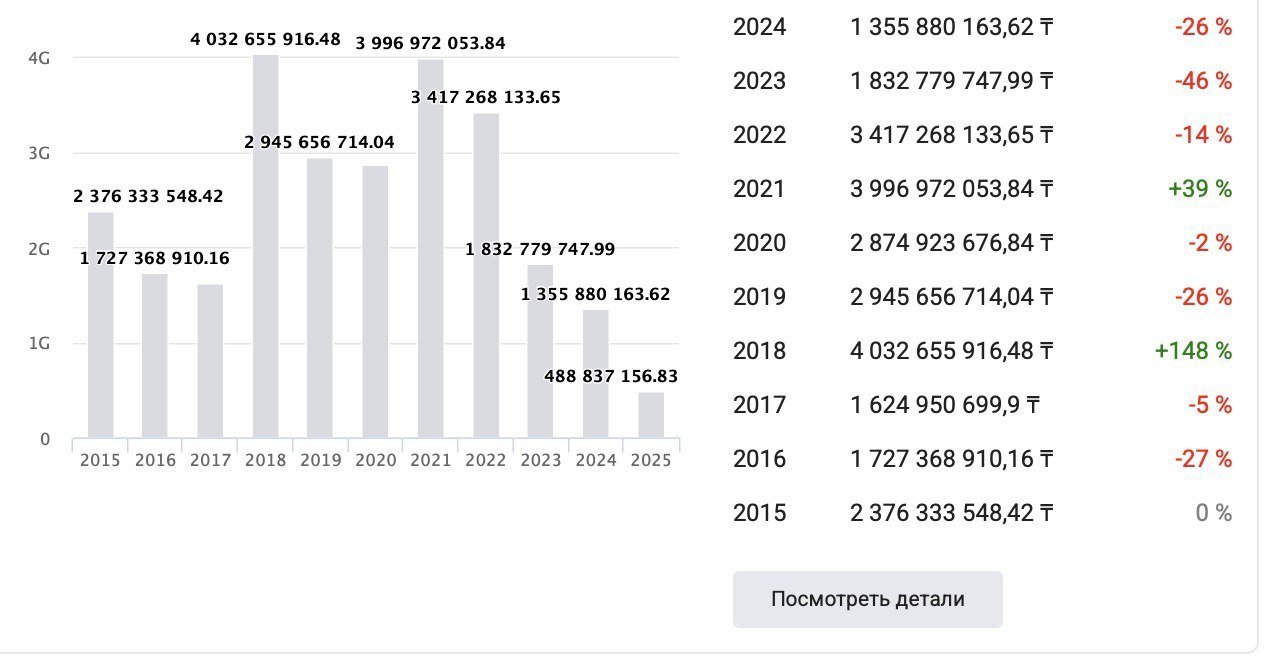
Karazhyra Holdings B.V. is a major taxpayer, contributing billions of tenge to the state budget.
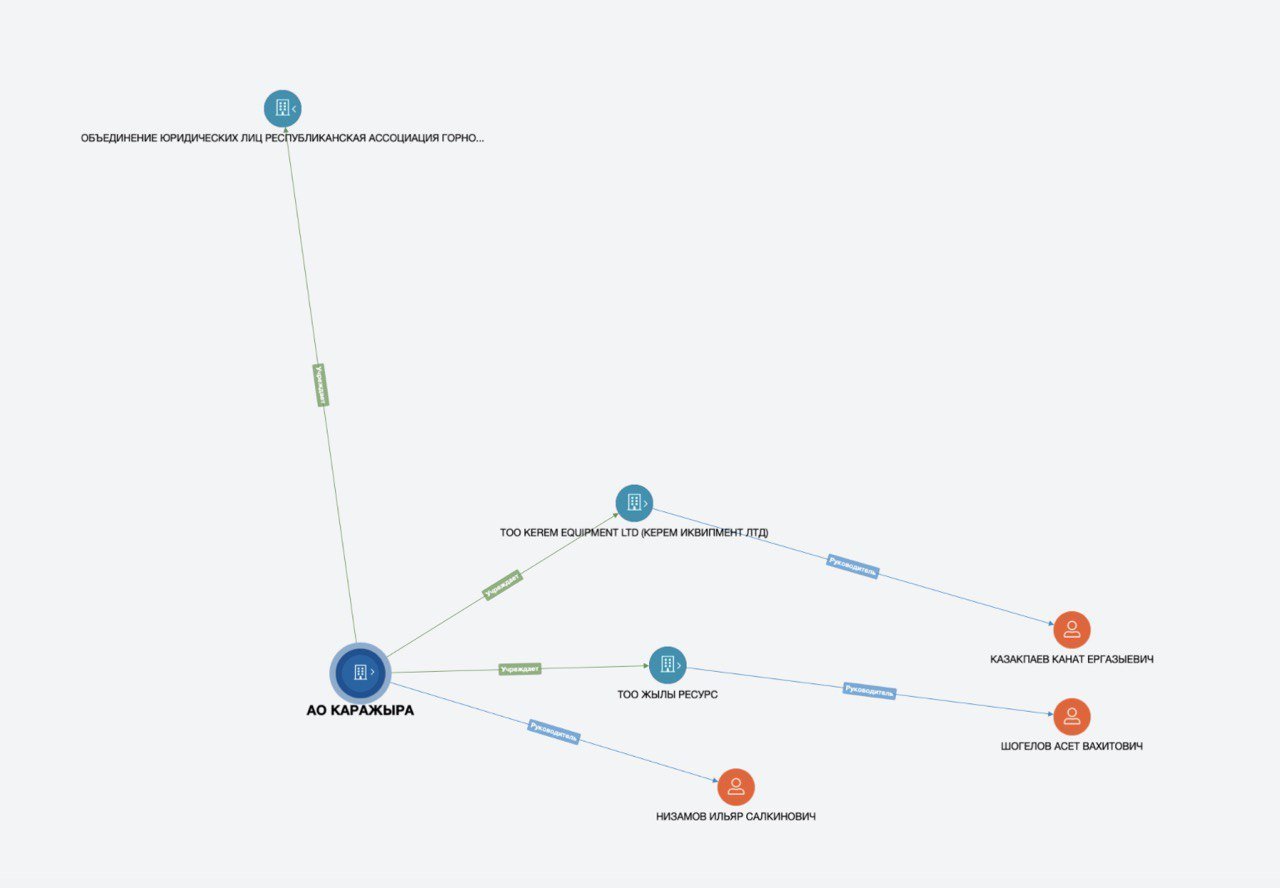
At first glance, the LLP appears to have a limited network of affiliations:
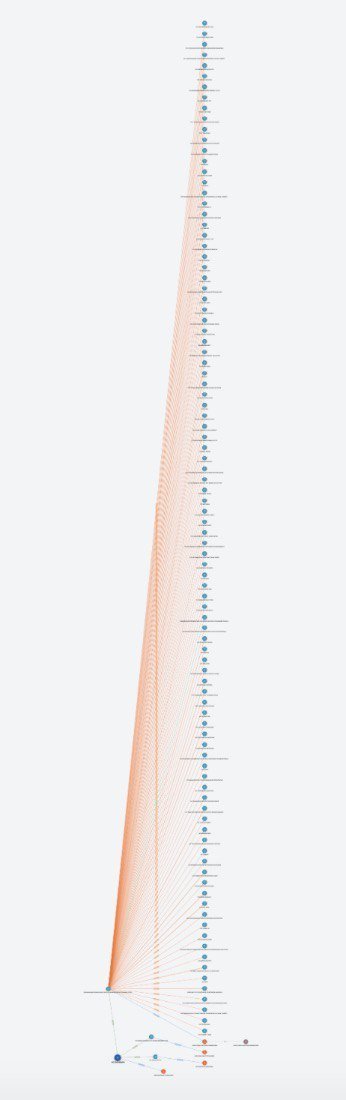
In reality, however, dozens of companies fall under the same umbrella. These include major names like the National Company Kazatomprom JSC, among others.
Legally, the company is registered in Semey.
A Historical Coincidence?
Now over 70, Lukin refuses to return to his homeland only to spend four years in prison over a case he insists was fabricated.
A partial amnesty is on the horizon in Kazakhstan — but it will exclude serious and corruption-related offenses.
The draft law “On Amnesty in Connection with the 30th Anniversary of the Constitution of the Republic of Kazakhstan” is still under discussion. Human rights advocates are weighing in — some defending the bill, others pushing to remove certain provisions.
To assess the legal grounds of Lukin’s current situation, we spoke with a lawyer who was indirectly familiar with the case.
Human rights advocate Sergey Utkin emphasizes:
Lukin does not qualify for amnesty — the article he was convicted under is classified as severe.
A serious charge — Article 307, Part 3, instead of the less severe Part 2 — was deliberately assigned during the supervisory review, specifically to block the previous amnesty granted on the 10th anniversary of independence. Initially, the appeals court applied Part 2 and granted amnesty, which allowed him to leave the country. But two months later, the supervisory authority reversed that and charged him under Part 3.
But at this point, Utkin argues, that distinction is no longer relevant. Twenty years have passed — and what’s happening now, he says, is legally unjustified.
If a sentence has gone unexecuted for more than 20 years, it cannot be carried out. According to Article 77, Part 3 of the Criminal Code, a verdict may not be enforced if 20 years have passed since it was issued, provided the statute of limitations has not been interrupted by a new crime. And importantly, even if the convicted person has evaded serving the sentence, the 20-year limit still runs. The only condition is that they must not commit any new crimes. Sergey emphasizes.
Under Article 77, Part 3, release from serving the sentence is mandatory — it is not subject to the court’s discretion. The court is obligated to act.
The lawyer is confident: Lukin should be formally released from serving his sentence by court order, the warrant for his arrest should be withdrawn, and there should be no further obstacles to his return to Kazakhstan.
The case should be re-examined. The legal basis for declaring Semey-Komir JSC bankrupt remains vague. At the time, the boundaries of the Semipalatinsk nuclear test site had not been officially defined — yet this did not stop authorities from shutting down enterprises that lacked the corresponding license.
Original Author: Alexandra Mokhireva
Latest news
- Almaty Drivers Offered Free Emissions Checks Without Penalties
- Croatia Will Finance Oil Exploration In Aktobe Region
- Half of Kazakhstanis Earn Less Than $1,000 a Month
- Is The Era Of Easy Extraction Over? Resource Development Is Being Rebuilt In Kazakhstan
- How a Kazakhstani Tried to Change His Ethnicity Through the Courts — and What Came of It
- Economist Names Kazakhstan Regions Lagging in Investment Transparency
- 14-Year-Old In Tesla Tries To Flee Police In Astana
- When a Michelin-Recognized Restaurant Will Open in Almaty, Akimat Says
- Transfers To China From Kazakhstan Fall To Six-Year Low
- Chinese Company To Build $1.2 Billion Steel Plant In Kazakhstan
- Moldova Finally Leaves The CIS And Bets On The EU
- Kazakhstani Scientists Develop Feed From Meat Processing Waste
- Why Large Families Face the Highest Poverty Risk in Kazakhstan
- Kazakhstan Schoolboy First in Central Asia to Receive Google Grant
- Kazakhstan Prosecutor General’s Office Checks Possible Ties Between Officials and Epstein Case
- After Farmers' Complaints, Kazakhstan Changes Potato Trading Rules
- Officials Accused Of Legalizing Thousands Of Migrants For Bribes In Astana
- Almaty Zoo Names Triplet Tiger Cubs
- Only One Loss-Making Bank Remains In Kazakhstan
- Cormorants To Be Shot In Pavlodar Region
