

Finance Specialists: Kazakhstan Should Raise VAT
 Photo: Elements.envato.com
Kazakhstan's Finance Association has analyzed the republican budget for the first nine months of 2024. Experts advised the government to discontinue current practices with the National Fund, an Orda.kz reports.
Experts draw attention to the budget crisis that has developed.
In 2024, significantly fewer taxes were collected than planned. Only 52% of the national budget tax plan for three quarters was fulfilled. National Fund financing was required to cover the budget deficit. Withdrawals from the fund reached a record high of 6.1 trillion tenge, and the budget deficit increased to 3.6 trillion tenge.
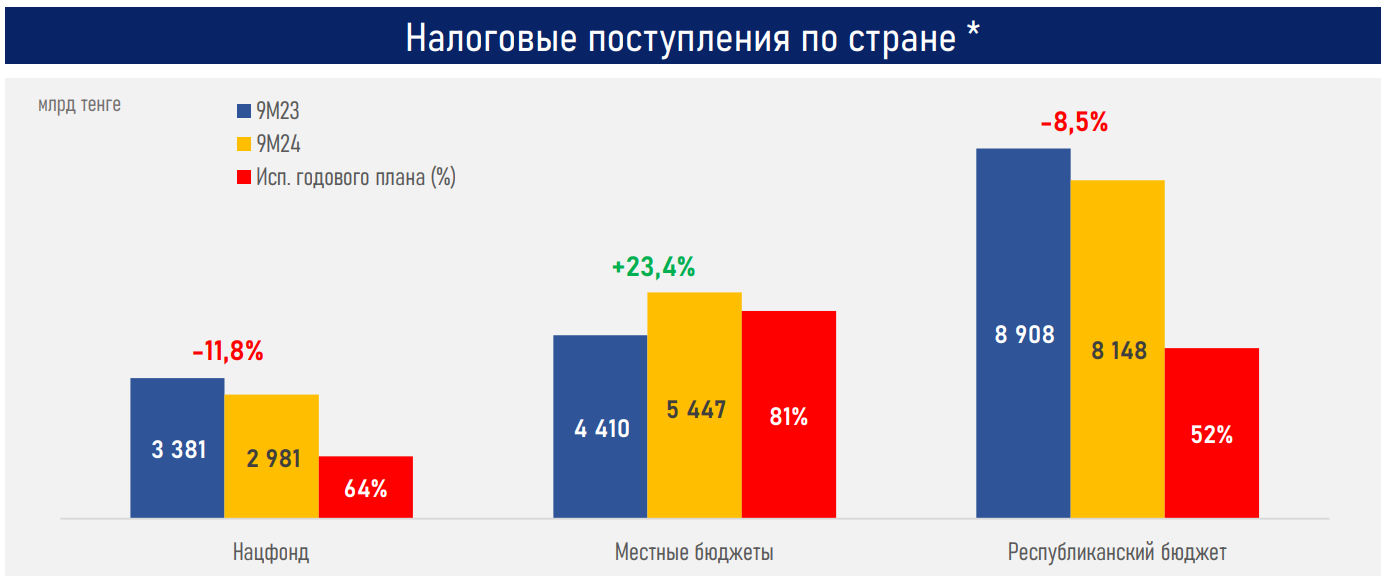
Finance experts note that the National Fund has seen a significant drop in revenues from extraction tax (470 billion tenge) and corporate income tax (160 billion tenge) due to the decline in oil prices.
The Republican budget has a 519 billion tenge shortfall in VAT (value-added tax) and 209 billion tenge in CIT (corporate income tax). VAT is a crucial budget contribution.
Local budgets exceeded the tax collection plan, which did not influence the overall budget shortfall. Direct withdrawals from the National Fund increased by as much as two trillion.
Large withdrawals from the National Fund, exceeding tax revenues to it, complicate the task of bringing its assets to 100 billion dollars by 2029 and will determine the dependence of its assets only on investment income. This year, investment income was high - about 2.8 trillion tenge, due to the growth of stock markets, high rates and currency revaluation, but due to market volatility, it is inconsistent, analysts point out.
State budget expenditures continue to grow. They increased by 9.3% and exceeded the revenue part by 24%.
Experts highlight a strong imbalance in the Social Health Insurance Fund's receipts and expenditures. Since the beginning of the year, 800 billion tenge has been received, while 2.2 trillion spent. The Republican budget covers these expenses.
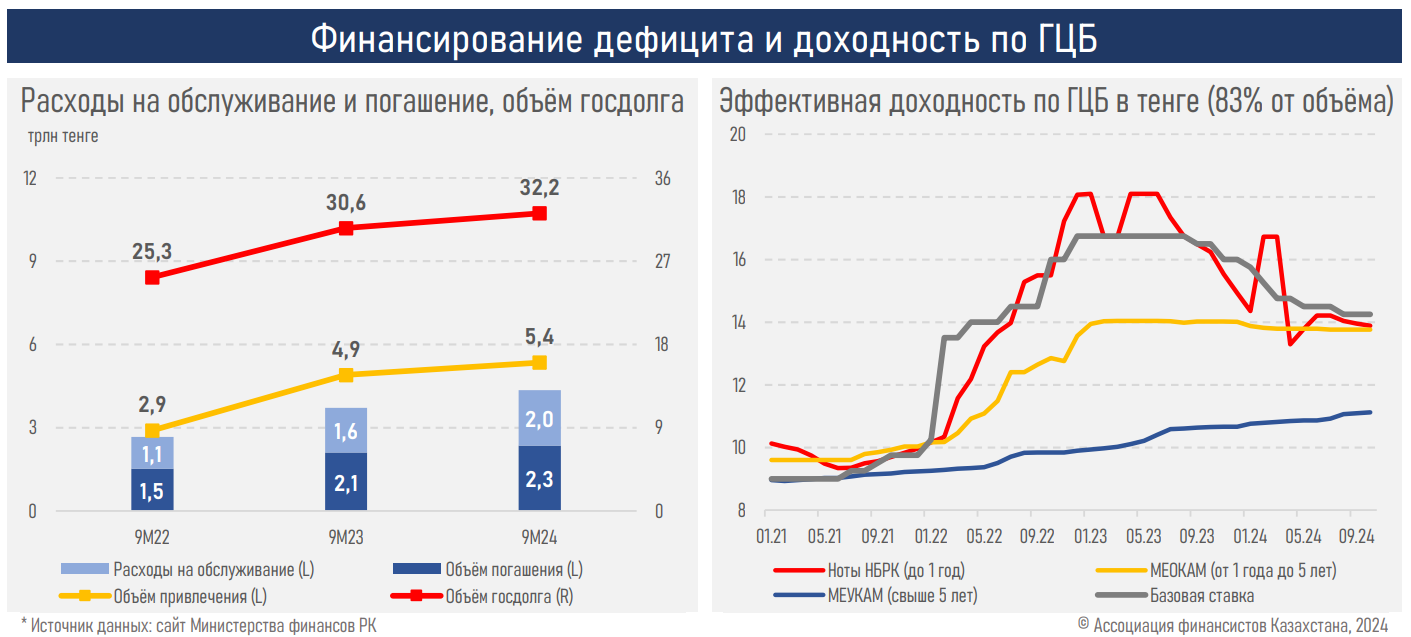
The budget issues also increased state debt, along with the costs of servicing and repaying it —from 3.7 trillion tenge to 4.3 trillion tenge. The state debt itself grew from 30.6 trillion tenge to 32.2 trillion tenge, impacting Kazakhstan's credit ratings.
Swift measures and decisive changes to the Tax Code may be required. Also, discontinuing to sell state assets to the National Fund may be required, as was with Kazatomprom.
An important condition remains the limitation of targeted transfers from the National Fund and their approval by parliament, similar to guaranteed ones (they do not exceed two trillion), as well as the cessation of the practice of selling state assets to the National Fund, experts say.
Experts recall that constantly dipping into the National Fund, the government is "overheating" the economy through increased government spending and consumption, thus necessitating its discontinuation.
Original Author: Nikita Drobny
Latest news
- Orda.kz Editorial Team to Cease Operations on September 1
- The Price of a Degree: How Students in Kazakhstan Pay for University
- Second Przewalski’s Horse Foal Born as Species Returns to Kazakhstan
- Kazakh Mining Companies Can Recalculate Purchases if Tenge Weakens
- Kazakhstan Names First Vice President in Three Decades
- What Almaty’s Bus Shelters Are Missing
- 400-Truck Queue Builds at Kazakh–Kyrgyz Border
- Kazakhstan Ready to Help Feed and Rebuild Gaza
- Tokayev Establishes New Presidential Security Body
- Almaty Takes Back Its Nearly Century-Old Hippodrome
- No More Guesswork on Savings: Kazakhstan Tightens Energy Audits for Businesses
- Public Money Could Be Used to Rescue Failing Kazakh Banks
- Third Kazakh Woman Reported Missing in Nepal-China Flood Zone
- Falconer Convicted Over 35 Protected Birds, Spared Punishment Under Amnesty
- Kazakh Citizen Detained in Yakutia in Phone Fraud Case
- Yuan Instead of Dollars? KazMunayGas Draws Record Demand in Asia
- China Gains Oil-Market Influence as OPEC+ Weakens
- Kazakhstan to Divide Smartphones Into White, Gray and Black Lists
- Kazakhstan’s Government Formally Resigns as First Kurultai Session Opens
- Rare Lynx Sighting Recorded in Northern Kazakhstan
