

Experts Weigh In on Kazakhstan’s Role in the SCO After Toqayev’s Visit to China
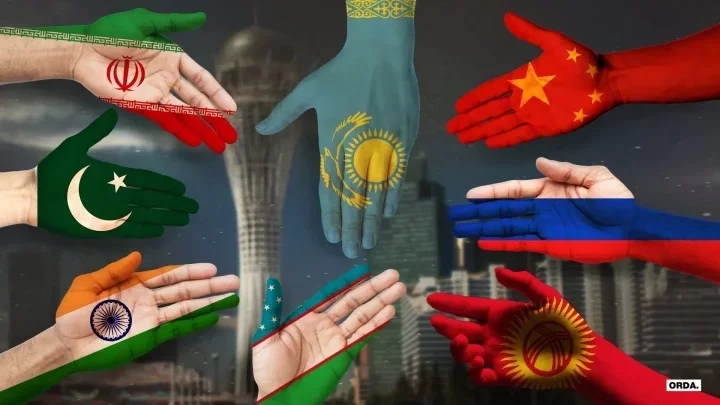 Photo: Orda
Qasym-Jomart Toqayev’s recent trip to China for the Shanghai Cooperation Organization summit resulted in the signing of several agreements between Astana and Beijing.
But while China is a key partner, the SCO itself raises broader questions.
Orda.kz has put together experts' opinions below.
Promises and Reality
Back in 2023, Toqayev noted that in more than 20 years, the SCO had not implemented a single major economic project. Political scientist Ruslan Izimov, a leading researcher at the Institute of Philosophy, Political Science and Religious Studies, argues that SCO summits often produce ambitious ideas but not concrete results.
As for the SCO Development Bank, this topic was indeed discussed in detail on the eve of the Tianjin summit. China has been actively promoting the idea of its creation for many years. But there is still no consensus among member countries. As far as we can judge, the issues of duplicating existing institutions and financing mechanisms remain open. As a result, we do not see an agreement or decision on the creation of the SCO Bank in the list of signed documents. Nevertheless, this does not mean that Kazakhstan does not have real prospects associated with participation in the SCO,said Izimov.
He emphasized that the real outcome of the summit was the Kazakhstan-China Business Council, where nearly 70 agreements worth more than $15 billion were signed.
Diplomat Kazbek Beisebayev also pointed to long-term initiatives.
All decisions in the SCO are made with the participation of Kazakhstan. Our country is one of the founders of the organization — it is not just a member of the SCO, but one of the important players. In addition to the SCO bank, the summit participants intend to create their own payment system. This means that the SCO members want to be less dependent on the West and the dollar, Beisebayev explained.
Strengthening Representation
Experts also noted Kazakhstan’s large delegation in Tianjin, which included the CSTO Secretary General, the head of the Eurasian Economic Commission, the CICA Secretary General, and the SCO Secretary General.
In addition to the CSTO Secretary General Tasmagambetov, the Chair of the Board of the Eurasian Economic Commission Sagintayev, the Secretary General of the CICA Sarybay and the SCO Secretary General himself Yermekbayev were presented. We can say that this is how it happened, but at the same time, this also speaks about the role and place of Kazakhstan in the SCO. Given the weight of the SCO countries, all member countries have great prospects for cooperation in all areas,said Beisebayev.
Izimov agreed that the summit’s scale underscored the SCO’s rising influence.
The Tianjin summit was intended to highlight the growing role of the SCO as the voice of new centers of power in world politics. This explains its scale and high level of representation. However, unlike military alliances (such as NATO), the SCO does not strive for a confrontational model and does not form a closed anti-Western bloc. On the contrary, the SCO and 'SCO+' formats, where leaders of states and international organizations that are not members of the organization, including the UN Secretary General, showed that the SCO positions itself as an open platform for dialogue. In this context, the invitation of the CSTO Secretary General seemed quite logical. Kazakhstan, as an active participant in both organizations, can synchronize the regional security agenda, strengthening its authority as a mediator, Izimov noted.
The Central Asian Voice
American analyst Dr. Robert Cutler, writing for The Times of Central Asia, stressed that Kazakhstan has become the key representative of Central Asia within the SCO.
In Tianjin, Toqayev held extensive talks with Xi Jinping. Both leaders stressed the characterization of China and Kazakhstan as “trustworthy and reliable strategic partners.” Xi identified the bilateral relationship as a cornerstone of SCO cohesion, while Tokayev linked the SCO’s new energy agenda to Kazakhstan’s national strategy for decarbonization, Cutler writes.
He added that Kazakhstan has promoted the interests of Central Asia in summit declarations, serving as a “collective voice” for the region:
Astana’s mediation was decisive, for example, in steering enlargement toward productive outcomes. New members were pressed not merely to observe but to contribute substantively to the Tianjin Declaration. This facilitative style positions Kazakhstan as a broker of governance reform, an unusual role for a mid-sized state surrounded by larger powers
Anti-western?
Some observers portray the SCO as a bloc defined by anti-Western rhetoric, but experts caution against this view.
The SCO is becoming an association of states that are building their global political and economic system. Yes, there are serious contradictions between individual SCO members, but this does not prevent them from working together to solve global problems. Moreover, the SCO is to some extent becoming an alternative platform to the G7, which unites Western countries, Beisebayev said.
Izimov added that the SCO has never sought confrontation.
Today, the SCO is already the 'Big Eurasian Ten,' where global and regional players meet at the same table. Having such an impressive political and economic weight, the SCO countries are consistently promoting the idea of reforming the global governance system that was formed back in the 20th century. The old architecture, including the UN Security Council mechanism, is rightly criticized for its inefficiency and lack of adaptation to modern realities. Incidentally, President Toqayev also emphasized the need for such reforms. Therefore, the desire of the SCO states to become part of the emerging new system of international order seems quite natural, he said.
A Pragmatic Choice
For Kazakhstan, experts conclude, participation in the SCO remains pragmatic. It strengthens trade, boosts investment, and enhances Astana’s ability to maneuver between East and West while advancing national interests.
Kazakhstan’s participation in the SCO is not only justified, but also necessary to maintain stability, advance national interests and participate in the formation of the future architecture of global governance, Izimov concluded.
Original Author: Nikita Drobny
Latest news
- Orda.kz Editorial Team to Cease Operations on September 1
- The Price of a Degree: How Students in Kazakhstan Pay for University
- Second Przewalski’s Horse Foal Born as Species Returns to Kazakhstan
- Kazakh Mining Companies Can Recalculate Purchases if Tenge Weakens
- Kazakhstan Names First Vice President in Three Decades
- What Almaty’s Bus Shelters Are Missing
- 400-Truck Queue Builds at Kazakh–Kyrgyz Border
- Kazakhstan Ready to Help Feed and Rebuild Gaza
- Tokayev Establishes New Presidential Security Body
- Almaty Takes Back Its Nearly Century-Old Hippodrome
- No More Guesswork on Savings: Kazakhstan Tightens Energy Audits for Businesses
- Public Money Could Be Used to Rescue Failing Kazakh Banks
- Third Kazakh Woman Reported Missing in Nepal-China Flood Zone
- Falconer Convicted Over 35 Protected Birds, Spared Punishment Under Amnesty
- Kazakh Citizen Detained in Yakutia in Phone Fraud Case
- Yuan Instead of Dollars? KazMunayGas Draws Record Demand in Asia
- China Gains Oil-Market Influence as OPEC+ Weakens
- Kazakhstan to Divide Smartphones Into White, Gray and Black Lists
- Kazakhstan’s Government Formally Resigns as First Kurultai Session Opens
- Rare Lynx Sighting Recorded in Northern Kazakhstan
