

Deputy Outlines Tax Breaks Being Discussed for Subsoil Users
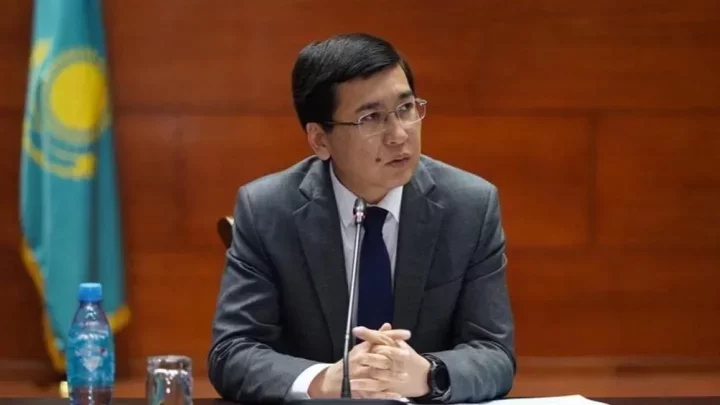 Photo: Gov.kz
Deputy Askhat Aimagambetov outlined the tax breaks currently under discussion in the Majilis. While the government has already removed many of the more controversial proposals from the draft Tax Code, several provisions still need further review and adjustment, Orda.kz reports.
One concern raised by deputies is the proposed tax exemption for subsoil users. The draft includes a provision to waive the tax on the extraction of solid minerals—a move that could cost the national budget between 70 and 100 billion tenge, according to preliminary estimates.
Under current solid minerals processing agreements, the proposal would effectively exempt companies from nearly all taxes, except payroll-related contributions. For Kazakhmys alone, the potential tax savings could amount to 343 billion tenge over five years.
There’s also a proposal to introduce an alternative tax regime for depleting oil fields. Preliminary estimates show the budget could lose around 234 billion tenge between 2025 and 2027 from just nine companies,the deputy noted on his Telegram channel.
He noted that many of the companies seeking these benefits have previously paid out large dividends, raising questions about whether they truly lack the funds to meet their tax obligations.
Aimagambetov also criticized a proposal to lower the corporate income tax (CIT) to 10% for the manufacturing sector, placing it on par with the social sector, which is currently losing several of its own tax benefits.
The industries slated to receive this reduced CIT rate include copper and gold production, auto and equipment assembly, mechanical engineering, and metallurgy.
How fair is it to reduce taxes for large businesses when the social sphere, on the contrary, loses tax preferences?the deputy writes.
He also drew attention to rising smuggling issues, citing a 300-million-pack drop in cigarette labeling in 2023. He argued this isn’t due to a decrease in smoking but rather a surge in illegal imports. Losses from the gray market in tobacco alone are estimated at 100 billion tenge annually.
Aimagambetov stressed that achieving a fair tax system requires more than just eliminating unjustified tax breaks — it also demands stronger enforcement against illegal flows, particularly in the import sector.
Previously, Aimagambetov explained why the draft Tax Code proposes to maintain zero VAT on medicines, medical services, books, and card-to-card money transfers.
Original Author: Artem Volkov
Latest news
- Orda.kz Editorial Team to Cease Operations on September 1
- The Price of a Degree: How Students in Kazakhstan Pay for University
- Second Przewalski’s Horse Foal Born as Species Returns to Kazakhstan
- Kazakh Mining Companies Can Recalculate Purchases if Tenge Weakens
- Kazakhstan Names First Vice President in Three Decades
- What Almaty’s Bus Shelters Are Missing
- 400-Truck Queue Builds at Kazakh–Kyrgyz Border
- Kazakhstan Ready to Help Feed and Rebuild Gaza
- Tokayev Establishes New Presidential Security Body
- Almaty Takes Back Its Nearly Century-Old Hippodrome
- No More Guesswork on Savings: Kazakhstan Tightens Energy Audits for Businesses
- Public Money Could Be Used to Rescue Failing Kazakh Banks
- Third Kazakh Woman Reported Missing in Nepal-China Flood Zone
- Falconer Convicted Over 35 Protected Birds, Spared Punishment Under Amnesty
- Kazakh Citizen Detained in Yakutia in Phone Fraud Case
- Yuan Instead of Dollars? KazMunayGas Draws Record Demand in Asia
- China Gains Oil-Market Influence as OPEC+ Weakens
- Kazakhstan to Divide Smartphones Into White, Gray and Black Lists
- Kazakhstan’s Government Formally Resigns as First Kurultai Session Opens
- Rare Lynx Sighting Recorded in Northern Kazakhstan
