

Crime Without Punishment: Who in Kazakhstan Is Lobbying Sanctioned Russian Companies Under the UAS Banner
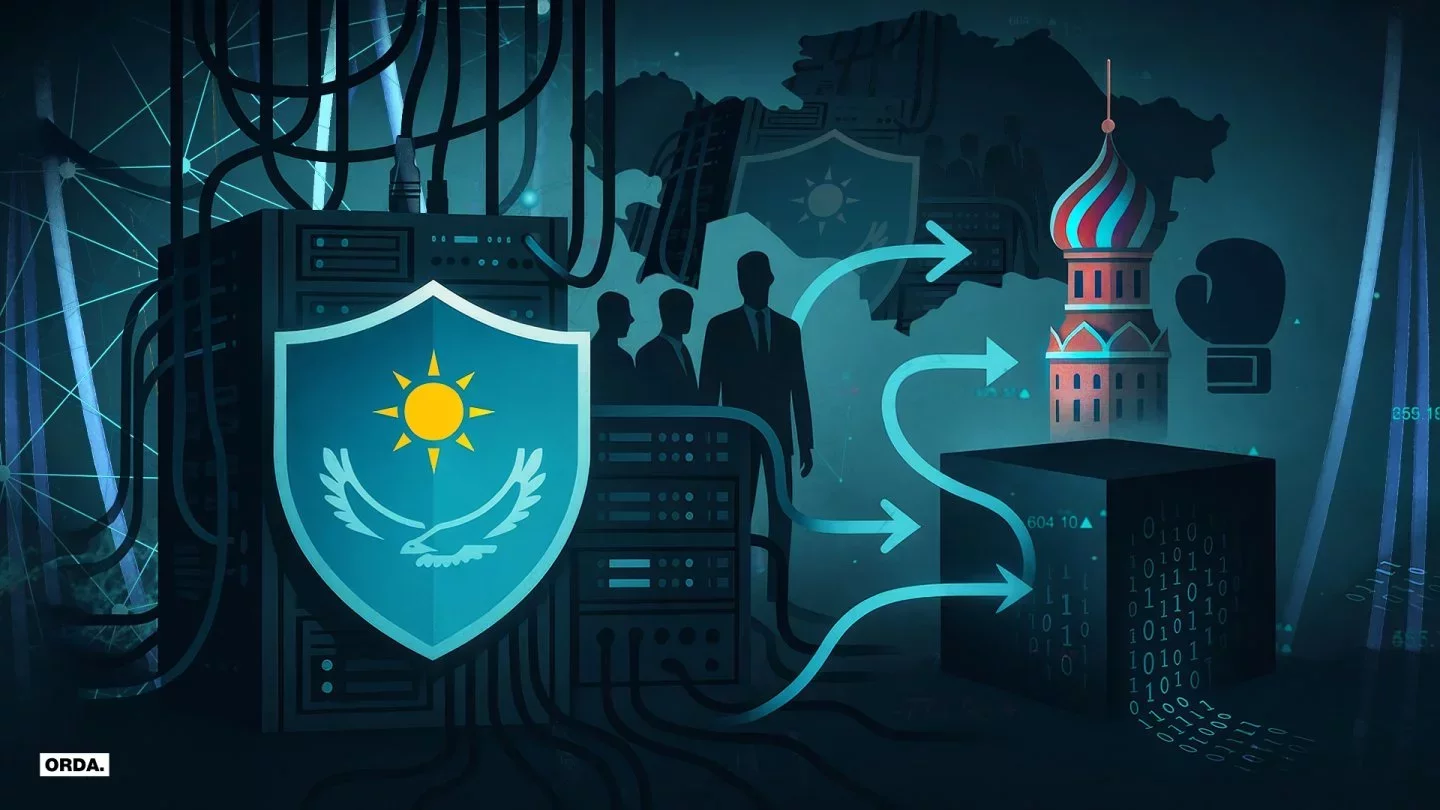 Photo: Orda.kz
Recently, Majilis deputy Bakhytzhan Bazarbek raised questions about the nature of the Unified Accounting System, where it came from, and who might actually benefit from its implementation.
His post suddenly disappeared. And that disappearance clearly illustrates the methods used by those introducing into Kazakhstan’s digital space an expensive and inefficient Russian system owned by sanctioned banks and individuals.
This is how lobbying by employees of the Presidential Administration of Kazakhstan operates, Orda.kz reports.
The editorial staff obtained a compliance investigation focused on the Russian interactive betting market. It shows how, under the slogans of transparency and oversight, Russia built a closed vertical system — from the regulator to the payment gateway — fully controlled by a narrow group of affiliated structures. We publish key figures from the document to show that what in Russia became a tool for destroying sports, raiding sports betting organizers, and siphoning money out of the industry into the pockets of Umar Kremlev and employees of Mobile Card (a subsidiary of VTB Bank, sanctioned by the US and EU), is now being introduced in Kazakhstan under the name Unified Accounting System (UAS).
Some of these people write For Official Use Only notes to the President of Kazakhstan, praising the achievements of the Russian TSUPIS, others use these same classified notes to pressure deputies, others organize the integration of the Kazakh nominal operator of the Russian Mobile Card into state information systems, and still others silence the media when the truth about the raider nature of the economically ineffective TSUPIS (called the UAS in Kazakhstan) leaks into mass media.
It may seem that the monopolization of sports betting payments by sanctioned Russian structures will not affect the life of the average Kazakh citizen. But this is a major misconception. The mere introduction of nominal operators of sanctioned Russian financial institutions puts Kazakhstan’s entire financial system at risk.
If secondary sanctions are triggered, Kazakhstan’s banks and related instruments will lose value on international exchanges, borrowing costs will rise, and this will inevitably lead to more expensive loans for citizens and businesses, higher prices on everyday goods, and ultimately runaway inflation.
It is no coincidence that the Chairman of the National Bank warned the Prime Minister about the risks of involving third parties under the UAS pretext. But who listens to the main financial regulator when billions and trillions are at stake for lobbyists sitting in high offices?
This is why Bayaliyev, from his office in the Presidential Administration, forces authorized bodies to connect the Kazakh nominal operator of Russian VTB subsidiaries — NomaPay — to state information systems. This is why Irgaliyev and Yessekeyev prepare For Official Use Only notes justifying the introduction of Russian TSUPIS.
What Russia calls streamlining the bookmaker market turned out to be a carefully built digital system of raiding, monetizing client data for TSUPIS owners, and ultimately robbing Russian sports. Behind the facade of state oversight stands a private structure — NBFC Mobile Card — which received exclusive access to every bettor in the country: passports, IP addresses, money flows. Its beneficiaries are VTB Bank and Umar Kremlev, whose boxing federation was removed from the IOC due to murky financing and concealing the criminal convictions of its chair.
Every new user who completes TSUPIS identification essentially enters a unified client database. And within hours of registration, the clean phone number begins receiving SMS offers from official bookmakers — Fonbet, Winline, Liga Stavok, and Pari.
The source of these mailings matches the TSUPIS database. The investigation shows that inside the system operates a hidden marketing mechanism — internal circulation of the client base.
A person who simply wanted to open a wallet automatically becomes a potential client of companies affiliated with Umar Kremlev. Meanwhile, the Mobile Card monopoly receives a commission from every transaction, and a second revenue stream comes from selling or using player data. This double monetization has become standard practice.
The formal regulator is ERAI — the Unified Gambling Regulator — where key positions are held by the same people who run the Russian Boxing Federation, headed by Umar Kremlev.
Claims that TSUPIS eliminated offshore operators also turned out to be false. Kremlev himself, in numerous interviews in 2025, speaks about the dominance of offshores in the Russian market. Worse yet — during TSUPIS registration, clients are targeted with ads for offshore bookmakers who happen to be sponsors and partners of Kremlev’s foreign tournaments.
Economically, TSUPIS is catastrophically inefficient. Its IT system costs are comparable to sports funding — about eight billion rubles a year. That is higher than the cost of the SBP and SEPA combined. Meanwhile, revenues — about 31 billion rubles — go into the founders’ pockets.
State spending on sports in Russia drops year after year. A representative of the Ministry of Sports clarified that 41.5 billion rubles are allocated for physical culture and sports development in 2025. TSUPIS spends the same amount on operational costs, while the beneficiaries — Umar Kremlev and VTB — pocket the profit.
In September 2025, at a forum of gambling operators organized by Kremlev himself, it was acknowledged that TSUPIS collapsed sports funding. The facts are simple. Before TSUPIS, bookmakers supported 130 sports federations; now only 28 remain.
Everything above makes it clear why employees of the Presidential Administration promoting the UAS work under secrecy and silence anyone who dares to tell the truth — even if they are a deputy.
It also clarifies why lobbyists mislead deputies and government members: a year ago, a rumor was spread in the Majilis that the UAS belonged to the president’s nephews, and therefore new laws should be adopted based on the Russian TSUPIS model.
Rumors are just one tool. Real employees of the Presidential Administration — Rustam Bayaliyev, Asset Irgaliyev, Kuanyshbek Yessekeyev, Kanat Kulshmanov — call and write to government members and deputies personally.
And when Kazakhstan’s financial system falls under secondary sanctions, when loans and food become more expensive, when citizens’ personal data and even the military personnel list flow to our northern neighbor, rumors won’t matter. Only one thing will: whose signatures from the Presidential Administration stand on the documents that introduced into Kazakhstan’s financial system a Trojan horse named UAS.
Orda.kz has all documents confirming the information in this text.
Original Author: Editorial
Latest news
- Pension Returns in Kazakhstan Nearly Match Inflation
- Kazakhstan Bets on a Falling Company: KASE Signs Three‑Year Agreement With BitGo
- New Legal Culture Lesson Introduced in Kazakh Schools and Colleges Amid Bullying Prevention Efforts
- Dozens of Officials Caught Betting With Bookmakers in Ulytau Region
- What Scheme Could Allow Kazakhstan to Supply Oil to Japan, Expert Explains
- What Will Happen to Gasoline Prices in Kazakhstan? Expert Outlines Three Scenarios
- More Than a Ton of Medicines Smuggled to Almaty Under Guise of Cosmetics
- Kazakhstani Man Suspected of Creating Multi‑Billion Tenge Pyramid Extradited from Georgia
- How Many Drugs Have Been Found in Kazakhstan Since Beginning of 2026, KNB Says
- “Civilized Divorce”: Why Kazakhstan Still Needs the CIS
- Fruit And Vegetable Exports Through Khorgos Rise To 137,000 Tons
- 80 People Defrauded of 40 Million Tenge in Fake UK Job Scheme
- From Taiga to Steppe: Red Book Amur Tigers to Be Resettled in Kazakhstan
- In Zhetysu, Authorities Begin Removing Fences That Blocked Animal Migration
- In Almaty, Over 400 Companies Received Fictitious Licenses for Construction Work
- Six Lives a Day: Why Road Accident Death Rate in Kazakhstan Is Higher Than in Europe and Central Asia
- What Will Change in Astana: New Law on Capital Status Submitted for Discussion
- Kazakhstan’s Foreign Ministry Comments On Conflict Involving Kazakhstanis In Russia
- Earth Hour: Kazakhstan Will Turn Off The Lights
- Vet Service in Turkestan Caught Making Fictitious Purchases
