

Bulgaria: Radev Blocks Lukoil Asset Bill, Citing Constitutional Concerns
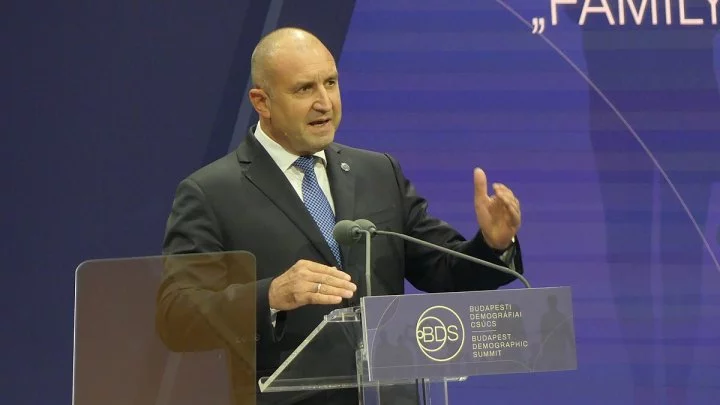 English: Bulgarian President Rumen Radev at the Budapest Demographic Summit 2023. Budapest, Central Europe. Date: 14 September 2023, 11:57 Source: Own work Author: Elekes Andor Licensing: This image is licensed under the Creative Commons Attribution-Share Alike 4.0 International license.
Bulgarian President Rumen Radev has vetoed a bill that would have introduced new rules for the sale of Lukoil’s assets in the country, Orda.kz reports, citing BTA.
The legislation required all transactions involving the Russian oil company’s property to be approved by the State Agency for National Security (SANS) and the Council of Ministers — a measure intended to prevent the sale of the assets in a way that could ultimately circumvent sanctions.
Radev argued that the law would place the government in “functional and operational dependence” on the security agency, violating the constitution. He also said the legislation breached the principle of equality before the law, since it was effectively aimed at a single company.
The veto follows a new wave of U.S. sanctions against Lukoil and Rosneft. On October 22, the U.S. Treasury’s Office of Foreign Assets Control (OFAC) blacklisted both firms and 34 of their subsidiaries, accusing them of financing the Kremlin’s war machine.
Two days later, Bulgaria’s parliament adopted amendments requiring all deals involving Lukoil’s assets to receive state security clearance, according to The Insider.
The U.S. measures have raised the risk of foreign assets being frozen, including Lukoil’s Neftochim Burgas refinery and its chain of gas stations. Around 10 percent of the refinery is directly owned by the Russian parent company, while the rest belongs to European subsidiaries such as LITASCO SA, a Geneva-based trading arm wholly owned by Lukoil.
Through similar holding structures, the corporation retains control of most of its operations in the EU.
Radev’s veto could make the sale process less transparent and potentially open the door for Russian-linked intermediaries to acquire Lukoil assets under the guise of European entities.
Parliament can now either uphold the president’s veto or override it with another vote, writes The Insider. Until then, the previous rules — allowing sales without government or intelligence approval — remain in force.
Over the past two years, Radev has challenged multiple decisions by the government and parliament on energy and defense policy. In October, he appealed to the Constitutional Court to strike down a gas transit tax on Gazprom pipelines, claiming it infringed on property rights — a move that drew accusations from Prime Minister Nikolay Denkov and Finance Minister Asen Vasilev of defending Russian interests.
Radev previously halted the transfer of 100 Bulgarian armored vehicles to Ukraine, citing domestic security needs, but lawmakers overrode his veto twice.
He has opposed sending weapons to Kyiv, warning it could drag Bulgaria into the war. He also refused to sign a joint declaration by Eastern European leaders backing Ukraine’s NATO bid and threatened to veto EU sanctions targeting Russian nuclear fuel exports.
Although he condemned Russia’s aggression in 2023 and called for a peaceful settlement, Radev continues to insist that the war “has no military solution” and that Kyiv must seek negotiations with Moscow.
Latest news
- Orda.kz Editorial Team to Cease Operations on September 1
- The Price of a Degree: How Students in Kazakhstan Pay for University
- Second Przewalski’s Horse Foal Born as Species Returns to Kazakhstan
- Kazakh Mining Companies Can Recalculate Purchases if Tenge Weakens
- Kazakhstan Names First Vice President in Three Decades
- What Almaty’s Bus Shelters Are Missing
- 400-Truck Queue Builds at Kazakh–Kyrgyz Border
- Kazakhstan Ready to Help Feed and Rebuild Gaza
- Tokayev Establishes New Presidential Security Body
- Almaty Takes Back Its Nearly Century-Old Hippodrome
- No More Guesswork on Savings: Kazakhstan Tightens Energy Audits for Businesses
- Public Money Could Be Used to Rescue Failing Kazakh Banks
- Third Kazakh Woman Reported Missing in Nepal-China Flood Zone
- Falconer Convicted Over 35 Protected Birds, Spared Punishment Under Amnesty
- Kazakh Citizen Detained in Yakutia in Phone Fraud Case
- Yuan Instead of Dollars? KazMunayGas Draws Record Demand in Asia
- China Gains Oil-Market Influence as OPEC+ Weakens
- Kazakhstan to Divide Smartphones Into White, Gray and Black Lists
- Kazakhstan’s Government Formally Resigns as First Kurultai Session Opens
- Rare Lynx Sighting Recorded in Northern Kazakhstan
