

Bektenov’s First Press Conference: Tariffs, VAT, Oil, and More
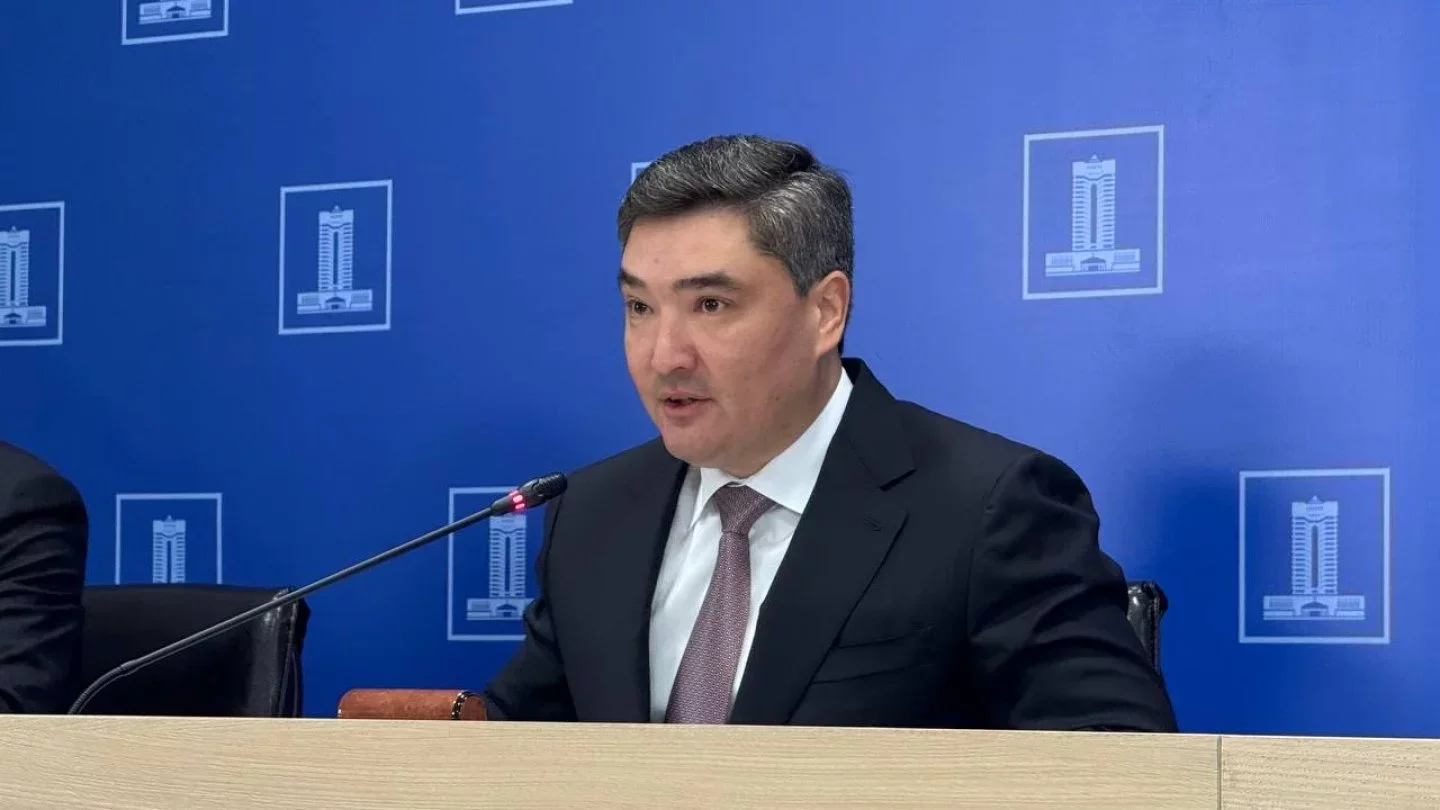 Photo: Orda.kz
At his first press conference, Prime Minister Olzhas Bektenov addressed a wide range of pressing economic and policy issues, from tariff hikes and tax reform to oil production and currency stability.
Orda.kz summarizes the key statements.
Tariffs Will Rise: “A Painful but Necessary Measure”
Bektenov was direct in his message on rising utility tariffs, acknowledging public concern but ruling out any rollback:
I want everyone to have a clear understanding. I do not want to look good and say that I will stop the rate of tariff growth. No, I will not. Tariffs will grow. This is a painful, unpleasant issue, but the government openly talks about it and is pursuing this policy to bring tariffs to market levels.
The Prime Minister stated that long-term tariff regulation had prevented investment in housing and utility infrastructure, which led to accidents in Yekibastuz and Ridder.
If we want to have constant heat at home in winter, constant electricity, water, and other utility networks to work well, we will go the way of raising tariffs. We have slightly revised the rate of tariff increases in order to reduce the pressure of tariffs on inflation.
New Tax Code and 16% VAT: Infrastructure Requires Funding
Bektenov also talked about a rise in VAT to 16%, calling it an “unpopular but necessary” step:
It is clear that any increase in taxes is always an unpopular and painful measure, but a necessary one. Thanks to this tax reform, we plan to significantly increase the development budget.
He stressed that sustained economic growth depends on the state’s ability to invest in infrastructure:
Infrastructure is essential for the development of any business. And in order to develop infrastructure, a development budget is needed. Unfortunately, today, our level of development budget is critically low. It does not allow the state to fully keep up with the development of the economy.
The reform is expected to increase the development budget by 8 percentage points, from 10% to 18%. To reassure businesses. Prime Minister Bektenov is confident this will create the conditions for sustainable economic growth.
He even quoted Benjamin Franklin's well-known phrase about death and taxes:
There is a famous expression attributed to Benjamin Franklin: In this world nothing can be said to be certain, except death and taxes. Unfortunately, this is true. Of course, we will try to ensure that the upcoming tax increase does not affect business activity and the business climate. According to our estimates, this will not happen.
The new Tax Code, which includes a VAT hike and a broader base of taxpayers, has faced strong criticism. Initially, the government proposed raising VAT to 20%, but after heated debate, parliament ultimately approved amendments setting the rate at 16%.
Housing Market
Prime Minister Olzhas Bektenov assured that the VAT increase will not lead to serious problems in the housing market. He vowed to monitor pricing and explained why a sharp jump in prices should not happen.
This is a market issue — a matter of supply and demand. If there were no supply, if we weren’t building housing, of course, prices would rise. But we are building. Last year, we completed 18.9 million square meters — a record figure. This year, we plan to exceed 19 million square meters, which is a very solid pace.
He emphasized that the changes to the construction industry taxation are carefully considered and include safeguards. Bektenov also pointed out that developers had been abusing VAT exemptions.
We’ve observed that pricing by developers did not reflect their VAT-exempt status — they were reaping excess profits. We do not expect a sharp spike in housing prices following the implementation of the new Tax Code next year. We will not allow speculative price hikes or collusion-driven increases in the market. We have every legal basis to apply measures in this case and intervene in the situation.
No Devaluation Expected
Bektenov commented on recent fluctuations in the tenge’s exchange rate and dismissed fears of devaluation:
The dollar exchange rate is formed based on market factors; that is, there is no intervention from the National Bank. According to our estimates and the estimates of most serious experts, there are no prerequisites for a sharp weakening of the tenge exchange rate.
The draft budget for 2025 uses a baseline scenario of 540 tenge per U.S. dollar, assuming oil at $60 per barrel. A pessimistic case assumes $50 oil.
“We do not expect devaluation,” he emphasized.
OPEC+ and Tengiz Expansion
Turning to energy policy, Bektenov addressed concerns over Kazakhstan exceeding its oil production quota under the OPEC+ agreement. He explained that the overproduction is due to the long-planned expansion project at the Tengiz field.
While Kazakhstan is not an OPEC member, it does participate in the OPEC+ agreement and is striving to meet its obligations. However, the Prime Minister acknowledged that fulfilling them has been particularly challenging this year.
In this particular period, we are not always able to do this due to the introduction of the future expansion project at the Tengiz field this year.
He stressed that Kazakhstan had communicated this in advance to OPEC+ partners:
Returning to production sharing agreements: all of this has been coordinated, and we've consistently informed our OPEC+ partners that with the launch of the future expansion project, we are forecasted to exceed our obligations. In previous years, on the contrary, we fell short of meeting our OPEC+ quotas.
Bektenov explained that Kazakhstan cannot simply ask investors to scale back:
We cannot demand that our partners in Tengiz reduce output. They have invested $49 billion in the future expansion project. Naturally, they expect to increase production, recoup their investments, and make a profit. This is such a delicate issue.
Despite exceeding quotas, Bektenov firmly denied speculation that Kazakhstan may exit the OPEC+ agreement:
At this particular moment, we are not considering the option of withdrawing from the OPEC+ deal. We believe that this deal is useful and, to a certain extent, contributes to stability in the oil market. Therefore, this issue is not being considered. We will try our best to fulfill our obligations, but taking into account, of course, national interests.
Charity Scandals and New Oversight
Finally, Bektenov addressed the controversy surrounding the misuse of charitable donations in the high-profile Perizat Kairat case. He said it underscores the need for tighter regulation:
Of course, I am aware of this situation. Unfortunately, it’s not just budget funds being misused — donations collected from citizens are, too. This case is a striking example, though not the only one. It’s simply the most high-profile.
Bektenov said the government will act based on law enforcement findings:
I think that the government will propose specific mechanisms based on the materials of law enforcement agencies. And it will be possible to adopt some legislative amendments to prevent such violations in the future.
Returned Assets, The Nazarbayevs
Prime Minister Olzhas Bektenov addressed the 900 billion tenge in assets recently returned to Kazakhstan’s budget by former oligarchs.
“To the extent permitted by law, we share information,” Bektenov said.
He explained that the Asset Recovery Commission, which he chairs, has signed agreements with individuals returning assets under legal provisions. However, the identities of those involved are not disclosed, as required by law.
Bektenov warned that naming names could harm major domestic companies, especially those with international business partners.
Mentioning a major businessman in such a context can negatively impact the company they own or lead, he noted.
The Prime Minister stressed that the state’s goal is not to destroy business, but to create conditions for entrepreneurs to invest, build new enterprises, and generate employment in Kazakhstan.
This is our national business, our national bourgeoisie. We should support them as much as possible.
He added that the recovered assets are being allocated toward socially important sectors, such as education, healthcare, and housing infrastructure.
Bektenov also commented on claims that members of the Nazarbayev family avoid accountability.
Systematic work is being carried out — including, as you well know, with regard to members of the [former President’s] family. Everything is being done in accordance with the law, Bektenov said.
He emphasized that the process of asset recovery and holding individuals accountable is ongoing and has not been paused.
If you think the amounts recovered so far are small — we will continue. This work is ongoing. And it's clear that since 2022, serious progress has been made toward building a more just society,
the Prime Minister added.
A journalist asked about the reported early release of former president Nazarbayev’s nephew, who had allegedly paid back several billion tenge. Was this considered sufficient?
Bektenov responded:
“As I said — ‘sufficient’ is a subjective judgment. The work will continue. Anyone who breaks the law will be held accountable.”
AntiKor and Rumors
Bektenov also commented on the situation surrounding Askhat Zhumagali, former head of the Anti-Corruption Agency (Antikor), stating he had no specific information.
“I don’t know, to be honest. He’s probably transferring responsibilities, as the agency is undergoing reorganization.”
When asked about rumors of a possible transition to the National Security Committee (KNB) or other roles, Bektenov dismissed them:
“These are just rumors. I’m working in the government. If the President continues to trust me, I will continue to serve.”
Not Just Presidential Directives
Prime Minister Olzhas Bektenov stated that his economic agenda goes beyond merely implementing presidential directives and is centered on the systematic diversification of Kazakhstan’s economy and reducing its dependence on raw materials.
“What I want to do — I am doing. I work on this every day, from morning until late evening,” he said.
Bektenov emphasized that his key priority is ensuring sustainable economic growth, independent of global market fluctuations. This means moving away from raw material dependency and building a production-driven economy with a stable national budget.
As a concrete example, he cited the recent launch of a major polypropylene gas-chemical plant, which he described as the first large-scale project of its kind in over 30 years.
We have ongoing projects involving polyethylene, butadiene, and more. There is huge potential in coal chemistry. As I’ve said before, over 400 different products can be made from coal — and we have massive, high-quality reserves, he noted.
The government is also focusing on deep grain processing and the development of high-value-added industries across various sectors.
“I could talk at length about the areas we’re working on. I have worked, and I will continue to work — as long as I can,” Bektenov concluded.
Original Authors: Zhadra Zhulmukhametova, Artyom Volkov
Read also:
Latest news
- Kazakhstan Dismisses Reports of “Acid Clouds From Iran” Heading Toward Central Asia
- Kazakhstan Continues Middle East Evacuation, More Than 7,300 Brought Home
- Kazakhstan Recommended for U.S. Watch List as Vorontsov Case Draws New Attention
- Putin Bans Extradition of Foreign Nationals Who Served in the Russian Army
- Kazakh Researcher Reportedly Jailed in Xinjiang for “Misinterpreting” Abay
- Almaty Residents Warned of Elevated Air Pollution
- Over 6,000 Kazakhstanis Return Home From the Middle East
- The National Bank Invests $350 Million in Crypto-Related Assets
- Tokayev Congratulates Kazakhstani Women on International Women’s Day
- Building a House in Kazakhstan Has Become Cheaper
- Kazakhstan May Allow Crypto Payments for Goods and Services
- Kazakhstan Tightens Penalties for Violence Against Medical Workers
- Kazakhstan Urges Citizens Not to Travel to Middle East Amid Escalating Conflict
- Kazakhstan Joins the Opening of the Milano Cortina 2026 Paralympic Winter Games
- Statistics Show Where the Most Women Live and Work in Kazakhstan
- Kazakhstan Carries Out 12 Evacuation Flights From the Middle East
- Kazakhstan Labor Inspectors Find Wage Arrears at 102 Enterprises
- Police Raid in Shymkent Uncovers Widespread Violations Involving Foreign Nationals
- Tokayev Condemns Drone Strike on Nakhchivan Airport
- Eyewitnesses Share Photos of Kazakh Citizens’ Evacuation
