

Annual Address: What Will Toqayev Say, What Will The Majilis Adopt, Who Will Be Removed From The Government?
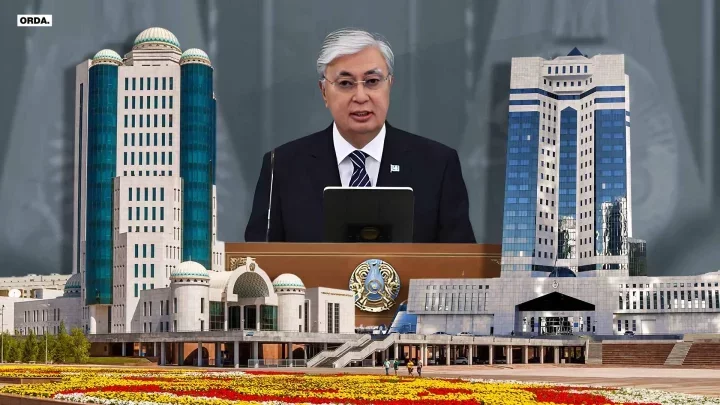 Photo: Orda.kz
First, the school year begins in early September, and second, the new political season begins. Its traditional starting point is the president’s address to the people, followed by the next session of the Majlis.
In anticipation of the new political season, Orda.kz spoke with political scientists to find out what they expect.
Toqayev’s Address
The first topic raised was the president’s address to the people. For two years in a row, one of the central topics has been the nuclear power plant. In 2023, Qasym-Jomart Toqayev announced that the decision would be made in a referendum, and in 2024 he announced the date. Last year, there was also much discussion about the Tax Code and taxation in general.
But in 2025, both of these issues appear resolved. Construction of the first NPP has begun, and a name is being chosen for it. The main contractor for two more plants has also been determined. The Tax Code has already been adopted.
So what topics should we expect this year?
According to Aidar Amrebayev, Director of the Center for Political Research at the Institute of Philosophy, Political Science and Religious Studies, the main themes in the president’s address could be the following:
The first is digitalization and the widespread use of artificial intelligence. The second is transport connectivity and, more broadly, Kazakhstan’s active participation in the transport network of Central Eurasia. Let me remind you that Kazakhstan is a participant in the One Belt – One Road project. The recent agreements between Azerbaijan and Armenia, reached in the United States, and the potential opening of the Zangezur route under U.S. control create an additional window of opportunity for Kazakhstan. In particular, the Trans-Caspian International Transport Route is planned to be updated in national development programs. Laying a fiber-optic cable along the Caspian seabed also allows us to join international communications projects. Therefore, I believe special attention will be paid to these issues.
Political scientist Talgat Kaliyev described the context ahead of the president’s address as “the conditions of a perfect storm,” primarily due to external factors.
The geopolitical centers with which we cooperate, which we look to, and on which our economy depends, are in tough confrontation and competition. Therefore, I think the focus will be on the economy and social issues. On how to maintain domestic political stability, ensure security. More specifically, how to safeguard social stability under conditions of a budget deficit, and how to minimize it.
On the topic of security, Kaliyev noted that the discussion may include not only defense capability but also internal security, particularly crime prevention.
Political scientist Valery Volodin described the upcoming political season as follows:
There is reason to believe that the new political season will be built around three broad narratives: energy as a symbol of sovereignty, infrastructure as a ritual of legitimization, and digitalization as a new form of control. In lawmaking, such high-profile projects will exist without real institutional effect. In personnel policy, we are likely to see rotations for the sake of image, rather than reforms for the sake of results. In form, there will be movement, but in fact it will be another round of the status quo, disguised as modernization.
According to Volodin, one of the central themes in the president’s address will be energy:
In 2024, Toqayev announced a referendum on nuclear power plants. This time, progress on the nuclear agenda can already be reported: not just one station, but an entire cluster. What will be promoted is not concrete, turbines, and radiation, but a beautiful vision of the future.
Volodin also expects Toqayev to emphasize transport and digitalization, but he points to different reasons for highlighting these issues:
The second theme is transport and infrastructure. The appointment of a new Minister of Transport is not accidental. Highways, roads, and airports have moved beyond ordinary construction projects and have become symbols of national unity, almost ideological arguments. And, of course, digitalization. The address will certainly include lofty statements about digital sovereignty. In addition, social issues will be highlighted — medicine, education, blue-collar jobs, and other showpiece elements of ‘A Just Kazakhstan.
Laws Of The Majilis
The next parliamentary session also begins with the president’s address. Last year, the Majilis spent considerable time discussing the Tax and Water Codes, and both were ultimately adopted. Among other high-profile laws that resonated beyond Kazakhstan was the one concerning territorial defense. However, the law on foreign agents was only debated, not passed.
So what can we expect from the Majlis this year?
According to Talgat Kaliyev, amendments related to information can be expected in the upcoming parliamentary season:
Perhaps amendments will be necessary in the area of control over information flows. Many EU countries are now adopting laws aimed at deanonymization. Because it is impossible, while preserving freedom of speech, to allow it to be abused by terrorists, extremists, or drug dealers. And many communication services, such as Signal and Telegram, have also become serious tools for drug distribution. Therefore, I think that in the areas of data protection and cryptocurrencies, laws aimed at regulating these processes will be introduced.
In addition, he suggests adopting laws regulating the use of unmanned aerial vehicles:
Unmanned aerial vehicles are now used, among other things, for delivery. But this process is not regulated in any way. What if a drone falls on someone’s car, drops a product, or malfunctions? Therefore, I think such laws will be adopted. As for the rest, the main set of laws has already been passed.
But the political scientist does not see serious prospects for the law on foreign agents:
Even if it is adopted in some form, opponents of this law will significantly dilute it, and it will end up more declarative and framework-based.
Valery Volodin joked about legislative activity, saying the Majilis needs something comparable to the Tax and Water Codes this year, otherwise parliament risks “falling into lethargy.”
He also predicts laws connected to the digital sphere, but not limited to them:
Tax and Budget Codes: possibly continuation of reforms. Digital laws: everything related to platforms, data, and security. If even ministers are now selected via e-Qazyna, there will be no avoiding a legal framework. Occupational health and safety: after the mining tragedies, the government cannot stay silent. Here we should expect either new rules or the creation of another supervisory body.
Will The Government Remain?
And since the president and parliament have already been mentioned, it is worth addressing the government.
There is reason to do so. In early June, Qasym-Jomart Toqayev replaced the Ministers of Transport and Defense.
Should we expect further changes in the government? Given the number of problems in various sectors, almost any minister could be considered a candidate. Could the resignation of Olzhas Bektenov’s government as a whole be possible?
Aidar Amrebayev does not expect major changes in the government:
This was Nazarbayev’s tactic: changing the government for certain dates, for certain speeches. I think Qasym-Jomart Kemelevich is a more cautious and institutional politician in this regard. He gives a certain carte blanche to current areas of development, and the minister works. In general, I believe the country’s leadership follows the logic that institutional, not personally motivated, decisions are needed. I think changes are possible in the form of structural transformations.
Instead of reshuffling the cabinet, Amrebayev suggests focusing on the efficiency of budget spending and optimizing state expenditures in the context of a budget deficit and volatile export prices.
As for the summer resignations of the transport and defense ministers, Amrebayev said this was understandable because new results are expected in these areas:
Defense is now at the forefront in every country. Therefore, we need to think about how to rebuild the defense system, how to improve material and technical support in this area, including transparency of government procurement, diversification of supply sources, and so on. The same applies to transport. Everything there is accelerating, and the situation can be summed up this way: even to stand still, you need to run twice as fast.
Valery Volodin views the summer changes in two ministries, along with the March replacement of the Minister of Energy, as a typical administrative reshuffle:
In theory, this can be presented as a renewal of the management elite, but in practice it is cosmetic. It is simply moving figures around without revising the institutional framework. A full cabinet reset is unlikely: Bektenov’s government still functions as a technocratic buffer, where the main focus is not efficiency but controllability. In political science terms, this is a strategy of controlled turbulence: we create the appearance of movement without changing the trajectory. Or, put simply, we make noise so it seems like we are moving.
Talgat Kaliyev also does not expect the resignation of Bektenov’s government:
In my opinion, Bektenov’s government has only just begun to show itself. Bektenov himself has only recently started to appear in the public space. They have finally carried out this unpopular tax reform. And the government has begun to gain some momentum. At this point, it seems to me, replacing him may be inappropriate.
Like the other two experts, Talgat Kaliyev did not name specific ministers who might leave office.
However, he did not rule out changes within the government:
Perhaps there will be reshuffles in the security bloc, since such serious reforms as the transfer of Anti-Corruption to the KNB structure have begun.
Original Author: Igor Ulitin
Latest news
- Orda.kz Editorial Team to Cease Operations on September 1
- The Price of a Degree: How Students in Kazakhstan Pay for University
- Second Przewalski’s Horse Foal Born as Species Returns to Kazakhstan
- Kazakh Mining Companies Can Recalculate Purchases if Tenge Weakens
- Kazakhstan Names First Vice President in Three Decades
- What Almaty’s Bus Shelters Are Missing
- 400-Truck Queue Builds at Kazakh–Kyrgyz Border
- Kazakhstan Ready to Help Feed and Rebuild Gaza
- Tokayev Establishes New Presidential Security Body
- Almaty Takes Back Its Nearly Century-Old Hippodrome
- No More Guesswork on Savings: Kazakhstan Tightens Energy Audits for Businesses
- Public Money Could Be Used to Rescue Failing Kazakh Banks
- Third Kazakh Woman Reported Missing in Nepal-China Flood Zone
- Falconer Convicted Over 35 Protected Birds, Spared Punishment Under Amnesty
- Kazakh Citizen Detained in Yakutia in Phone Fraud Case
- Yuan Instead of Dollars? KazMunayGas Draws Record Demand in Asia
- China Gains Oil-Market Influence as OPEC+ Weakens
- Kazakhstan to Divide Smartphones Into White, Gray and Black Lists
- Kazakhstan’s Government Formally Resigns as First Kurultai Session Opens
- Rare Lynx Sighting Recorded in Northern Kazakhstan
