

Tired of Being Afraid: How Human Rights Activists Want to Stop and Prevent Torture in Kazakhstan
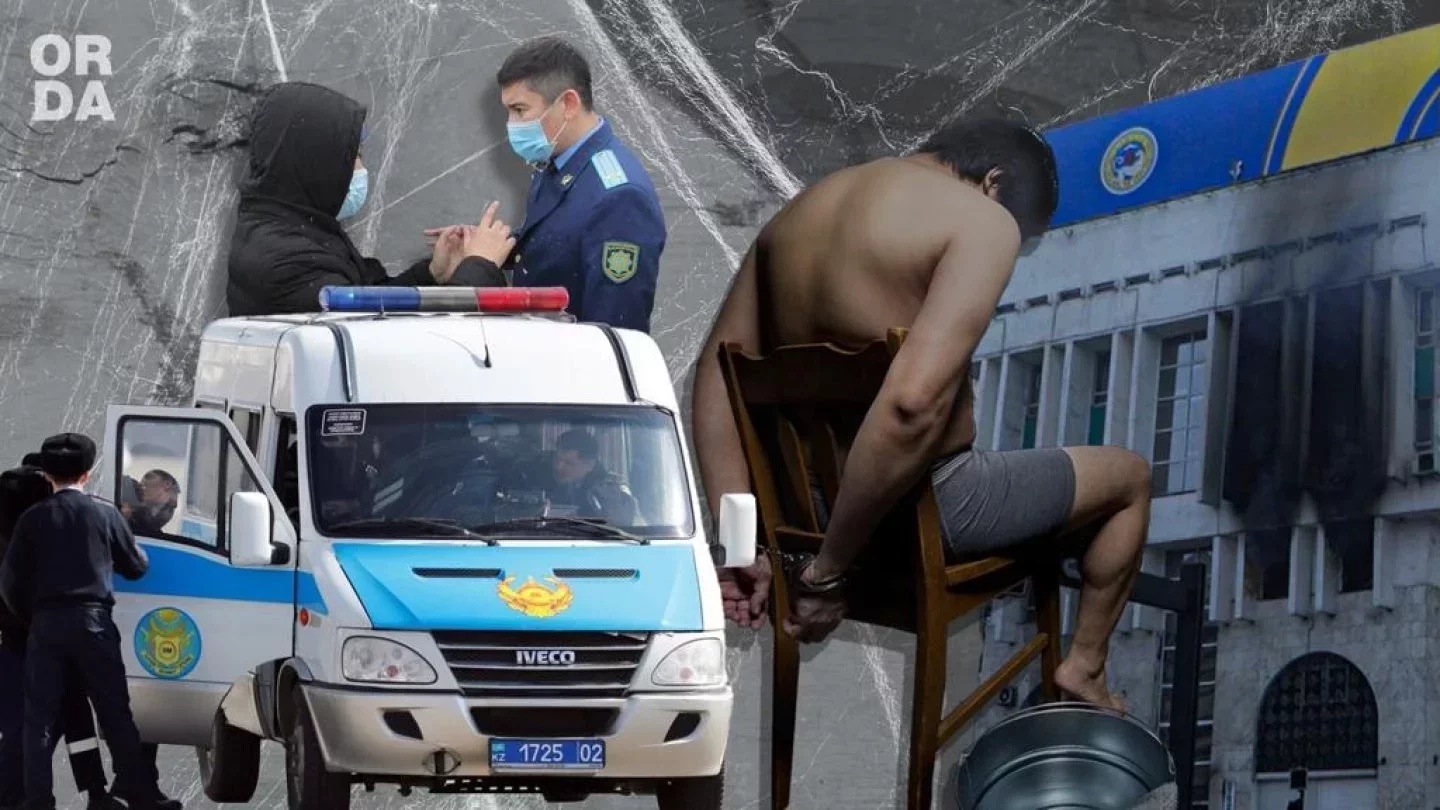 Orda
Orda
In December 2023, Qasym-Jomart Toqayev signed a decree "On an action plan regarding human rights and the rule of law." Human rights activists say that this document is critical, expressing high hopes for it. Especially concerning stopping and the prevention of torture. Meanwhile, since January, Kazakhstani human rights defenders have initiated a project aimed at combating torture. Orda has looked into the matter.
Traces of Qantar
The project entitled "Breaking the Vicious Circle: A Multifaceted Approach to Combating Torture in Kazakhstan" is being implemented by the Kazakhstan NGO Coalition against Torture. The Taldykorgan Human Rights Center, which won the competition for the project’s implementation, is at its forefront. The competition was held by the European Union, the project’s sponsor.
The project’s main aims are combating torture and certain punishment for those committing it.
In 2023, 283 people reached out to the Coalition against Torture. According to the deputy chairperson of Kazakhstan’s International Bureau of Human Rights, Rosa Akylbekova, this figure is even higher than 2022’s statistics. In 2022, they were approached by several torture victims after Qantar.
Oddly enough, human rights activists perceive the increase in appeals as an upside. The uptick translates as people having found the courage to talk about what was done to them.
I think this figure could be even higher. Because people are still afraid. Especially after Qantar. After all, about 9,000 people were detained. Many did not file statements, many got off with administrative offenses, many settled for amnesty. But some came to us already in 2023. Some learned by word of mouth that the Coalition against Torture can help find a lawyer, a psychologist, and even help with medical care. And others stopped being afraid. They say that after what they have experienced, they have nothing to fear, only death remains, Roza Akylbekova said at a press conference at the office of the KIBHR.
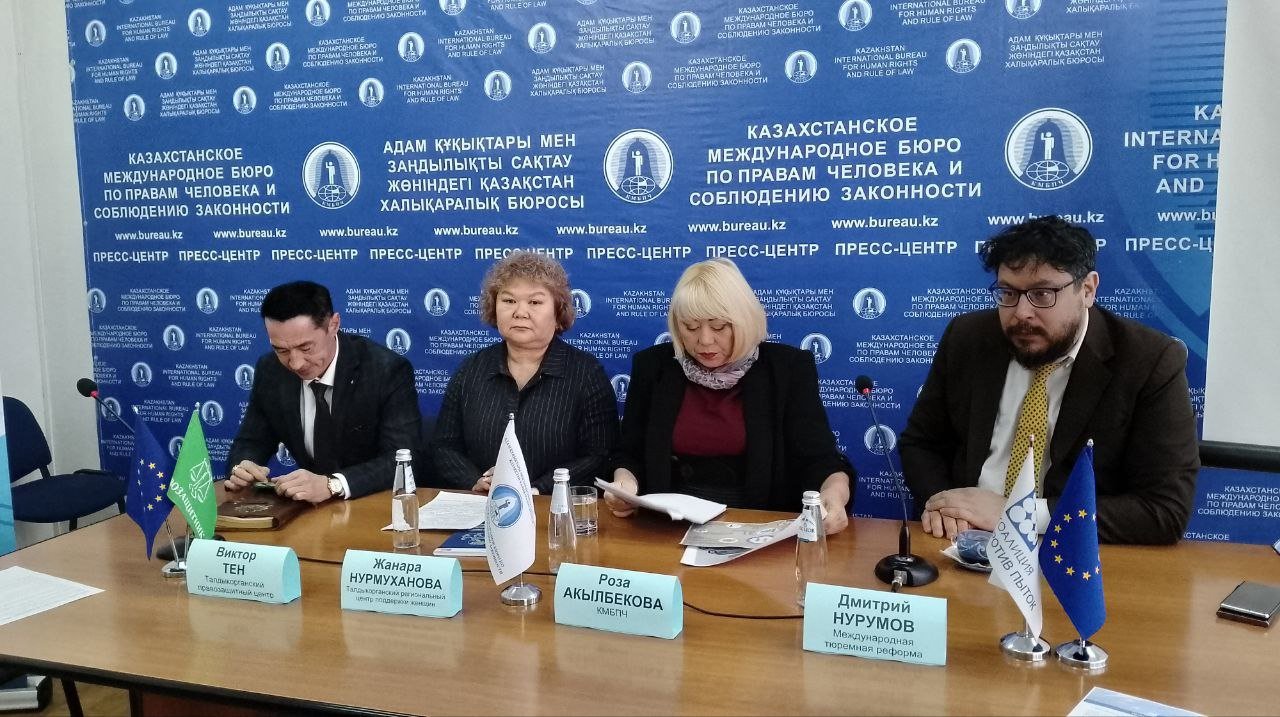
By comparing the number of complaints with the number of cases initiated and those who were punished, then one can notice that the last two indicators are several times less.
- 59 criminal cases were initiated under article 146 of the Criminal Code of the Republic of Kazakhstan "Cruel, inhuman or degrading treatment, torture”
- 31 people were recognized as torture victims.
- 23 police officers were found guilty of torture.
- Three convictions were handed down by the courts under Article 146 of the Criminal Code of the Republic of Kazakhstan.
Fines are stipulated in the Criminal Code. Human rights activists believe that this situation needs to be changed. The project being implemented with the EU strives for this and more.
Conflict of Interest
Fines as punishment are not the only matter that concern human rights defenders. Indeed, they are at a loss as to how cases under Article 146 of the Criminal Code of the Republic of Kazakhstan should be investigated.
The article currently specifies:
- Cruel, inhuman or degrading treatment
- Torture
Depending on which of them qualifies as a criminal case, different departments should investigate it. The Prosecutor General's Office will deal with the second part as a more severe offense. Human rights defenders have no objections. Yet, crimes under part 1 of Article 146 of the Criminal Code of the Republic of Kazakhstan fall under the jurisdiction of the investigators from the Ministry of Internal Affairs. Human rights activists believe that this generates a conflict of interest.
Kazakhstan keeps institutions of detention and institutions of deprivation of liberty under the jurisdiction of the Ministry of Internal Affairs. And the issue of cruel, inhuman and degrading behavior often concerns penitentiary institutions. It turns out that the Ministry of Internal Affairs, in whose jurisdiction they are located, will have them under their investigation. In our opinion, this is fundamentally wrong, says Dmitry Nurumov, a representative of the International Prison Reform.
According to human rights activists, at least two steps should be taken. The first is to transfer the aforementioned jurisdiction to an independent body. They named the Prosecutor General's Office as one possible option. Ideally, it should be a separate department altogether.
The second step is to separate the penal enforcement system from the jurisdiction of the Ministry of Internal Affairs.
Prevention
As the head of the Taldykorgan Human Rights Center, Viktor Ten, stressed, tougher punishment for those committing torture is not the main goal of the project.
We will have a more systematic approach. We want all appeals from torture victims to be properly investigated and properly referred to court. And so that perpetrators are given an adequate and commensurate punishment for what they have done. That is, the main message is inevitability and commensurability, says Victor Ten.
The second, and no less important, goal of the project, according to Ten, is the prevention of torture through the National Preventive Mechanism for the Prevention of Torture. This should eventually lead to the absence of torture in the state system altogether.
Human rights defenders plan to promote and explain this to citizens and law enforcement officers in particular.
Original Author: Igor Ulitin
DISCLAIMER: This is a translated piece. The text has been modified, the content is the same. Please refer to the original piece in Russian for accuracy.
Latest news
- Kazakhstan Prosecutor Opposes Deportation of 16-Year-Old Russian Teen
- Russian TV Channels Taken Off Air in Kazakhstan
- Mistaken Claim? Kazakhstan Denies $1B Contribution to the Board of Peace
- How many Kazakhstanis remain in the Middle East — MFA
- Kazhydromet Warns of High Flood Risk in Five Regions in 2026
- MP Calls for Prosecutor Review of Kazakhstanis’ Dubai Property
- Kazakhstan Moves to Legalize Private Detective Work
- Kazakhstan to Extend Gas Export Ban for Six More Months
- Majilis MP Calls to Soften Liability for Kazakhstanis Drawn into Foreign Wars for Pay
- The Delivery of 51 Stadler Passenger Coaches Has Been Delayed
- Kazakhstan Returns Nearly 1,000 Citizens From the Middle East
- Damaged Baikonur Launch Pad Facility Restored After 2025 Collapse
- A Rare Black Melanist Wolf Was Shot in Eastern Kazakhstan
- Kazakhstan Maintains Neutral Stance on Middle East Escalation
- Kazakh MFA: Citizens Evacuated from the Middle East via Oman and Saudi Arabia
- Kazakhstan to Spend 4.6 Trillion Tenge on Road Projects Through 2029
- Central Asia Competes for the Skies: Why Kazakhstan Risks Falling Behind Uzbekistan on Jet Fuel
- The War in Iran Opens a Window of Opportunity for Kazakhstan’s Oil Sector, Analysts Say
- Iran Conflict Escalates Beyond the Gulf: What Kazakh Experts Say About Risks for Central Asia and Kazakhstan
- Kazakhstan Prepares Possible Evacuation of Its Citizens From Iran
