

Recovered Ancient Saka-Era Gold Now on Public Display
 Photo: Orda.kz
Artifacts from the Saka (Scythian) era — including a winged lion and a ring inscribed with Arabic script — have officially been added to the collection of Kazakhstan’s National Museum. The items were confiscated from a previously unnamed oligarch, Orda.kz reports.
Now, they’ve been transferred into state ownership through the Returned Assets Management Company and handed over to the National Museum. The artifacts, dating from the 7th century BC to the 3rd century AD, are now part of Kazakhstan’s national heritage.
When the Returned Assets Management Company first received the items, they suspected they might be more than just golden jewelry, possibly of historical significance. They reached out to the Ministry of Culture, and experts from the National Museum confirmed their suspicions: several of the artifacts were crafted in the distinctive Saka “animal style” and date back to the early Iron Age and the Middle Ages.


What Was Given to The Museum:
- A metal eagle head
- A ring bearing Arabic script (especially notable)
- A plate depicting a horned animal on a hill
- Sculptures of a winged lion, a winged horse, a running leopard, and a jumping deer
- 15 ancient coins
- Two spiral rings and a lion-head ring
Though the total weight of the collection is just over 118 grams, its cultural and historical value far outweighs the scale. The craftsmanship — including chasing, embossing, and engraving — reflects a blend of steppe traditions and Greco-Persian and Eastern artistic influences.


The Returned Assets Management Company's general director, Kuanyshbek Mukash, emphasized that this transfer demonstrates how recovered assets can benefit the public by helping tell the country’s story. However, he declined to name the individual from whom the artifacts were seized.
Well, you know that we cannot... We have no legal right to reveal who owned the assets, whether they’re historical or modern. All recovered assets are transferred to the state. Those with historical value are now being handed over to museums, said Mukash.
The artifacts were initially listed for auction as part of state property sales, misidentified as standard gold items. For example, the ring with Arabic script had been valued at just 136,000 tenge.


Yes, the 136,000 tenge valuation came from the expert who assessed all the items as a group. He most likely evaluated it purely as a gold object, priced by weight, by gram, added Kuanyshbek Mukash.
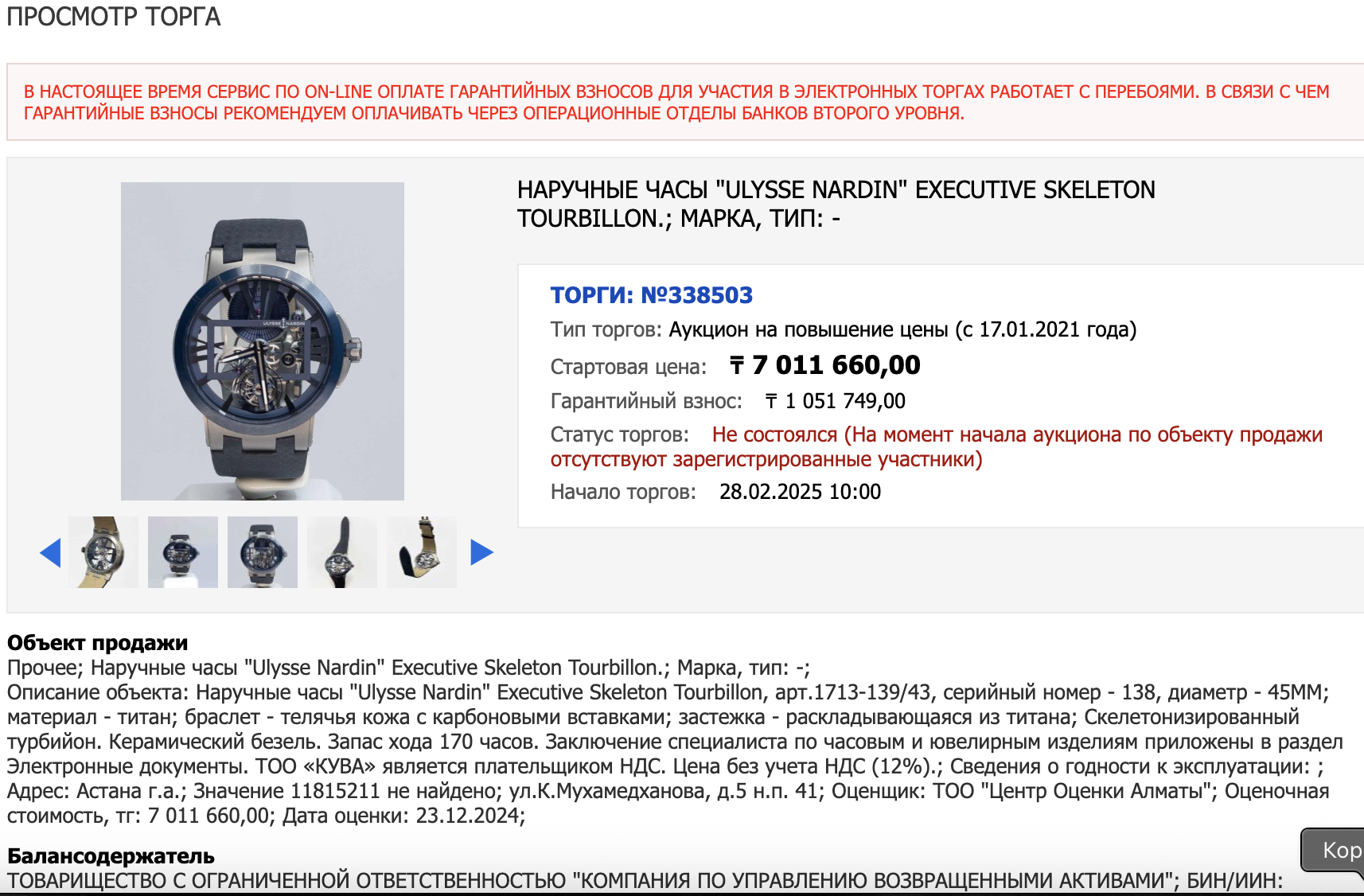
We found this ring listed among items that the Returned Assets Management Company has sold — and continues to sell — through the state property auction. The valuables were divided into separate lots and sold individually, but had been appraised as a bulk collection. The list included rings, earrings, handbags, and luxury wristwatches, with a total estimated value of 414 million tenge.
We’ve reported on this before, and notably, a large collection of jewelry and luxury watches was previously confiscated from Kairat Satybaldyuly, the nephew of former President Nursultan Nazarbayev. A watch from that seized collection resembles one spotted on Satybaldyuly’s wrist at an official event.


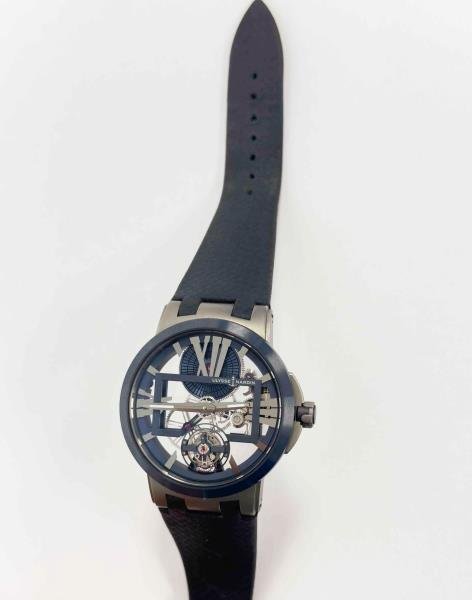
In the photo, Satybaldyuly is wearing a Ulysse Nardin Executive Skeleton Tourbillon watch on his right wrist — the same model listed among items sold by the Returned Assets Company on the state auction website. It was priced at seven million tenge.
Original Author: Ilya Astakhov
Latest news
- Several Border Checkpoints With China to Close for One Day
- Laser Guidance Systems Begin Testing on Kazakhstan’s Highways
- Kazakhstan Plans Mandatory Labeling for Dietary Supplements and Jewelry
- Chinese Influencer Tao Mingxiu Receives Presidential Award in Kazakhstan
- Kazakhstan Ranks Sixth In the World By Agricultural Land Area
- Uzbekistan Breaks Regional Record In Public Debt Market
- “They Are Not Cattle, You Don’t Vaccinate Them”: Why Zoologists Cannot Save Caspian Seals
- Did The Digital Economy Stumble Over PPP? How The Minister Reacted to the IT Industry’s Problems
- Private Investors to Help Build Juvenile Correctional Facilities in Kazakhstan
- “Like Rotten Eggs”: Residents of Atyrau Again Complain About the Stench in the City
- Digital Passport and Admission Benefits: Kazakhstan Wants to Change Volunteering
- Infected Sunflower Seeds From the U.S. Barred From Entering Kazakhstan
- Almaty Drivers Offered Free Emissions Checks Without Penalties
- Croatia Will Finance Oil Exploration In Aktobe Region
- Half of Kazakhstanis Earn Less Than $1,000 a Month
- Is The Era Of Easy Extraction Over? Resource Development Is Being Rebuilt In Kazakhstan
- How a Kazakhstani Tried to Change His Ethnicity Through the Courts — and What Came of It
- Economist Names Kazakhstan Regions Lagging in Investment Transparency
- 14-Year-Old In Tesla Tries To Flee Police In Astana
- When a Michelin-Recognized Restaurant Will Open in Almaty, Akimat Says
