

Middle Powers and the Crisis in International Politics: Toqayev Writes an Article for French Outlet
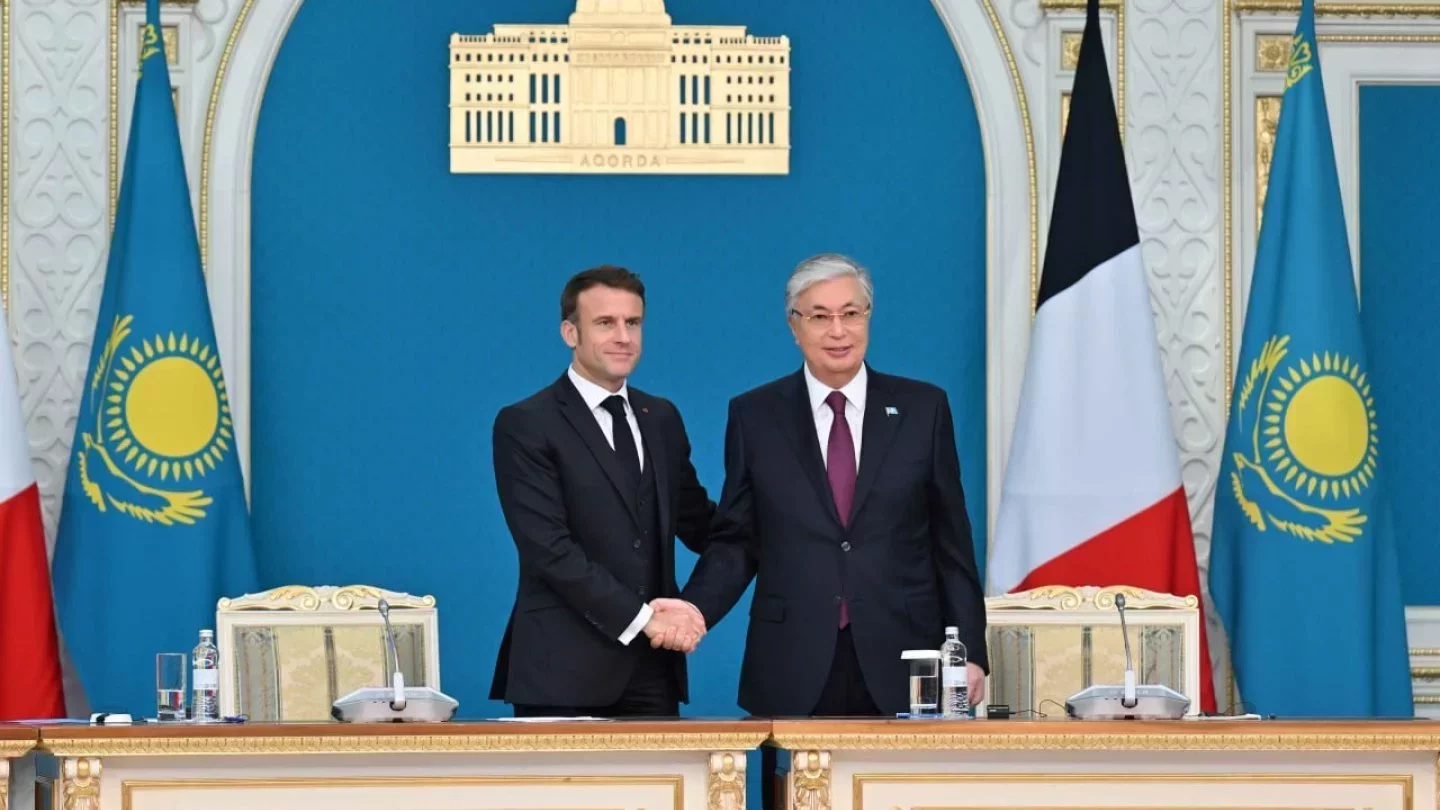 Photo: Aqorda press service
President Qasym-Jomart Toqayev published an article for FIGAROVOX. In it, he explains the country's position on global challenges and prospects for cooperation with France. Toqayev touched on several topics, from the need for a geopolitical reassessment to specific steps by Kazakhstan on the international agenda.
Toqayev began by stating that the world is becoming increasingly unpredictable, facing threats from climate warming and mass migration. These crises compound each other, creating consequences affecting millions.
Existing governance systems and international response mechanisms are proving insufficiently effective in such crises. It is particularly alarming to note that multilateral institutions are increasingly finding themselves in a dead end. The example of the United Nations clearly demonstrates such a crisis. This organization, originally created as a symbol of global solidarity, remains indispensable today and faces serious difficulties. Traditional superpowers, economic and political mastodons, disagree on major current issues on the agenda. The consequences of these disagreements are felt especially acutely in regions where conflicts are becoming protracted, while the structures created to resolve these disagreements, primarily the UN, are paralyzed, the President noted.
He believes the world community should accept that the “geopolitical coordinate system” has undergone significant changes and rethink multilateralism. One key aspect of the new reality is the recognition of the growing role of middle powers.
The economic and political importance of these countries is growing, and their balanced and constructive position is becoming an advantage in the context of global uncertainty. As major powers fail to reach consensus, it is the middle powers that are increasingly taking on the role of mediators, maintaining opportunities for dialogue and maintaining a commitment to global cooperation, Toqayev added.
He recalled that Kazakhstan has long demonstrated an active foreign policy, promoting initiatives worldwide.
Our country has thereby facilitated interstate negotiations, providing a platform for peaceful dialogue between Azerbaijan and Armenia and discussing the Syrian crisis and the Iranian nuclear program. Kazakhstan also regularly organizes congresses of global religious leaders, supporting interfaith dialogue.
As Toqayev emphasized, these initiatives unite the values of peace and solidarity that Kazakhstan shares with France.
In Kazakhstan’s national plan, a democratic system of governance has been created in domestic policy, and future sectors such as “green” energy, digital technologies, and logistics are actively developing, including in close cooperation with French companies.
In the area of environmental protection, we are firmly committed to the global climate agenda and strongly support the Paris Agreement on Climate Change, thereby confirming our obligations to the planet and future generations. Our stated goal of achieving carbon neutrality by 2060 will be further evidence of Kazakhstan's consistent implementation of sustainable development goals, the President reminded.
Toqayev says work is already underway with the French side on the One Water Summit initiative to solve water resource problems, corresponding to one of the UN Sustainable Development Goals.
The President also highlighted the Middle Corridor, which links Europe and Asia through Kazakhstan and the Caspian Sea. This transport route will strengthen regional economic ties and increase European energy security.
This is not just about expanding trade routes; we are talking about strengthening the spirit of cooperation that promotes mutually beneficial economic ties between different regions. Such efforts are important for ensuring energy security in Europe and France, which we consider an important aspect of our bilateral relations. Kazakhstan, which remains the world leader in the production of natural uranium, expects to maintain its status as a reliable partner for the French nuclear industry, the President believes.
In addition, Toqayev spoke about Kazakhstan and France's mutual interest in rare earth metals, renewable energy, and nuclear energy cooperation. Kazakhstan's recent referendum on the construction of the country's first nuclear power plant opened up new opportunities for bilateral partnership, strengthening energy security and expanding the horizons of economic cooperation.
We look forward to working with France, which enjoys undisputed authority in the international arena and has extensive diplomatic experience. Together, we can contribute to building a stable and prosperous world, guaranteeing safe coexistence, mutually beneficial cooperation and universal progress. It is with this vision that, at the invitation of the President of the French Republic, I am making my state visit to Paris - the first in the history of our relations, Toqayev concluded.
Kazakh President Qasym-Jomart Toqayev will visit Paris on November 4–5 at the invitation of French President Emmanuel Macron. The visit will include talks to expand cooperation between the countries in the economy, investment, and culture. Toqayev will also meet with representatives of French business.
Original Author: Artem Volkov
Latest news
- Russian TV Channels Taken Off Air in Kazakhstan
- Mistaken Claim? Kazakhstan Denies $1B Contribution to the Board of Peace
- How many Kazakhstanis remain in the Middle East — MFA
- Kazhydromet Warns of High Flood Risk in Five Regions in 2026
- MP Calls for Prosecutor Review of Kazakhstanis’ Dubai Property
- Kazakhstan Moves to Legalize Private Detective Work
- Kazakhstan to Extend Gas Export Ban for Six More Months
- Majilis MP Calls to Soften Liability for Kazakhstanis Drawn into Foreign Wars for Pay
- The Delivery of 51 Stadler Passenger Coaches Has Been Delayed
- Kazakhstan Returns Nearly 1,000 Citizens From the Middle East
- Damaged Baikonur Launch Pad Facility Restored After 2025 Collapse
- A Rare Black Melanist Wolf Was Shot in Eastern Kazakhstan
- Kazakhstan Maintains Neutral Stance on Middle East Escalation
- Kazakh MFA: Citizens Evacuated from the Middle East via Oman and Saudi Arabia
- Kazakhstan to Spend 4.6 Trillion Tenge on Road Projects Through 2029
- Central Asia Competes for the Skies: Why Kazakhstan Risks Falling Behind Uzbekistan on Jet Fuel
- The War in Iran Opens a Window of Opportunity for Kazakhstan’s Oil Sector, Analysts Say
- Iran Conflict Escalates Beyond the Gulf: What Kazakh Experts Say About Risks for Central Asia and Kazakhstan
- Kazakhstan Prepares Possible Evacuation of Its Citizens From Iran
- LRT in Astana Is Reaching the Finish Line: The Launch Is Expected in the Coming Months
