

Kazakhstan’s R&D Deductions: Good Idea, Poor Execution
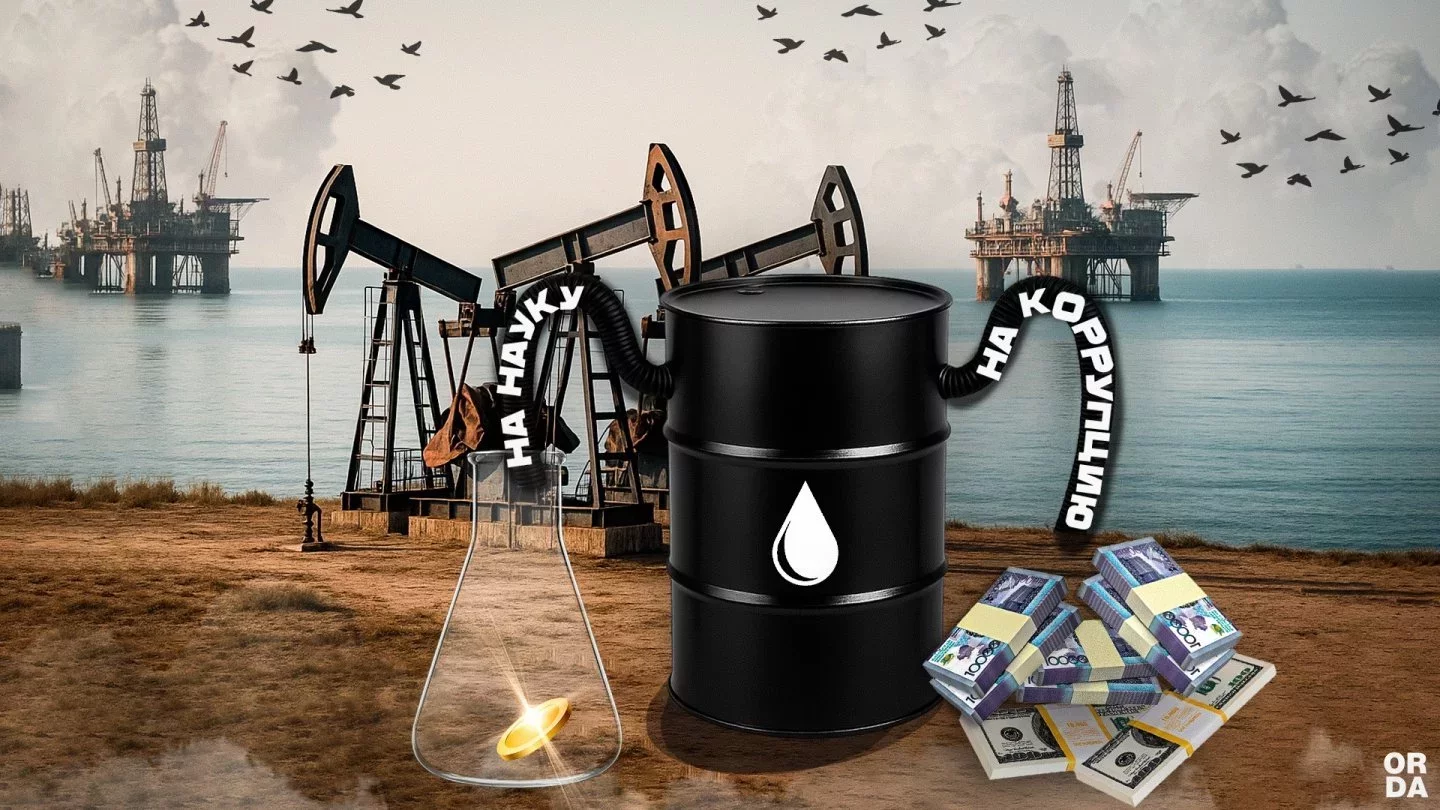 Photo: Orda
For 13 years, companies extracting minerals (primarily oil) in Kazakhstan have been required to pay a special fee to finance science. In theory, the mechanism was supposed to benefit both businesses and the state. In practice, it has turned into what many describe as an indirect tax and a channel for corruption.
What went wrong? Orda.kz has looked into the matter.
We Wanted It Like Norway
Oil and gas industry analyst Nurlan Zhumagulov recalls how R&D deductions — scientific research and experimental design work — appeared in Kazakhstan.
In 2012, the law “On Subsoil and Subsoil Use” was amended: resource-extracting companies now had to contribute one percent of their earnings to scientific developments.
We took the Norwegian experience of developing R&D in the oil and gas industry as a basis: you spend a dollar on R&D and get two dollars in deductions. But initially, everything went wrong for us: some companies had several contracts for subsoil use, and the obligations applied to the entire company (this would have led to huge deductions, because you were obliged to pay even if you did not produce oil). As a result, 1% of annual income was replaced by 1% of costs. Obligations arose mainly for new contracts (at the exploration stage) or when making changes to existing production contracts, notes Zhumagulov.
Many of the regulations tied to R&D remained on paper. For example, tax incentives were rarely used, since applying required extensive documentation.
There is still no separate website where the Ministry of Energy once promised to publish information on R&D expenses. Tracking how much oil companies send “to science” is difficult, though rough estimates suggest billions of tenge are spent annually, with amounts increasing each year.
Non-Science Fiction
Zhumagulov points out that the concept of R&D itself lacked a clear definition for years. Subsoil users included anything from seismic exploration to installing metering devices.
An official list of allowable works later appeared, but problems persisted.
The expenses that are considered R&D are absolutely not related to R&D. I worked in the oil and gas sector myself and I'm familar with the topic. There are a lot of expenses that have nothing to do with science or research. Moreover, here we run into the issue of the ‘whales’ — Tengiz, Karachaganak and Kashagan, where foreign investors operate. The ‘whales’ do not pay R&D in Kazakhstan. They invest this money in their developments in America, which then comes to us in the form of ready money,says oil and gas analyst Olzhas Baidildinov.
To see what effective spending looks like, analysts often point to Houston, Texas — the global center of the oil and gas industry, where companies base research labs and actively develop technologies. Kazakhstan, by contrast, has seen little to show for 13 years of deductions.
According to Baidildinov, one promising area for research would be improving the oil recovery factor (ORF).
Currently, the industry average recovery factor in Kazakhstan is about 30%. That is, from a field with 100 million barrels of oil, we extract only 30 million, and the remaining 70 million are simply buried and cannot be extracted. And in the US, for example, the industry average recovery factor is over 60%: they use modeling, artificial intelligence, and so on... This is where Kazakhstan's R&D should really be directed.
Instead, “R&D” money often funds equipment purchases, partial upgrades, or economic zones — expenditures far from cutting-edge science.
R&D in the form in which it exists now has not taken place. There are no studies. I think if we ask the Ministry of Energy to name five developments that have helped the Kazakh oil industry, there will be no answer. For some reason, we consider semi-automation and semi-informatics to be R&D, although this is not the case,Baidildinov adds.
A few projects did emerge — such as enhanced oil recovery technologies using bacteria/polymers, or Smart-Field solutions — but they remain exceptions.
"Unfortunately, we have not been able to implement the Norwegian experience in these 13 years," concludes Zhumagulov.
Deductions and Corruption
The bigger concern, experts say, is that funds often end up misused.
Dorin Baru, former Managing Director of OMV Petrom Kazakhstan, warned in 2024 that R&D contracts had turned into a corruption scheme:
Most of the service contracts done under NIOCR have absolutely nothing to do with research. I would strongly challenge the anticorruption bodies in Kazakhstan to review all the completed works under NIOCR and at the same time have some investigation on how (at under which circumstances various service companies have secured the respective licenses to operate under NIOCR (PIT and others). I am sure the public would be very interested to know the results of such investigations.
Zhumagulov notes three main weaknesses: companies channeling funds through affiliated contractors, reliance on single-source procurement, and open tenders that were largely formalities.
As a result, the state has considered shifting R&D oversight to a ministry:
This topic is quite painful for everyone. It is associated with corruption risks — that is why, for example, the relevant Ministry of Energy does not want to take responsibility for it... But no one wants to take responsibility because this is a corruption factor,Baidildinov explains.
What Next?
Authorities now plan to redirect the one percent deductions directly to the budget, possibly overseen by the Ministry of Digital Development or the Ministry of Science. Critics say this would simply formalize the payments as another tax on subsoil users without fixing inefficiencies.
Baidildinov suggests that genuine R&D should be driven by companies themselves, focusing on practical needs like oil recovery. He also highlights a major imbalance: the largest investors in Tengiz, Kashagan, and Karachaganak — the so-called “whales” — are exempt due to earlier agreements, meaning the biggest players contribute the least.
"R&D in general is no longer needed in the form it exists now. It is a rather cumbersome structure... Now it is not so much a research fee, but simply an additional tax for subsoil users," Baidildinov says.
Some propose redirecting funds to social projects or a special industry fund. But for now, the reality is clear: Kazakhstan’s attempt to pair oil with high technology has not produced the desired results.
Original Author: Nikita Drobny
Latest news
- Kazakh MFA: Citizens Evacuated from the Middle East via Oman and Saudi Arabia
- Kazakhstan to Spend 4.6 Trillion Tenge on Road Projects Through 2029
- Central Asia Competes for the Skies: Why Kazakhstan Risks Falling Behind Uzbekistan on Jet Fuel
- The War in Iran Opens a Window of Opportunity for Kazakhstan’s Oil Sector, Analysts Say
- Iran Conflict Escalates Beyond the Gulf: What Kazakh Experts Say About Risks for Central Asia and Kazakhstan
- Kazakhstan Prepares Possible Evacuation of Its Citizens From Iran
- LRT in Astana Is Reaching the Finish Line: The Launch Is Expected in the Coming Months
- Kazakhstan Ready to Help the UAE Amid Escalation in the Region
- Tokayev Discusses Middle East Escalation With Qatar’s Emir
- Airlines Ready to Bring Kazakhstanis Home From the Middle East
- Tokayev Sends Support Messages to Gulf Leaders Amid Regional Escalation
- Kazakhstan Bans Its Airlines From Flying Over Several Middle East Countries
- Astana Strengthens Security Measures Amid Escalation Around Iran
- Tokayev Meets U.S. Ambassador Stufft, Discusses Board of Peace Cooperation
- Mangystau Launches AI-Assisted School Monitoring to Prevent Teen Suicidal Behavior
- Kazakhstan to Supply UK With Critical Minerals
- AI Faculties for Educators to Open in Kazakhstan: What Other Changes Are Coming to the Education Sector
- There Are Medals — But Not Enough Ice: What’s Happening to Figure Skating in Kazakhstan
- Is Kazakhstan’s Nuclear Power Plant Project at Risk After New UK Sanctions? Rosatom Responds
- Prosecutor General’s Office Suspends Extradition of Navalny Ex-Staffer Detained in Almaty
