

Kazakhstan: Human Rights Expert on USAID, Global Politics, and the Future of Civil Society
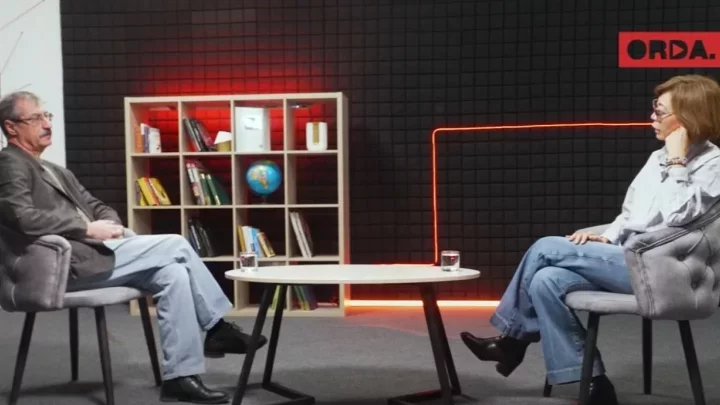
In an interview with Orda.kz Editor-in-Chief Gulnar Bazhkenova, Yevgeny Zhovtis, Director of the Kazakhstan International Bureau for Human Rights and Rule of Law, discussed how USAID funding cuts will impact Kazakhstan’s civil society and which programs in the country had been supported by American assistance.
Interview in Russian:
For those who don’t have time to watch the video, Orda.kz has briefly summarized the key points.
Impact of USAID Cuts on Kazakhstan
Funding for USAID programs has been reduced by 83%, freezing over 5,000 contracts worldwide, including in Kazakhstan. But what types of initiatives did the U.S. fund in Kazakhstan?
These were not only and not so much human rights projects, but social ones. USAID in Kazakhstan helped NGOs involved in educational activities and supporting vulnerable groups. It was the social projects that suffered the biggest blow, explains Zhovtis.
Could Kazakhstan finance such projects independently, without foreign donors?
Why are we happy about commercial investments from abroad but reject assistance for NGOs? The world is globalizing. The government receives foreign funding for its projects, and no one questions them. No one assumes they are working against their own state, Zhovtis argues.
According to him, the end of American funding has not significantly affected his Bureau’s operations, as most of its funding comes from European sources.
USAID support was only received three or four times, including for a project to develop an anti-discrimination law for Kazakhstan —Kazakhstan currently lacks a legal definition of discrimination.
Wouldn’t addressing discrimination become too sensitive in Kazakhstan?
More than 90% of discrimination cases do not concern areas that are sensitive for Kazakhstan, such as nationality, religion, or LGBT rights. Most often, discrimination affects people with disabilities, the elderly, children, and women. No funding is provided for politically sensitive issues, says Zhovtis.
Zelenskyy And NGOs
Before the war, Ukrainian NGOs actively urged President Volodymyr Zelenskyy to abandon agreements with Russia. Some believe this contributed to the escalation of conflict.
Could NGOs influence leaders to such an extent?
Zhovtis disagrees, arguing that political parties, opposition groups, and voters — not NGOs — shape such decisions.
Regarding concerns that Kazakhstan could face a fate similar to Ukraine’s, Zhovtis believes the country’s leadership is currently doing everything possible to maintain a geopolitical balance.
We are also signatories of the Budapest Treaty. We also renounced nuclear weapons and received security guarantees from Russia — yet now we see that these guarantees mean nothing. Kazakhstan is navigating foreign policy wisely, balancing between the West, Russia, and China. The government is trying to survive in this complex geopolitical field, preserving sovereignty while recognizing that we have limited influence on global affairs, says Zhovtis.
Looking Forward
According to Zhovtis, the world is undergoing a period of regression, but this does not mean a complete transformation. History has seen setbacks before, but the core principles of the global system remain intact.
The market economy is not ideal, but there is nothing better. It will evolve, but it will persist. For it to function properly, the rule of law is necessary — without it, the market economy doesn’t work well. Democratic governance is also essential. Some may cite Singapore as an exception, but overall, democratic systems are more effective, Zhovtis explains.
He believes significant changes will happen in the near future, yet the fundamental triad of market economy, rule of law, and democratic governance will continue to develop. This means that more people will demand their rights be respected, increasing the need for human rights organizations, independent media, and political change.
Original Author: Liliya Gaysina
Latest news
- Kazakhstan And EU Sign Deals On Airbus Aircraft, Roads And Visa Facilitation
- Kazakhstan Pauses Planned Electricity Tariff Increase
- Attack On Russian Gas Plant Again Raises Question Of Karachaganak Gas
- Kazakhstan Wants To Make Its Power Grids Smarter
- Kazakhstan’s Muftiate Declares Childfree Ideology Haram
- Ukrainian Suspect Extradited From Poland To Kazakhstan In Telegram Drug Case
- Kazakhstan’s Northeast May Be Left Without Gas Route If Russia Chooses Mongolia
- €70 Million Gas Supply Project Planned For Atyrau Polyethylene Plant
- Kazakhstan’s Rural-Focused Auyl Party Changes Leader
- Kazakhstan’s Two-Chamber Parliament To Meet One Last Time Before Abolition
- Kyrgyzstan Receives Two Villages From Uzbekistan And Proposes Land Swap With Kazakhstan
- Officials Fired For Gambling At Work In Turkestan Region
- Kazakhstan And Belgium Discuss Joint Projects In AI, Logistics And Petrochemicals
- Kazakhstan’s Luxury Property Tax To Take Effect In 2027
- Most Kazakhstanis Believe Officials Hear Citizens, Survey Says
- Two Saiga Calves Born At Almaty Zoo
- Kazakhstan Temporarily Bans Tomato Imports From Outside EAEU
- Kazakh Activist Taken To Police After Solo Protest Over Dirty Water
- Kazakhstan Bans Mobile Operators From Adding Paid Services Without Double Confirmation
- Kazakhstan Looks To AI To Track Melting Glaciers And Water Shortages
