

Kashagan Operator Accused Of Stalling Sulfur Fine Pending Washington Arbitration
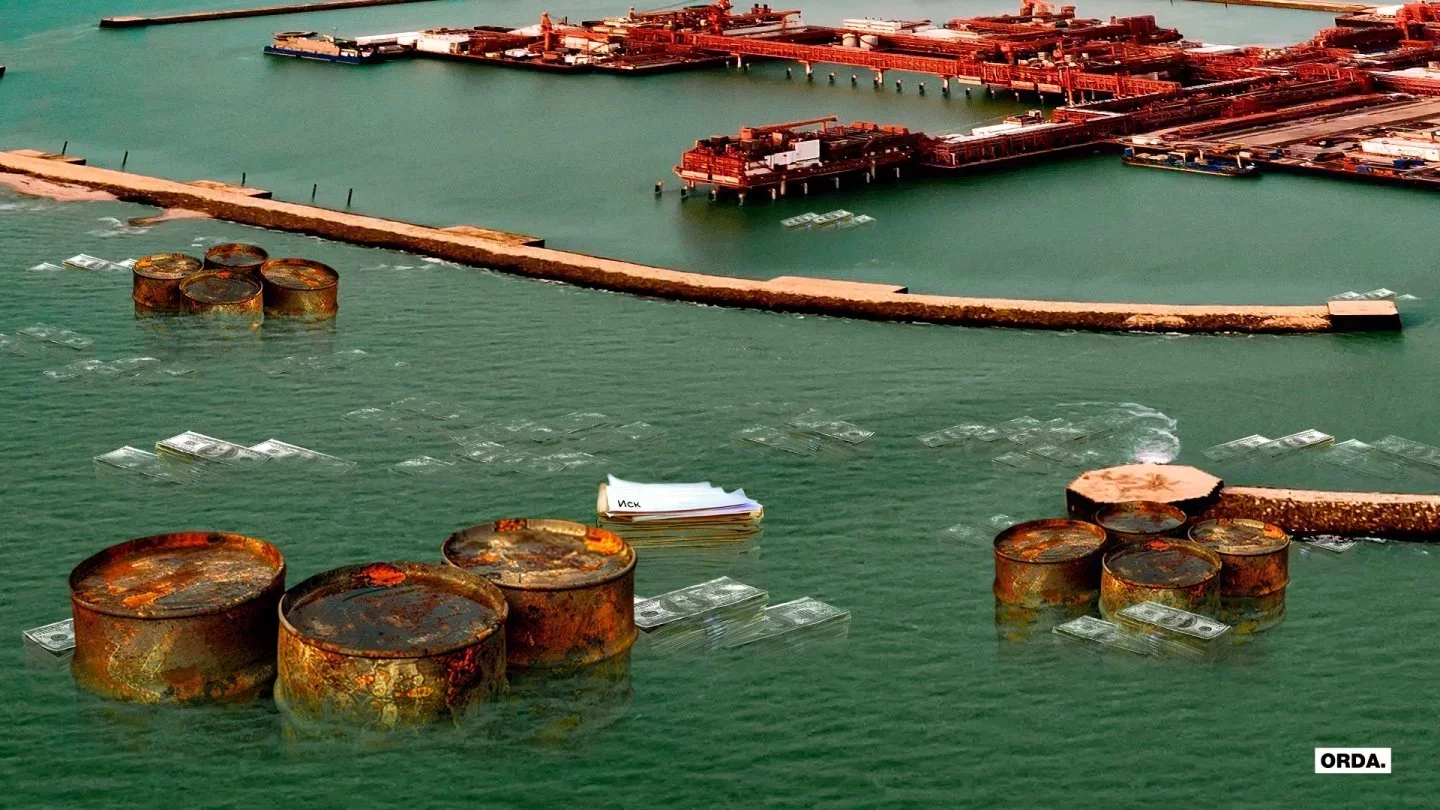 Photo: Orda.kz
The consortium operating the Kashagan field may be deliberately dragging out environmental proceedings in Kazakhstan in an effort to avoid paying a massive fine before a ruling is issued by an international arbitration tribunal in Washington, oil and gas expert Nurlan Zhumagulov wrote on his Energy Monitor Telegram channel. If the case is ultimately unsuccessful for the operator, the payment could reach 2.3 trillion tenge, Orda.kz reports.
Zhumagulov noted that the Supreme Court recently rejected an appeal by the North Caspian Operating Company (NCOC), the Kashagan operator. The company argued that procedural violations had taken place during the case, but the court did not accept those arguments.
The Ecology Department of the Atyrau region must now impose a 2.3 trillion tenge fine on NCOC over violations related to sulfur storage, he said. However, the operator still has the option to file another appeal. Zhumagulov described that step as a formality intended to buy time while the international arbitration case continues.
He also argued that Kazakh courts themselves are slowing the process. At the same time, he questioned how the state would actually enforce payment of such a fine.
Under the law, the authorities could freeze funds held in bank accounts or ban NCOC managers from leaving the country. But those measures may be difficult to use, Zhumagulov wrote, because NCOC’s accounts do not accumulate revenue from Kashagan production. Instead, the proceeds go directly to the project’s shareholders: KazMunayGas, Shell, Eni, ExxonMobil, TotalEnergies, CNPC and Inpex. Those companies independently sell the oil for export and transfer part of the proceeds to the state under the terms of the production-sharing agreement.
The environmental case over Kashagan has been ongoing since 2022. According to Bloomberg, NCOC shareholders had long been aware of possible violations involving sulfur storage and of potential claims from the Kazakh authorities. Bloomberg also reported that NCOC proposed grinding the stored sulfur to make it suitable for sale, but no action was taken.
Over the past four years, the state has also brought new claims against NCOC and Karachaganak operator KPO over alleged overstatements of capital expenditure. According to the claims, this allowed the operators and their shareholders to retain a larger share of produced oil as cost compensation, while state budget revenues declined.
The total size of those claims varies depending on the source. Bloomberg reported that Kazakhstan was seeking $6 billion from KPO alone, while the International Consortium of Investigative Journalists has said claims linked to Kashagan may reach $160 billion.
Original author: Alexey Afonsky
Read also:
Latest news
- Tokayev Finishes Uzbekistan Trip With Focus on Trade and Environmental Cooperation
- Kashagan Operator Accused Of Stalling Sulfur Fine Pending Washington Arbitration
- Copper And Molybdenum Project Set To Launch In Abay Region
- Deputies Raise Alarm Over Chaos in Construction Licensing and Oversight
- Kazakhstan’s Tobacco Output Surges as Smoking Rate Holds Steady
- EAEU Waives Import Duties on Several Vegetables for Kazakhstan
- SpaceX Direct-to-Cell Service Still Awaiting Commercial Launch in Kazakhstan
- Kazakhstan To Require Near Real-Time Emissions Reporting From Enterprises
- Tokayev Says Elections to Kazakhstan’s New Parliament Will Be Held in August
- System Outage Leaves Foreigners Without IIN and Residence Permit Services in Kazakhstan
- Sowing 2026: What Kazakhstan Will Plant and How It Will Pay for It
- What Higher Foreign Labor Hiring Rates Could Mean for Kazakhstan
- First Soyuz-5 Launch From Baiterek Expected Soon
- Gas Went Up Despite A Tariff Freeze In Southern Kazakhstan
- Kazakhstan Expands Military Spending With A Focus On UAVs
- Who Is Now Protecting Investors In Kazakhstan
- No One Was Punished For LGBT Propaganda In Kazakhstan — Ministry Of Culture
- Can Kazakhstan Really Send Green Power To Europe Through The Black Sea?
- Why Kazakhstan’s Army Is Struggling To Win Over Young Recruits
- A New Transit Era May Cost Almaty Dozens Of Buildings
