

Japarov Comments on New Law Restricting Face Coverings in Public Spaces
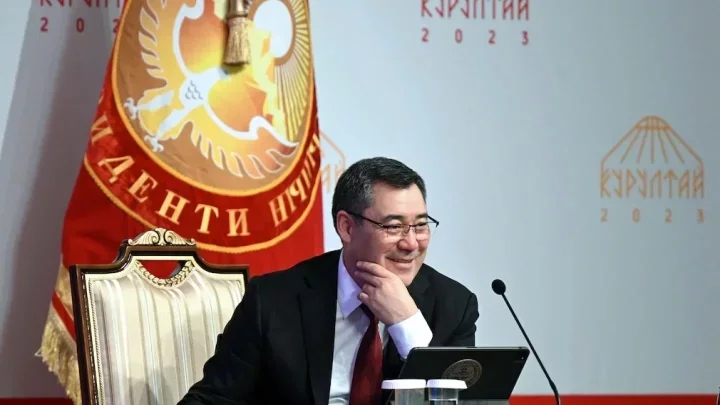 Photo: Kyrgyz presidential administration
Kyrgyz President Sadyr Japarov shared his perspective in an interview with the Kabar agency, Orda.kz reports.
Earlier this year, a law in Kyrgyzstan banned clothing that fully conceals the face in public spaces — such as garments that leave only the eyes visible. As of February 1, violators are subject to a fine of 20,000 soms (approximately 230 USD).
Japarov explained that the new amendments have placed all matters related to religious practice under the jurisdiction of the muftiate and the Council of Ulema.
The authorities have no right to interfere in religious affairs and will not do so.
He noted that all fatwas issued by the muftiate are based on religious texts and scholarly interpretation.
Regarding the hijab, Japarov clarified that it is like the garment traditionally worn by grandmothers and mothers. He emphasized that its use has never been controversial and remains acceptable, provided the face remains visible.
The niqab, however, has been prohibited by the muftiate. Japarov stated that fully covering the face is not a part of Kyrgyz tradition, and maintaining this stance is essential primarily for security reasons.
At the same time, the President urged law enforcement to exercise caution:
Don't approach women who simply wear a headscarf with their face uncovered. It's their personal right.
He reiterated that the amendments are not politically motivated but stem from a religious fatwa issued by the muftiate. The state's role, he said, is to assist in enforcing these religious guidelines.
This is important for maintaining public order and respect for religious norms.
Critics of the regulation argue that the ban alienates women who prefer to wear the niqab.
Original Author: Raushan Korzhumbekova
Latest news
- Orda.kz Editorial Team to Cease Operations on September 1
- The Price of a Degree: How Students in Kazakhstan Pay for University
- Second Przewalski’s Horse Foal Born as Species Returns to Kazakhstan
- Kazakh Mining Companies Can Recalculate Purchases if Tenge Weakens
- Kazakhstan Names First Vice President in Three Decades
- What Almaty’s Bus Shelters Are Missing
- 400-Truck Queue Builds at Kazakh–Kyrgyz Border
- Kazakhstan Ready to Help Feed and Rebuild Gaza
- Tokayev Establishes New Presidential Security Body
- Almaty Takes Back Its Nearly Century-Old Hippodrome
- No More Guesswork on Savings: Kazakhstan Tightens Energy Audits for Businesses
- Public Money Could Be Used to Rescue Failing Kazakh Banks
- Third Kazakh Woman Reported Missing in Nepal-China Flood Zone
- Falconer Convicted Over 35 Protected Birds, Spared Punishment Under Amnesty
- Kazakh Citizen Detained in Yakutia in Phone Fraud Case
- Yuan Instead of Dollars? KazMunayGas Draws Record Demand in Asia
- China Gains Oil-Market Influence as OPEC+ Weakens
- Kazakhstan to Divide Smartphones Into White, Gray and Black Lists
- Kazakhstan’s Government Formally Resigns as First Kurultai Session Opens
- Rare Lynx Sighting Recorded in Northern Kazakhstan
