

How the State Uses Money from Non-State Funds: A Case Study of a Bridge in Semey
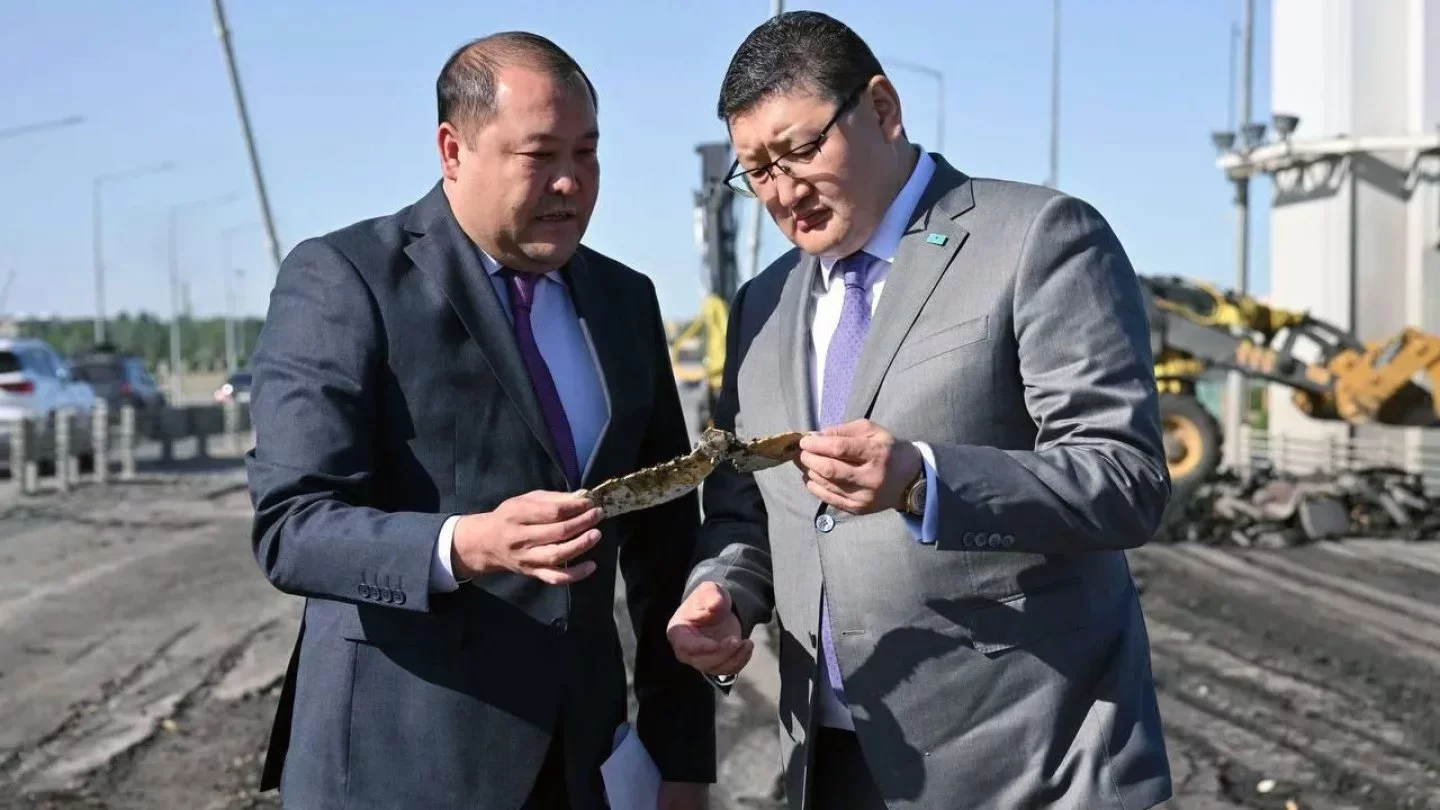 Photo: Abay Region Akimat
Across Kazakhstan, formally independent public foundations operate that collect money for the needs of local authorities. These are not small sums. For example, one fund in the West Kazakhstan Region raised 73.5 billion tenge to help flood victims (and was recently inspected by the prosecutor’s office).
Orda.kz decided to look into how such funds work by examining the case of the Aq Ertis fund in the Abay Region.
A Bridge in Focus
On May 28, 2025, Abay region Akim Berik Uali visited the suspension bridge in Semey to check on repair works. Clearly invested in the project, he instructed contractors to finish the job efficiently and on time.
Journalists and the Akimat’s press service documented everything carefully — and with good reason. The Semey suspension bridge is a local sore point. Built more than 20 years ago, it had never once undergone full repairs — not even the asphalt had been replaced.
So the bridge repair project initiated under Berik Uali’s watch could be seen as a real achievement. But looking closer, questions arise.
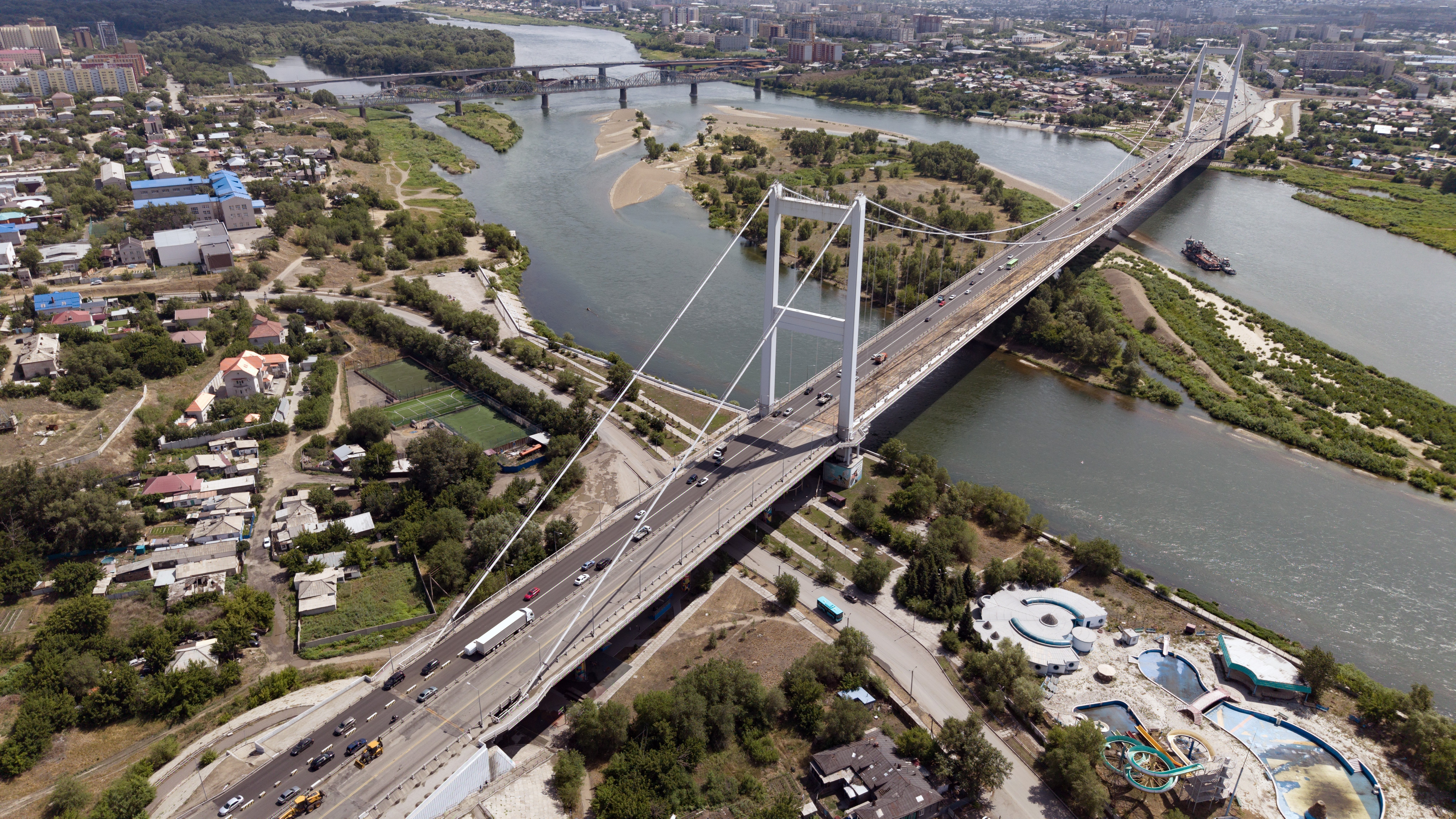
The key question, which none of the journalists on site seemed to ask, is this: what does the Akimat have to do with these repairs? Why is the regional Akim issuing instructions to contractors?
After all, neither the regional nor the city Akimat is financing the project. Local outlet Arnapress reported in July that:
Financing is carried out by the Aq Ertis Foundation. The city budget of Semey did not allocate funds for these works.
In other words, a little-known public foundation decided to present the city with a “gift” — repairing the suspension bridge at the cost of hundreds of millions. According to the Semey Department of Transport and Highways, Aq Ertis is the main actor behind the project, while the transport department merely serves as the balance-holder of the structure and representative of the Akimat.
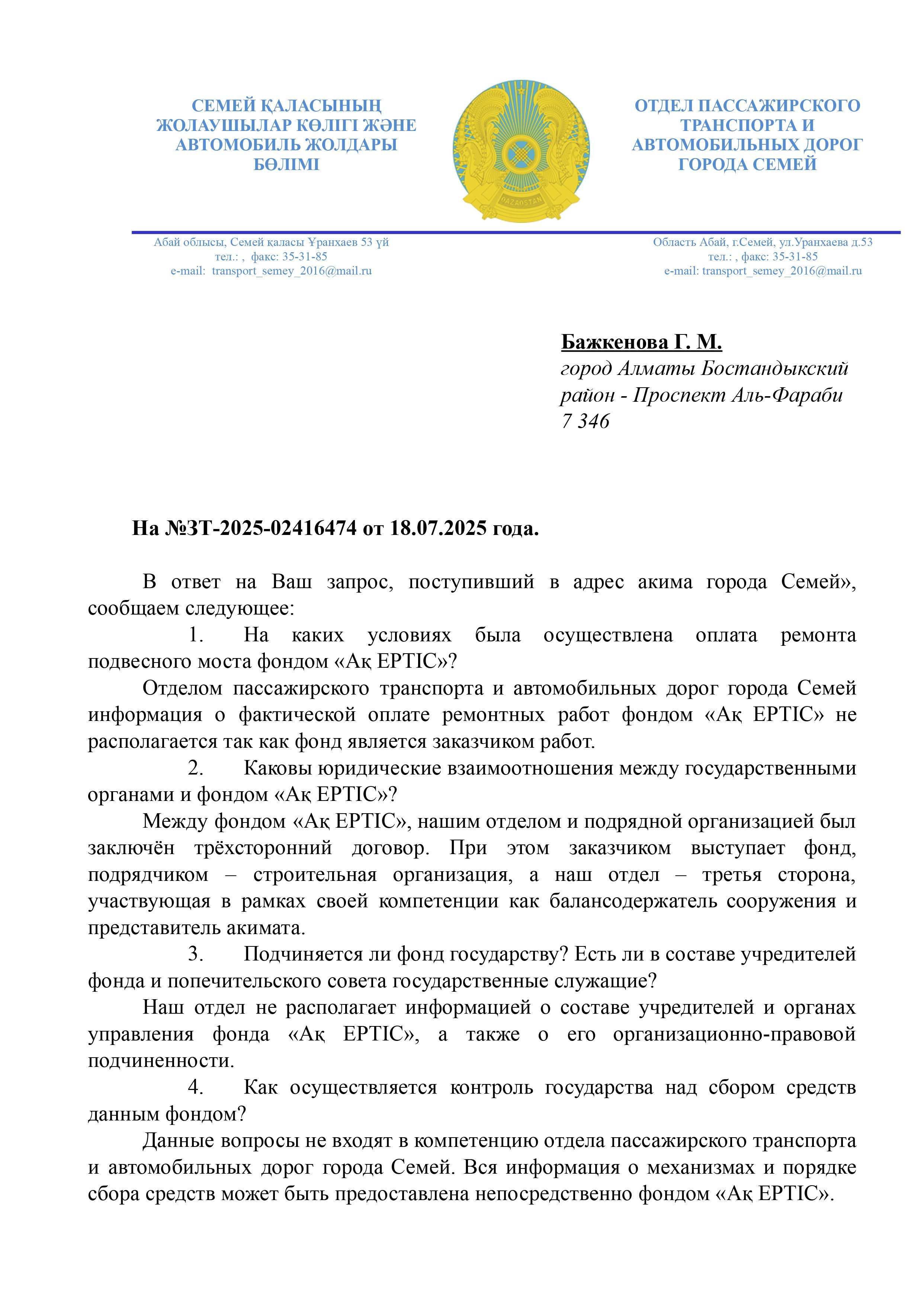
That means the foundation ordered and paid for the work, while the department only signed off on it. Yet, the project is being closely overseen not by foundation officials but by acting city Akim Bekzhan Bapyshev and regional Akim Berik Uali.
Neither of them heads the transport department, nor are they leaders or founders of the Aq Ertis Foundation.
This raises uncomfortable questions: are regional officials claiming credit for the efforts of a public foundation? Or is there more behind the scenes — perhaps the Akimat helped raise money for the foundation, or persuaded its founders to channel funds into the bridge repair?
Orda.kz might have been able to answer these questions if officials had not refused to provide basic information — including the repair costs, the nature of the Akimat’s relationship with the foundation, and even the name of the contractor carrying out the work.
Their refusal has only deepened the secrecy around the project.
The Foundation
According to the Kompra.kz portal, the Aq Ertis Public Foundation was registered on August 22, 2022, in Semey, shortly after Nurlan Urankhayev was appointed Akim of the newly created Abay region. In May 2025, just after Berik Uali became Akim, the foundation changed both its director and founders.
Officially, it is categorized as a small private enterprise with activities listed under “public organizations.” Its legal address is 99 Abay Kunanbayev Street in Semey — a building long used by government agencies. Under the East Kazakhstan Region, it housed the city treasury; later Urankhayev relocated the city’s House of Friendship there.
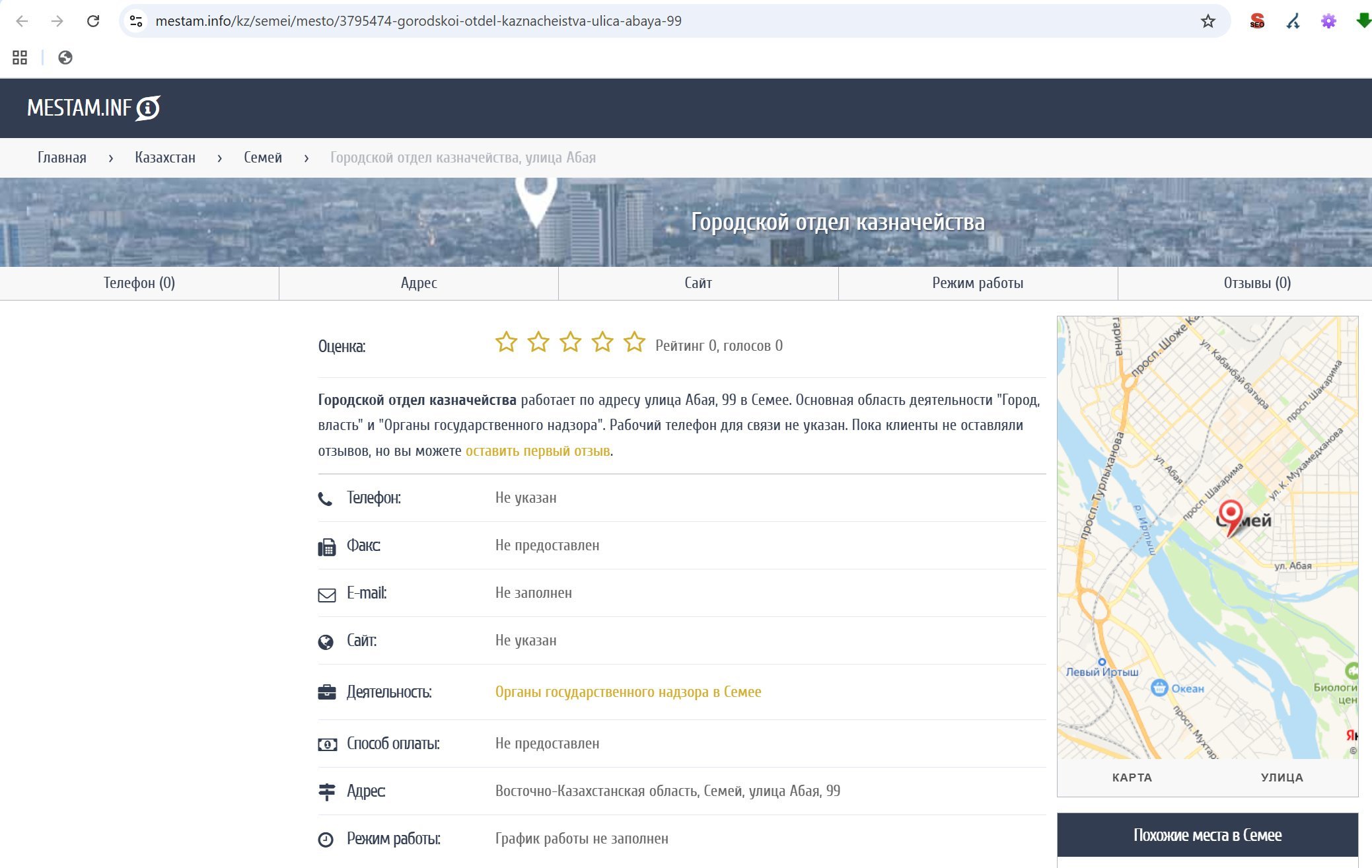
According to the public cadastral map, the land plot still belongs to a state body — Vostkaznedra. So can an “independent” public foundation really be registered in a government building on state-owned land?
Technically, yes. And the timing of its registration, right after the creation of the Abay Region, is hardly coincidental.
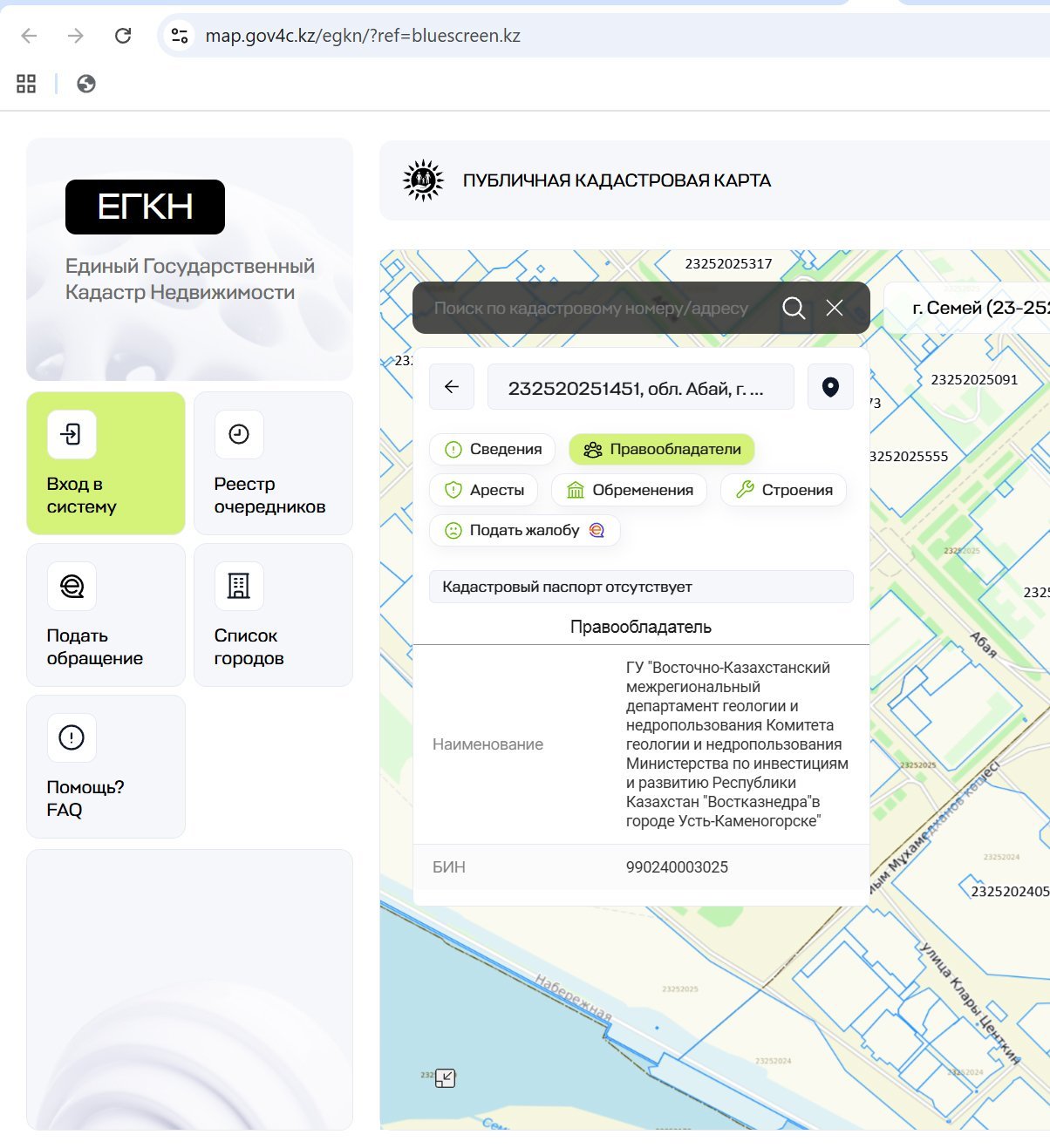
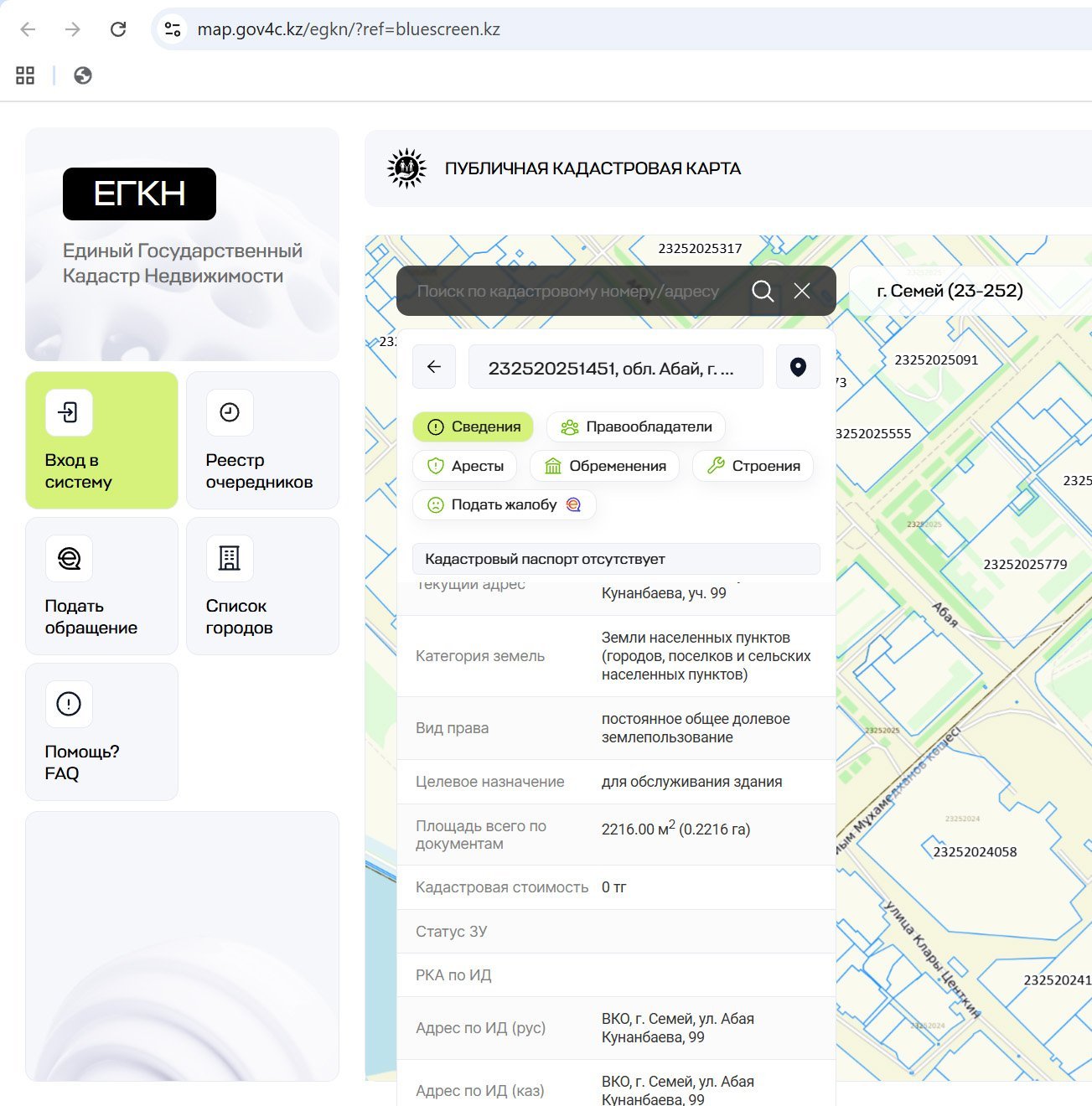
Since its creation, Aq Ertis has transferred more than 51,521,566.66 tenge in taxes, with annual deductions growing sharply:
- 2022 — 464,762 tenge
- 2023 — 1,282,069 tenge
- 2024 — 13,285,310 tenge
- 2025 — 36,489,425.66 tenge
What Does the Foundation Actually Do?
The only official description of the Aq Ertis Foundation’s goals comes from the Gov.kz website:
The purpose of the Aq Ertis Foundation, according to the foundation’s charter, is to achieve social, cultural, scientific, educational, charitable goals, as well as other goals aimed at ensuring public benefits.
The statement sounds broad, but it does not explain what the foundation actually does.
In practice, Aq Ertis has appeared in the media only four times since its registration:
- December 2022 — organized a charity ball, raising 35 million tenge
- 2023 — raised 500 million tenge to address fires in the Semey Ormany Nature Reserve
- 2024 — financed the construction of a children’s railway in Semey for 2.5 billion tenge
- 2025 — paid for repairs of a suspension bridge, though officials refused to disclose the amount
The foundation’s role is clear: it collects money and funds for large public projects.
The wildfire case also explains a little about how Aq Ertis operates. The Abay region Akimat was one of the organizers of the fundraising campaign, and Akimats from other regions also participated.
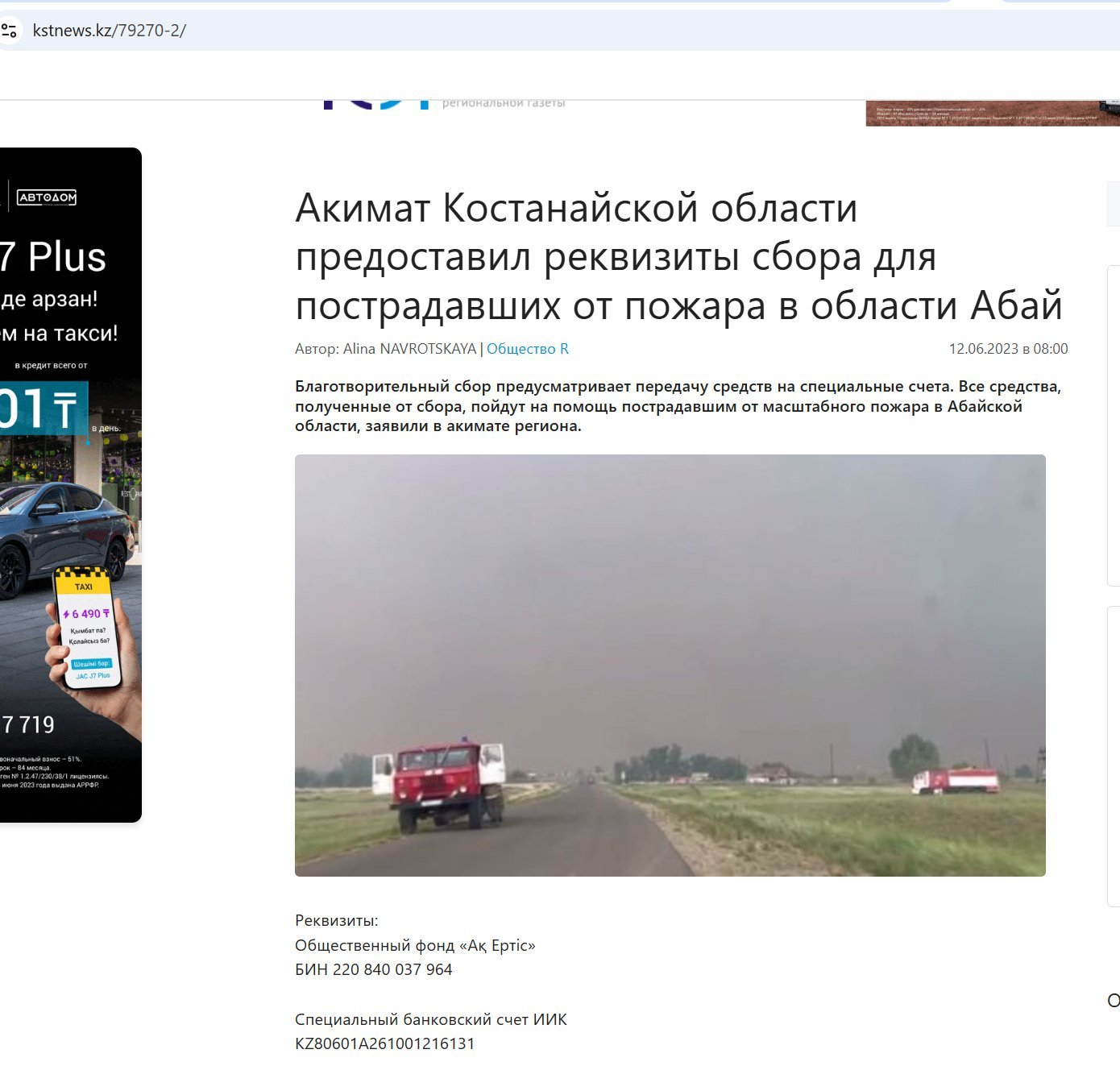
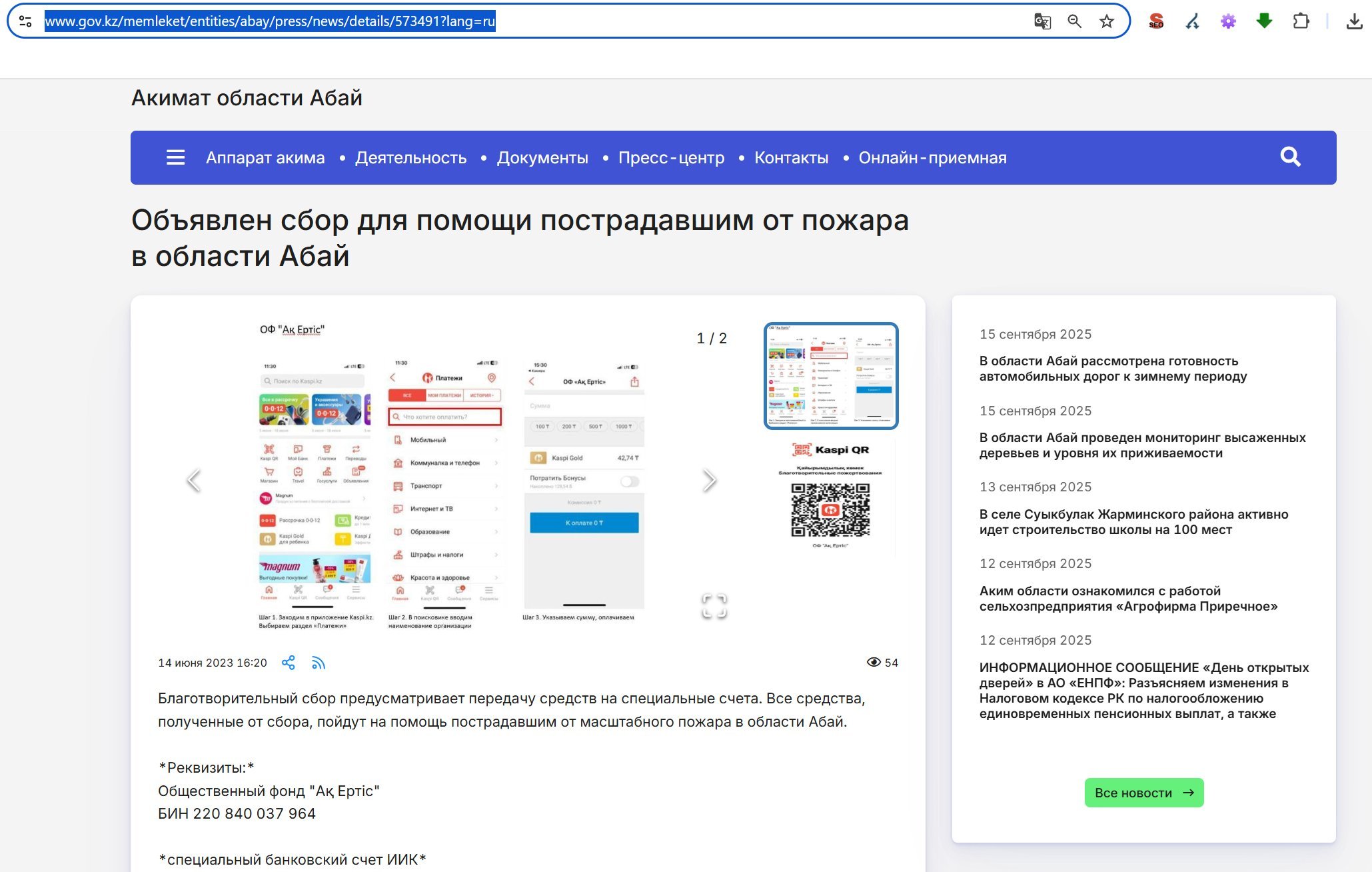
The foundation opened a special account to collect money.
As of today, personal assistance cards have been issued for each family within the framework of budgetary and extra-budgetary funds. In addition, a special account has been created in the Ak Ertis charity foundation to provide aid to victims and eliminate the consequences of the fire, the Abay region akim Nurlan Urankhayev explained at the time.
In other words, deposits to the fund’s accounts are carried out at least in part with state involvement. And in this case, “partially” actually means “very extensively.”
State bodies help the foundation collect money, and they also help distribute it—for the needs of the city and the region.
Orda.kz did not receive an answer to whether the state exercised any control over the money collected with the support of the regional Akimat in the foundation’s accounts.
In fact, we did not receive answers to any of our questions about the fund.
Yet the creation of a separate special account for donations, as envisioned by the Urankhayev administration, clearly implied the possibility of some oversight measures — for the sake of transparency.
But over time, the concept changed.
How Do Similar Structures Operate in Kazakhstan?
On September 12, 2025, Uralskaya Nedelya reported that the Anti-Corruption Service in the West Kazakhstan Region was conducting a pre-trial investigation into the activities of the Aqjaiyk charity foundation, which had accumulated funds to eliminate the consequences of the 2024 spring flood.
According to the outlet, during the 2024 flood, the West Kazakhstan Akimat signed a tripartite agreement with the Aqjaiyk foundation and all companies that transferred money to support flood victims. Under this agreement, the foundation received sponsor funds and distributed them according to documents provided by regional and city Akimats.
In other words, the Akimat first told sponsors where to send money. Sponsors sent it to the foundation. Then the Akimat told the foundation what to spend it on. In theory, this scheme is perfectly legal.
Its only problem is a significant lack of transparency. Government agencies in this system receive billions in “gifts” from sponsors — but spend them at their own discretion. These are not state budget funds, so they are not monitored.
At any moment, an official could decide, for example, to buy cheap one-room apartments for 60–100 million tenge — two or three times their real price — select a friendly seller, and split the profit. That’s just the simplest of possible schemes.
One fact that drew media attention was that the head of the foundation bought a car using interest from donations.
Tlekkabyl Imashev reacted to a Uralskaya Nedelya journalist’s questions.
( I – Imashev, U – Uralskaya Nedelya):
I: “I bought a Tucson, so what? We needed transport. What does this have to do with you? Why are you asking me? This is my private foundation! These are my own funds, from a deposit. I earned them.”
U: “But your foundation had no other activity except collecting donations for flood victims. From what activity did you earn money for the deposit?”
I: “The donations were on deposit. We earned interest. I provided 218 million in aid. Yes, from interest. And why are you asking me these questions?!” — protested Imashev.
An important detail: in West Kazakhstan Region, despite all this, there was at least some control. A tripartite agreement was signed with the Akimat.
In the Abay region, when Orda.kz asked which projects and in what amounts were carried out with state involvement through the foundation’s funds, no answers were given.
In the West Kazakhstan Region, 73.5 billion tenge was raised from sponsors. With this money, 2,011 apartments and 777 houses were purchased, and 19 dams were restored. Before creating the foundation, its head, Tlekkabyl Imashev, had led the Department of Internal Policy.
Who Leads and Founded Aq Ertis?
The Foundation in Abay region accumulates billions in donations from global-scale companies. Such activity cannot go without oversight. And, judging by data from Kompra.kz, there are no random people involved.
The foundation’s leadership and founders are mainly former civil servants.
Since its establishment, the leadership and founders have changed. The first head was Gulzhan Kairkhanovna Altynbekova, and the founders were Galiya Abdugaliyevna Zhuasbayeva and Zauresh Ramazanovna Isabayeva. In May 2023 the head changed, and in May 2025 the foundation was taken over by Zhasulan Toleubekovich Sapargaliyev. The new founders are Amantay Khairollinovich Utelbayev and Nurlan Battashovich Sydykov,
excerpt from Kompra.kz.
- Gulzhan Altynbekova: former Head of the Finance Department in Petropavlovsk, Head of Semey’s Education Department, and employee in Semey’s economics and budget planning office
- Galiya Zhuasbayeva: headed Semey’s hospice under the Abay Region Health Department
- Zauresh Isabayeva: long career in Semey’s internal policy department, also Head of Education, Deputy Akim, head of the Akim’s Office, and director of the Center for Language Learning
In May 2025, after Berik Uali’s appointment, both the head and founders changed:
- Amantay Utelbayev: long-time head of Semey’s Housing and Utilities department
- Nurlan Sydykov: former MP, former Akim of Beskaragay and Zharma districts, and former head of SPC Ertis
- Zhasulan Sapargaliyev: the only non-official. No records of an administrative career, but according to Gov.kz he, like the regional akim, comes from the village of Oyshilik
The Finances
In 2023, many Semey residents were surprised by how quickly 500 million tenge was raised to address fire damage. It was even suggested this could become an effective way to solve city problems: no need to wait for Akimat decisions — announce a fundraiser instead. Reality turned out both simpler and more complicated.
Sources suggest most money came not from individuals but from large international mining companies. 300 out of 500 million for fire relief came from Eurasian Resources Group.
The emergency in Abay region has shaken us all. At such a moment, it is more important than ever to show unity. The fight against the aftermath still lies ahead. At ERG, we mourn the tragedy that claimed the lives of our compatriots. The funds allocated by the company will go toward recovery and providing necessary assistance to the region,”
said Alexander Mashkevich, Chairman of the Board of Directors of ERG.
The construction of the children’s railway on the island was financed by the mining company KAZ Minerals and the Bakyrchik Mining Enterprise.
Major support for the implementation of this large socially significant project was provided by KAZ Minerals, which sponsored the purchase of a locomotive and carriages, and the Bakyrchik Mining Enterprise, which carried out large-scale construction. As part of a socio-economic cooperation agreement with the Abay region akimat, BME allocated 2.5 billion tenge to the Aq Ertis public Foundation in 2024,reported the local outlet Obyektiv-Vostok on November 30.
After August 10, 2025, this publication was mysteriously deleted. However, it remains accessible in Yandex’s cache.
Concerns
Residents may say there’s nothing wrong: the Akimat repairs a bridge. True. But why did officials refuse to name the cost of the suspension bridge repair or the contractor?
The risk is simple: money can be easily misused. A friendly company inflates the estimate three to four times — works worth 300 million suddenly cost 1 billion. Residents get a repaired bridge, and the company pockets 600 million in profit.
The sponsors’ role remains unclear. We are not blaming anyone; this is an example.
And when Orda.kz asked about the recent repairs of Semey’s second bridge (the cart bridge), officials ignored the question. Were those works also paid for by the Foundation?
Why, under Nurlan Urankhayev, did officials acknowledge the Akimat–Foundation link and name project sums openly, but under Berik Uali information dried up?
Huge amounts are raised with state involvement — but outside its control. Huge amounts are spent with state involvement — but behind closed doors, with corruption risks.
This is not only about one Foundation or one region. It is a nationwide issue. We examined it using the Abay region as an example.
Kazakhstan’s biggest companies donate, expecting the money to be used for city improvements, houses for flood victims, and aid for fire victims. But under certain conditions, it can turn into inflated estimates and corruption risks.
Orda.kz will continue investigating the role of such Foundations in Kazakhstan, and especially in the Abay region.
Original Author: Ilya Barokhovsky
Latest news
- How many Kazakhstanis remain in the Middle East — MFA
- Kazhydromet Warns of High Flood Risk in Five Regions in 2026
- MP Calls for Prosecutor Review of Kazakhstanis’ Dubai Property
- Kazakhstan Moves to Legalize Private Detective Work
- Kazakhstan to Extend Gas Export Ban for Six More Months
- Majilis MP Calls to Soften Liability for Kazakhstanis Drawn into Foreign Wars for Pay
- The Delivery of 51 Stadler Passenger Coaches Has Been Delayed
- Kazakhstan Returns Nearly 1,000 Citizens From the Middle East
- Damaged Baikonur Launch Pad Facility Restored After 2025 Collapse
- A Rare Black Melanist Wolf Was Shot in Eastern Kazakhstan
- Kazakhstan Maintains Neutral Stance on Middle East Escalation
- Kazakh MFA: Citizens Evacuated from the Middle East via Oman and Saudi Arabia
- Kazakhstan to Spend 4.6 Trillion Tenge on Road Projects Through 2029
- Central Asia Competes for the Skies: Why Kazakhstan Risks Falling Behind Uzbekistan on Jet Fuel
- The War in Iran Opens a Window of Opportunity for Kazakhstan’s Oil Sector, Analysts Say
- Iran Conflict Escalates Beyond the Gulf: What Kazakh Experts Say About Risks for Central Asia and Kazakhstan
- Kazakhstan Prepares Possible Evacuation of Its Citizens From Iran
- LRT in Astana Is Reaching the Finish Line: The Launch Is Expected in the Coming Months
- Kazakhstan Ready to Help the UAE Amid Escalation in the Region
- Tokayev Discusses Middle East Escalation With Qatar’s Emir
