

Golovkin at World Boxing: How Kazakhstan and Saudi Arabia Are Building a New Power Structure in Boxing
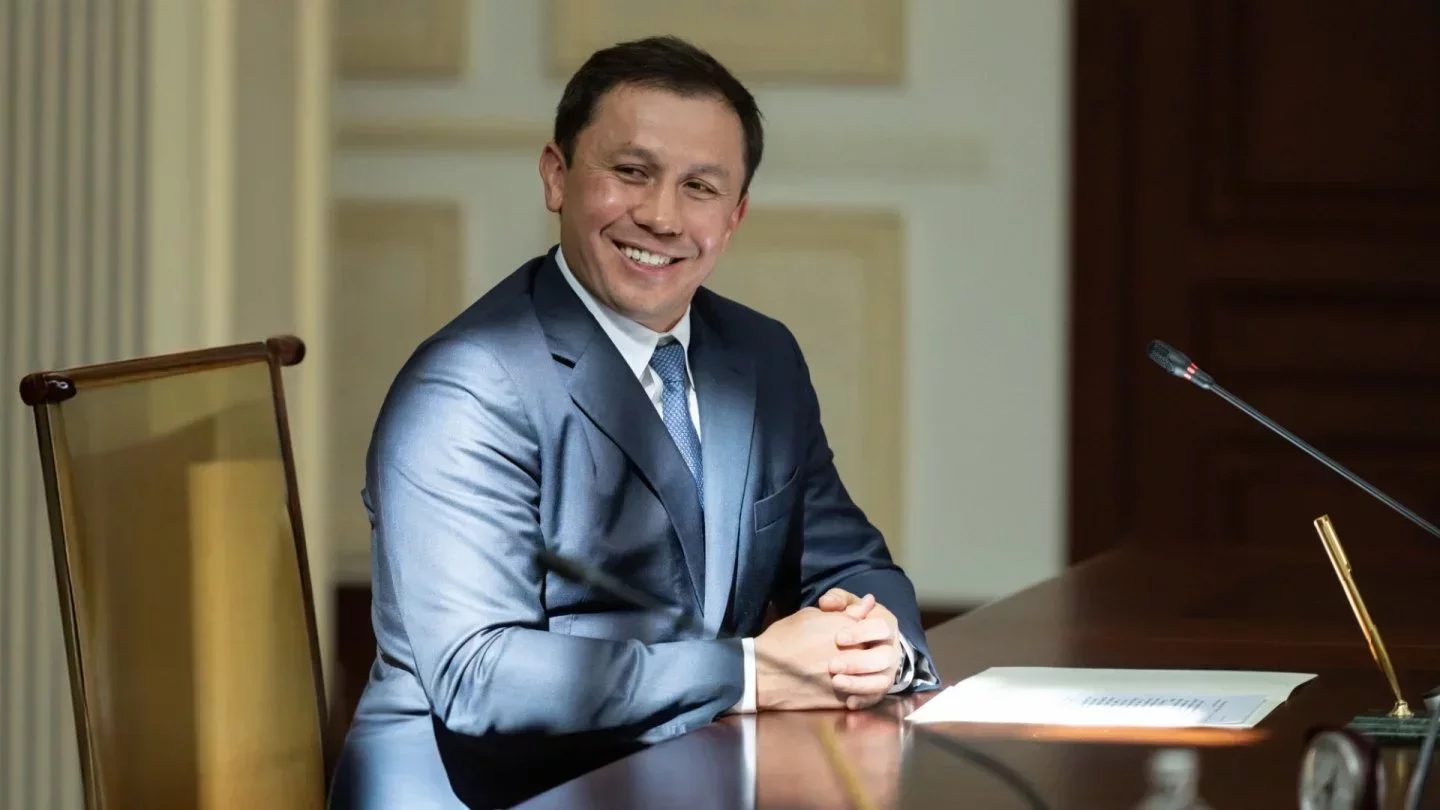 Photo: NOC Kazakhstan
The International Olympic Committee (IOC) has chosen a new favorite to replace the pro-Russian IBA, Orda.kz reports.
Gennady Golovkin’s appointment as chair of the World Boxing is far more than just a career milestone for one of Kazakhstan’s most famous athletes. It is part of a large political game involving the Aqorda, the Saudi royal court, and the Olympic ambitions of an entire region.
Boxers on a Chessboard
For the first time in history, an international sports federation is headed by a citizen of Kazakhstan — but the road to this position extended far beyond sports.
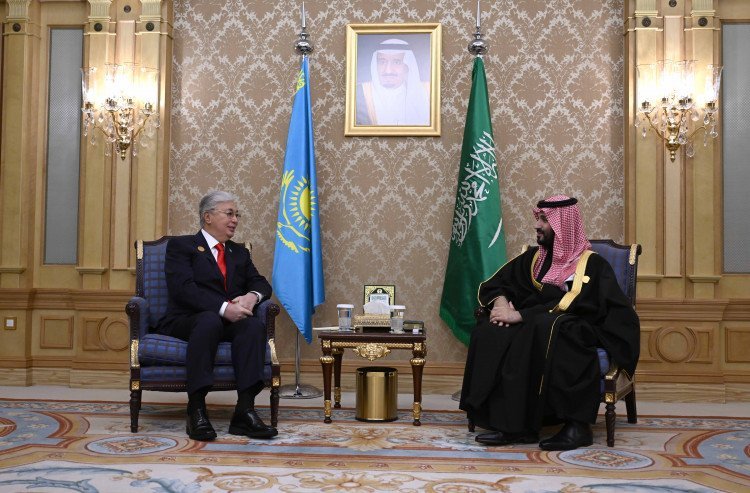
The political groundwork was laid back in December 2024, when Qasym-Jomart Toqayev met with Saudi Arabia’s crown prince Mohammed bin Salman. Officially they discussed energy, construction, and investment, but cooperation in sports was also mentioned as one of the future areas of partnership.
At the same time, Saudi Arabia began investing billions into combat sports.
The focus is on Olympic and amateur boxing, where the kingdom aims to seize global influence. In this context, Golovkin became the ideal figure for a new strategic direction.
In August 2025, a delegation from the Saudi Olympic Committee arrived in Astana. Vice President, Prince Fahad bin Jalawi, and Secretary General Abdulaziz Baeshen met with Golovkin and Kazakhstan’s deputy NOC head Alimzhan Akayev.
They discussed training camps, tournaments, and “long-term cooperation.” These same figures belong to the inner circle of Saudi Arabia’s top sports overseer, Prince Abdulaziz bin Turki, and often lobby his decisions.
Behind-the-scenes Maneuvering
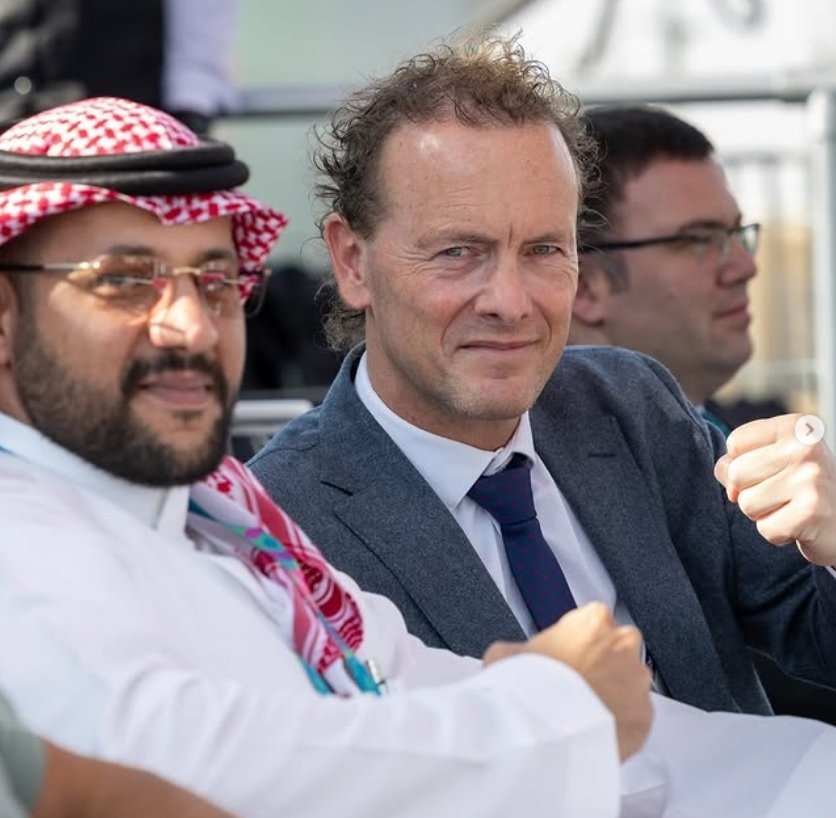
A month later, in September 2025, World Boxing president Boris van der Vorst announced he would not seek a second term. This launched the campaign for a new leader.
Boris van der Vorst is a Dutch sports administrator and entrepreneur. He entered boxing in 2008, joined the board of the Dutch Boxing Federation, and became its president in 2014, serving until 2023. His tenure coincided with the Netherlands’ first Olympic boxing medals in 25 years.
He was the main opponent of Umar Kremlev in the 2020 IBA presidential election, receiving only 30%. Later, he challenged his disqualification at CAS, which ruled in his favor.
After the refusal to hold new elections, he helped initiate the creation of an alternative organization. In April 2023, he was among those who founded World Boxing and was elected its first president in November 2023 with 63%.
But in September 2025, he unexpectedly declined to run again.
In October, Kazakhstan officially nominated Golovkin. Informal contacts began simultaneously. Asian, Turkic, and Middle Eastern diplomacy intensified. Saudi Arabia quickly signaled a strong interest. For them, Golovkin was both a recognizable global face and a figure acceptable to the IOC, with whom World Boxing is trying to rebuild relations.
The pivotal scene unfolded on November 8–12 in Riyadh at the Islamic Solidarity Games. Golovkin arrived in his capacity as head of Kazakhstan’s NOC. During those same days, Boris van der Vorst also arrived in the Saudi capital. Prince Abdulaziz bin Turki — the kingdom’s minister of sports, president of its NOC, and head of ISSA — was there as well.
He personally expressed support for Golovkin.
This became the turning point. Key players gathered in one city, at one tournament, in an informal setting. They could coordinate support, remove resistance, and build a voting coalition. All of this occurred as Saudi Arabia continued strengthening its position in international sports — from football to boxing.
Just a week later, on November 15–20, the federation’s independent review panel cleared Golovkin to run and rejected his competitor, Greece’s Mariolis Charilaos. At the Congress in Rome on November 23, Golovkin was approved unanimously — the only remaining candidate.
President Qasym-Jomart Toqayev congratulated Golovkin, highlighting his international reputation. But this appointment represents not only recognition of Golovkin’s sporting achievements — it is also an example of subtle sports diplomacy where the interests of Kazakhstan, Saudi Arabia, and an entire direction of Olympic policy converged.
Golovkin became not just the president of World Boxing, but the focal point of global influence in a new configuration of sports geopolitics.
Background
To understand the scale of Golovkin’s appointment, another figure must be recalled — Russia’s Umar Kremlev. He heads the International Boxing Association (IBA), an organization many national federations and the IOC describe as pro-Russian.
Under Kremlev, IBA received major funding from Gazprom. Its stance on Russian and Belarusian athletes sharply diverged from IOC recommendations. Corruption scandals and judging controversies, which began even before his tenure, only intensified under him.
In 2019, the IOC suspended IBA from organizing Olympic boxing. At Tokyo 2021, the boxing competition was held without the IBA, directly under IOC control. In June 2023, the IOC stripped IBA of recognition entirely — an unprecedented case of an Olympic sport losing its international federation. Olympic boxing fell into a vacuum.
The IOC said it could not trust qualifications or the 2024 Games to an organization it considered opaque, financially dependent, and failing to meet basic governance standards. Kremlev accused the IOC of “political motives.”
But the scandal at Paris 2024 became the final breaking point. IBA publicly attacked two female boxers — Imane Khelif and Lin Yu-Ting — claiming they should not compete in women’s events. A global uproar followed. They were accused of being transgender and “men beating women.”
IBA claimed Khelif had male chromosomes and elevated testosterone. The IOC took the opposite stance, recognized them as women based on documentation, and allowed them to compete. Kremlev accused the IOC of destroying women’s boxing; the IOC responded that IBA was spreading disinformation. At this point, a new federation became unavoidable.
From 2023 to 2025, national federations worldwide, including the US, UK, Germany, Canada, Australia, Kazakhstan, and Japan, began leaving the IBA en masse. This coalition created the alternative federation: World Boxing. The IOC then began treating it as a partner for preserving Olympic boxing for Los Angeles 2028.
By the time Golovkin was elected, World Boxing had become the only structure through which the IOC intended to “save” Olympic boxing. This is why Golovkin became a convenient, consensus, neutral, and politically safe figure for the IOC, Asia, the Middle East, and Western federations alike.
Original Author: Ruslan Loginov
Latest news
- The War in Iran Opens a Window of Opportunity for Kazakhstan’s Oil Sector, Analysts Say
- Iran Conflict Escalates Beyond the Gulf: What Kazakh Experts Say About Risks for Central Asia and Kazakhstan
- Kazakhstan Prepares Possible Evacuation of Its Citizens From Iran
- LRT in Astana Is Reaching the Finish Line: The Launch Is Expected in the Coming Months
- Kazakhstan Ready to Help the UAE Amid Escalation in the Region
- Tokayev Discusses Middle East Escalation With Qatar’s Emir
- Airlines Ready to Bring Kazakhstanis Home From the Middle East
- Tokayev Sends Support Messages to Gulf Leaders Amid Regional Escalation
- Kazakhstan Bans Its Airlines From Flying Over Several Middle East Countries
- Astana Strengthens Security Measures Amid Escalation Around Iran
- Tokayev Meets U.S. Ambassador Stufft, Discusses Board of Peace Cooperation
- Mangystau Launches AI-Assisted School Monitoring to Prevent Teen Suicidal Behavior
- Kazakhstan to Supply UK With Critical Minerals
- AI Faculties for Educators to Open in Kazakhstan: What Other Changes Are Coming to the Education Sector
- There Are Medals — But Not Enough Ice: What’s Happening to Figure Skating in Kazakhstan
- Is Kazakhstan’s Nuclear Power Plant Project at Risk After New UK Sanctions? Rosatom Responds
- Prosecutor General’s Office Suspends Extradition of Navalny Ex-Staffer Detained in Almaty
- Former EBRD Executive Jürgen Rigterink Elected as New Independent Director on Bank RBK’s Board of Directors
- Kazakhstan Near Bottom of Retirement Comfort Ranking
- Kazakhstan to Open New International Flights Across Asia, the Middle East and Europe
