

General Battles KNB in Court Over Pension Rights
 Photo: Orda.kz
Over the past thirty years, Kazakhstan has adopted many well-intentioned laws aimed at improving the lives of its citizens. But in practice, when an individual turns to the courts for protection under these laws, they often fall short. Orda.kz reports on one such legal conflict.
Former border service officer and Afghan war veteran Abdyrzak Ilyasov reached out to our editorial office. Once a prominent figure in the border troops, Ilyasov was the only general in the national security services with a doctorate in military sciences.
After the 2012 Arkankergen incident and the resignation of Deputy Chair of the National Security Committee (KNB) and Border Service Director Nurzhan Myrzaliyev, Ilyasov was seen as a likely successor to lead the agency.
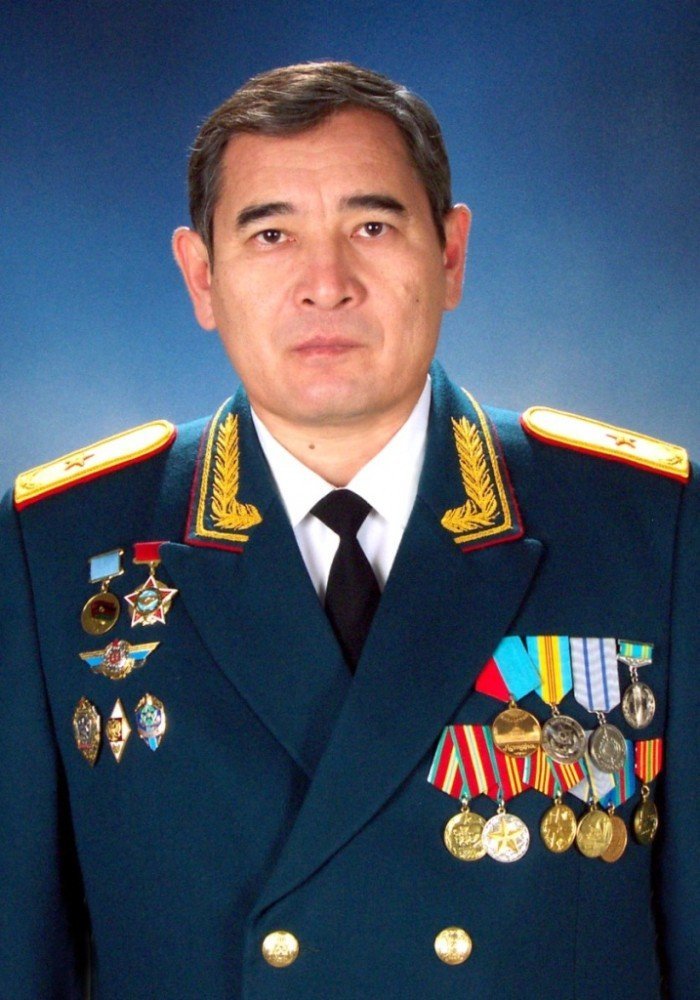
Instead of being promoted, the general found himself behind bars. KNB officers accused him of creating and leading a criminal group that allegedly took bribes from foreign nationals for unrestricted passage across the Uzbekistan–Kazakhstan–Russia border.
Ilyasov vehemently denied the charges, calling the case fabricated and politically motivated.
After serving nine of the 13 years handed down by a military court, Ilyasov was released. Now, however, he faces a new challenge: he is unable to secure a formal dismissal from the KNB and receive the pension payments he believes he is entitled to.
He has already lost two lawsuits but hopes to succeed in the cassation court, which will begin operating under a new format starting July 2025. Our journalists looked into the details of the general’s legal struggle.
A Battle with His Own Department
Abdyrzak Nadyrovich, can you explain your claims against the KNB?
— I don’t have a grievance with the KNB as an institution, but with the officials who violated my right to a timely retirement based on length of service and pension. That’s why I’m suing to recover the pension I never received. I won’t name the exact amount — let’s just say it’s in the eight-digit range. That is, to put it briefly.
To explain in detail: according to Kazakhstan’s law on pension provision, adopted on June 20, 1997, any citizen who has reached retirement age or completed a required length of service may apply to the authorized body for pension calculation.
Security service members are eligible after 25 years of service. By the end of 1997, I had completed 32 years of military service, so I submitted my application to the Ministry of Defense — at that time, the border service was still under its jurisdiction. The Ministry processed my documents and registered my pension file under No. 350. Shortly after, the border service was transferred to the National Security Committee, and my file was forwarded accordingly. However, the National Security Committee never processed my pension.
According to you, you could have retired based on length of service in 1997. However, you remained in the border troops and served until your arrest in 2012. Why didn’t you retire in time?
— That’s not the right question, but I’ll answer it. I planned to retire upon reaching the age limit for a major general, which is 55. I was promoted to general in December 2003 and turned 55 on October 27, 2012. The KNB Border Service should have notified me in writing a month in advance about the option to retire or continue service.
Instead, they launched a criminal case based on extortion charges in the western region. Initially, I was a witness, then a suspect, then an accused, and finally a defendant. In the end, I was dismissed with cause from the border service, and my pension was not paid.
So the main argument from the KNB in court was that you were dismissed with cause, and therefore not entitled to a pension?
— Yes, that is exactly how it was. KNB representatives cited the February 23, 2015, order dismissing me with cause, based on the enforcement of the court’s guilty verdict. But I presented several counterarguments in response.
First, I submitted a request to resume my pension payments on November 17, 2012, while the investigation was still ongoing. At that point, no one could have known how the case would turn out.
Second, the guilty verdict didn’t officially take effect until March 2014. So, how could the committee justify denying my pension back in 2012, unless they had already planned the outcome of the trial?
I’ll say it again: under the law, they were obligated to calculate my pension based on years of service, regardless of the grounds for dismissal.

Did the court side with the National Security Committee?
— Yes. On December 13, 2024, the Astana Interdistrict Civil Court ruled in favor of the defendant — the National Security Committee. The court essentially ignored the core of my claims and accepted the KNB’s argument that I was not entitled to a pension.
I appealed the decision to the Civil Division of the Astana City Court, citing both the Law “On Pension Provision in the Republic of Kazakhstan” from June 20, 1997, and the new Social Code from April 20, 2023. These laws clearly state that the state guarantees pension payments to citizens who earned the right to a pension by length of service and who registered that right before January 1, 1998, with the appropriate authorities.
I finalized all the paperwork in December 1997. But the court claimed that my pension file wasn’t listed in the border service archives as of January 1, 1998.
Did you lose the appeal as well?
— Yes, I did. But I haven’t lost hope for justice. I earned the right to a pension long before I was accused in that high-profile case. I dedicated 46 years to protecting the state border — I didn’t just earn a pension, I earned it with all applicable bonuses. I submitted ten applications to the KNB to reinstate my pension and to compensate me annually.
What impact did those 10 applications have?
— Over five years, the KNB should have accepted at least one of them. That would have triggered the resumption of pension payments with all due indexation. According to Article 112 of the Social Code, if a pension is delayed due to a government agency’s fault, the retiree has the right to receive it in full. And the Code doesn’t set a statute of limitations.
The KNB was obligated to resume my pension and formally dismiss me from service back in November 2012.
You mentioned that you should have been officially notified about your right to retire by length of service. Did that happen?
— No, it didn’t. According to military service regulations dated May 25, 2006, continuing my service beyond the age limit could only be done if I submitted a personal request. I never filed such a request.
What was your main argument in the inter-district court?
— I presented the Constitutional Court’s interpretation of Articles 10, 63, and 64 of the Law “On Pension Provision in the Republic of Kazakhstan” dated June 21, 2013, which confirms their compliance with the Constitution. The explanation clearly states there are only two legal grounds for terminating pension payments for length of service: the death of the pensioner or their relocation abroad for permanent residence.
Therefore, if the courts misinterpreted these provisions, their rulings should not be enforced and must be reviewed according to due procedure. This clarification by the Constitutional Court has the force of law.
Are you currently receiving a pension? If so, how much?
— Since November 2023, I’ve been receiving a length-of-service pension from the Ministry of Defense. It’s enough to support me and my family. But I still haven’t received the payments I was due between November 2012 and November 2023. That’s what I’m fighting for in court now — to receive the full amount owed.
Abdyrzak Nadyrovich, do you know how many other retired officers dismissed for negative reasons are currently suing over pension eligibility?
I don’t know exactly how many officers from the Ministry of Defense, the National Security Committee, or the Ministry of Internal Affairs are currently suing for pensions. I’ve been told the number is significant, but only a few plaintiffs have actually won their cases. I know of one woman who submitted two formal requests to her unit commander asking to retire based on her length of service.
He ignored both, so she continued to work. Later, she was named a suspect in a criminal case and was eventually convicted. The commander immediately dismissed her on disciplinary grounds, and she was denied a pension.
Unhappy with the situation, she appealed to the Constitutional Court, asking for a review of the current laws to determine whether they were constitutional. On January 24, 2025, the Constitutional Court issued a regulatory ruling clarifying Article 21 of the Law "On Military Service and the Status of Military Personnel."
This article governs how long military personnel can serve in non-military positions. The Court ruled that simply being named a suspect in a criminal case is not grounds for extending a servicemember’s term or delaying their retirement based on age limits.
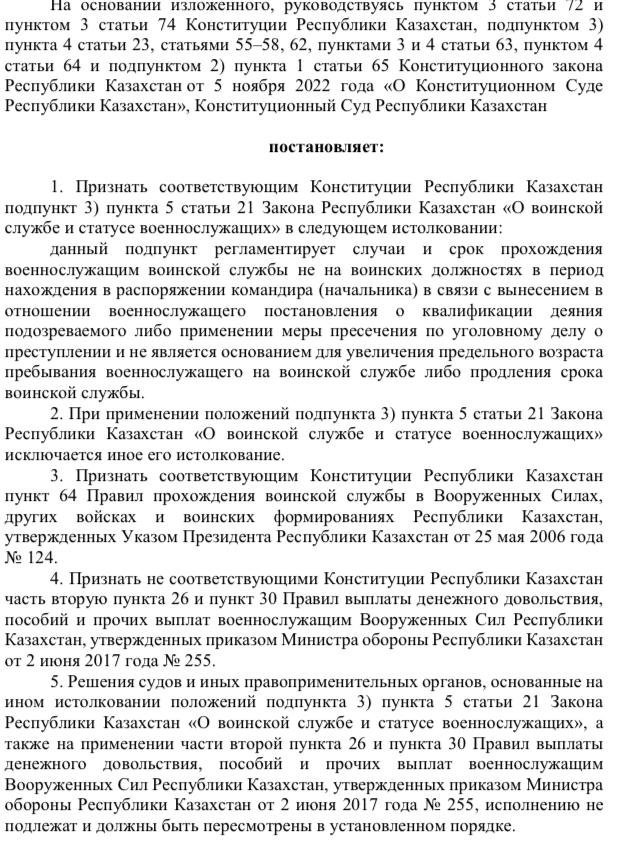
The Constitutional Court ultimately found that Paragraphs 26 and 30 of the Rules on the Payment of Monetary Allowances, Benefits, and Other Payments to Military Personnel — approved by the Minister of Defense's order dated June 2, 2017 — were unconstitutional.
It instructed the Government of Kazakhstan to submit a draft law to the Majilis within six months aimed at improving the legal framework governing military personnel serving in non-military positions.
From the Editors
While preparing this material, we initially believed that General Ilyasov’s pension case was an isolated incident — a case of the KNB trying to cut costs at one person’s expense.
However, after speaking with legal professionals familiar with the issue, it became clear that many former security service officers are in similar legal battles with their departments over pension entitlements.
These cases don’t usually involve generals, so the compensation claims tend to be smaller — but that’s not the point. Some plaintiffs challenge the size of their pension payments, arguing they were miscalculated without taking preferential length of service or applicable bonuses into account. Others, like Abdyrzak Ilyasov, are denied their pensions entirely due to dismissal during criminal investigations.
These veterans are now seeking their legally guaranteed payments in court.
Notably, many citizens are actively defending their rights through the legal system — a sign of growing legal awareness in the population.
We reached out to lawyer Serzhan Praliyev for expert commentary. Between 2000 and 2003, he served as a military judge in the Aqmola garrison before becoming a defense attorney. He frequently represents current and former members of the security services in legal disputes.
Serzhan, you’ve seen this issue from both sides. How common were lawsuits from military pensioners in the early 2000s, and how were they usually resolved?
— When I served as a garrison judge, I didn’t personally preside over pension disputes. Back then, such cases were extremely rare, so I can't speak for the rulings of my former colleagues. But in terms of the underlying issue, I believe the answer is simple: if someone earned their pension, give it to them!
Otherwise, it reflects poorly on the system. As the saying goes, “They used him and cast him aside.” Even if a criminal investigation is ongoing, a senior officer still has the right to file for retirement based on length of service.
Being a defendant in a case shouldn’t be grounds to deny someone their pension.

Have you had clients who successfully applied for a pension during an investigation or trial?
— Yes, there was such a case. One of my clients, a police officer, became the subject of an investigation. At the time, he had already reached the maximum service age for his rank, so he filed for a pension based on length of service. Despite his status shifting from witness to suspect during the eight-month investigation, he continued to receive his pension.
He had earned it, and no one had the right to suspend the payments.
Why doesn’t everyone have this outcome?
— In practice, it often happens that a law enforcement agency waits until the investigation is over and the case goes to court. At that point, they dismiss the employee with cause based on the court verdict, and deny them their pension. While the individual serves their sentence, their family is left without any stable income. It is good if, after their release, the person files a lawsuit to protect their rights and achieves their goal!
But it often happens that a person does not go to court for various reasons. Or he does, but the court refuses to satisfy his claim, citing the dismissal. That’s a misreading of the law.
Then why do courts continue to interpret the law this way, especially after the Constitutional Court issued a ruling stating that a law enforcement officer who qualifies for a pension cannot be denied it?
— Unfortunately, many judges still rule based on “inner conviction” rather than the law — and that’s the root of the issue, in my opinion. To eliminate arbitrary interpretations in the first and second instance courts, the Supreme Court needs to issue a regulatory resolution.
It should clearly lay out how courts must proceed when reviewing claims for length-of-service pensions. Right now, courts in different regions can issue contradictory rulings on identical cases. Yes, each case has its nuances, but legal interpretation must be consistent across Kazakhstan. Uniform application of the law is essential.
Original Author: Zhanar Kusanova
Latest news
- Tokayev Says Elections to Kazakhstan’s New Parliament Will Be Held in August
- System Outage Leaves Foreigners Without IIN and Residence Permit Services in Kazakhstan
- Sowing 2026: What Kazakhstan Will Plant and How It Will Pay for It
- What Higher Foreign Labor Hiring Rates Could Mean for Kazakhstan
- First Soyuz-5 Launch From Baiterek Expected Soon
- Gas Went Up Despite A Tariff Freeze In Southern Kazakhstan
- Kazakhstan Expands Military Spending With A Focus On UAVs
- Who Is Now Protecting Investors In Kazakhstan
- No One Was Punished For LGBT Propaganda In Kazakhstan — Ministry Of Culture
- Can Kazakhstan Really Send Green Power To Europe Through The Black Sea?
- Why Kazakhstan’s Army Is Struggling To Win Over Young Recruits
- A New Transit Era May Cost Almaty Dozens Of Buildings
- From Patient Care To Italy Trips: Prosecutors Uncover Embezzlement Scheme In Astana
- Kazakhstan Clears The Sky For Turkish Military Transit
- Why Kazakhstan’s Financial Companies Are Being Pushed Toward Aitu
- What AI Found In Almaty’s Spring Air
- Kazakh Potato Shipment Turned Back At Kyrgyz Border
- Kazakhstan To Resume Raising Women’s Retirement Age
- How Many Conscripts Kazakhstan Plans To Draft This Spring
- Kazakhstan Will Not Hold A Military Parade On Victory Day This Year
