

Digital Nomad Residency: One Applicant Shares Experiences of Bureaucracy and Technical Glitches
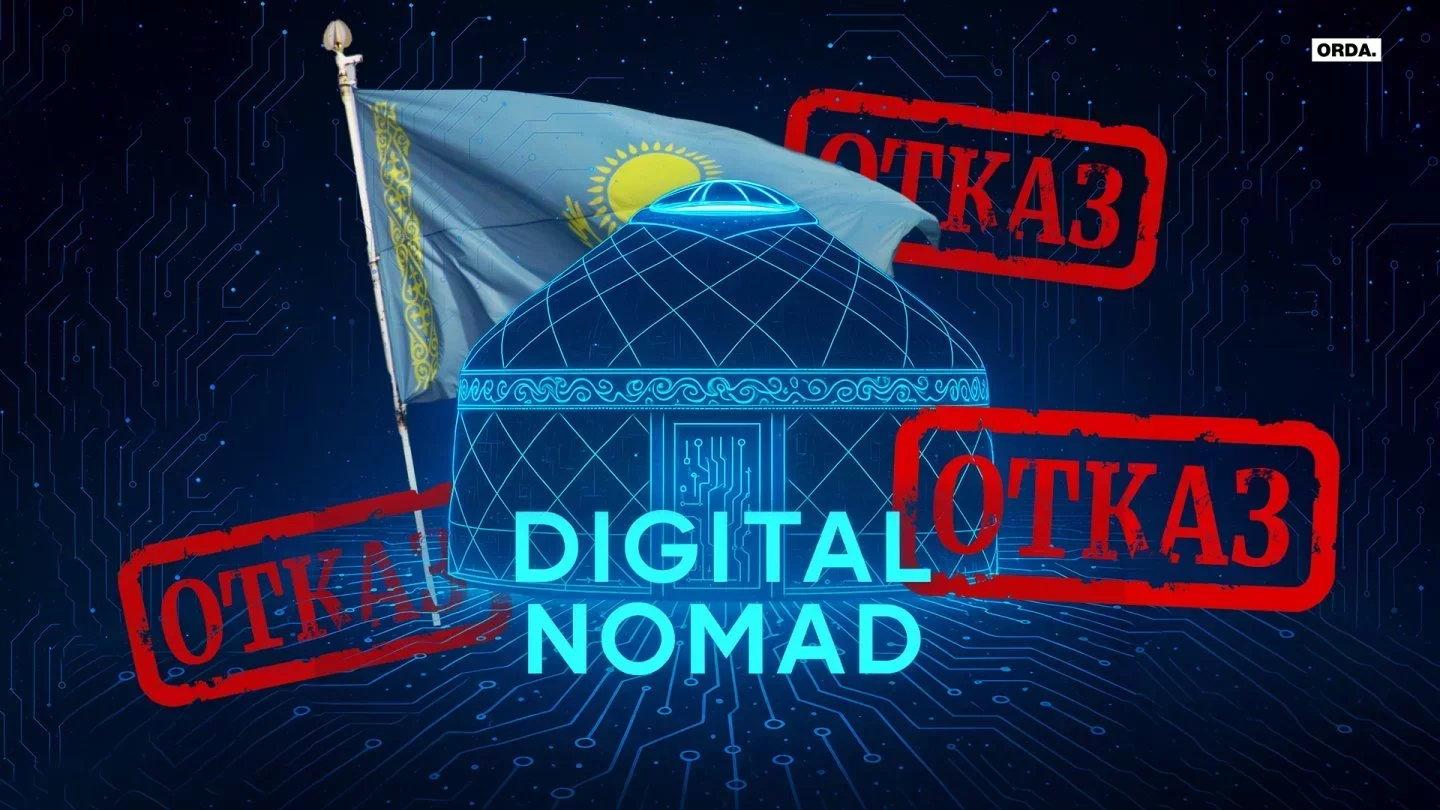 Photo: Orda.kz
On June 26, the Ministry of Digital Development announced that a Digital Nomad Visa had been issued to a foreign citizen, Algerian IT specialist Abdelmadjid Belmekki. According to the Ministry's release, he was pleased with the process.
The Ministry also highlighted the Digital Nomad Residency program, which allows foreign IT professionals to obtain residency in Kazakhstan.
However, just days before this announcement, a participant in the program reached out to Orda.kz to share a different perspective — one of glitches, delays, and near-legal limbo.
A Promising Start
The Digital Nomad Residency program was launched in January on the instructions of President Qasym-Jomart Toqayev. According to the Ministry of Digital Development:
Digital Nomad Residency was launched in January 2025 and is aimed at citizens of visa-free countries, offering a fast-track path to a residence permit. The assessment of the candidates' professional skills and compliance with IT specialties is reviewed by experts from Astana Hub, the country’s top technopark. So far, over 152 applications have been submitted from 21 countries, including the U.S., Canada, Türkiye, Algeria, and CIS states. Most interest comes from professionals in software development, automation, and cybersecurity.
But according to one IT specialist who spoke with Orda.kz, no applicants have successfully obtained residency through the program so far.
The biggest obstacles: persistent failures on the eGov platform, excessive bureaucracy, and unclear communication from Astana Hub, the police, and officials.
“We Believe in the Program”
The interviewee, who asked to be called Nikolai out of concern for his status and wary of drawing unwanted attention from the immigration police, is a Russian citizen.
He, like many others, left Russia in the fall of 2022 after mobilization began and settled in Kazakhstan, where he found employment and lived for an extended period on a temporary residence permit.
This document allows foreign nationals to legally stay in Kazakhstan for more than 90 days within six months.
The problem is that a temporary permit doesn’t make you a resident. And that imposes some restrictions, in particular, limited access to things like banking, a driver’s license, and more. The only option for me to obtain a residence permit was proof of financial solvency. To do this, you need to have about $10,000 in a bank account, which I didn’t have,Nikolai explained.
When Kazakhstan announced the Digital Nomad programs, Nikolai saw it as his opportunity.
As an IT specialist, he met the program requirements. Confident, he even switched jobs to a company outside Kazakhstan. That decision, unfortunately, would later complicate things.
He studied the list of eligible specializations and submitted his application to Astana Hub, which reviews candidates and, if approved, issues a petition to the migration police.
The petition states that the Deputy Minister himself confirms that you are indeed a qualified IT specialist eligible to apply for a residence permit, or more precisely, a permanent residence permit, which makes it possible to be a tax resident of Kazakhstan.
But even getting to that petition was a challenge.
The program was announced in early January, but the application form wasn’t even available on the Astana Hub website until mid-February,Nikolai recalled.
The paperwork required was extensive, including a resume, portfolio, and a police clearance certificate from the applicant’s home country.
For Nikolai, this meant requesting documents through the Russian consulate, which took three weeks.
He finally submitted everything in early March.
At this stage, there were two interviews: first, with a chatbot, then a Zoom call with Astana Hub reps. The questions were mainly related to the profession. And, as if making excuses, they asked why I wanted to get a residence permit in Kazakhstan. I explained I’d already been here a while and wanted to stay.
The process was then stalled by the Nauryz holidays. Finally, by early April, he received his petition from Astana Hub.
All that remained was to submit it through the migration portal.
Garbles and Nitpicking
The applicant must fill out the form; eGov auto-generates a PDF, which is uploaded, reviewed, and digitally signed. If all goes well, the migration police review the application within five days and give a decision.
A separate application form was created on eGov for submitting documents to the migration police. But from day one, it’s been plagued by technical glitches,says Nikolai.
The application file generated by the system was full of errors. Even trying to fill it out manually didn’t help. It also turned out that the migration police have strict file size limits.
If the final PDF was larger than 5MB, it caused ‘Garbled text’ on the migration police’s end. Maybe it’s an issue with their PDF reader or something else. So, you have to compress the file. On top of that, you need to upload other documents — the petition, a criminal background check, a passport scan, and even a photo — all in PDF format. Astana Hub’s petitions also had to be compressed. They say the newer petitions are under 5MB now, but that doesn’t help me, Nikolai explains.
As is now common, digital nomads created a shared chat, including web developers among them.
At first, the glitches in eGov were a source of amusement. When these issues kept people from getting a residence permit for months, it became frustrating and costly.
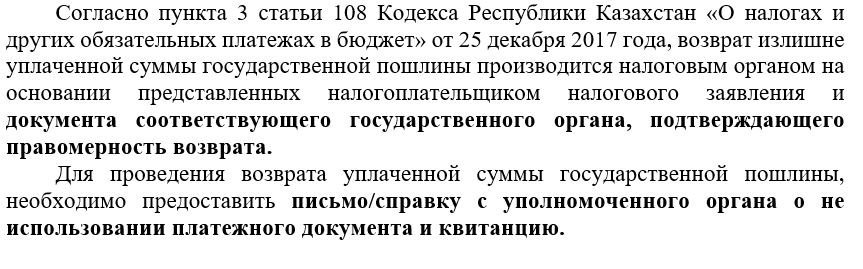
If there’s an error, the eGov system won’t let you move to the next step. And every time you reapply, you have to pay the state fee again — four MCI, which is about 16,000 tenge. Personally, I’ve paid it four times already. No one I know who’s faced the same issue has gotten their money back, Nikolai says.
He tried to find out how to get his money back and contacted the State Revenue Committee.
Their response, however, didn’t help — because when eGov returns an error, applicants don’t receive a receipt.
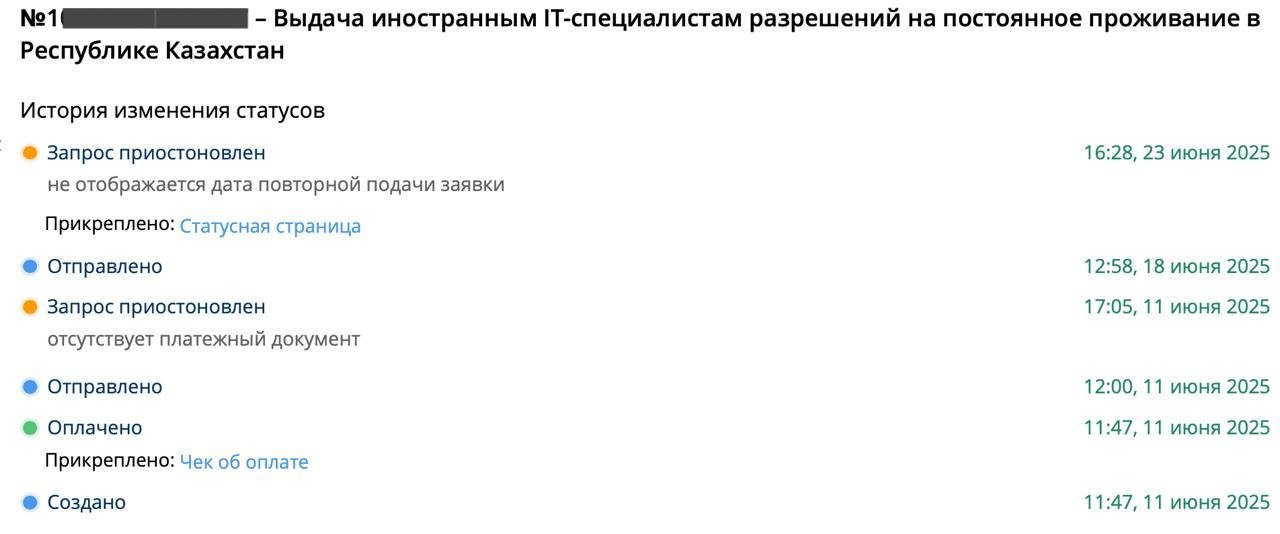
And the reason for one of the rejected applications was... the absence of a payment document. In other words, the system simply didn’t see the paid fee.
Nikolai also ran into what he calls bureaucratic nitpicking. Officers at the migration police objected to the “never been married” status in the application and insisted it should read “single/not married.” Eventually, they let it slide.
The applicants organized Zoom calls with representatives of Astana Hub, the migration police, and JSC NIT — the company responsible for eGov.
But even with all the right people in one chat, progress was slow.
It often felt like they were embarrassed — they just didn’t know when things would be fixed. And sometimes, there was complete silence for two weeks,he recalls.
All-Digital or Nothing
One would think that if the digital system failed, one could bring paper copies of your documents to the Public Service Center or the migration police. That’s what other foreign nationals and HR reps did in April when temporary residence permits weren’t processing electronically.
But Nikolai’s experience shows this wasn’t so simple.
In early May, I decided to go in person, especially since the migration police representatives told me during a call, ‘to come.’ I called the eGov hotline and was advised to visit the special migration center. I went there, but they told me they only handle work permits. So they sent me to the Bostandyq District Migration Police because that’s where I live. I got there and saw a sign on the door saying ‘Police Service Center handles fingerprinting and residence permits.’ But from that place, I was sent back to the migration department. Turned out, a week earlier, the residence permit duties had been returned to them — they just hadn’t taken the sign down. I waited in line, and when I finally spoke to someone, they said they’d never even heard of this program. Not even the senior officer. They told me to ask eGov. Full circle, he says.
Nikolai suspects that in Almaty, only a couple of people handle Digital Nomad Residency permits, and just one person actually processes them.
Nikolay placed his hopes in the Digital Nomad Residency program and took a job with a foreign company. In doing so, he lost eligibility for a temporary residence permit. And the Digital Nomad Residency program does not provide a temporary permit while the permanent residence application is being processed.
As a result, to remain in Kazakhstan legally, he had to do what's known as a "visa run" — leave the country and return, thereby resetting the 90-day tourist stay period. Those 90 days expire on June 30. Nikolay is now seeking employment with a local company so he can once again apply for a temporary residence permit.
That will require a visit to the migration police — one of the reasons he prefers not to reveal his real name, fearing backlash from authorities over his candid remarks.
They told us during the calls that they hadn’t planned for a temporary residence permit because the program assumes applicants are applying from abroad. But at the same time, you need a Kazakhstan digital signature to submit documents through eGov — and to get that, you need an IIN. Plus, you have to pay a fee. And if you're Russian, your card doesn’t work here,Nikolai explains.
In Kazakhstan, there’s an option to obtain a digital signature online, but it’s only available to citizens. Foreigners — even those with an IIN — must visit a Public Service Center in person.
On June 23, Nikolai received his latest rejection for a residence permit under the Digital Nomad Residency program.
The reason stated: “resubmission date not displayed.”
We still haven’t figured out the technical reason for the rejection — some of the staff are on vacation,Nikolai says.
On June 26, an Orda.kz journalist asked Vice Minister of Digital Development Doszhan Mussaliyev, on the sidelines of the Senate, whether the Ministry of Digital Development, Innovation and Aerospace Industry is addressing issues with the Digital Nomad Residency process.
Mussaliyev replied:
We are working on it. As far as I know, there were some problems, but they’ve been resolved. If this is an isolated case, provide us with the details and we’ll look into it and respond officially.
Orda.kz has also sent official inquiries to the Ministry of Digital Development, Innovation and Aerospace Industry, the Ministry of Internal Affairs, the State Corporation "Government for Citizens," and JSC "NIT" requesting clarification on the current status of the Digital Nomad Residency program.
Original Author: Igor Ulitin
Latest news
- How many Kazakhstanis remain in the Middle East — MFA
- Kazhydromet Warns of High Flood Risk in Five Regions in 2026
- MP Calls for Prosecutor Review of Kazakhstanis’ Dubai Property
- Kazakhstan Moves to Legalize Private Detective Work
- Kazakhstan to Extend Gas Export Ban for Six More Months
- Majilis MP Calls to Soften Liability for Kazakhstanis Drawn into Foreign Wars for Pay
- The Delivery of 51 Stadler Passenger Coaches Has Been Delayed
- Kazakhstan Returns Nearly 1,000 Citizens From the Middle East
- Damaged Baikonur Launch Pad Facility Restored After 2025 Collapse
- A Rare Black Melanist Wolf Was Shot in Eastern Kazakhstan
- Kazakhstan Maintains Neutral Stance on Middle East Escalation
- Kazakh MFA: Citizens Evacuated from the Middle East via Oman and Saudi Arabia
- Kazakhstan to Spend 4.6 Trillion Tenge on Road Projects Through 2029
- Central Asia Competes for the Skies: Why Kazakhstan Risks Falling Behind Uzbekistan on Jet Fuel
- The War in Iran Opens a Window of Opportunity for Kazakhstan’s Oil Sector, Analysts Say
- Iran Conflict Escalates Beyond the Gulf: What Kazakh Experts Say About Risks for Central Asia and Kazakhstan
- Kazakhstan Prepares Possible Evacuation of Its Citizens From Iran
- LRT in Astana Is Reaching the Finish Line: The Launch Is Expected in the Coming Months
- Kazakhstan Ready to Help the UAE Amid Escalation in the Region
- Tokayev Discusses Middle East Escalation With Qatar’s Emir
