

Deputy Bapi Dispelled “Myths About The Old and New Country” in Article
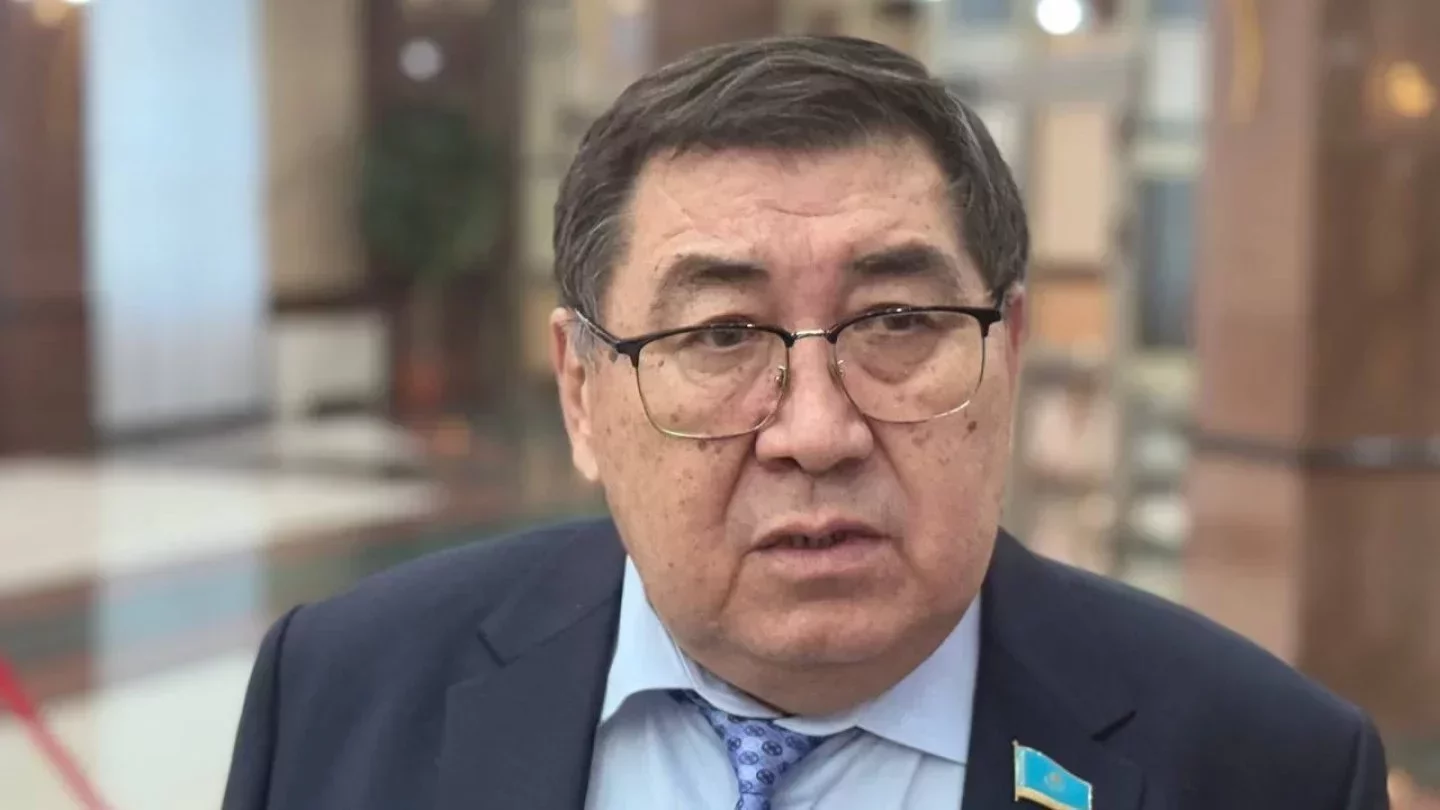 Photo: Orda
Majilis deputy Yermurat Bapi, known for his criticism of “Old Kazakhstan,” has published an article titled “Senseless Myths about The ‘Old’ and ‘New’ Country,” where he highlights how Kazakhstan has changed since Qasym‑Jomart Toqayev became president, Orda.kz reports.
He also argues that Nursultan Nazarbayev’s family no longer wields power.
Orda.kz outlines the main points of Bapi’s article and public reactions.
“Rumors Quickly Spread"
Bapi warns that “various myths, fueled by mistrust and distorted perceptions, regularly emerge in the public sphere.” He says such rumours, though baseless, “disrupt trust in the changes taking place, instill doubt and undermine hope.
And therefore, they poison the very possibility of moving forward, developing the state, and consolidating the nation.”
He praises reforms under Toqayev, highlighting how they have strengthened parliament and government, returned to mixed electoral districts, lowered thresholds for party registration and Senate entry, and expanded the powers of the Constitutional Court and commissioners.
Previously, representatives of big business could influence the courts, personnel policy, and government contracts. Now this access is limited. Influential figures of the past, such as Mashkevich and Kulibayev, are deprived of their former influence.
He also addresses those who claim that “New Kazakhstan” is just a name and is no different from the old one.
Firstly, society and the state cannot be divided into "old" and "new" as everyday things. Kazakhstan is in place, the people are in place. The concept of "Old Kazakhstan" in an author's lexicon is a metaphor indicating an era and principles where personal interest dominated over state interest.
Yermurat Bapi himself often used the metaphor “Old Kazakhstan” concerning the family and associates of Nursultan Nazarbayev.
“No More Nazarbayev”
Bapi confronts claims that Nazarbayev still pulls the strings behind the scenes:
“There are no facts, no legal grounds. This is simply an attempt to sow discord. It is possible that these false claims … are being spread by supporters of the old, rotten system.”
He reminds readers that Nazarbayev “has been completely removed from the public administration system,” with no official roles since June 2022:
His relatives were dismissed from their positions in government agencies and Akimats. None of them have any connection to state power. Some have already lost their illegally acquired wealth, others have had their property confiscated, and some have become defendants in criminal cases. Many, concerned about their own safety, have gone abroad.
Bapi also addresses concerns over Nazarbayev’s foreign trips:
There are also those who exaggerate the importance of Nazarbayev's personal visits abroad, spreading rumors that 'a hidden policy is being carried out.' Recently, there was information about his trip to Russia and another meeting with Putin. After that, some people began to panic again, afraid of their 'shadow.'
He wrote that "the practice of former leaders traveling abroad and meeting with current heads of state is a common occurrence in international politics."
Former Chancellors of Germany (Gerhard Schroeder, Angela Merkel), former Presidents of the USA (Barack Obama, George W. Bush), France (Nicolas Sarkozy, François Hollande), Great Britain (Tony Blair) - they all continue to communicate with colleagues, participate in forums, act as invited speakers. None of them interfere in the affairs of their own country. This is just an element of their private and public life after leaving office. But for some reason, in our society, every time such an occasion occurs, society goes into hysterics, makes a scandal, divides into camps, argues, makes noise. Why is this? Apparently, this is a consequence of the complex of dependence on the 'center,' from which we have not yet completely gotten rid of.
He calls for “learning to distinguish the historical role of individuals from their real influence on public administration.”
“Otherwise, we will continue to fight imaginary fears and attribute our doubts to the entire system.”
Notably, Yermurat Bapi himself was recently one of those who were alarmed by Nazarbayev's meeting with Putin.
He admitted this six months ago in a conversation with an Orda.kz correspondent.
I think that when Nazarbayev resigned, he first consulted with the President of Russia. He got a guarantee from him, without this he would not have made such a decision. And now he, perhaps, went there to renew the guarantees. He thinks that he has not yet lost his importance in society, his significance in the country. (...) You noticed, almost all the CIS countries, many foreign countries congratulated on Independence Day, open the Aqorda website, there is no congratulation from Putin. What does this mean? For example, I am very afraid, he said then.
In the article, he also emphasizes Toqayev's foreign policy. Yermurat Bapi believes that this is a key instrument for guaranteeing the country's security in an unstable international environment.
Kazakhstan borders Russia and China, powerful military powers. In these conditions, military security is insufficient - flexible and multi-level diplomacy is needed.
Public Response
Public figures have weighed in. Political scientist Gaziz Abishev believes Bapi’s shift reflects both personal evolution and a broader political strategy:
He had some amount of claims regarding the authorities. And, understandably, in this sense, he has become one of the driving forces behind the ongoing processes of dismantling the most odious legacy of the 'Old Kazakhstan.' And if, let’s say, he has reason to think that the old regime may be restored, then he is more at risk than everyone else. And therefore, this is part of his struggle for his own survival.
Abishev adds that Bapi, now inside the system, may have altered views:
When you spend hours with the Ministry of Finance, attend courses at the Ministry of Defense, receive closed analytics, your view of the situation changes because many static positions or dynamic policies rely on solid arguments that are not visible on the surface. And here he begins to understand something better, and his position changes.
Abishev does not rule out the political-technological factor. He believes that Bapi's publication could be part of a broader media campaign:
It's always part of some kind of political technology game. Perhaps it's a signal to certain groups: if you don't calm down, we'll go further. Maybe he was asked to support the current course because Bapi has always taken a sharp position against the so-called 'Old Kazakhstan,' the political scientist suggests.
Gaziz Abishev also noted that this is a typical political gesture, even in the United States:
I am certainly against excessive flattery and unnecessary verbiage. I believe that it is precisely the policy and specific actions that need to be assessed. I support the thesis that the President is a hired official. But I think that everyone is free to express sympathy to one degree or another. Bapi has the right to speak out about this. He approved of some of his (Toqayev's) policy points.
Nostalgia?
Journalist Timur Asylkhanov echoes Bapi’s warning:
The main idea is that the old system, from which the country seemed to have begun to move away, is in fact still around. People who were part of the previous government are trying to regain their influence. They do this not directly, but through social networks, anonymous channels, by creating the illusion that things were 'better' before. Some people benefit from this, and some build their policies on it.
Political scientist Ruslan Tusupbekov adds:
Apparently, the Soviet habit of making mountains out of molehills is still with us. But if we do not learn to distinguish speculation from reality, then we will continue to drive ourselves into fictional scenarios. Incidentally, I have started to come across posts where people remember Nazarbayev with nostalgia. And I do not understand where this melancholy comes from? Do people have amnesia or Stockholm syndrome? Let's get out of this bubble and stop dwelling on the past. Because getting stuck in old images prevents us from noticing real changes and opportunities that are opening up for the country at the moment.
Original Author: Zhadra Zhulmukhametova
Latest news
- Kazakhstan Prosecutor Opposes Deportation of 16-Year-Old Russian Teen
- Russian TV Channels Taken Off Air in Kazakhstan
- Mistaken Claim? Kazakhstan Denies $1B Contribution to the Board of Peace
- How many Kazakhstanis remain in the Middle East — MFA
- Kazhydromet Warns of High Flood Risk in Five Regions in 2026
- MP Calls for Prosecutor Review of Kazakhstanis’ Dubai Property
- Kazakhstan Moves to Legalize Private Detective Work
- Kazakhstan to Extend Gas Export Ban for Six More Months
- Majilis MP Calls to Soften Liability for Kazakhstanis Drawn into Foreign Wars for Pay
- The Delivery of 51 Stadler Passenger Coaches Has Been Delayed
- Kazakhstan Returns Nearly 1,000 Citizens From the Middle East
- Damaged Baikonur Launch Pad Facility Restored After 2025 Collapse
- A Rare Black Melanist Wolf Was Shot in Eastern Kazakhstan
- Kazakhstan Maintains Neutral Stance on Middle East Escalation
- Kazakh MFA: Citizens Evacuated from the Middle East via Oman and Saudi Arabia
- Kazakhstan to Spend 4.6 Trillion Tenge on Road Projects Through 2029
- Central Asia Competes for the Skies: Why Kazakhstan Risks Falling Behind Uzbekistan on Jet Fuel
- The War in Iran Opens a Window of Opportunity for Kazakhstan’s Oil Sector, Analysts Say
- Iran Conflict Escalates Beyond the Gulf: What Kazakh Experts Say About Risks for Central Asia and Kazakhstan
- Kazakhstan Prepares Possible Evacuation of Its Citizens From Iran
